
Why Potatoes Go Hollow Inside
Updated July 2026
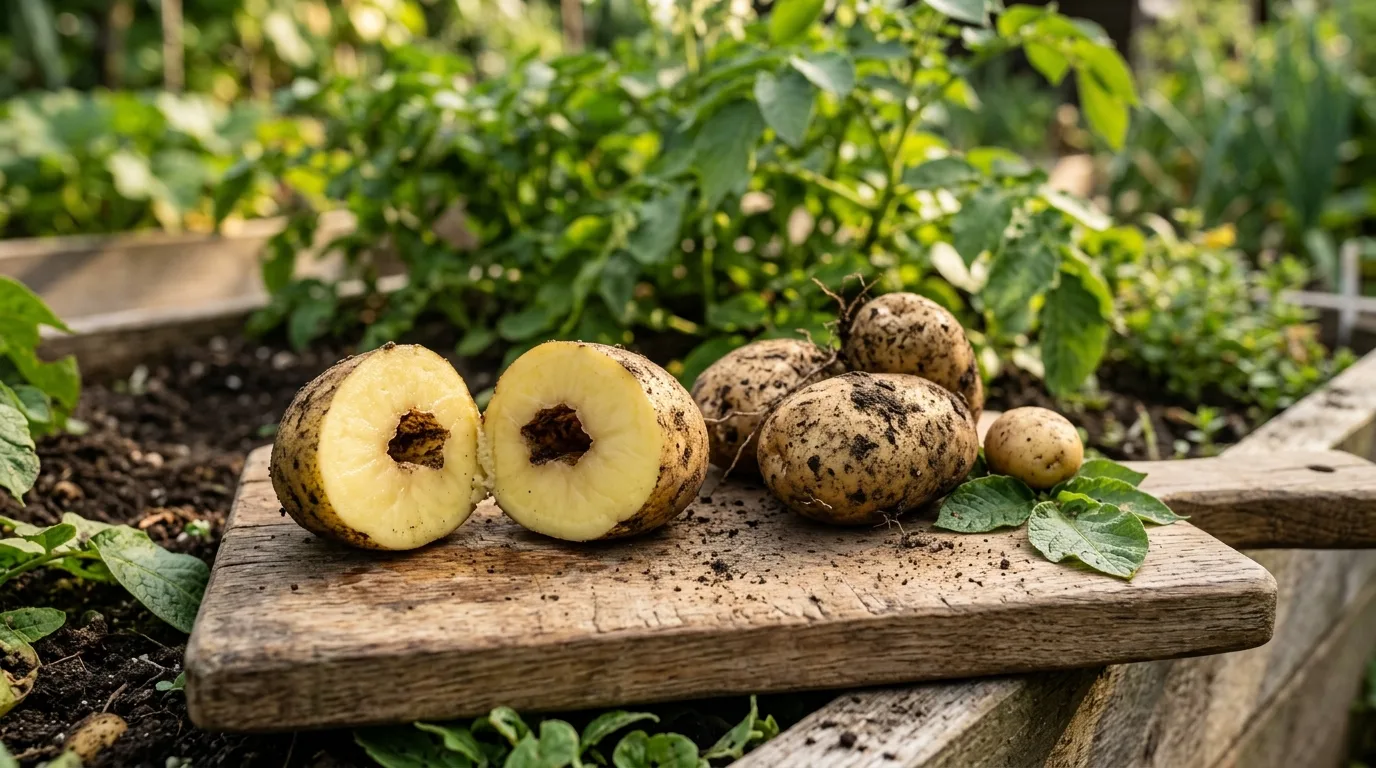
Hollow heart is a growth-rate problem, and it is decided weeks before you ever dig.
The potato looks perfect from the outside. You cut it open and there is a cavity in the middle, often star-shaped, with brown edges. Nothing ate it and nothing infected it. Hollow heart is a physiological disorder, which is the polite way of saying the potato grew faster than it could fill.
What hollow heart is
When a tuber bulks up too quickly, the cells at the centre pull apart faster than new cells can divide to fill the space. The result is a clean internal cavity, sometimes with light brown, corky edges where the tissue tore. There is no pest, no rot organism and nothing contagious about it, and the rest of the potato is completely normal.
What causes it
A growth surge after a check. The pattern is nearly always stress followed by sudden plenty:
- A dry spell, then heavy water. Rain or a big catch-up watering after drought sends tubers into a growth spurt their centres cannot match.
- Wide spacing. Plants with room to spare set fewer, larger tubers, and oversized fast-grown tubers are the classic hollow heart victims.
- Heavy feeding mid-season. A big nitrogen hit while tubers are bulking pushes the same too-fast growth.
- Cool starts and big swings. A slow, checked start followed by warm perfect weather sets up the surge.
How to grow solid potatoes
Keep moisture boring
Steady is everything. Water deeply on a regular rhythm through the whole bulking period rather than rescuing bone-dry plants with a flood, and mulch well so the soil never fully dries out. In pots and grow bags, moisture swings hit harder, so check them more often.
Close up the spacing
Plant seed potatoes about 10 to 12 inches apart. Slightly crowded plants set more, smaller tubers that fill out solid rather than a few giants that race hollow.
Feed early, then leave it
Build fertility into the bed before planting and feed lightly early. Avoid big nitrogen doses once plants flower, which is when tubers are bulking hardest.
Can you eat hollow potatoes?
Yes. Cut away the cavity and any brown edges and the rest of the potato is fine to eat and tastes normal. Hollow heart does not spread in storage and does not affect the rest of your harvest, though badly affected tubers will not keep as long once cut.
Catch problems before they cost you a crop
Track every bed in the Planting Season app, log what is going wrong, and get region-specific reminders so the same problem does not bite twice.
Open the App →Frequently Asked Questions
What causes a hole in the middle of a potato?
Hollow heart, a growth disorder where the tuber bulks up faster than its centre can fill. It follows growth surges, usually heavy water or feeding after a dry or slow spell. It is physiological, so there is no pest or disease involved.
Are hollow potatoes safe to eat?
Yes. Cut out the cavity and any brown, corky edges and use the rest as normal. The flavor and texture of the remaining flesh are unaffected.
Why are only my biggest potatoes hollow?
Hollow heart concentrates in the largest, fastest-grown tubers. Wide spacing and rich mid-season feeding produce fewer, bigger spuds, which is exactly the profile that goes hollow. Closer spacing produces more, smaller, solid tubers.
Can I do anything about hollow heart at harvest time?
No, it is set weeks earlier during tuber bulking. The fixes are all preventive: steady watering, sensible spacing and restrained feeding next crop. This season, just cut around the cavities.
Do potatoes in containers get hollow heart?
They can, because pots and bags swing between dry and soaked more than garden soil. Use a big container, water on a steady rhythm and mulch the surface to even out the swings.
See also: Potatoes in Containers and Why Carrots Fork
Get next month's planting calendar, free
One email a month with exactly what to plant in your region, plus seasonal tips and harvest reminders. No spam, and you can unsubscribe any time.