Why the Pacific Northwest Needs Its Own Book
West of the Cascades, from the Willamette Valley up through Puget Sound, the maritime climate gives a long, gentle season with cool cloudy summers. Cool-season crops thrive, but heat-lovers need help: warm spots, cloches and early, quick varieties to ripen before the fall rains return.
East of the Cascades the rain shadow flips everything to hot dry summers and cold winters, a continental garden that keeps a different calendar. The book handles both sides, and leans into what the maritime Northwest grows better than almost anywhere: berries, brassicas, tree fruit and hazelnuts.
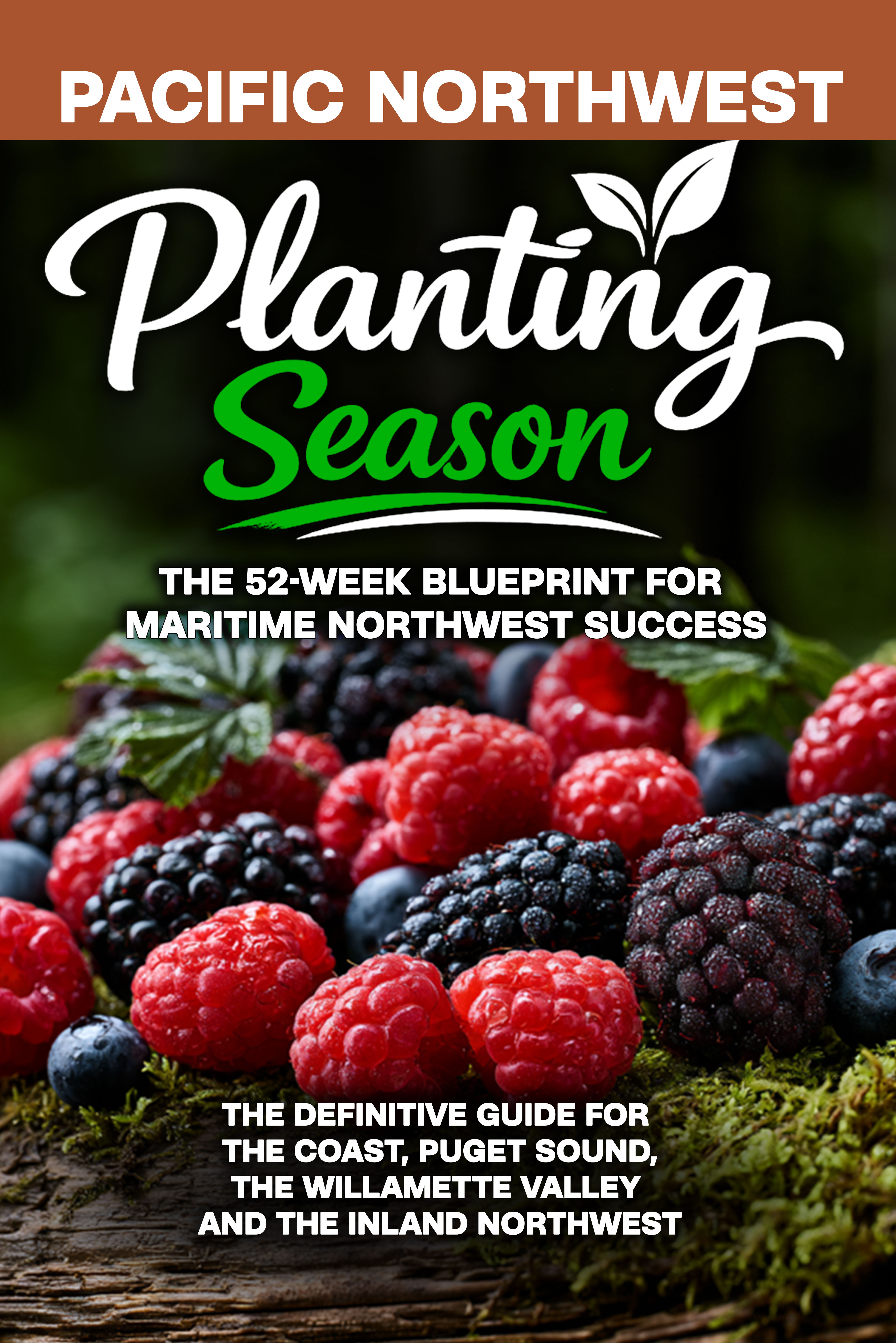
Planting Season Pacific Northwest fixes that. It calibrates to the region, gives the local shifts throughout, and works with your ground and your weather instead of against them.
What You Get Inside
The Full Chapter List
Seventeen main chapters plus a nine-part plant library. Every chapter is written for the Pacific Northwest. Every chapter assumes you want to eat what you grow.
The Plant Library (parts 1 through 9)
- Part 1: Leafy greens and brassicas, with the cool-season windows that suit Pacific Northwest
- Part 2: Fruiting vegetables, with berries, brassicas and cool-season crops and the timing that works here
- Part 3: Root vegetables, with soil and season notes for the region
- Part 4: Heat-lovers and warm-season survivors
- Part 5: Legumes, beans and peas through the local seasons
- Part 6: Herbs, the ones that thrive and the ones to baby
- Part 7: Fruit trees, vines and perennials suited to Pacific Northwest
- Part 8: Regional and native edibles worth a place in the garden
- Part 9: Companion plants and flowers
Each plant entry includes Pacific Northwest sowing windows by season, spacing, sun, water needs, companions, common pests, common diseases, a kitchen-use note, and a realiztic local tip.
A Sample from the Book
Draw a line down the Cascades and you draw the Northwest's two gardens. To the west it is cool, gray and forgiving, a season so long you can grow greens most of the year and so mild that a hot day is news. To the east the rain shadow turns everything dry and continental.
The west-side gardener grows berries and brassicas the rest of the country envies, and then spends August willing a tomato to turn red. Knowing which side of the mountains you are on is the first page of the book.
Who It's For
You just moved in, the yard is bare, and you want food growing next season. The book walks you through your first year, step by step.
You followed generic advice and lost crops to the wrong timing. This book tells you why, and gives you the calendar built for the Pacific Northwest.
You gardened somewhere else and moved. the Pacific Northwest keeps a different schedule. The book recalibrates your timing to local reality.
You rent, or you are short on space. The small-spaces chapter is built for patios, balconies and raised beds.
You want real food, lower grocery bills, and a yard that feeds the household year-round. The book is the 12-month plan for that.
You know your way around a garden. The plant library and the the Pacific Northwest-tuned calendar are the reference you keep on the bench.
Pair the book with the free Planting Season app
The book is the full reference; the free app is the day-to-day. the Pacific Northwest is covered month by month, with reminders tuned to your region and a mobile plant library you can search from the garden.
Open the Planting Season app →Why This Book, Not Another
Planting Season Pacific Northwest is written for the Pacific Northwest and nothing else. If a paragraph could apply unchanged to another part of the country, it does not belong in this book. The voice is plain and direct, the neighbor over the fence, not a textbook.
It is built to last: a genuine reference you come back to every season for years, paired with the free app for the day-to-day.
Frequently Asked Questions
Does it cover both sides of the Cascades?
Yes. The maritime west and the dry continental east are different climates, and the book gives each its own timing while focusing on the challenges of the wet west side.
How do I ripen tomatoes here?
The book covers it directly: warm microclimates, cloches and wall-of-water, early quick-maturing varieties, and the timing that beats the return of the fall rains.
What about slugs?
Slugs are the signature Northwest pest, and the book has a full organic strategy for them, along with spotted wing drosophila on berries and the region's fungal diseases.
Does it work with the Planting Season app?
Yes. The app covers the Pacific Northwest month by month for free, and the book is the deep reference to go with it.
Grow food every month of the year in the Pacific Northwest.
Planting Season Pacific Northwest is coming soon to Amazon in paperback and Kindle. Be first to know.
Every book includes 3 months of Pro free.
Gardening in another region? Browse the whole series →