Why Texas Needs Its Own Book
A calendar built for a single mild summer will fail you in Texas. Here the summer is the enemy: many crops stop setting fruit in the triple-digit heat, so you plant in early spring to beat it and again in late summer for a fall harvest. The state also throws hard curveballs, like the deep February freezes that catch gardeners off guard.
The ground shifts as much as the sky. The Blackland Prairie runs to heavy alkaline clay, East Texas is sandy and acidic, and the west is thin caliche. Water is the constant worry across most of the state. The book meets Texas where it actually is, not where a national gardening book pretends it is.
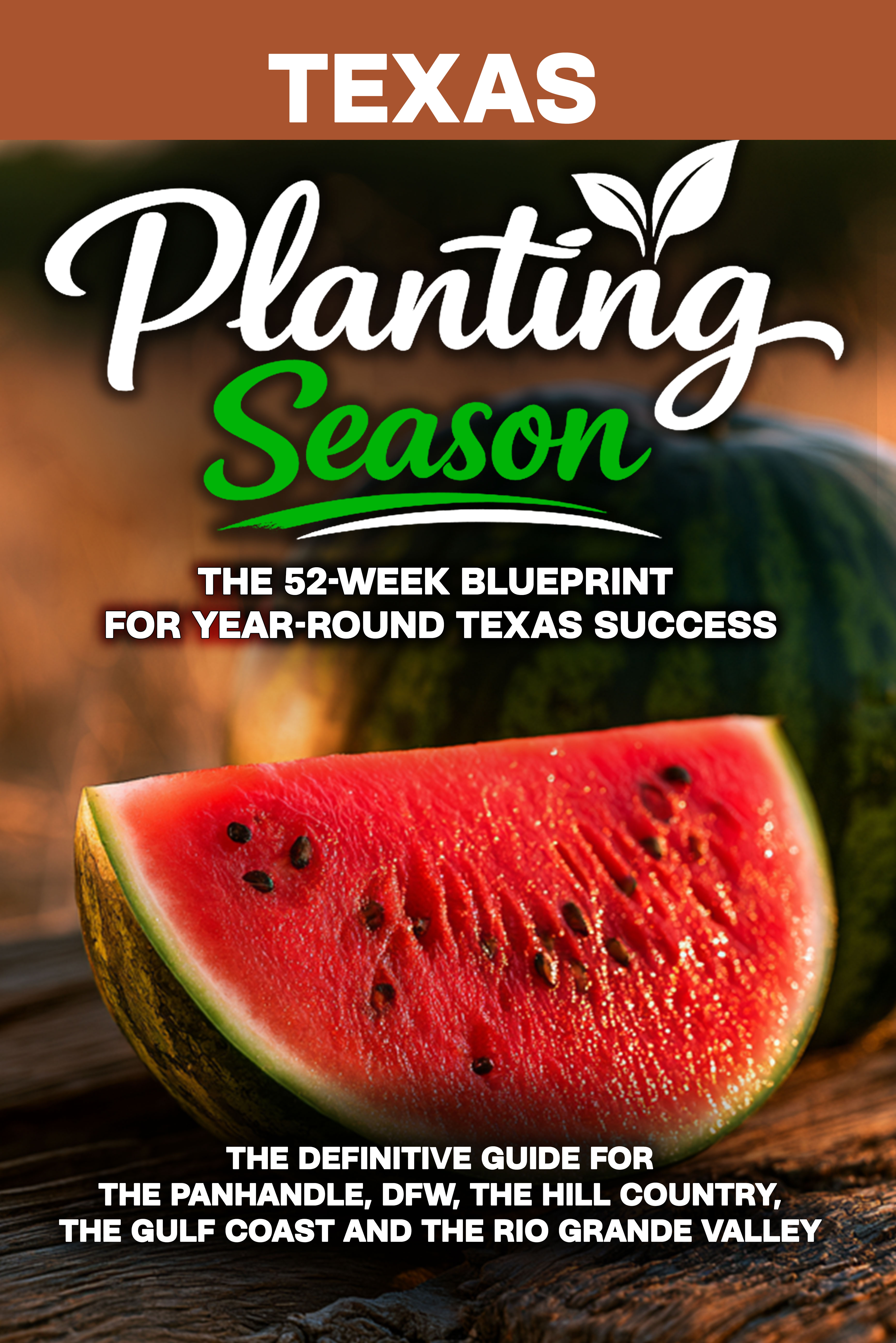
Planting Season Texas fixes that. It calibrates to the region, gives the local shifts throughout, and works with your ground and your weather instead of against them.
What You Get Inside
The Full Chapter List
Seventeen main chapters plus a nine-part plant library. Every chapter is written for Texas. Every chapter assumes you want to eat what you grow.
The Plant Library (parts 1 through 9)
- Part 1: Leafy greens and brassicas, with the cool-season windows that suit Texas
- Part 2: Fruiting vegetables, with spring and fall tomatoes, okra and southern peas and the timing that works here
- Part 3: Root vegetables, with soil and season notes for the region
- Part 4: Heat-lovers and warm-season survivors
- Part 5: Legumes, beans and peas through the local seasons
- Part 6: Herbs, the ones that thrive and the ones to baby
- Part 7: Fruit trees, vines and perennials suited to Texas
- Part 8: Regional and native edibles worth a place in the garden
- Part 9: Companion plants and flowers
Each plant entry includes Texas sowing windows by season, spacing, sun, water needs, companions, common pests, common diseases, a kitchen-use note, and a realiztic local tip.
A Sample from the Book
Ask what climate Texas has and the honest answer is all of them. A gardener in Amarillo and a gardener in Brownsville share a state and almost nothing else. The Panhandle keeps a northern schedule; the Valley keeps an almost tropical one.
What unites Texas gardeners is the summer. When the heat settles in, tomatoes stop setting and the garden idles. So we plant twice, once in spring to race the heat and once at the end of summer for a long, generous fall.
Who It's For
You just moved in, the yard is bare, and you want food growing next season. The book walks you through your first year, step by step.
You followed generic advice and lost crops to the wrong timing. This book tells you why, and gives you the calendar built for Texas.
You gardened somewhere else and moved. Texas keeps a different schedule. The book recalibrates your timing to local reality.
You rent, or you are short on space. The small-spaces chapter is built for patios, balconies and raised beds.
You want real food, lower grocery bills, and a yard that feeds the household year-round. The book is the 12-month plan for that.
You know your way around a garden. The plant library and the Texas-tuned calendar are the reference you keep on the bench.
Pair the book with the free Planting Season app
The book is the full reference; the free app is the day-to-day. Texas is covered month by month, with reminders tuned to your region and a mobile plant library you can search from the garden.
Open the Planting Season app →Why This Book, Not Another
Planting Season Texas is written for Texas and nothing else. If a paragraph could apply unchanged to another part of the country, it does not belong in this book. The voice is plain and direct, the neighbor over the fence, not a textbook.
It is built to last: a genuine reference you come back to every season for years, paired with the free app for the day-to-day.
Frequently Asked Questions
Does the book work for both North and South Texas?
Yes. Texas covers several climate zones, and the calendar and plant entries flag the differences between the Panhandle, Central Texas, East Texas, and the South and coast.
Why does it plant twice a year?
Because Texas summers are too hot for most vegetables to produce. The book builds a spring garden to harvest before the worst heat and a fall garden planted in late summer, which is often the better of the two.
Will it help with our clay soil?
Yes. The soil chapter covers the heavy alkaline Blackland clay, sandy East Texas, and thin western caliche, with the practical fixes for each.
Does it work with the Planting Season app?
Yes. The app covers Texas month by month for free. The book is the deep reference; the app is the day-to-day companion.
Grow food every month of the year in Texas.
Planting Season Texas is out now on Amazon, in hardcover, paperback and Kindle ebook.
Every book includes 3 months of Pro free.
Gardening in another region? Browse the whole series →