
Companion Planting Guide
Updated June 2026
Some plants genuinely help their neighbors, by drawing in beneficial insects, deterring pests, or making better use of space. Here is what works.
See our full companion planting guide with an interactive picker.
Companion planting is the practice of growing plants together that benefit one another. The reliable benefits are real: attracting pollinators and pest predators, repelling or confusing pests, providing shade or support, and using space efficiently. Treat the folklore with a grain of salt and lean on what is well supported.
Classic pairings that work
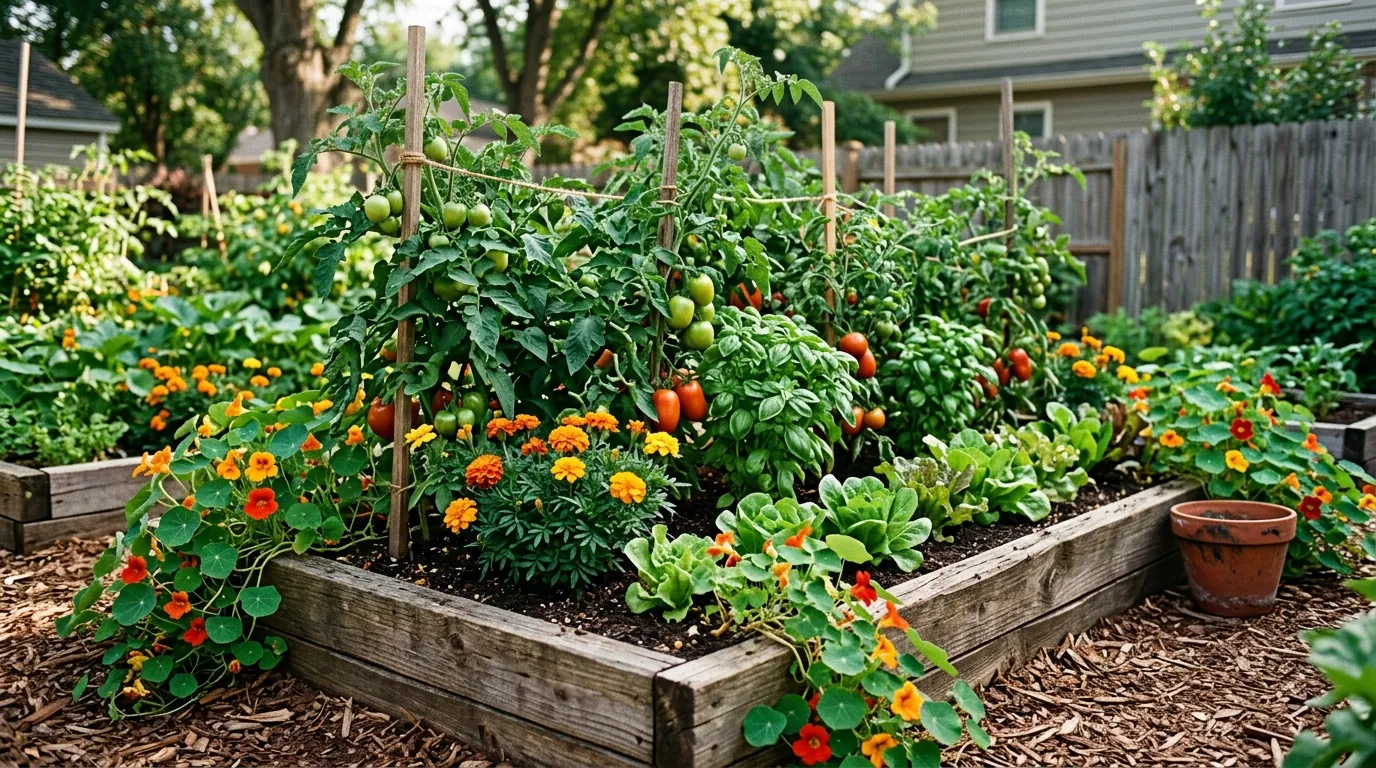
- Tomatoes + basil + marigold — basil and marigold help mask the crop and draw beneficials.
- The Three Sisters (corn + beans + squash) — corn supports beans, beans fix nitrogen, squash shades the soil.
- Carrots + onions/leeks — the alliums help confuse carrot pests.
- Any vegetable + flowering insectary plants (alyssum, cosmos, dill, zinnia) — these feed the predatory insects that eat aphids and caterpillars.
Combinations to avoid
- Beans near onions, garlic or fennel — alliums can stunt legumes; fennel inhibits many plants.
- Brassicas crowded with strawberries or tomatoes — competition and shared pests.
- Potatoes near tomatoes — both share blight and pests, so rotate them apart.
The biggest win: flowers and herbs
The most evidence-backed companion strategy is simply weaving flowering plants and herbs through the vegetable beds. They feed the hoverflies, lacewings, parasitic wasps and lady beetles that control pests for you. Every plant page on this site lists good companions and ones to avoid.
Source: UF/IFAS Gardening Solutions and general integrated pest management guidance.
See what to plant this month
Pick your region for a month-by-month calendar tuned to your climate.
Find your region →