
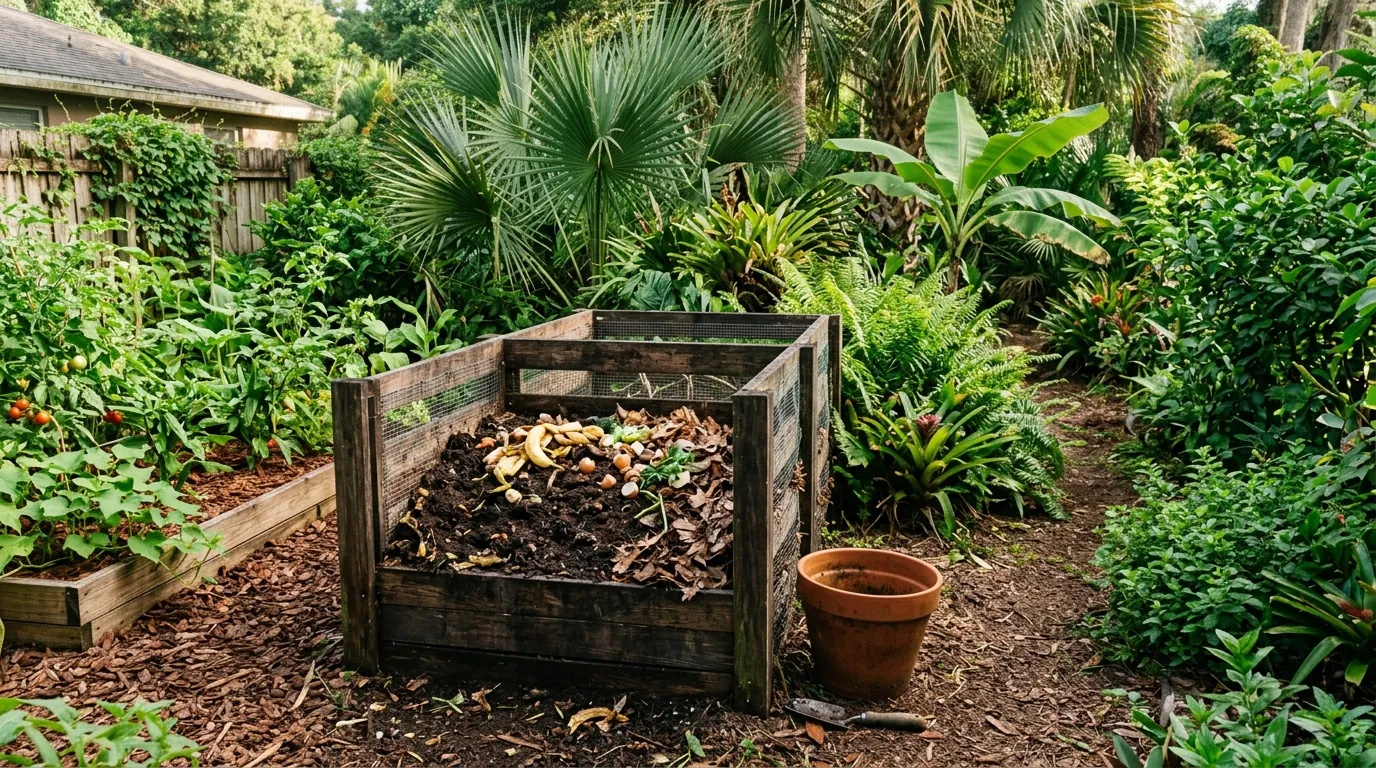
Composting in Florida
Updated June 2026
Florida's heat is a composter's friend: piles break down fast year-round. And compost is the single best thing you can do for sandy Florida soil.
Most Florida soil is sand that drains in seconds and holds almost no nutrients. Compost is the fix. It adds the organic matter that holds water and food, feeds soil life, and even helps suppress root-knot nematodes. The good news: Florida's warmth means compost happens fast.
Why it matters here
- Sandy soil keeps neither water nor nutrients; compost gives it both.
- Organic matter feeds the microbes and fungi that out-compete nematodes and disease.
- Mixed into beds, compost is the foundation every Florida vegetable garden needs before planting.
Hot composting (fast)
In Florida's warmth a balanced, turned pile can finish in 6-10 weeks. Build it about half "greens" (nitrogen: kitchen scraps, fresh grass, manure) and half "browns" (carbon: dry leaves, cardboard, straw). Keep it as damp as a wrung-out sponge, turn it weekly, and it will heat right up.
Cold composting (easy)
No turning, just pile it and wait. It takes longer but works fine; in Florida even a lazy pile breaks down within a season or two.
Worms and tumblers
A worm bin (vermicompost) is excellent in Florida shade and produces rich castings; keep it out of the sun so it doesn't cook. Tumblers keep things tidy and speed up turning in small yards.
What to add and avoid
Add: vegetable scraps, coffee grounds, eggshells, dry leaves, grass clippings, shredded cardboard, plant trimmings. Avoid: meat, dairy and oily food (pests), diseased plants, weeds gone to seed, and pet waste.
Source: UF/IFAS Gardening Solutions, Composting; UF/IFAS Florida-Friendly Landscaping.
See what to plant this month
Pick your Florida region for a month-by-month calendar tuned to your climate.
Find your region →