
How to Grow Donut Peaches
Updated June 2026
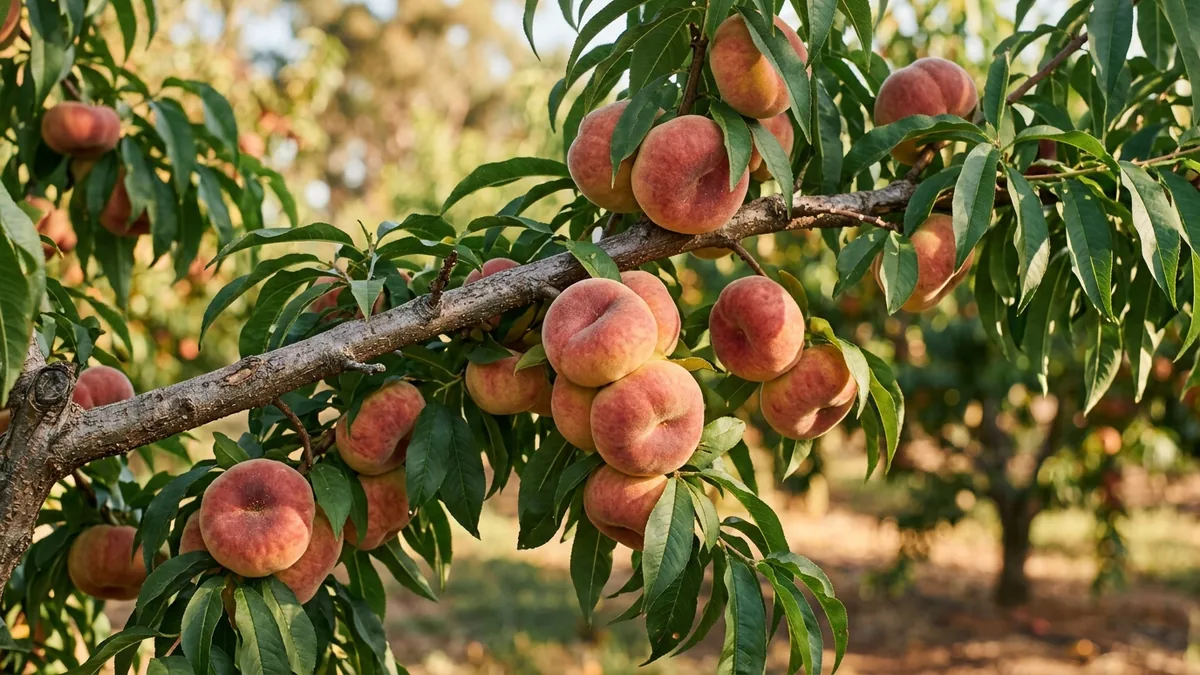
Flat, honey-sweet Saturn peaches for the home garden, with the chill hours and varieties that decide whether they will fruit where you live
Donut peaches, also called flat or Saturn peaches, are a squashed, ring-shaped peach (Prunus persica var. platycarpa) with sweet, low-acid white flesh and a mild, honey-like flavor. They grow on an ordinary deciduous peach tree and are pruned and cared for just like round peaches. Most are self-fertile, so a single tree fruits on its own.
The one thing that decides your success is winter chill. Peaches need a set number of cold hours each winter to flower and fruit, and donut types come in standard and low-chill versions. Match the variety to your USDA zone using the tool below and you will get fruit. Get it wrong and a healthy-looking tree will simply refuse to crop.
Will donut peaches fruit where you are?
Chill hours are the make-or-break factor. Pick your USDA zone band to see whether your winter delivers enough chill, which varieties to choose, and the frost risks to plan around.
Chill hours, the rule that decides everything
Chill hours are the hours a tree spends between about 32 and 45 degrees Fahrenheit over winter. Peaches use this cold to break dormancy and flower properly in spring. Plant a high-chill variety where winters are mild and it will leaf out late and patchy and set almost no fruit. Plant a low-chill variety where winters are very cold and it can flower too early and lose the blossom to frost.
- Standard donut peaches such as Saturn need roughly 400 to 600 chill hours. They suit zones 5 to 8.
- Low-chill donut peaches such as UFO and TangOs need only about 200 to 300 chill hours. They are the choice for the warm South, the Gulf Coast, the low desert and coastal California (zones 9 to 10).
Climate and position by USDA zone
Donut peaches want full sun, at least six to eight hours a day, and well-drained soil. The dormant tree wood is hardy to around zone 5, but the spring blossom is always frost-tender, so a hard late frost after bloom can wipe out a crop in any zone.
- Zones 5 to 7: excellent. Plenty of winter chill for standard Saturn donut types, which thrive here. Watch for late spring frosts on open blossom.
- Zone 8: good. Most donut peaches fruit well, and you have a wide choice of standard and mid-chill varieties.
- Zone 9 (Deep South, Gulf, low desert, coastal California): use low-chill cultivars only, such as UFO or TangOs. A standard Saturn will not get enough chill and will barely fruit.
- Zones 10 to 11: generally too warm. Only the very lowest-chill flat peach in the coolest part of the garden has a chance, and you should expect poor, unreliable set.
- Below zone 5: winter cold can damage or kill flower buds and wood, so growing is risky without a very sheltered site.
Planting
Plant bare-root donut peach trees in late winter to early spring while the tree is dormant, which is also when nurseries sell them and when they establish best. Container-grown trees can go in through spring and fall. Choose the sunniest, most open spot you have, with free-draining soil. Peaches hate wet feet.
Dig a hole as deep as the roots and twice as wide, set the tree at the same depth it grew at the nursery with the graft union above the soil line, backfill, firm gently and water in well. Space standard trees about 12 to 15 feet apart, or closer for dwarf and patio types. A 2 to 3 inch mulch ring, kept off the trunk, helps hold moisture and suppress weeds.
Watering and feeding
Water young trees deeply and regularly through their first two summers to get them established. Mature trees need a deep soak during dry spells and especially while the fruit is swelling, as drought at that stage gives small, dry peaches. Avoid frequent shallow watering, which encourages weak surface roots.
Feed in late winter or early spring with a balanced fruit-tree fertilizer, and again lightly after harvest. Do not overfeed with nitrogen, which pushes soft leafy growth at the expense of fruit and invites disease. A mulch of compost each spring keeps the soil in good heart.
Pruning, training and thinning
Peaches fruit on year-old wood, so annual pruning to encourage fresh growth is essential. Train donut peaches to an open-vase shape with three to five main branches radiating from a short trunk, leaving the center open to light and air. This keeps the tree low for easy picking and spraying and ripens fruit evenly.
Prune in late winter while dormant, or in summer in very wet regions to limit disease entry. Remove dead, crossing and inward-growing wood, and shorten the previous year's growth to keep the tree compact and productive.
Thinning is not optional. Peach trees set far more fruit than they can ripen. When the young fruit is about marble-sized, a few weeks after blossom drop, thin it so each peach is about 6 to 8 inches apart. This gives larger, sweeter fruit, stops branches snapping under the load, and reduces the boom-and-bust cropping that comes from leaving every fruit on.
Harvest and storage
Donut peaches ripen from early to midsummer depending on the variety and your climate. They are ready when the background skin color shifts from green to creamy or golden, the fruit smells fragrant, and it gives slightly to gentle pressure and pulls free with a light twist. Because they are flat and thin, donut peaches bruise easily, so pick gently.
They are best eaten within a few days. Keep them at room temperature to finish ripening, then refrigerate for up to a week. A glut freezes well sliced, or turns into jam, and the flat shape makes them lovely for drying.
Pests and problems
- Peach leaf curl: a fungus that puckers and reddens spring leaves. Spray a copper fungicide at leaf drop in fall and again at bud swell in late winter, before buds open. Spraying after leaves emerge is too late.
- Peach tree borers: larvae that tunnel into the trunk near the soil line, shown by gummy ooze. Keep the trunk base clear, inspect in late summer, and control as recommended for your area.
- Brown rot: rots blossom and fruit in warm, wet weather. Improve airflow with open-vase pruning, remove mummified fruit, and use a labeled fungicide if it is a recurring problem.
- Aphids and scale: treat outbreaks with horticultural oil and encourage natural predators.
- Late frost on blossom: cover small or potted trees with frost cloth on cold spring nights to protect open flowers.
Donut peach varieties
| Variety | Type / flesh | Chill hours | Best zones |
|---|---|---|---|
| Saturn | Classic donut, sweet white flesh | About 400 to 500 | 5 to 8 |
| Galaxy | Donut, white flesh, firm | About 400 to 500 | 5 to 8 |
| TangOs / TangOs II | Low-chill flat peach | About 200 to 300 | 8 to 9 (warm South, coastal CA) |
| UFO | Low-chill flat peach bred in Florida | About 200 to 300 | 8 to 9 (Deep South, Gulf) |
| Dwarf / patio peach | Compact tree for containers | Varies by cultivar | Match cultivar chill to your zone |
Most donut peaches are self-fertile, so one tree will fruit alone. For a small garden or balcony, a dwarf or patio peach in a large pot lets you grow your own and move it to shelter if a late frost threatens.
When to plant in your region
Donut peaches are deciduous, so the main planting window is the dormant season. Bare-root trees go in from late winter to early spring, which is when they are sold and when they take off best.
- Zones 5 to 7: plant bare-root in early spring as the ground becomes workable, before bud break.
- Zone 8: plant bare-root in late winter to early spring. Fall planting of container trees also works in mild areas.
- Zones 9 to 10: plant low-chill cultivars in winter while dormant, taking advantage of the cooler, wetter season to establish before summer heat.
Know your chill hours before you buy a tree
The Planting Season app tracks Fruit Tree Varieties and chill-hours by zone, so you can pick a donut peach that will actually fruit where you garden. Log bloom, thinning and harvest, set frost-protection reminders, and build a fruit garden that crops reliably.
Open the App →Common questions
What are donut peaches?
Donut peaches, also called flat or Saturn peaches, are a type of peach (Prunus persica var. platycarpa) with a squashed, doughnut-like shape and a sunken center. The flesh is usually white, sweet and low in acid, with a mild, honey-like flavor. They grow on the same kind of deciduous stone-fruit tree as round peaches and are cared for in the same way.
How many chill hours do donut peaches need?
Standard donut peaches such as Saturn need about 400 to 600 chill hours, which are hours between 32 and 45 degrees Fahrenheit over winter. Low-chill donut cultivars bred for warm climates, such as UFO and TangOs, need only about 200 to 300 chill hours, which makes them the right choice for the Deep South, the Gulf Coast, low-desert areas and coastal California. Without enough chill, a tree leafs out poorly and sets little or no fruit.
Which USDA zones suit donut peaches?
Zones 5 to 8 are the sweet spot, with plenty of winter chill so standard Saturn types thrive. In zones 9 and 10 you must plant a low-chill cultivar such as UFO or TangOs or the tree will not fruit. Below zone 5 the winter cold can damage or kill the flower buds and wood, so growing is risky. The dormant tree wood is hardy to around zone 5, but the spring blossom is always frost-tender.
Do donut peaches need another tree to pollinate?
Most donut peaches are self-fertile, so a single tree will set fruit on its own. You do not need a second variety for pollination, although bee activity in spring still helps. This makes them a good choice for a small garden where there is only room for one fruit tree.
Can you grow donut peaches in the Deep South or Florida?
Yes, but only with low-chill cultivars. UFO is a flat peach bred in Florida for warm climates and needs only about 200 to 300 chill hours, and TangOs is another good low-chill flat peach. A standard Saturn peach planted in Florida or the Gulf Coast will struggle because it never gets enough winter chill to break dormancy properly. Always match the cultivar's chill rating to your area.
How do you stop peach leaf curl?
Peach leaf curl is a fungal disease that puckers and reddens new leaves in spring. The key is timing. Apply a copper-based fungicide once in late fall after leaf drop and again at bud swell in late winter, before the buds open. Spraying after the leaves have emerged is too late for that season. Choosing an open, airy site and cleaning up fallen leaves also reduces the disease.
Why should you thin donut peaches?
Peach trees set far more fruit than they can ripen well. Thinning the young fruit so each one is about 6 to 8 inches apart gives larger, sweeter peaches, stops branches breaking under the weight, and helps the tree fruit more evenly from year to year. Thin when the fruit is about the size of a marble, usually a few weeks after blossom drop.
Can you grow donut peaches in a pot?
Yes. Dwarf and patio peach varieties grow well in a large container of at least 15 to 20 gallons with free-draining mix, and they can be moved to a sheltered spot if a late frost threatens the blossom. A potted tree still needs the right chill for your area and full sun, and it will need regular watering and feeding through the growing season.
Source: university Cooperative Extension stone-fruit and home orchard guidance, including chill-hour and low-chill peach cultivar information from Florida, Texas and California Extension programs.
Related guides
See also: How to Grow Peaches and Low-Chill Fruit for Warm Climates
See also: Peach in the Plant Library