
How to Grow Nashi (Asian Pear)
Updated June 2026
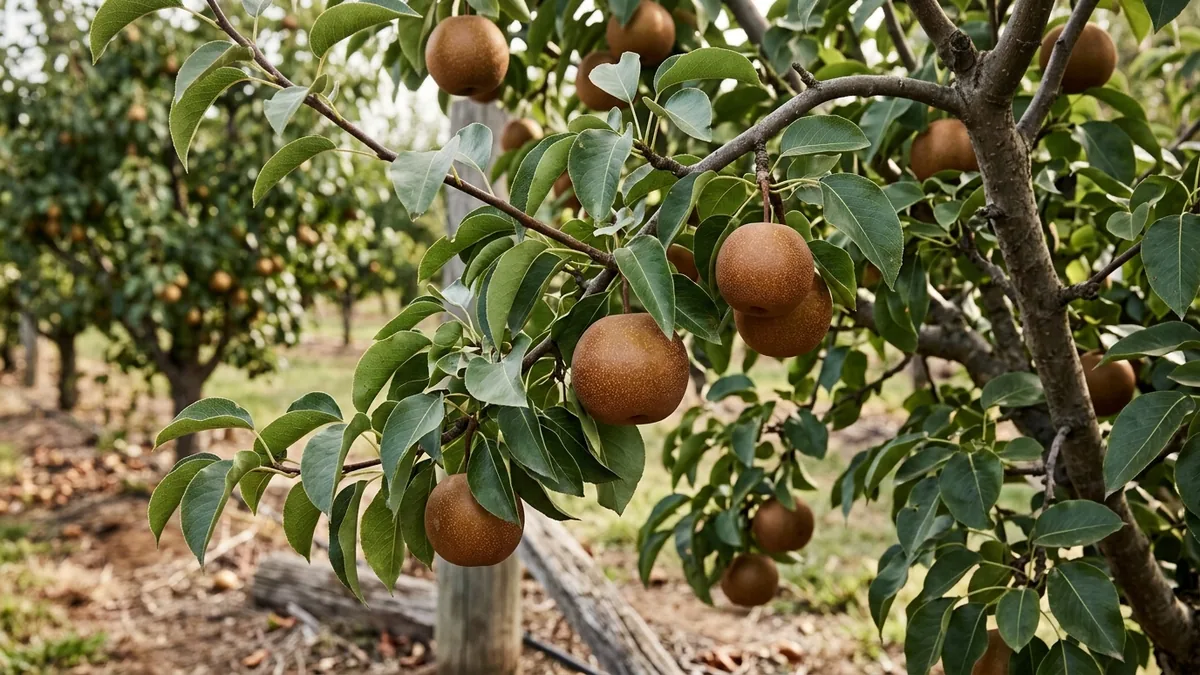
Crisp, juicy Asian pears for temperate gardens, with the chill hours, pollinator pairings and zones that decide whether they will fruit for you
Nashi is the Japanese name for the Asian pear (Pyrus pyrifolia), a round, apple-shaped pear with crisp, sweet, dripping-juicy flesh. Unlike European pears, you eat nashi firm and crunchy straight off the tree. It grows on a deciduous, temperate tree that needs winter chill to fruit, and it crops generously once established.
Two things make or break a nashi: enough winter chill for your zone, and a compatible pollinator variety nearby, because most nashi cannot set a good crop on their own. Use the zone tool below to check your chill, then choose a pollinator pairing from the varieties table.
Will nashi fruit where you are?
Nashi needs winter chill and a partner to pollinate. Pick your USDA zone band to see whether your winter delivers enough chill, which cultivars suit, and the pollinator pairing to plant alongside.
Plant a pollinator, this is the key to a crop
Most nashi varieties are partly or fully self-sterile, so a lone tree often flowers beautifully and then sets almost nothing. The fix is simple: plant two different Asian pear varieties that flower at the same time so bees can carry pollen between them. Even the more self-fertile types, such as Shinseiki, crop far more heavily with a partner.
- Hosui, Nijisseiki and Shinseiki cross-pollinate one another well and make a reliable pairing or trio.
- A European pear such as Bartlett that blooms at the same time can also pollinate nashi, so a mixed pear garden works.
- If you only have room for one tree, choose the more self-fertile Shinseiki or Nijisseiki, but expect a lighter crop than you would get with a partner.
Chill hours and climate by USDA zone
Nashi needs winter chill, the hours between about 32 and 45 degrees Fahrenheit, to break dormancy and flower well. Most cultivars need around 400 to 600 chill hours. The wood is hardy roughly across zones 5 to 9, but the spring blossom is frost-tender, so a late frost after bloom can cut a crop in any zone.
- Zones 5 to 7: ideal. Reliable chill and a good growing season. Plant two varieties in full sun and watch only for late spring frost on open flowers.
- Zone 8: good, with enough chill for most cultivars. A pollinator partner is still essential.
- Zone 9: marginal. Only the lowest-chill cultivars such as Shinseiki have a chance, and results are unreliable.
- Zones 10 to 11: unsuitable. There is not enough winter chill for nashi to flower properly.
- Below zone 5: risky, as severe cold can damage flower buds and wood.
Planting
Plant bare-root nashi trees in late winter to early spring while dormant, which is when they are sold and when they establish best. Container trees can go in through spring and fall. Pick a full-sun site, six hours or more a day, with deep, well-drained soil. Nashi dislikes waterlogged ground.
Set the tree at the depth it grew at the nursery with the graft union above the soil, backfill, firm and water in. Space trees about 12 to 15 feet apart, or closer on dwarfing rootstock, and make sure your two varieties are near enough for bees to move between them, ideally within 50 feet. Mulch the root zone, keeping the mulch off the trunk.
Watering and feeding
Water young trees regularly through their first couple of summers. Mature trees need a deep soak in dry spells, especially while fruit is swelling, to size the pears and keep the flesh juicy. Feed in late winter or early spring with a balanced fruit-tree fertilizer. Go easy on nitrogen, as soft, lush growth is more prone to fire blight and produces leaves at the expense of fruit.
Pruning, training and thinning
Nashi is naturally upright and vigorous, and it is usually trained to a central leader, a single main upright stem with tiers of side branches arranged around it. Tie young branches down toward horizontal to slow them and encourage the short fruiting spurs where nashi bears. Prune in winter to build and maintain the framework, and again in summer to control vigor and open the canopy to light.
Thin heavily. Nashi over-set, carrying many more fruit than the tree can size or hold. Once the fruit has set, thin to roughly one fruit per cluster and about 6 inches apart along the branch. Hard thinning gives bigger, sweeter pears, stops limbs breaking, and keeps the tree cropping evenly year to year instead of swinging between a glut and a bare season. Many growers bag individual fruit to protect them from pests and marking.
Harvest and storage
Here is the big difference from European pears: nashi is picked ripe and eaten crisp, never softened off the tree. Fruit is ready when its background color has fully developed, green-yellow types turn yellow and russet types deepen to brown, it smells fragrant, and it lifts and twists easily off the spur. Taste-test as they color up, since different varieties ripen across late summer into fall.
Handle gently, as nashi bruises. Stored cool in the fridge, ripe nashi keeps crisp for several weeks and often a couple of months, which is one of its great virtues.
Pests and problems
- Fire blight: Asian pears can be susceptible to this bacterial disease, which blackens shoots, blossom and leaves so they look scorched. Cut out affected wood well below the damage, sterilizing your tools between cuts, avoid heavy nitrogen, and choose an airy, well-drained site. Follow local Extension advice on bloom sprays in high-pressure areas.
- Codling moth: larvae tunnel into the fruit. Bagging fruit, pheromone traps and good orchard hygiene all help.
- Pear psylla and aphids: sap-suckers that weaken growth and foul fruit with sticky honeydew. Encourage predators and use horticultural oil for outbreaks.
- Codling and stink bug marking: bagging individual fruit protects appearance and quality.
- Late frost on blossom: protect small trees with frost cloth on cold spring nights to save the flowers.
Nashi varieties and pollinator pairings
| Variety | Type / fruit | Chill / pollination | Best zones |
|---|---|---|---|
| Nijisseiki (20th Century) | Crisp, green-yellow, classic | About 400 to 500 hrs. Partly self-fertile, much better with a pollinator | 5 to 8 |
| Hosui | Russet skin, sweet, excellent flavor | About 400 to 500 hrs. Needs a pollinator | 5 to 8 |
| Shinseiki | Yellow, juicy, reliable | Somewhat lower chill. More self-fertile, still cropping better with a partner | 5 to 9 (best self-fertile choice) |
| Kosui | Small, very sweet | About 400 to 500 hrs. Needs a pollinator | 5 to 8 |
| Chojuro | Russet, firm, rich flavor | About 400 to 500 hrs. Needs a pollinator | 5 to 8 |
Good pairings: Hosui, Nijisseiki and Shinseiki cross-pollinate well together, so any two of them make a reliable combination. A same-flowering European pear such as Bartlett can also do the job. For a single-tree garden, Shinseiki is the most forgiving choice.
When to plant in your region
Nashi is deciduous, so the main planting window is the dormant season. Bare-root trees go in from late winter to early spring, which is when they are sold and when they take best.
- Zones 5 to 7: plant bare-root in early spring as the soil becomes workable, before bud break.
- Zone 8: plant bare-root in late winter to early spring. Container trees also establish in fall in milder areas.
- Zone 9: plant the lowest-chill cultivars in winter while dormant, and accept that cropping may be light or unreliable.
Get the pollinator pairing and chill right the first time
The Planting Season app tracks Fruit Tree Varieties, chill-hours by zone, and which trees pollinate each other, so your nashi actually sets fruit. Log bloom, thinning and harvest, set frost-protection reminders, and build a fruit garden that crops every year.
Open the App →Common questions
What is a nashi pear?
Nashi is the Japanese name for the Asian pear (Pyrus pyrifolia), a round, apple-shaped pear with crisp, juicy, sweet flesh. Unlike European pears, nashi is eaten firm and crunchy straight from the tree and does not need to soften off the tree. It grows on a deciduous tree that needs winter chill to fruit, much like apples and European pears.
Do nashi pears need a pollinator?
Most nashi varieties need a compatible second variety nearby to set a good crop, because they are partly or fully self-sterile. Plant two different Asian pear varieties that flower at the same time, such as Hosui, Nijisseiki and Shinseiki, which cross-pollinate well. A European pear like Bartlett that blooms at the same time can also pollinate nashi. Even the more self-fertile varieties such as Shinseiki crop more heavily with a partner.
How many chill hours do nashi pears need?
Most nashi cultivars need about 400 to 600 chill hours, the hours between 32 and 45 degrees Fahrenheit over winter, to break dormancy and flower well. This puts them firmly in temperate territory. A few cultivars such as Shinseiki sit at the lower end and tolerate slightly milder winters, but no nashi suits a frost-free tropical climate.
Which USDA zones suit nashi pears?
Zones 5 to 8 are ideal, with the right balance of winter chill and a long enough season. Wood is hardy roughly across zones 5 to 9, but the spring blossom is frost-tender. In zone 9 only the lowest-chill cultivars will fruit and results are marginal. Zone 10 is generally unsuitable because there is not enough winter chill, and below zone 5 the cold becomes risky for buds and wood.
Why do you have to thin nashi pears?
Nashi naturally over-set, carrying far more fruit than the tree can size up or support. Thin hard, leaving roughly one fruit per cluster and spacing fruit about 6 inches apart along the branch. Heavy thinning gives larger, sweeter pears, prevents limbs breaking under the load, and keeps the tree cropping steadily each year rather than swinging between a glut and a bare year.
How do you train a nashi tree?
Nashi is usually trained to a central leader, a single main upright stem with tiers of side branches spaced around it, which suits its naturally upright, vigorous growth and spreads the fruit load. Tie down young branches toward horizontal to encourage fruiting spurs. Prune in winter to build the framework, and in summer to control vigor and let light into the canopy.
Are nashi pears prone to fire blight?
Asian pears can be susceptible to fire blight, a bacterial disease that blackens shoots, blossom and leaves so they look scorched. Cut out affected wood well below the damage, sterilizing tools between cuts, avoid heavy nitrogen feeding that pushes soft growth, and choose more resistant cultivars and a well-drained, airy site. In high-pressure areas, follow local Extension advice on bloom-time sprays.
When are nashi pears ripe?
Unlike European pears, nashi is picked ripe and eaten crisp. The fruit is ready when its background color has developed fully, green-yellow types turn yellow and russet types deepen to brown, it smells fragrant, and it parts easily from the spur with a gentle lift and twist. Taste-test as they color up. Ripe nashi stores well in the fridge for several weeks to a couple of months.
How long until a nashi tree fruits?
A nashi tree on a typical rootstock usually begins bearing in its third to fifth year after planting, and reaches full production a few years after that. Good early training, a compatible pollinator nearby, and regular thinning once it starts cropping all help it settle into reliable annual fruiting.
Source: university Cooperative Extension pome-fruit and home orchard guidance, including Asian pear cultivar, pollination and fire blight information from California, Oregon and other Extension programs.
Related guides
See also: How to Grow Pears and Low-Chill Fruit for Warm Climates