
Organic Pest Management Guide
Updated June 2026
The goal is not a sterile, pest-free garden, it is a balanced one. Here is a simple, low-spray way to stay ahead of trouble.
Good pest management is mostly good gardening: the right plant in the right season, healthy soil, and a quick eye. When you do need to act, start with the gentlest tool. For identifying specific problems, see the full pest & disease guide.
1. Prevent first
- Grow each crop in its proper season (most pest pressure peaks in summer heat).
- Build healthy soil with compost; strong plants shrug off more.
- Rotate crops and choose resistant varieties.
- Space for airflow and water at the roots in the morning to limit disease.
2. Scout and identify
Walk the garden often and check leaf undersides. Catching an aphid colony or the first caterpillars early means a far gentler fix than a full infestation.
3. Invite the good bugs
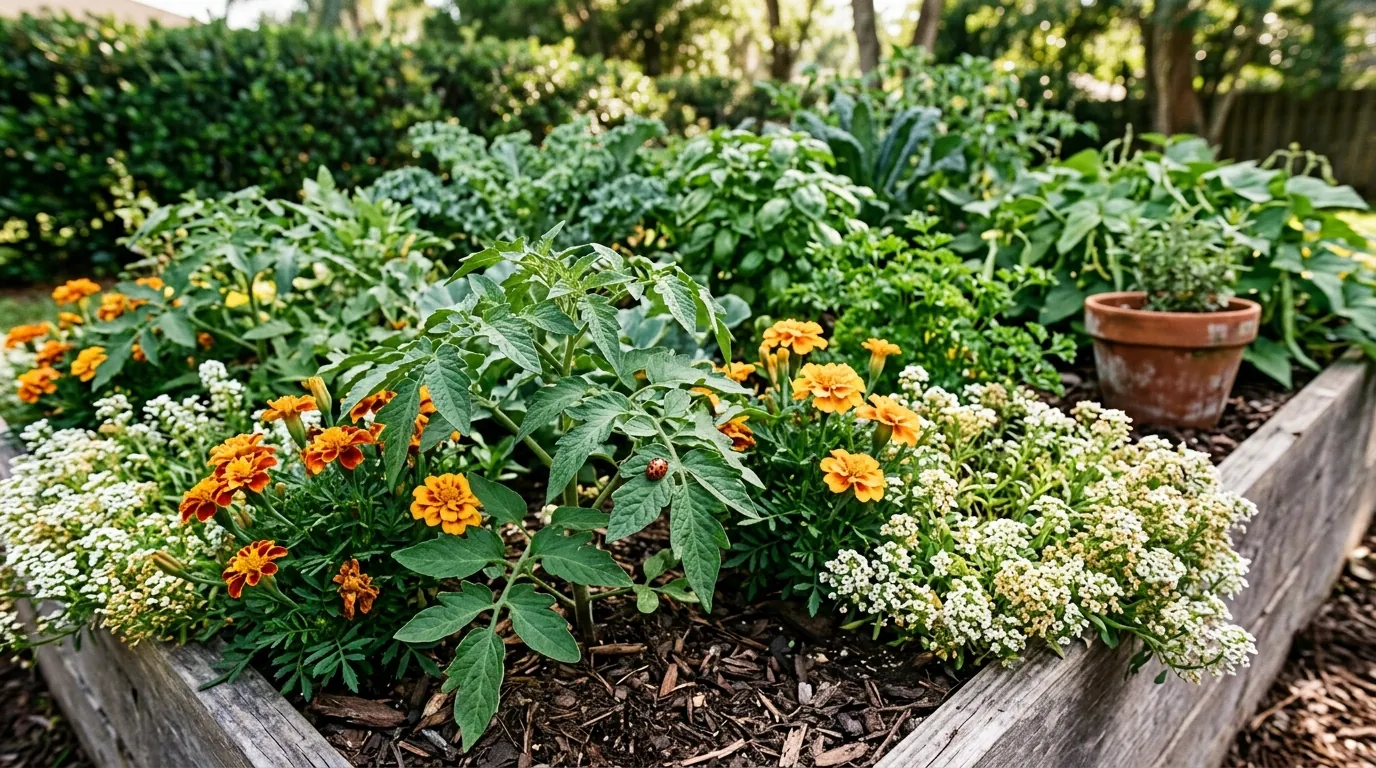
Lady beetles, lacewings, hoverflies and parasitic wasps do most of the work if you let them. Plant flowers (alyssum, cosmos, dill, yarrow) to feed them, and avoid broad-spectrum sprays that wipe them out along with the pests.
4. Escalate gently
- Physical: hand-pick, hose off, and use row cover and netting.
- Targeted organic: Bt for caterpillars (spares bees), insecticidal soap or horticultural oil for soft-bodied pests, iron-phosphate bait for slugs.
- Last resort: stronger organic products, always by label, applied in the evening to protect bees.
Source: UF/IFAS integrated pest management guidance.
See what to plant this month
Pick your region for a month-by-month calendar tuned to your climate.
Find your region →