Sunscald on Vegetables and Fruit
Updated July 2026
Sunscald is sunburn on fruit. It follows sudden exposure, so prevention is all about keeping the canopy.
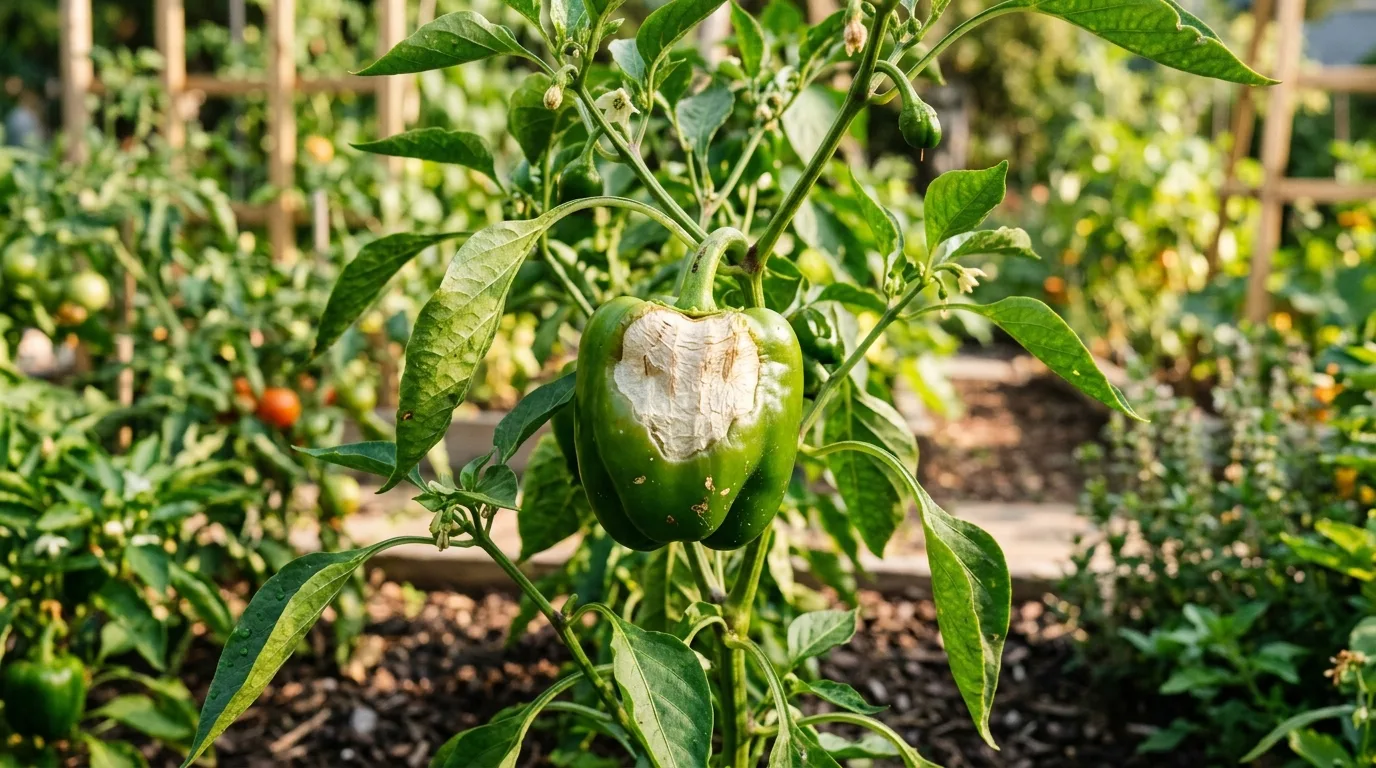
A tomato or bell pepper develops a pale, almost white patch on the side that faces the sun. The patch turns papery and sunken, and sometimes a dark mold moves in behind it. That is sunscald, and it is exactly what it looks like: sunburn on fruit that grew up expecting shade.
What sunscald looks like
The tell is the position. Sunscald always sits on the sun-facing side of the fruit, usually the north or west face. It starts as a pale, washed-out patch on green or ripening fruit, dries to a papery texture, and can collapse into a sunken scar. Black or grey mold on the patch is a secondary invader, arriving after the burn kills the tissue.
What causes it
Fruit that develops under leaf cover handles sun poorly when that cover suddenly disappears. The common ways the canopy goes missing:
- Heavy summer pruning. Stripping leaves to "let the sun ripen the fruit" is the classic own goal. Fruit ripens from warmth, and the leaves you removed were its sunscreen.
- Pest defoliation. Caterpillars, mites and beetles thinning the foliage expose fruit a little more each day.
- Disease. Leaf spots and blights that crisp the lower and mid canopy leave whole trusses in full sun.
- Sudden heatwaves. Even a decent canopy can fail in extreme, prolonged sun on trellised fruit and exposed pumpkins.
How to prevent sunscald
Prune with restraint in summer
Thin for airflow, and keep the leaves that shade fruit trusses. If a truss is exposed after pruning, it stays exposed for the rest of its life, so err on the side of cover once the weather warms.
Keep the canopy healthy
Leaf-eating pests and foliage diseases cost you leaves, and the fruit pays. Deal with caterpillars and mites early, and manage leaf spots before they march up the plant.
Shade the survivors
When a heatwave is forecast, or a plant has already lost cover, 30 to 50 percent shade cloth over the crop is instant replacement canopy. Even an old bedsheet on the western side helps through the worst afternoons.
Can you eat sunscalded fruit?
Yes, if the patch is dry and clean. Cut generously around the scald and use the rest; flavor is unaffected. Discard fruit where mold has moved into the patch or the area has gone soft and wet. Pick scalded fruit promptly, because the damaged skin is an open door for rot on the vine.
Catch problems before they cost you a crop
Track every bed in the Planting Season app, log what is going wrong, and get region-specific reminders so the same problem does not bite twice.
Open the App →Frequently Asked Questions
What does sunscald look like on tomatoes?
A pale, washed-out patch on the sun-facing side of green or ripening fruit. The patch dries papery, can sink into a scar, and sometimes grows dark mold later. Position is the giveaway; it always faces the sun.
Can you eat vegetables with sunscald?
Yes, while the patch is dry and clean. Cut around the damaged area and use the rest of the fruit as normal. Throw the fruit out if the patch has gone soft, weepy or moldy.
Should I remove leaves so the sun can ripen my tomatoes?
No. Tomatoes ripen from warmth and internal chemistry, and shade barely slows them. The leaves you strip were protecting the fruit, and removing them in summer is the most common cause of sunscald.
Why did my bell peppers get sunscald all at once?
Something removed the canopy quickly. Heavy pruning, a caterpillar outbreak or a leaf disease crisping the foliage are the usual suspects, often combined with a heatwave arriving the same week.
Does shade cloth stop sunscald?
Yes, 30 to 50 percent shade cloth is the reliable fix for exposed fruit and heatwave forecasts. Rig it above the plants so air keeps moving rather than draping it directly on the foliage.
See also: Blossom Drop in Hot Weather and Why Tomatoes Split and Crack
Get next month's planting calendar, free
One email a month with exactly what to plant in your region, plus seasonal tips and harvest reminders. No spam, and you can unsubscribe any time.