
Blossom Drop in Hot Weather
Updated July 2026
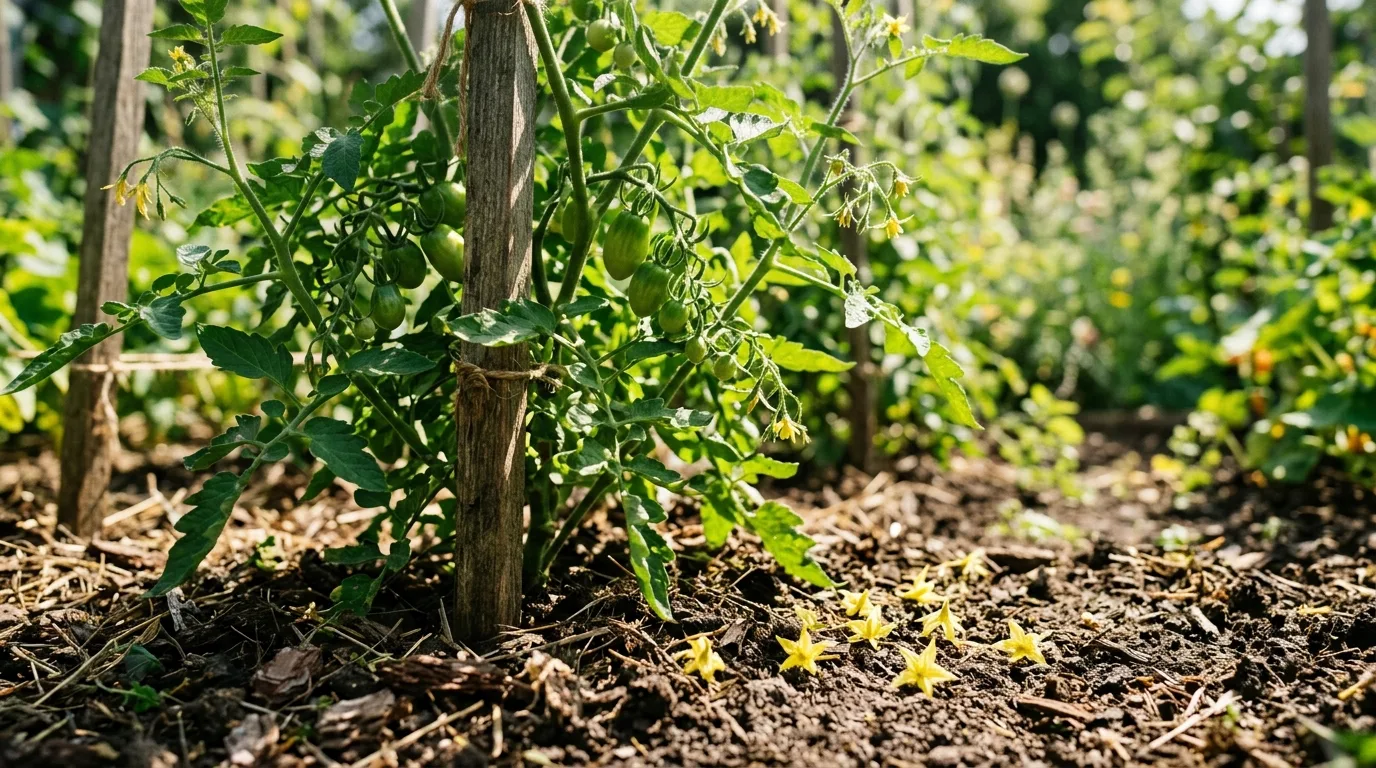
Flowers falling without setting fruit is a temperature story. Here is what is happening and how to work with the heat instead of against it.
The plant looks healthy, it flowers well, and then every flower yellows at the stem and drops without a single fruit behind it. Blossom drop is the classic heatwave complaint, and it hits tomatoes, bell peppers, chili peppers and beans hardest, right when summer should be peak production.
What causes blossom drop
Pollen is the casualty. Once daytime temperatures push above about 95F, and especially when nights stay above about 70F, tomato and bell pepper pollen goes sterile. The flower opens, nothing viable arrives, and the plant cuts its losses and sheds the bloom. A few other triggers pile on:
- Warm nights. Night temperature matters more than the daytime peak for tomatoes. A run of muggy nights will drop flowers even when days seem manageable.
- Very high or very low humidity. Pollen clumps and fails to shed in humid air, and dries out too fast in hot dry wind.
- Water stress. A plant swinging between dry and drenched sheds flowers to protect itself.
- Too much nitrogen. Heavy feeding pushes soft leafy growth at the expense of fruit set, and makes drop worse in heat.
How to keep fruit setting in the heat
Shade cloth is the big lever
Throw 30 to 50 percent shade cloth over the crop during heatwaves. It knocks several degrees off flower temperature and cuts flower loss more than any other single move. Fix it so air still moves; a tent over stakes beats cloth resting on the foliage.
Water deep, water early
Deep watering in the early morning sets the plant up for the hot hours, and thick mulch keeps root-zone moisture steady between drinks. Even moisture will not fix sterile pollen, but it stops water-stress drop from stacking on top.
Ease off the feed
Skip high-nitrogen feeds during heat spells. If you feed at all, use a balanced or flowering formulation once conditions settle.
Plant for the gaps
In hot climates, time plantings so flowering happens either side of the worst heat, and lean on heat-set tomato varieties bred to hold fruit in warm nights. Smaller-fruited types generally set better in heat than big beefsteaks.
Will the plant recover?
Yes. Blossom drop is a pause, and the plant itself is fine. When the heat breaks, new flowers set normally and production resumes in a few weeks. Keep the plant watered and healthy through the hot spell so it is ready to fire when conditions turn.
Catch problems before they cost you a crop
Track every bed in the Planting Season app, log what is going wrong, and get region-specific reminders so the same problem does not bite twice.
Open the App →Frequently Asked Questions
Why are my tomato flowers falling off without making fruit?
Heat is the usual reason in summer. Once days pass about 95F or nights hold above about 70F, tomato pollen goes sterile, the flower cannot set, and the plant sheds it. The plant is healthy; the pollen is not. Fruit set resumes when the weather breaks.
What temperature causes blossom drop?
For tomatoes, sustained days above about 95F or nights above about 70F. Bell peppers and chili peppers drop a little later, around 90 to 100F days, and beans abort flowers in similar heat. Warm nights are the quiet culprit gardeners miss.
Does blossom drop mean my plant is sick?
No. A plant dropping flowers in a heatwave is making a sensible trade, saving its resources until pollination can actually work. Disease-related flower loss usually comes with other symptoms like spotted leaves, wilting or stem damage.
Should I fertilize a plant that is dropping flowers?
No, and especially not with a high-nitrogen feed. Rich feeding in heat pushes soft leafy growth and makes flower drop worse. Wait until the hot spell passes, then feed with a balanced or flower-and-fruit formulation.
Do bell peppers and chili peppers get blossom drop too?
Yes, along with beans and to a lesser degree pumpkins and cucumbers. Chili peppers are a little more heat-tolerant than bell peppers but both shed flowers in extreme runs. Shade cloth and steady water help all of them hold on.
See also: Tomato Flowers but No Fruit and Bell pepper Not Setting Fruit
Get next month's planting calendar, free
One email a month with exactly what to plant in your region, plus seasonal tips and harvest reminders. No spam, and you can unsubscribe any time.