Good feed does most of the work
Backyard chickens are not fussy, but they are precise. A laying hen turns feed into eggs every day, a growing pullet is building bone and feathers, and a chick is doing both at once on a tiny body. The single best thing you can do is feed a complete, age-appropriate feed and keep clean water in front of them at all times.
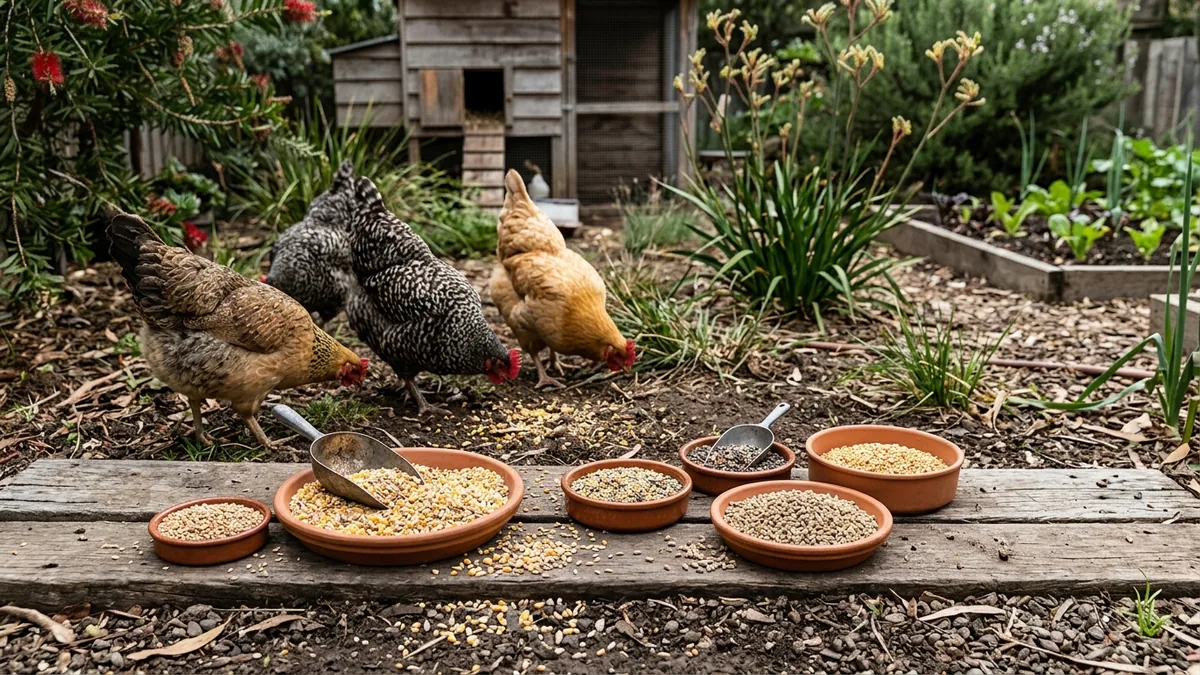
A complete feed is balanced for protein, energy, vitamins and minerals. That is why it should make up at least about 90 percent of the diet. Everything else on this page, the calcium, the grit, the treats, is built around that complete feed, not instead of it. If you also make your own mix, pair this nutrition guide with our homemade chicken feed recipe and cost calculator to check the protein math.
Feed by age selector
Pick a life stage and the selector shows the right feed type, the protein target to aim for, what to give and what to avoid. Use it as a quick reference at the feed store.
The three core feeds
Most flocks move through three complete feeds in order. Each is formulated for a different job, and the only real decision is when to switch.
Chick starter
Roughly 18 to 20 percent protein, low calcium. Fed from hatch to about 6 weeks. Comes as a fine crumble that small beaks can manage. Medicated versions are optional.
Grower feed
Around 15 to 16 percent protein with lower calcium. Fed from about 6 to 18 weeks. Supports steady growth without overloading developing kidneys with calcium.
Layer feed
About 16 to 17 percent protein with 3.5 to 4 percent calcium for eggshells. Start it only at point of lay, around 18 weeks or the first egg.
When to switch
The big rule is to wait. Do not move birds onto layer feed early just because the bag is cheaper or easier. The extra calcium in layer feed is wasted on a non-laying bird and can stress the kidneys of a growing pullet. Switch when the first hen lays, or at roughly 18 weeks, whichever comes first.
Calcium, grit and oyster shell
These three get muddled constantly because they sound similar, but they do completely different jobs. Two are about minerals, one is about mechanics.
Calcium and oyster shell
Laying hens pull a large amount of calcium out of their body for every shell. Layer feed already carries 3.5 to 4 percent calcium, but hens lay on different schedules, so offer crushed oyster shell free-choice in a separate dish. Oyster shell is soluble, meaning it dissolves and goes into the shell. Each hen takes what she needs and leaves the rest.
Grit
Grit is insoluble, small hard stones the bird swallows and stores in its muscular gizzard to grind food, since chickens have no teeth. Any bird eating something other than a complete crumble or pellet, such as whole grains, scratch or fibrous greens, needs grit. Birds that free-range on soil usually pick up enough naturally. Confined birds should have grit offered free-choice.
Treats and kitchen scraps
Treats are fine and chickens love them, but they dilute a balanced diet fast. Keep all treats and scraps combined to about 10 percent of total intake. The other 90 percent should be complete feed so laying, shells and health stay strong.
Good scraps
Leafy greens, cooked vegetables, squash, melon, berries, cooked plain rice or pasta in small amounts, herbs, and pumpkin or sunflower seeds.
Treats in moderation
Scratch grains, mealworms and corn are tasty but low in balanced protein. They are treats, not a meal, so scatter only a small handful.
Watch the season
Cut high-energy scratch in summer heat and offer cooling water-rich foods. A little extra scratch on a cold winter evening is fine.
What never to feed
Keep these away from your flock: moldy or spoiled food of any kind, avocado skin and pit, raw or dried beans, very salty or sugary food, large amounts of onion, chocolate or anything with caffeine, rhubarb leaves, and green or sprouted potato and its peelings. When in doubt, leave it out, and never feed anything that has gone moldy.
Water is part of the diet
It is easy to focus on feed and forget water, but an egg is mostly water and a hen that runs short stops laying quickly. Provide clean, fresh water at all times, scrub the drinker regularly to stop slime, and add extra waterers in hot weather. Birds drink far more in heat, so check it twice a day in summer.
Feed and nutrition at a glance
| Life stage | Feed type | Protein | Calcium | Notes |
|---|---|---|---|---|
| Chick (0 to 6 wk) | Chick starter crumble | 18 to 20% | Low | Fresh water always. Medicated starter optional. No added calcium. |
| Grower (6 to 18 wk) | Grower / pullet feed | 15 to 16% | Low | Too much calcium harms growing kidneys. Stay off layer feed until lay. |
| Laying hen | Layer pellet or crumble | 16 to 17% | 3.5 to 4% | Plus free-choice oyster shell. Start only at point of lay. |
| Rooster / non-layer | Maintenance or grower | 14 to 16% | Low | Avoid long-term high-calcium layer feed, or offer oyster shell free-choice. |
| Molting / broody | Higher-protein feed | 18 to 20% | Keep for layers | Feathers are about 85% protein. Extra protein and water help regrowth. |
Track your real flock
Numbers on a page are a starting point. The free Planting Season app Poultry and Flock tracker lets you log feed, eggs and each bird, so you can see how feeding changes line up with how your hens are actually laying.
Questions people ask
How much feed does a chicken eat per day?
A standard laying hen eats roughly a quarter pound of complete layer feed a day, which is about 100 to 150 grams. Larger breeds eat more and bantams eat less. Free-choice feeding lets each bird take what it needs, and they tend to eat more in cold weather.
Can I feed layer feed to chickens that are not laying yet?
No. Layer feed has around 3.5 to 4 percent calcium, which is too high for chicks and growing pullets. Excess calcium can damage their developing kidneys. Feed chick starter then grower feed, and only switch to layer feed at point of lay, around 18 weeks or the first egg.
Do free-ranging chickens still need grit?
Birds that range on soil usually pick up small stones naturally and may not need added insoluble grit. Confined birds, or any bird eating whole grains, scratch or fibrous greens, should have free-choice grit so the gizzard can grind that food. Grit is separate from oyster shell, which is for eggshells.
Can chickens live on kitchen scraps alone?
No. A complete starter, grower or layer feed should make up at least about 90 percent of the diet because it is balanced for protein, vitamins and minerals. Treats and scraps are fine in moderation, but a scraps-only diet leads to poor laying, soft shells and health problems.
What is the difference between oyster shell and grit?
Oyster shell is soluble calcium that dissolves and helps hens build strong eggshells. Offer it free-choice in a separate dish for laying hens. Grit is small insoluble stones the bird stores in its gizzard to grind food. They do different jobs, so do not treat one as a substitute for the other.
Are scratch grains and mealworms a complete feed?
No. Scratch grains are mostly cracked corn and wheat with low, unbalanced protein, and dried mealworms are a high-protein treat. Both are treats, not a balanced diet. Keep them under about 10 percent of total intake and rely on a complete feed for the rest.
Can chickens eat bread, rice or pasta?
Small amounts of cooked rice, plain cooked pasta or a little bread are fine as occasional treats. Keep them minimal because they are low in the nutrients hens need, and never feed moldy or spoiled leftovers. Count them within the roughly 10 percent treat allowance.
Do chicks need medicated starter feed?
Medicated starter is optional. It usually contains amprolium, which helps protect chicks against coccidiosis. It is a sensible choice for larger or mixed brooder groups, but it is not required, especially if chicks were vaccinated for coccidiosis, since the medication can interfere with that vaccine.
Track feed, eggs and birds in one place
Log what you feed, watch how your hens respond, and keep every bird's record in your pocket with the free Planting Season app.