Aphids on Vegetables and Fruit
Updated June 2026
Identify them, understand the lifecycle, and clear them the organic, bee-safe way, with a tool that builds your control plan
Aphids are the pest almost every gardener meets first. They turn up as soft clusters on the tips of new growth, on the undersides of leaves and along flower stems, and they multiply fast enough to make a clean plant look infested within a week. The good news is that aphids are also one of the easiest pests to manage well, because they are slow, soft-bodied, and hunted by a long list of garden helpers. You almost never need a strong spray, and reaching for one usually makes the problem worse by killing the very insects that keep aphids down.
This guide shows you how to tell aphids apart from other pests, how their lifecycle lets them explode so quickly, the damage they actually do, and a clear organic control ladder. The interactive tool below builds you a plan based on whether you want to prevent aphids, start with gentle organic controls, or step up because the gentle steps are not keeping pace. Every step is chosen to protect the bees and beneficial insects your garden depends on.
Build Your Aphid Control Plan
Pick the approach that fits where you are right now. The tool lays out the recommended steps for aphids specifically, ordered from the gentlest and most bee-safe to the strongest. Always start as low on the ladder as you can.
Choose an approach above to see your recommended steps.
How to Identify Aphids
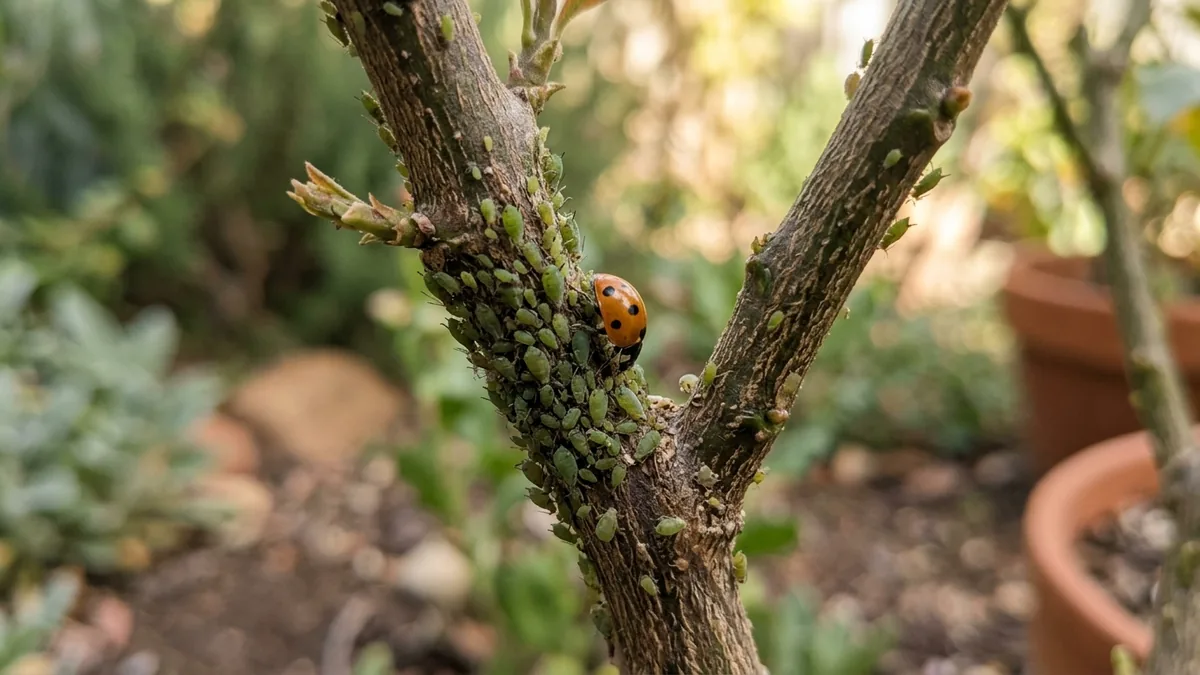
Aphids are tiny, pear-shaped, soft-bodied insects, usually about 1 to 3 millimeters long. They come in green, black, gray, pink, yellow and woolly white, but the shape and the way they cluster give them away. Look for these signs.
Dense clusters on new growth
Aphids gather where the sap is richest, so check shoot tips, flower buds and the undersides of young leaves. A heavy colony looks like a crowd packed shoulder to shoulder along a stem.
Two little tailpipes
Aphids have a pair of tiny tubes called cornicles sticking up from the rear end. No other common garden pest has these, so they are the clincher when you look closely.
Sticky honeydew and sooty mold
Aphids excrete a sugary honeydew that makes leaves shiny and sticky. A black, sooty mold often grows on it, and ants march up and down to harvest it.
Curled, distorted new leaves
Sap feeding twists and cups young leaves and stunts shoots. White cast skins (shed as aphids grow) dusting the leaves below are another giveaway.
The Aphid Lifecycle, and Why They Explode
Aphids breed faster than almost any other garden pest, and the reason is unusual. Through the warm growing season, female aphids reproduce without mating and give birth to live young rather than laying eggs. Each of those young is already carrying her own developing daughters, like a set of nesting dolls. A single aphid can become a colony of dozens within days, and hundreds within a couple of weeks.
When a colony gets crowded or the plant declines, some aphids grow wings and fly off to start fresh colonies elsewhere, which is how a problem spreads across the garden. In cooler regions, aphids lay overwintering eggs in fall that hatch in spring. This is why aphids peak during the soft, lush growth flushes of spring and fall, and why catching a colony early, before it produces winged migrants, makes such a difference. In warm subtropical and tropical zones they can stay active much of the year.
The Damage Aphids Do
A few aphids are harmless and even useful as food for predators. Problems come when colonies build up.
- Distorted growth. Sap feeding curls and cups new leaves, stunts shoot tips and can deform flowers and fruit.
- Weakened, stunted plants. Heavy feeding drains seedlings and soft crops, slowing growth and reducing yield.
- Sooty mold. The black mold that grows on honeydew blocks light and makes leaves and fruit grubby, though it does not infect the plant directly.
- Virus spread. This is the most serious harm. As aphids probe from plant to plant they transmit plant viruses, which matters most on cucurbits (pumpkin, zucchini, cucumber), potatoes, beans and brassicas. There is no cure for an infected plant, so prevention and early control are the real defense.
The Organic Control Ladder
Work from the top of this ladder down, and only move to the next rung if the one above is not keeping up. The gentlest steps protect your beneficial insects and bees, which are your best long-term aphid control.
- Squash or prune. For a colony on one or two shoot tips, wipe it off with your fingers or a gloved hand, or simply snip off the worst tip. Fastest fix of all for a small outbreak.
- Blast with water. A firm jet from the hose knocks aphids off, and most cannot climb back. Do it in the morning, focus on leaf undersides and shoot tips, and repeat every two to three days.
- Encourage the predators. Plant flowers such as alyssum, dill, fennel, cilantro gone to flower and yarrow to feed ladybugs, lacewings and hoverflies. Tolerate a few aphids so the predators have a reason to stay.
- Deal with ants. Ants protect aphids from predators. A sticky barrier around a fruit tree trunk, or tackling the nest, lets the natural enemies do their work.
- Insecticidal soap. A soap spray (a registered horticultural soap, or a weak pure-soap solution) coats and kills aphids on contact. It only works on what it touches, so spray the undersides thoroughly and repeat. Test on a few leaves first as some plants are sensitive.
- Horticultural oil. A light spray oil smothers aphids and scale. Do not use it in very hot weather or on water-stressed plants.
- Neem, as a step up. Neem oil deters feeding and disrupts the lifecycle. Use it as a measured step up from soap and oil, not a first reach, and apply it bee-safe (see below).
What not to do
Do not reach for a broad-spectrum insecticide. Products that kill anything that moves also kill ladybugs, lacewings, hoverflies and bees. Within a week or two the aphids bounce back with no predators left to check them, and you are locked into spraying again and again. This is the single most common aphid mistake.
Do not spray flowers that bees are visiting. Even soap and neem can harm bees on contact or on open blooms. Spray in the evening once bees have stopped flying, target only the aphid colonies, avoid open flowers, and let the spray dry before morning.
Do not over-feed with nitrogen. Soft, sappy growth pushed by high-nitrogen fertilizer is an aphid magnet. Feed gently and evenly instead.
Preventing Aphids
- Feed gently. Ease off high-nitrogen feeds so plants grow steadily rather than pushing soft, aphid-friendly shoots.
- Plant for predators. Keep alyssum, dill, fennel, yarrow and other small-flowered plants going year round so ladybugs and lacewings always have food and stay in the garden.
- Inspect new growth weekly. Catch colonies on shoot tips and leaf undersides while they are small, especially through the spring and fall flushes.
- Manage ants. Break the ant-aphid partnership with sticky barriers on fruit trees so predators can get to work.
- Use barriers on seedlings. A light insect-exclusion net or mesh keeps winged aphids off young, vulnerable plants and off virus-sensitive crops.
- Grow strong, diverse beds. Healthy soil and a mix of crops and flowers support a balance where no single pest takes over.
Plants Most Prone to Aphids
Aphids will try almost anything soft and leafy, but some crops are reliable favorites. Watch these closest.
- Brassicas: cabbage, broccoli, kale and Brussels sprouts (gray cabbage aphid loves the growing heart).
- Cucurbits: pumpkin, zucchini and cucumber, which are also virus-sensitive.
- Legumes: fava beans (the classic black bean aphid on the tips) and other beans.
- Leafy greens and herbs: lettuce, chard, cilantro and parsley.
- Fruit: citrus, roses, stone fruit and apples, often with curled leaves and woolly aphid on apple wood.
- Pepper, chili and tomato seedlings under cover.
When Aphids Are Serious
Step in promptly rather than waiting if any of these apply. On virus-sensitive crops such as cucurbits, potatoes and brassicas, even modest aphid numbers matter because of the diseases they carry, so control them early and use exclusion netting on young plants. Seedlings and small transplants can be set back badly by a colony, so protect them. A heavy, repeated infestation that shrugs off water and soap, or distorted growth and sooty mold spreading across a plant, is your cue to move up the ladder to oil or neem, applied bee-safe. If a plant is already virus-infected, showing mottled, distorted leaves that do not recover, remove it so it cannot be a source for the rest of the garden.
Know when aphid season is coming
The Planting Season app includes a Pest Calendar that flags when aphids and other pests are most likely in your region, so you can check new growth and act before a few become thousands. Plan your beds, log what is happening, and stay one step ahead.
Open the App →Frequently Asked Questions
What is the fastest way to get rid of aphids?
A sharp jet of water from the hose is the fastest first move. It knocks aphids off the plant, and because aphids are slow and soft-bodied, most of them cannot climb back. Do it in the morning so leaves dry through the day, and repeat every couple of days until numbers crash. For a heavily infested shoot tip, simply squashing the colony between your fingers or pruning off the tip works too. Reach for sprays only if water and squashing are not keeping up.
Are aphids harmful to my plants?
A few aphids do no real harm and are part of a healthy garden, feeding the ladybugs and other beneficials you want. Large colonies are a different story. They suck sap, which curls and distorts new growth, stunts seedlings, and weakens plants. Their sugary honeydew grows sooty mold and attracts ants. Some aphids also spread plant viruses, which matters most on cucurbits, potatoes and brassicas. Control them when colonies build, not when you see the first one.
Will soap or neem spray hurt bees?
Insecticidal soap and neem can harm bees if they are sprayed directly onto a bee or onto open flowers that bees are visiting. Both break down quickly and are far safer than broad-spectrum insecticides, but they are not harmless. Spray in the evening when bees have stopped flying, avoid open flowers, target only the aphid colonies, and let the spray dry before bees return in the morning. Never spray a plant in bloom in the middle of the day.
What eats aphids in the garden?
Ladybugs and their alligator-shaped larvae, lacewing larvae, hoverfly larvae, parasitic wasps and small birds all eat aphids, often in large numbers. The larvae are the hungry stage and look nothing like the adults, so learn to recognize them before you spray. You encourage these helpers by planting flowers such as alyssum, dill, fennel and yarrow, by tolerating a few aphids as food, and by avoiding broad-spectrum sprays that kill the predators along with the pest.
Why do I keep getting aphids on the same plants?
Aphids love soft, lush new growth, so anything pushed hard with high-nitrogen fertilizer becomes a magnet. Ease off the nitrogen and feed more gently. Ants also farm aphids for their honeydew and protect them from predators, so a band of horticultural glue or a sticky barrier on the trunk of a fruit tree can break the cycle. Finally, a garden with few flowers has few aphid predators, so plant some insectary flowers to keep the balance.
Should I use a systemic insecticide for aphids?
For home food gardens we do not recommend systemic insecticides for aphids. They move through the whole plant, including the pollen and nectar, which makes them a real risk to bees, and they wipe out the natural enemies that would otherwise keep aphids down. In almost every case water, soap, oil, neem and encouraging predators do the job. Save any stronger product for a genuine, repeated failure of the gentler steps, choose a targeted one, and follow the label exactly.
Can ants cause an aphid problem?
Yes. Ants feed on the sweet honeydew aphids produce, and in return they protect aphids from ladybugs and lacewings and even move them to fresh growth. If you see ants streaming up a stem, aphids are often the reason. Controlling the ants, with a sticky barrier on the trunk or by dealing with the nest, lets the natural predators get back to work and the aphid numbers usually fall on their own.
When are aphids worst in the US?
Aphids peak in the mild flush of spring and again in fall, when soft new growth is plentiful and the weather suits rapid breeding. Hot, dry summers and cold winters slow them down. In the warm South and frost-free zones they can stay active for much of the year, while colder regions see a clearer spring and fall peak. Watch new shoots and the undersides of leaves closely during the spring and fall growth flushes, which is when small colonies turn into big ones fastest.
See also: Fungus Gnats, Cabbage White and Cabbage Moth and the Pest & Disease Guide