
How to Grow Blueberries in Pots
Updated June 2026
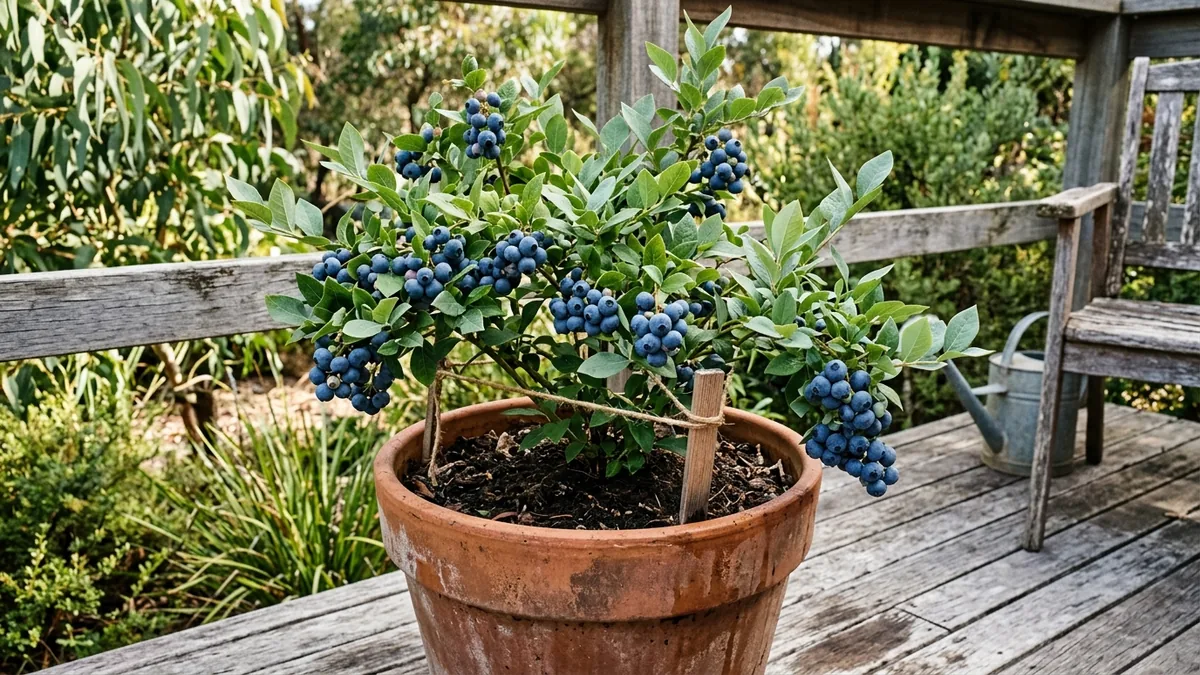
The acidic-soil and climate story that makes container blueberries thrive
Blueberries are one of the best fruits to grow in a pot, and not just because they suit a balcony or patio. Blueberries are fussy about one thing above all else, acidic soil, and a pot is the easiest place in the whole garden to give them exactly the sour, free-draining soil they need.
Get two things right, the type that suits your USDA zone and the soil acidity, and a potted blueberry will reward you with handfuls of fruit and glowing fall color for years. This guide walks you through both, then covers pot size, sun, watering, feeding, pollination, netting and the rest.
Which Blueberry for Your Zone?
The single biggest mistake is buying the wrong type. Each blueberry type is bred for a certain amount of winter cold, measured in chill hours. Northern highbush needs a long, cold winter, while low-chill southern highbush and rabbiteye types fruit happily in the warm South. Pick your USDA zone below for the right type and two varieties to start with.
The One Rule That Matters: Acidic Soil
Blueberries evolved in acidic, peaty soils and they will not thrive in ordinary soil or standard potting mix. They need a soil pH of about 4.5 to 5.5, which is quite sour. In the wrong pH they cannot take up iron, the leaves yellow between the veins, growth stalls and the plant slowly fades.
- Use an acidic mix. Fill the pot with a potting mix made for acid-loving plants, often sold as azalea, camellia and rhododendron mix or an ericaceous mix. You can amend it with peat or pine bark fines. Do not use general-purpose potting soil.
- Never add lime. Lime, garden lime, wood ash and mushroom compost all raise pH and are the enemy of blueberries. Keep them well away from the pot.
- Rainwater beats hard tap water. Hard, alkaline tap water slowly pushes the pH up. Rainwater is ideal. If you only have hard water, watch for yellowing leaves and keep the soil topped up with acidic mix.
- Keep it acidic over time. If the leaves start yellowing, water with a diluted soil acidifier or feed for acid-loving plants, and refresh the top of the mix each year.
Pot Size, Position and Soil
Start a young plant in a pot around 12 to 16 inches wide and pot it on as it grows, finishing in a container of at least 10 to 15 gallons. Bigger is better, as a larger pot holds moisture more evenly and gives the roots room. Make sure the pot has good drainage holes, because while blueberries like steady moisture they hate sitting in water.
Give the pot a spot in full sun for the best crop, though in hot inland gardens a little afternoon shade in summer protects the plant and fruit. Group two pots together so the bushes can cross-pollinate, and stand them where you can get netting over them when the fruit colors.
Watering and Feeding
Pots dry out fast, and blueberries have shallow, fine roots that resent both drought and waterlogging. Keep the mix evenly moist through spring and summer, checking daily in hot weather, and mulch the surface with pine bark or pine needles to hold moisture and gently keep the soil acidic.
Feed with a fertilizer made for acid-loving plants (an azalea or rhododendron food, or an ammonium-sulfate-based blueberry food), which is formulated to keep the pH low and supply the right nutrients. Feed lightly in spring and again after fruiting, and avoid general fertilizers and anything containing lime. Less is more, as blueberries are not heavy feeders.
Pollination: Plant Two Varieties
Many highbush varieties are partly self-fertile, so a single bush will set some fruit. But almost every blueberry crops more heavily, with bigger berries, when a second variety of the same type is planted nearby for cross-pollination. Rabbiteye varieties in particular are largely self-incompatible and need a second rabbiteye partner to fruit well. Two pots side by side is the simple answer, and bees do the rest.
Pruning and Netting
For the first couple of years just remove any weak, dead or crossing twigs and let the bush build a strong framework. From about year three, prune in winter while the bush is dormant: take out the oldest, twiggiest wood at the base to make room for vigorous young canes, which carry the best fruit.
Net before the birds beat you to it
Birds love ripe blueberries and will strip a bush in a day. Net the plant as the berries start to color. Use proper, wildlife-safe fruit netting with a fine, tight mesh held off the plant on a frame so birds and other wildlife cannot get tangled in it. A potted bush is easy to cage with a small netted frame.
Harvest, Storage and Fall Color
Ripe blueberries are fully blue with a dusty bloom and come away with a gentle tug. They keep ripening over a few weeks, so pick over the bush every few days. Fresh berries keep about a week in the refrigerator and freeze beautifully: open-freeze them on a tray, then bag them so they stay loose.
As a bonus, northern highbush, rabbiteye and half-high blueberries are deciduous and turn fiery red and orange in fall before dropping their leaves, so a potted blueberry earns its place as an ornamental as well as a fruit plant. Low-chill southern highbush types in mild climates are often semi-evergreen.
Track your blueberries in the app
Add blueberries to your garden in the Planting Season app for reminders on feeding, netting and harvest, and log your picks to watch the totals add up.
Open the App →Frequently Asked Questions
What soil pH do blueberries need?
Blueberries need acidic soil with a pH of about 4.5 to 5.5. In a pot, fill with an acidic or ericaceous mix (sold as azalea, camellia and rhododendron mix or acid-loving potting mix) rather than standard potting soil, and never add lime. If the pH drifts up, water with a diluted acidifier or top up with more acidic mix.
Can I grow blueberries in a pot?
Yes, blueberries are one of the best fruits for pots, partly because a container lets you give them the acidic, free-draining soil they demand. Use a pot of at least 10 to 15 gallons, an acidic mix, a sunny spot and consistent water, and pot on as the bush grows.
Which blueberry should I grow in my USDA zone?
In warm zones 8 to 10 grow low-chill southern highbush and heat-tolerant rabbiteye types. In zones 6 to 7 grow northern highbush and some southern highbush. In cold zones 4 to 5 grow northern highbush and half-high types, and in zone 3 grow half-high and lowbush-hybrid cultivars bred for extreme cold. Matching the type to your winter cold is the single biggest factor in getting fruit.
Do I need two blueberry plants?
Many highbush varieties are partly self-fertile, but almost all blueberries crop more heavily and with larger berries when you plant two different varieties of the same type for cross-pollination. Rabbiteye varieties in particular are largely self-incompatible and need a second rabbiteye variety.
Why are my blueberry leaves turning yellow?
Yellowing leaves with green veins is usually iron chlorosis caused by soil that is not acidic enough, which locks up iron. Check the pH, top up with an acidic or ericaceous mix, water with rainwater rather than hard tap water, and feed with a fertilizer for acid-loving plants such as an azalea or rhododendron food.
Can I water blueberries with tap water?
You can, but hard or alkaline tap water gradually raises the soil pH and can cause problems over time. Rainwater is better. If you only have hard tap water, watch the leaves for yellowing, keep topping up with acidic mix, and use an acidifier or acid-loving plant food.
How do I stop birds eating my blueberries?
Net the bush as the berries start to color, using proper wildlife-safe fruit netting with a fine, tight mesh held off the plant on a frame so birds cannot get tangled. A potted bush is easy to cage with a simple netted frame.
Do blueberry bushes lose their leaves?
Northern highbush, rabbiteye and half-high blueberries are deciduous and color up beautifully in fall before dropping their leaves, while many low-chill southern highbush varieties grown in mild climates are semi-evergreen. The fall color makes them an attractive pot plant as well as a productive one.
See also: Blueberry in the Plant Library and our guide to growing blueberries.