
How to Grow Strawberries: When to Plant Strawberries in the US
Updated October 2026

Pick the right type for your climate, plant at the right time for your zone, and net the bed. Runners vs crowns, container tips, and US planting calendars.
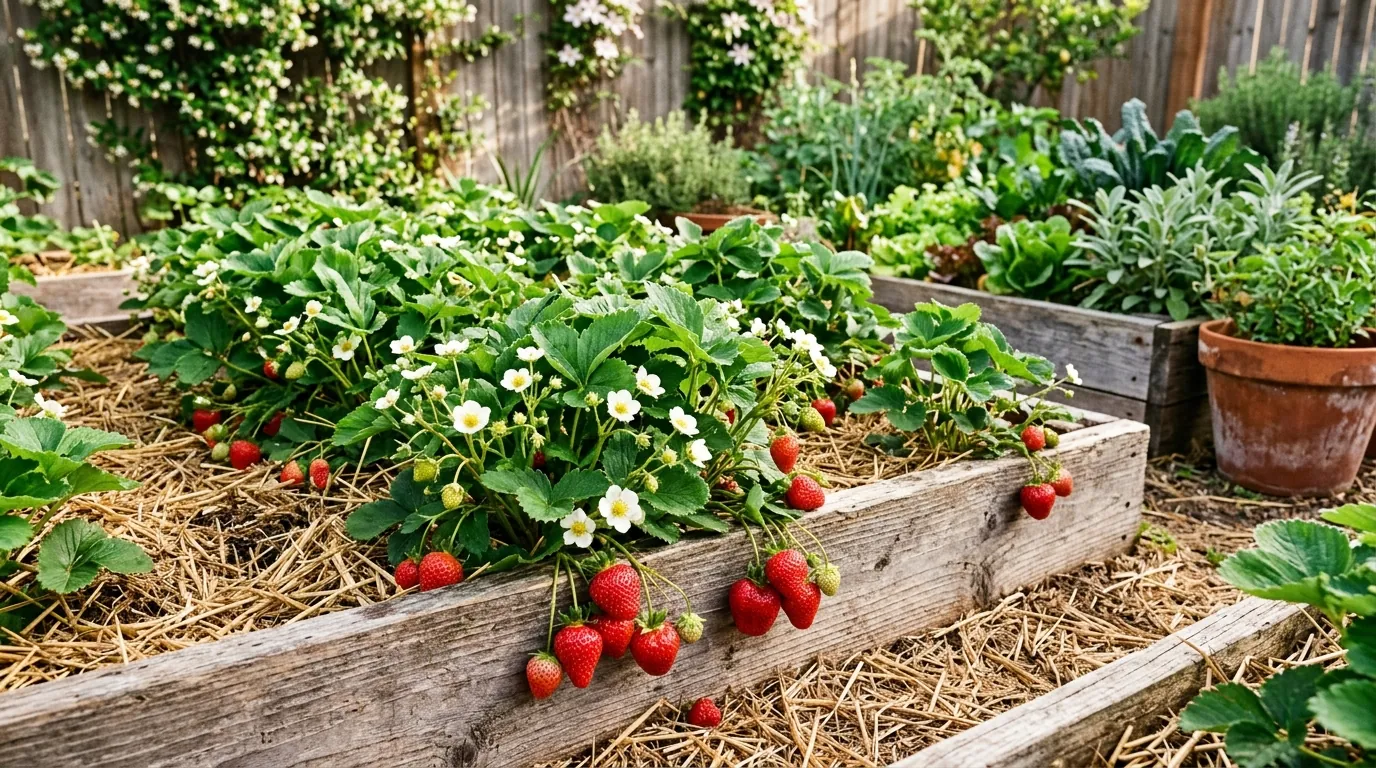
Strawberries are one of the best crops for the home gardener. They fruit quickly, grow in small spaces and containers, and taste far better fresh than anything in a supermarket clamshell. A well-tended bed of 25 plants can keep a family in berries for weeks. The two things that decide your harvest are choosing the right type for your climate and planting at the right time for your zone.
What it looks like as it grows
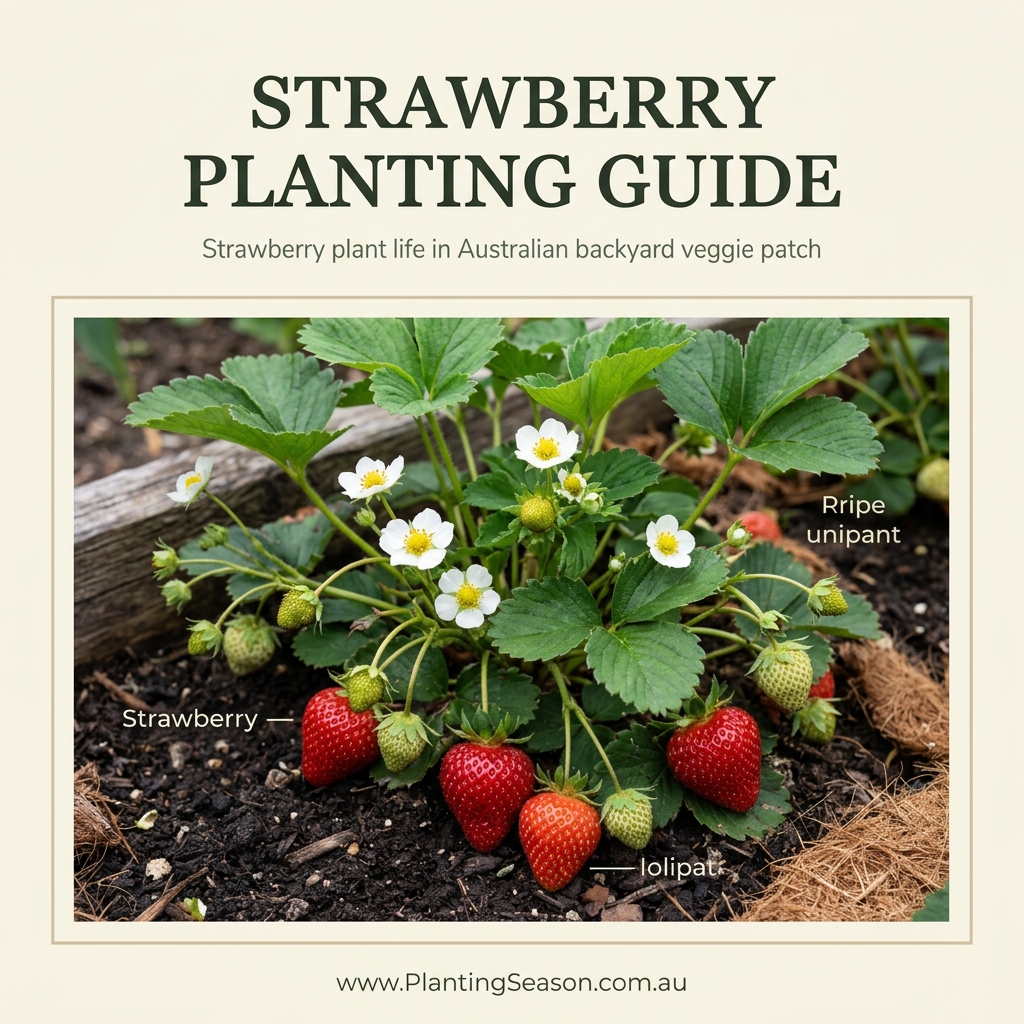
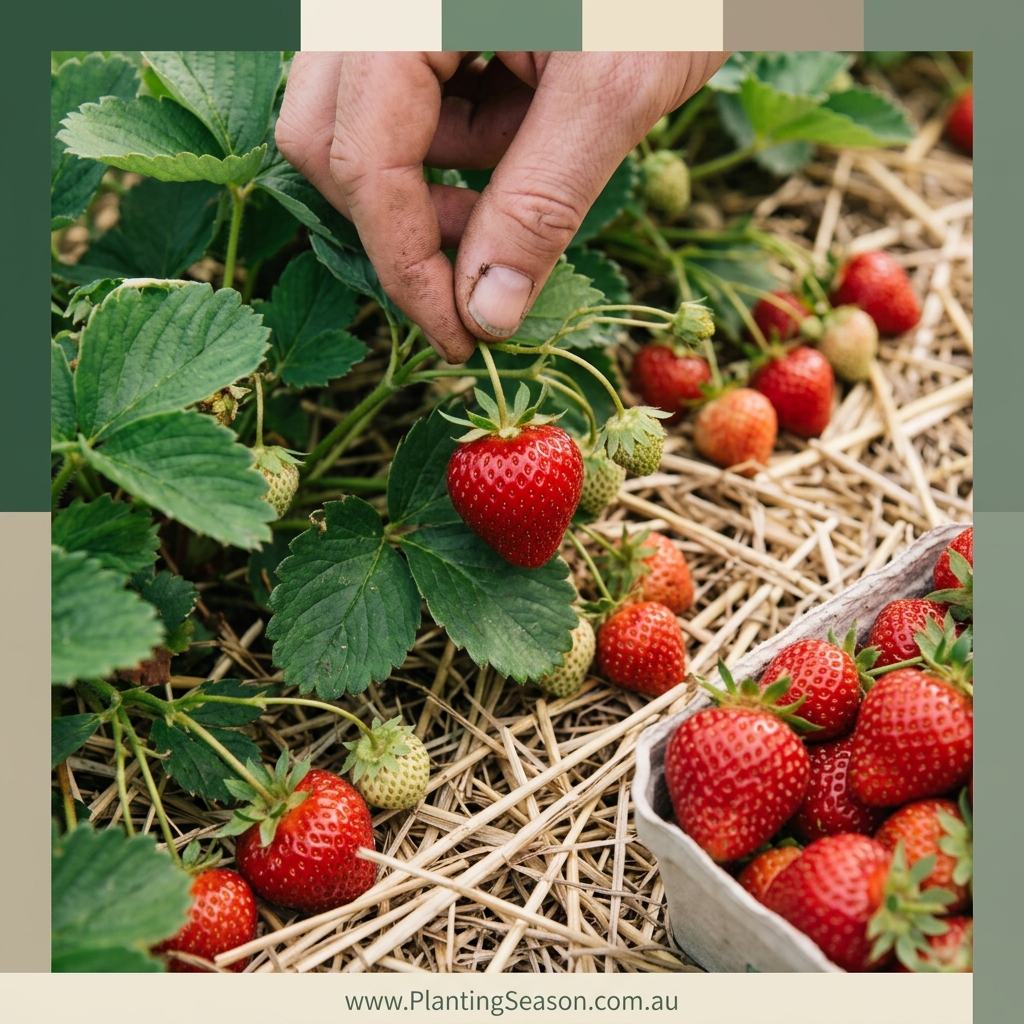
🌱 Plant profile: Strawberry, with sowing times for your region, companion plants and common pests.
When to Plant Strawberries in Your Region
When to plant strawberries depends on your winters. Florida, the Gulf South, the low desert and Texas set out plants in fall and grow them as a winter crop, while the colder regions set out dormant plants in early spring. These are the planting months for each of our 18 regions, with each region's frost window. Each region links to its full vegetable planting calendar, and the Strawberry plant page shows the calendar for any region you pick.
| Region | Set out plants | Frost window and local note |
|---|---|---|
| North Florida | September to October | February 15 to December 5 |
| Central Florida | September to October | Effectively frost free |
| South Florida | October to November | Effectively frost free |
| Gulf South | September to October | February 25 to December 1 |
| Desert Southwest | October to November | February 5 to December 5 |
| Texas | February and October | March 1 to November 28 |
| Southern California | March to April and October | Effectively frost free |
| Mid-South | March to April | April 10 to October 25Set out dormant plants in early spring as soon as the soil can be worked, so they root well before summer. |
| Pacific Northwest | March to April | March 25 to November 15Set out dormant plants in early spring as soon as the soil can be worked, so they root well before summer. |
| Northeast & New England | April to May | May 10 to October 15Set out dormant plants in early spring as soon as the soil can be worked, so they root well before summer. |
| Mid-Atlantic | March to April | April 15 to October 25Set out dormant plants in early spring as soon as the soil can be worked, so they root well before summer. |
| Midwest & Great Lakes | April to May | April 30 to October 15Set out dormant plants in early spring as soon as the soil can be worked, so they root well before summer. |
| Upper Midwest & Northern Plains | May | May 15 to September 25Set out dormant plants in early spring as soon as the soil can be worked, so they root well before summer. |
| Mountain West | April to May | May 5 to September 30Set out dormant plants in early spring as soon as the soil can be worked, so they root well before summer. |
| Southern Plains | March to April | April 10 to October 30Set out dormant plants in early spring as soon as the soil can be worked, so they root well before summer. |
| Northern California & Central Valley | November to February | February 28 to November 17 |
| Hawaii | March to May and September to November | Effectively frost free |
| Alaska | May to June | May 15 to September 10 |
The Mid-South, the Pacific Northwest, the Mid-Atlantic and the Southern Plains plant strawberries in March and April. North Florida, Central Florida and the Gulf South plant strawberries in September and October. The Northeast and New England, the Midwest and the Mountain West plant strawberries in April and May. South Florida and the Desert Southwest plant strawberries in October and November.
The three types: June-bearing, everbearing, day-neutral
Before you buy a single plant, decide which type fits your garden. This is the most important strawberry decision in the US, and it is the one most new growers skip.
| Type | How it fruits | Best for |
|---|---|---|
| June-bearing | One large concentrated crop in late spring to early summer (or winter into spring in the warm South). Sends out lots of runners. | Gardeners who want a big batch at once for jam, freezing and preserving. |
| Everbearing | Two to three smaller flushes across the season, typically early summer and again in fall. | Steady picking with less commitment to one harvest window. |
| Day-neutral | Fruits steadily all season as long as temperatures stay moderate, ignoring day length. Fewer runners. | Containers, small beds, and a long trickle of fresh berries. |
When to plant by zone and frost
Strawberries are planted as dormant bare-root crowns or as potted plugs. Timing follows your zone and last frost, not the calendar.
| Region / Zone | When to plant | Notes |
|---|---|---|
| Northern and cold-winter states (zones 3 to 6) | Early spring, as soon as the soil is workable | Set out bare-root crowns 4 to 6 weeks before the last frost. Pinch off the first year's flowers on June-bearers to build strong plants. |
| Transitional and Mid-South (zones 7 to 8) | Early spring, or fall in the warmer half | Fall planting gives plants a head start and an earlier, bigger crop the next spring. |
| Deep South and Gulf Coast (zones 8 to 9) | Fall (October to November) | Grown as a cool-season annual. Pick from winter into spring, then pull the plants before summer heat. |
| Florida and frost-free South (zones 9 to 10) | Fall (late September to November) | Set out short-day transplants in October, harvest December through March, and do not try to carry plants over the summer. |
UF/IFAS puts the Central Florida planting window at roughly September 25 to October 25. Pick your region in the calendar below, or see the strawberry plant page.
Varieties to choose from
Match the variety to both your climate and the type you want. Cold-winter gardeners lean on hardy June-bearers and day-neutrals; the Deep South and Florida need short-day varieties bred for warm winters.
| Variety | Type / season | Notes |
|---|---|---|
| Honeoye | June-bearing | Very cold-hardy and productive. A reliable early June-bearer for the North and Midwest. |
| Allstar | June-bearing (mid to late) | Large, mild, disease-resistant berries. Widely adapted across the northern and central US. |
| Chandler | June-bearing (short-day) | Large, flavorful fruit. A standard in the South, California and Florida home gardens. |
| Ozark Beauty | Everbearing | Classic everbearer with sweet fruit and good runner production. Popular and widely sold. |
| Quinault | Everbearing | Soft, sweet berries and heavy runnering. Does well in the Pacific Northwest and cooler regions. |
| Albion | Day-neutral | Large, firm, very sweet berries over a long season. Excellent for containers and a top all-around pick. |
| Seascape | Day-neutral | Productive across a long season, tolerant of varied climates. A strong choice for the West and containers. |
| Eversweet | Day-neutral | Holds up to heat better than most, fruiting into warm summers. Useful in hotter inland gardens. |
In Florida and the frost-free South, University of Florida short-day varieties such as Florida Brilliance, Sweet Sensation (Florida127), Strawberry Festival and Florida Beauty are bred for the local winter and outperform northern June-bearers there.
Runners vs crowns
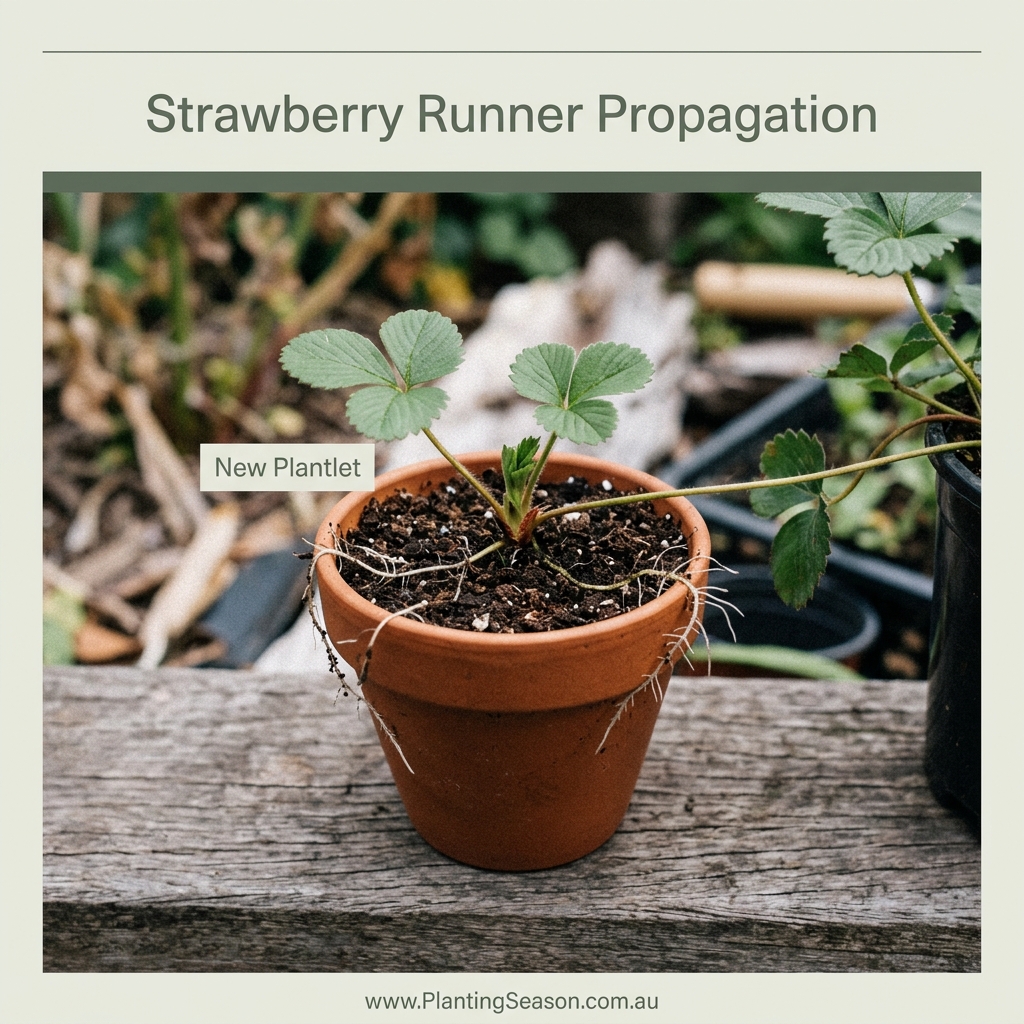
Bare-root crowns are the norm in the US. You buy a bundle of dormant plants, each a woody crown with trimmed roots, in late winter or early spring. Potted plugs are also common and transplant with less shock. Established plants also send out runners, small rooted plantlets you can peg down to expand a bed for free.
Plant so the crown sits right at soil level. Too deep and the crown rots; too shallow and the roots dry out. Soak bare-root crowns for an hour before planting, fan out the roots, and firm the soil. Space plants 12 to 18 inches apart in rows about 3 feet apart, in full sun and rich, well-drained soil.
Container growing
Strawberries are ideal for pots, hanging baskets, window boxes and strawberry towers, which suits renters and small yards. Use a quality potting mix and a container at least 8 inches deep. Feed every two weeks through the fruiting season and water daily in summer heat, since containers dry out fast. Day-neutral varieties such as Albion and Seascape are the best performers in pots because they fruit steadily without relying on runners.
Bird netting
Birds will find ripe berries before you do. Netting is essential for a real harvest. Drape proper bird netting over a frame or hoops rather than directly on the plants, use a fine mesh to exclude small birds, and secure the edges at ground level so nothing gets underneath.
Common problems
Botrytis (gray mold)
Fuzzy gray mold on the fruit, worst in humid, wet weather. Mulch with straw so berries sit off the soil, improve air flow between plants, avoid overhead watering, and pick ripe fruit promptly. Remove affected berries right away.
Slugs and snails
These pests love strawberries as much as you do, especially in damp beds. Mulch with straw, use iron-based slug pellets that are safe for pets and wildlife, set beer traps, or run copper tape around containers. Hanging baskets sidestep the problem.
Birds and other pests
Net the bed as fruit colors up. In the South and dry-winter regions also watch for spider mites and aphids, plus sap beetles on overripe fruit. Pick clean and often to keep pests from settling in.
Lots of leaf and runners, little fruit
Too much nitrogen, or old crowded plants. Ease off high-nitrogen fertilizer, thin surplus runners so plants put energy into fruit, and replace June-bearing plants every three years as older crowns produce less. For your neighbor's heavy-cropping bed, the secret is usually fresh certified plants and good spacing.
Harvest
Berries are ready about 90 to 110 days after planting, depending on type and climate. Pick every couple of days, fully red, with the cap on, in the cool of the morning. Frequent picking keeps plants producing and beats the birds and rot.
Strawberries at a glance
The planting figures for strawberry from our plant data, converted to inches and Fahrenheit.
| Planting depth | 1/2 inch |
|---|---|
| Spacing | 12 inches |
| Days to come up | About 14 days |
| Soil temperature for sprouting | 59 to 77°F |
| Days to harvest | About 90 days |
| Frost | Frost hardy |
| Container | At least 8 inches |
Planting strawberry crowns
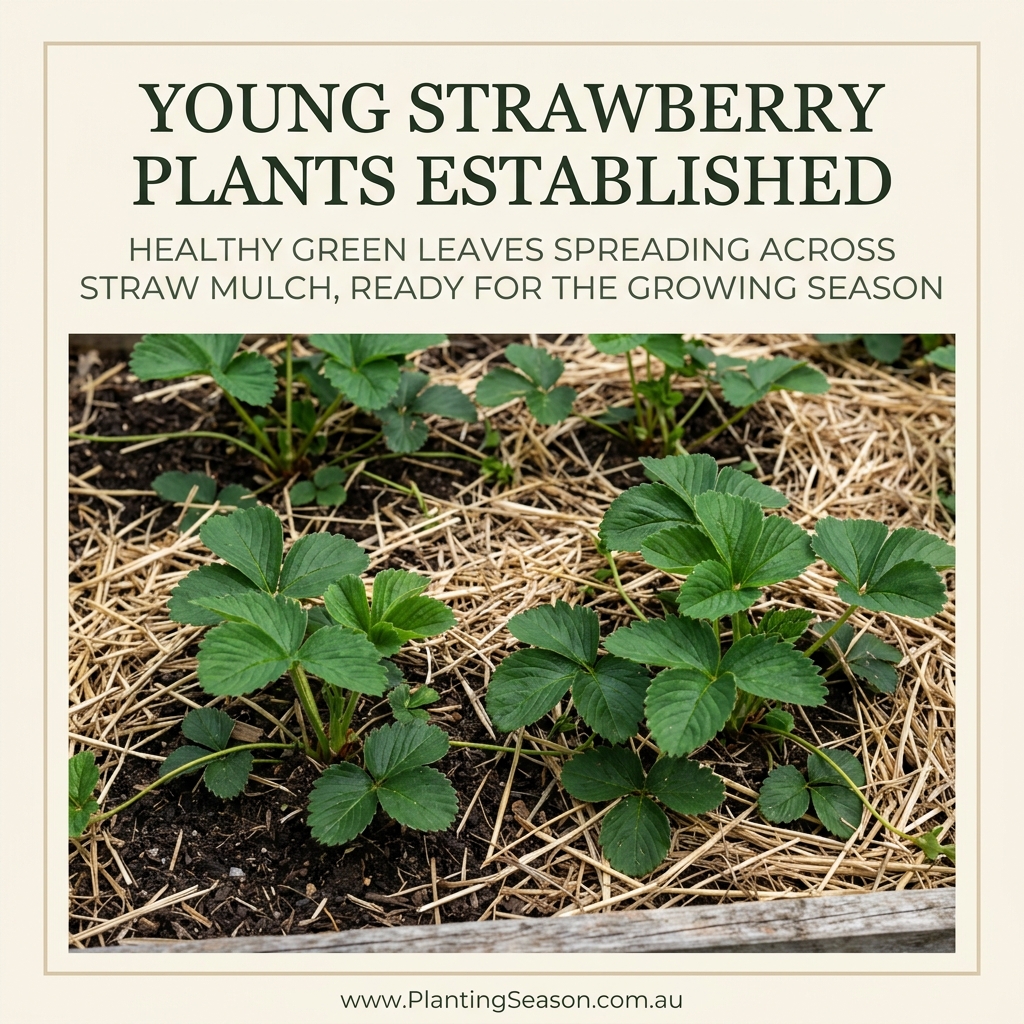
Most gardeners plant strawberries as young plants or runners rather than seed. Set each crown level with the soil surface, neither buried nor sitting high, about 12 inches apart, and peg down fresh runners if you want more plants. Water steadily, mulch with straw to keep the fruit off wet ground, and net the bed against birds.
How long do strawberries take to grow?
Our plant data allows about 90 days from planting to the first berries. A berry is ripe when it is red right to the shoulders and fragrant; pinch the stem above the berry rather than tugging the fruit.
Common questions
June-bearing, everbearing, or day-neutral, which should I grow?
Choose June-bearing if you want one big crop to preserve. Choose day-neutral for a long, steady trickle of fresh berries or for containers. Everbearing gives two or three smaller flushes and sits between the two.
When do I plant strawberries?
In the North (zones 3 to 6) plant bare-root crowns in early spring as soon as the soil is workable. In the Deep South and Florida (zones 8 to 10) plant in fall and harvest through winter into spring. Spring planting fails in the hot South.
Should I grow from crowns or runners?
Bare-root crowns and potted plugs are the standard way to start a bed in the US. Runners from established plants are free and great for expanding an existing patch. Buy certified plants for the healthiest, heaviest crops and replace June-bearers every three years.
Can I keep my plants for next year?
In the North, yes, June-bearers and everbearers are perennial and crop for several years. In Florida and the Deep South it is rarely worth it; plants decline in the summer heat and carry disease, so pull them in late spring and start fresh with certified transplants in fall.
Sources: UF/IFAS Gardening Solutions, Strawberries; UF/IFAS Florida Vegetable Gardening Guide (SP 103); university extension strawberry variety and planting guidance.
How long do strawberries take to grow?
Our plant data allows about 90 days from planting to the first berries, and plants keep cropping over a long flush.
Can I plant strawberries in October?
Yes, in 8 of our 18 regions: North Florida, Central Florida, South Florida, the Gulf South, the Desert Southwest, Texas, Southern California and Hawaii. Everywhere else our calendar has no October planting for strawberries; the table on this page shows each region's months.
Can I plant strawberries in the fall?
Yes, in 9 of our 18 regions: North Florida, Central Florida, South Florida, the Gulf South, the Desert Southwest, Texas, Southern California, Northern California and Hawaii. In the colder regions our calendar sets out dormant plants in early spring instead, so they root well before summer.
When to plant in your region
Pick your region to see exactly when to plant strawberries where you garden.
See also: Strawberries in the plant library →
Related guides
See what to plant this month
Pick your region for a month-by-month calendar tuned to your climate.
Find your region →Plant profile
The strawberry profile has sowing times for your region, companion plants and common pests.