
How to Compost Chicken Manure Safely
Updated June 2026
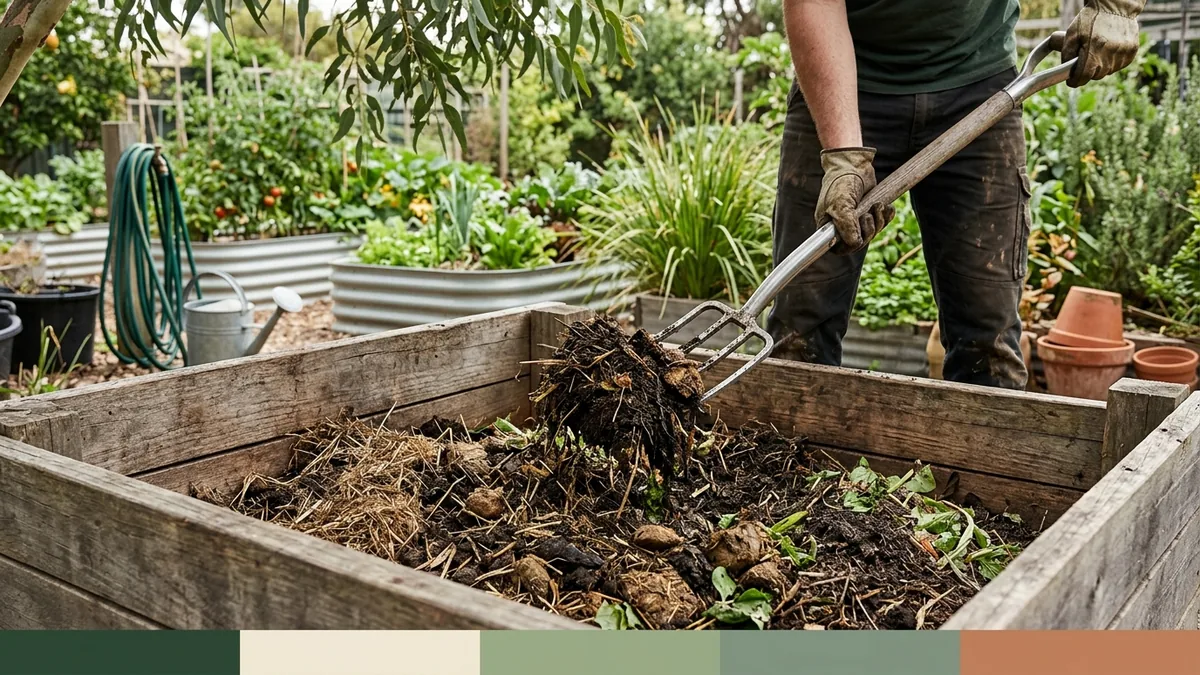
Turn coop bedding into free fertilizer, with a calculator that sizes your pile from your flock
Keep a few hens and you quickly notice they produce more than eggs. A laying flock turns out a steady stream of nitrogen-rich manure, and mixed into your garden the right way it becomes some of the best free fertilizer you can get. The catch is that it cannot go straight on your plants. Raw chicken manure is far too strong, and it carries a real food-safety risk, so it has to be composted first.
This guide is specifically about chicken manure. For general compost (kitchen scraps, leaves and the rest of your browns and greens) see the composting guide. Here we cover why fresh manure burns plants, how to hot-compost it safely, the simple carbon-to-nitrogen idea, the deep litter method in the coop, how to tell when it is ready, and how to use it. The calculator below sizes your pile from the number of hens you keep.
Why raw chicken manure is too hot for plants
Gardeners call chicken manure hot, and they do not mean its temperature. They mean it is very high in nitrogen. Chicken manure has one of the highest nitrogen levels of any common animal manure, and as it breaks down it releases ammonia. Put it raw around growing plants and that surge of nitrogen and ammonia can scorch roots and leaves. Seedlings are especially easy to burn.
There is a second reason, and it matters more. Fresh manure can carry pathogens such as Salmonella and E. coli. That is a genuine food-safety risk on anything you are going to eat, particularly leafy greens and root crops that sit in or near the soil. The rule is simple.
Never use fresh chicken manure on edible crops
Raw chicken manure can carry Salmonella and E. coli and can burn plants with its nitrogen and ammonia. Do not spread it on vegetables, herbs or fruit you intend to eat.
Compost it first. Build a hot pile, get it through a proper heat, turn it, then age it for about 6 to 12 months until it is dark, crumbly and earthy. Wash your hands after handling manure or fresh bedding, and keep raw manure well away from the parts of the garden you are currently harvesting.
How to compost chicken manure safely
The whole job is taming that nitrogen and using heat to reduce pathogens, then letting time finish it. Here is the sequence.
- Mix in carbon. Combine the manure and coop bedding with carbon-rich brown materials: straw, dry leaves, shredded paper or cardboard, and wood shavings. As a rough rule, use about twice as much carbon material as manure by volume.
- Build a real pile. A pile roughly a cubic yard (about a cubic meter) holds heat well. Dampen it so it is moist like a wrung-out sponge, not soggy.
- Let it heat. A balanced, moist pile heats up within a few days. For a hot compost that reduces pathogens, aim for the core to reach roughly 131 to 149 F (about 55 to 65 C). US extension guidance commonly points to home compost reaching at least 131 F to help reduce harmful organisms. A compost thermometer takes the guesswork out.
- Turn it. After it peaks, turn the pile so the cooler outer material moves into the hot center and every part gets exposed to the heat. Turning also adds air, which keeps the process aerobic and odor-free.
- Cure it. Once it stops reheating after turning, let it age. Total time from coop to garden-ready is about 6 to 12 months, or until it passes a hot-compost process and smells earthy.
Follow a tested hot-compost process for your setup rather than guessing at times and temperatures. Hot composting is the part that addresses the pathogen risk, so it is worth doing properly.
The deep litter method in the coop
Deep litter is a way to start the composting before the bedding even leaves the coop. Instead of cleaning the coop out constantly, you let the bedding and droppings build up over the season. You keep topping it with fresh carbon bedding such as wood shavings or straw, and stir it occasionally so it stays dry on top and does not pack down.
Done well, the litter slowly composts in place. It controls odor, gives the birds something to scratch through, and in winter the gentle activity adds a little warmth. When you finally clear it out, that partly broken-down litter is an excellent base for your finishing pile. It still needs to be hot-composted and cured before it touches food plants, but you have given it a head start, and you have made coop cleaning a once-or-twice-a-year job instead of a weekly chore.
The carbon-to-nitrogen balance, simply
Compost works best when it has a balance of carbon (browns) and nitrogen (greens). Chicken manure is a powerful nitrogen source, so the thing it always needs is more carbon to balance it. Too much nitrogen and not enough carbon gives you a wet, smelly, ammonia-heavy pile. Plenty of carbon soaks up the nitrogen, feeds the microbes, and turns the whole thing into sweet, earthy compost.
You do not need to measure ratios precisely. The practical version is to add roughly twice as much brown carbon material as manure by volume, keep it moist, and adjust by smell and feel. If it smells of ammonia, add more browns and turn it. If it is dry and not heating, add water and a little more nitrogen.
| Material | Browns or greens | Rough carbon-to-nitrogen | Role in the pile |
|---|---|---|---|
| Fresh chicken manure | Green (high nitrogen) | Low, roughly 7 to 1 | The nitrogen engine that drives the heat |
| Straw | Brown (carbon) | High, roughly 80 to 1 | Bulk and airflow, balances the manure |
| Dry leaves | Brown (carbon) | High, roughly 50 to 1 | Cheap seasonal carbon, easy to stockpile |
| Shredded paper or cardboard | Brown (carbon) | High, roughly 200 to 1 plus | Soaks up moisture and ammonia |
| Wood shavings | Brown (carbon) | Very high, roughly 400 to 1 | Common coop bedding, breaks down slowly |
Carbon-to-nitrogen figures are approximate and vary with the source. Use them as a guide to which materials add carbon and which add nitrogen, not as exact numbers.
Size your manure compost from your flock
Enter how many laying hens you keep and this tool estimates the fresh manure they produce in a year, how much carbon bedding to mix in, roughly how much finished compost you can expect, and how long to let it cure. The figures are approximate and meant for planning your bins and bedding, not for lab-grade accuracy.
How to tell it is ready, and how to use it
Finished manure compost looks and smells nothing like what you started with. It is dark and crumbly, it smells earthy rather than of ammonia or droppings, it has cooled to roughly air temperature and no longer reheats when turned, and the original bedding and droppings are gone, broken down past recognition. If it still smells sharp, looks stringy with recognizable bedding, or feels warm in the middle, it needs more time.
Once it is ready, use it like any rich compost, with a light hand because it is still potent.
- Work it in before planting. Spread a layer and fork or till it into the bed a couple of weeks ahead of sowing or transplanting.
- Side-dress established plants. Scatter a little around hungry crops during the season and water it in.
- Keep it off seedlings. Young seedlings are the easiest to burn, so keep even finished manure compost away from their stems and use it more sparingly around them.
Selling your produce? Follow food-safety guidance on manure
If you grow to sell, raw and partly treated manure are covered by food-safety rules that set waiting intervals between application and harvest, especially for crops in contact with the soil. Properly composted manure is treated differently from raw manure under those rules. Check current produce-safety guidance and your local extension or regulator, since the requirements depend on your crop and operation.
Composting chicken manure through the US seasons
Manure does not stop, so you compost year-round, but the pace of the pile changes with the weather. Across most of the US, warm weather drives fast, hot composting, while cold winters slow microbial activity to a crawl.
- Spring (March to May): rising temperatures restart cold piles. Clear out winter deep litter and build a fresh hot pile to be ready for the main growing season.
- Summer (June to August): peak composting. Piles heat fast and finish quickly. Keep them moist in dry zones so they do not stall, and turn regularly.
- Fall (September to November): bank your carbon. Stockpile fallen leaves now as free brown material for the year ahead, and build piles before the cold sets in.
- Winter (December to February): in cold zones (lower USDA zones) piles slow or freeze; insulate with extra browns and let them ride until spring. In the warm South and Florida (higher zones) composting carries on through winter alongside the cool-season harvest.
For timing tuned to your zone, pick your region on the what to plant now page or open the Planting Season app.
Let your flock fertilize your beds
The Planting Season app links your chickens to your compost to your garden beds, so coop bedding becomes free, tracked fertilizer instead of a chore. Log your flock, follow the compost, and feed the right beds at the right time.
Open the App →Common questions
Can I put fresh chicken manure straight on my garden?
No, not on growing edible crops. Fresh chicken manure is very high in nitrogen and ammonia, so it can burn roots and foliage. It can also carry pathogens such as Salmonella and E. coli. Compost it first with plenty of carbon-rich bedding, hot-compost it, then age it for about 6 to 12 months until it is dark, crumbly and earthy. Only then is it safe and gentle to use around food plants.
How long does chicken manure take to compost?
Plan on about 6 to 12 months from coop to garden-ready compost. A well-built hot pile heats up within days and breaks the bulk down in a few weeks, but it still needs a curing period afterward so it cools, mellows and finishes. It is ready when it is dark and crumbly, smells earthy rather than of ammonia, has cooled to roughly air temperature, and the original bedding and droppings are no longer recognizable.
Why is fresh chicken manure called hot?
Hot here means high in nitrogen, not high in temperature. Chicken manure has one of the highest nitrogen levels of any common manure. Applied raw, that nitrogen and the ammonia it releases can scorch plant roots and leaves, which gardeners describe as burning. Composting it with carbon-rich materials and letting it age tames the nitrogen so it feeds plants steadily instead of burning them.
What do I mix with chicken manure to compost it?
Mix it with carbon-rich brown materials such as straw, dry leaves, shredded paper or cardboard, and wood shavings. As a rough rule, aim for about twice as much carbon material as manure by volume to balance the carbon-to-nitrogen ratio. If you use the deep litter method in the coop, the bedding and droppings are already partly mixed, so you mostly add more browns and moisture when you build the pile.
What is the deep litter method?
Deep litter is a system where you let bedding and droppings build up in the coop over the season instead of cleaning it out constantly. You keep adding fresh carbon bedding like wood shavings or straw and stir it occasionally, and the litter slowly composts in place, controlling odor and warming the coop. When you do clear it out, that partly composted litter is a great base for your finishing pile, which still needs hot-composting and curing before garden use.
How hot should a chicken manure compost pile get?
For a hot compost that reduces pathogens, the pile should reach roughly 131 to 149 F (about 55 to 65 C) in the active core. US extension guidance commonly points to home compost reaching at least 131 F to help reduce harmful organisms. Turn the pile so the outer material moves to the hot center and every part is exposed to that heat. Use a compost thermometer and follow a tested hot-compost process rather than guessing, then cure the finished pile.
I sell my produce. Are there extra rules for using manure?
Yes. If you grow produce to sell, you should follow food-safety guidance on raw manure, which sets waiting intervals between applying untreated or partly treated manure and harvesting crops, especially crops that touch the soil. Properly composted manure is treated differently from raw manure under those rules. Check current produce-safety guidance and your local extension or regulator, because requirements depend on your operation and the crop.
Source: USDA and university Cooperative Extension guidance on composting manure and home food safety; figures for manure output, carbon-to-nitrogen ratios, compost temperatures and curing times are approximate.
Related guides
See also: the poultry section, worms and composting, and the rest of the homestead