
Beekeeping for Beginners
Updated June 2026
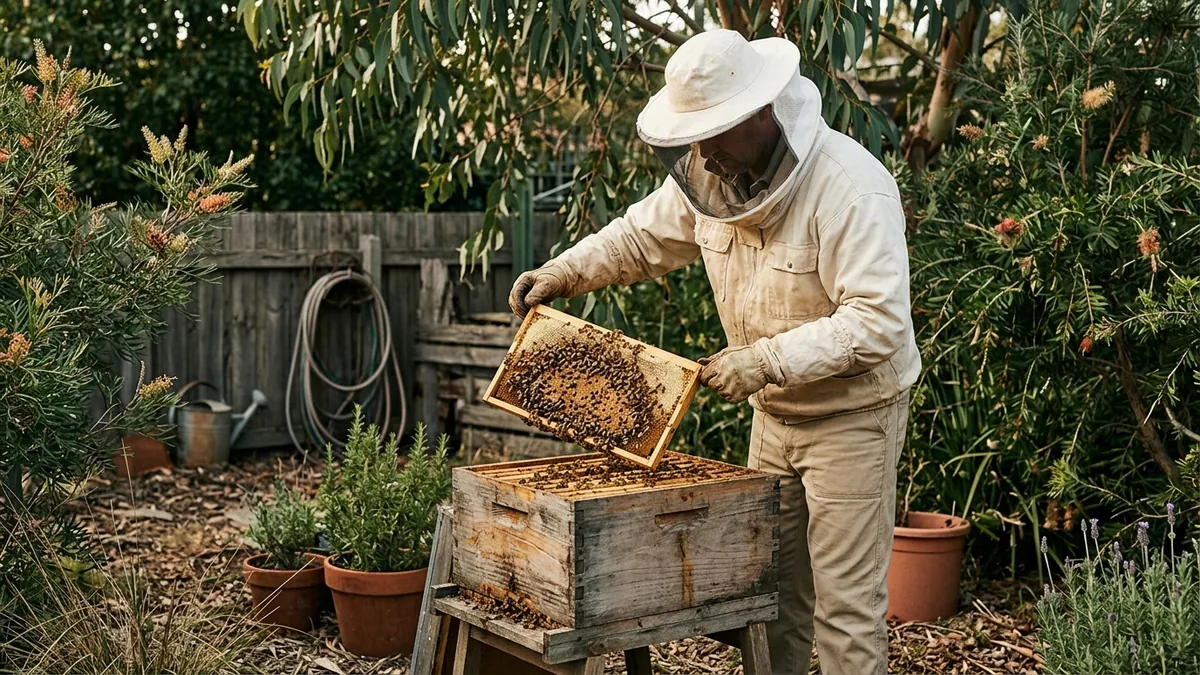
An honest first-year guide for the US, with an interactive checklist that walks you through the bee year
Keeping bees is one of the most rewarding parts of a homestead. It pulls you into the rhythm of the seasons, pollinates your whole garden, and in time gives you honey from your own backyard. It is also more demanding than it looks from the outside. Bees are livestock, they can sting, they need real care, and in the US there are rules to follow that depend on where you live.
This guide is the honest version. It helps you decide whether beekeeping is for you, compares the main hive types, explains how to get your bees, and walks through the bee year so you know what each season asks of you. It is upfront about honey, which is often scarce in year one, and about the legal and health side, especially state registration and varroa mites. The interactive checklist further down organizes the whole first year by season.
Is beekeeping for you?
Before you buy anything, be honest about the commitment. Bees are not a set-and-forget hobby.
- Time. Expect regular inspections through the active season, plus reading, mite testing and the occasional problem to solve. A neglected hive usually dies.
- Cost. Starting one hive with bees, gear and a smoker typically runs several hundred dollars, with smaller ongoing costs for treatments and feed.
- Stings and allergies. You will get stung sometimes. Think about anyone in your household or close by with a sting allergy, and get medical advice if that is a concern.
- Placement and neighbors. Bees forage over a wide area. Good hive placement, a screen or hedge to lift their flight path, and a nearby water source keep the peace with neighbors.
If that all sounds workable and even exciting, beekeeping may be a great fit. Joining a local club and finding a mentor before you start is the single best thing you can do.
Before you get bees, check the law and plan for varroa
Registration and rules vary by state, city and county. Many US states require you to register your hives or apiary with the state department of agriculture, sometimes annually. Some cities have ordinances on hive numbers, setbacks from boundaries, or homeowner association limits. Check your own state department of agriculture and your local city or county ordinances before getting bees.
Varroa mite (Varroa destructor) is established across the US. Active varroa monitoring and management is essential to keep colonies alive. Plan for regular mite testing and treatment from the start. Requirements and best methods change, so check current guidance from your state apiary inspector and university Cooperative Extension rather than relying on a fixed claim here.
Hive types compared
Three hive systems cover almost all new US beekeepers. None is wrong, but they suit different people, and your local mentors will likely favor one.
Langstroth
The standard stacked-box hive. Parts and gear are everywhere, almost every mentor uses it, and it scales well. The trade-off is lifting heavy honey boxes during the season.
Flow Hive
A Langstroth-style hive with special frames that let honey drain out through a tap, so harvesting is easy and gentle. It costs more, and you still do full colony management and varroa control.
Top-bar
A long, low, horizontal hive worked one bar at a time, with no heavy boxes to lift. It is gentle on your back and lovely to work, but uses non-standard comb and usually yields less honey.
Which to pick
For most beginners, the Langstroth wins on support, parts and shared knowledge. Choose the system your local club and mentor use so help is always close at hand.
| Hive type | Best for | Pros | Cons |
|---|---|---|---|
| Langstroth | Most beginners | Standard, parts everywhere, easy to get help, scales up | Heavy boxes to lift when full of honey |
| Flow Hive | Easy harvesting | Honey drains via a tap, gentle on bees at harvest | Higher cost, still needs full management and varroa control |
| Top-bar | No heavy lifting | Worked one bar at a time, back-friendly, simple | Non-standard comb, usually lower honey yield |
Getting your bees and your gear
Nuc, package or swarm
You have three ways to get bees. A nuc (nucleus colony) is a small working colony on several frames with a laying queen, drawn comb and brood. It establishes fastest and is the easiest start for a beginner. A package is a box of loose bees with a caged queen and no comb. It is cheaper and ships well, but takes longer to get going. Catching a swarm is the cheapest of all and very satisfying, but it is unpredictable and best left until you have some experience.
The basic gear
Keep the first kit simple and buy quality once. You need a hive (boxes, frames, base and lid), a veil and protective suit or jacket, gloves, a smoker to calm the bees, and a hive tool to pry frames apart. Add a feeder for the early days and basic mite-testing supplies. A honey extractor can wait, and many clubs share one.
The bee year, season by season
Beekeeping follows the seasons closely. In the US (northern hemisphere) the year runs roughly like this, shifting earlier in the warm South and later in the cold North.
- Spring (March to May): the colony builds up fast as flowers bloom. This is when most beginners install their nuc or package, and when colonies may try to swarm.
- Summer (June to August): peak activity and the main nectar flow. Keep the colony with room to store honey, and stay on top of varroa.
- Fall (September to November): the colony slows and prepares for winter. This is a key time to treat for varroa and make sure they have enough stores.
- Winter (December to February): the colony clusters and rides it out. In cold zones you mostly leave them be and check stores. In the warm South they may stay lightly active.
Your first-year beekeeping checklist
This interactive checklist groups the first year by season. Tick items off as you plan or complete them and watch the count update. Nothing is saved, so it resets each visit, which makes it a clean planning tool every time.
This is a general guide. Adjust timing to your region and follow your local mentor and state apiary program, especially for varroa treatment windows and any registration deadlines.
Honey, realiztically
It is worth saying plainly: you should not expect much honey in your first year, and you may get none. A new colony has to build comb, raise brood and store enough honey to survive its first winter, and all of that comes before any surplus you could take. Harvesting too early can leave the colony short and cost you the whole hive over winter.
Think of year one as the year you learn to keep bees alive and healthy. A harvest you can actually take is far more realiztic from the second year, once the colony is established and strong. Going in with that expectation is what keeps new beekeepers from getting discouraged.
Plan your bee year alongside your garden
The Planting Season app keeps your hives, your beds and your bee-friendly planting in one place, so forage, inspections and the harvest all line up with the seasons. Start your homestead the organized way.
Open the App →Common questions
Do I need to register my hives in the US?
It depends on where you live. Beekeeping rules vary by state and even by city or county. Many states require you to register your hives or apiary with the state department of agriculture, and some require it annually. Some cities have ordinances on the number of hives, setbacks from property lines, or homeowner association limits. Check your own state department of agriculture and your local city or county ordinances before you get bees, rather than relying on a fixed rule.
How much does it cost to start beekeeping?
Plan for a meaningful upfront outlay. A new Langstroth hive, a colony of bees as a nuc or package, basic protective gear, a smoker and a hive tool together typically run several hundred dollars to start one hive. Ongoing costs are smaller but real, including varroa treatments, feed when needed, and replacement equipment. Buying good gear once is usually cheaper than replacing cheap gear, and a local club may have shared extractors and mentoring.
How much honey will I get in the first year?
Often very little, and sometimes none. A new colony spends its first season building comb, raising brood and storing enough honey to survive winter, which has to come first. Taking honey too early can leave the colony short and risk losing it over winter. Treat year one as the year you learn to keep bees alive and healthy. A surplus you can harvest is more realiztic from the second year on, once the colony is established.
What is varroa and why does it matter?
Varroa destructor is a parasitic mite that feeds on honey bees and spreads viruses that weaken and kill colonies. It is established across the US, so active monitoring and management are essential to keep colonies alive. Beekeepers regularly test mite levels and treat when needed using an integrated approach. Requirements and recommended methods change over time, so check current guidance from your state apiary program and university Cooperative Extension rather than relying on a fixed claim.
Which hive type should a beginner choose?
Most new US beekeepers start with a Langstroth hive because it is the standard, equipment and parts are easy to find, and most local mentors and clubs use it. Flow Hives make harvesting easier but cost more and still need full colony management and varroa control. Top-bar hives are lower and need no heavy lifting of boxes, but use non-standard frames and yield less honey. Choosing the system your local mentors use makes learning much easier.
Should I get a nuc or a package of bees?
A nuc, short for nucleus colony, is a small working colony on several frames with a laying queen, drawn comb and brood, so it establishes faster and is usually easier for a beginner. A package is a box of loose bees with a separate caged queen and no comb, which is cheaper and ships well but takes longer to get going. Catching a swarm is the cheapest option but unpredictable and best left until you have some experience.
Is beekeeping a good idea if someone nearby is allergic to stings?
Take it seriously. Beekeepers get stung, and bees forage over a wide area, so think about household members, close neighbors and anyone with a known sting allergy before you start. Good hive placement helps, such as facing the entrance away from walkways and using a fence or hedge to lift the bees flight path above head height, plus a nearby water source so bees do not visit a neighbor pool. If allergy is a real concern, get medical advice first.
Source: US state apiary programs and university Cooperative Extension beekeeping guidance; registration and varroa requirements vary by location and change over time, so confirm current rules locally.
Related guides
See also: the bees section, the poultry section, and the rest of the homestead