
Grow Bags: Sizes, What to Plant and How to Water
Updated November 2026
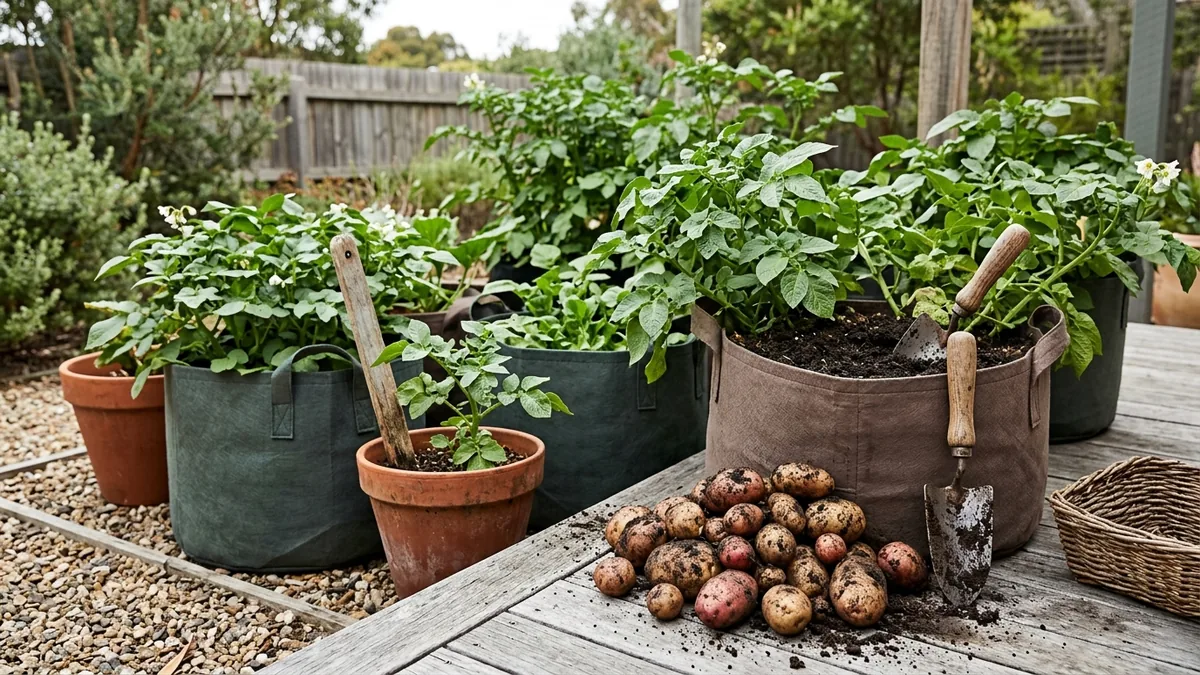
A grow bag is a soft-sided container, usually made of thick non-woven fabric, that you fill with potting mix and set on a patio, deck, driveway or balcony. Grow bags suit renters, small spaces and gardeners with poor or paved ground, and they let you move plants to follow the sun. They also dry out faster than most pots, so the main decision is the right size for each crop and a watering routine that keeps up.
Quick answer
- Pick the size by crop: 3 to 5 gallons for herbs and greens, 5 to 7 for peppers and strawberries, 10 to 20 for tomatoes and potatoes.
- Fabric grow bags drain well and dry out quickly, so expect to water in hot weather every day, sometimes twice.
- Fill with potting mix, not garden soil, and leave an inch or two below the rim for watering.
- Set bags on pavers or a tray if you do not want water and soil staining a deck.
Grow bag sizes and what to plant in each
| Bag size | Crops | Notes |
|---|---|---|
| 1 to 2 gallons | Basil, chives, thyme, radishes, a single lettuce | Dries out in hours in summer. Best for herbs and quick crops. |
| 3 gallons | Lettuce, arugula, spinach, scallions, parsley, bush beans | A good small size for salad and greens. |
| 5 gallons | Peppers, eggplant, strawberries, bush cucumbers, kale, chard | The most useful all-round size for fruiting vegetables. |
| 7 gallons | Larger peppers, bush cucumbers, bush squash, determinate tomatoes | Lets one plant keep its roots cool and moist longer. |
| 10 gallons | Tomatoes, potatoes, trellised cucumbers | The practical minimum for potatoes and full-size tomatoes. |
| 15 to 20 gallons | Indeterminate tomatoes, potatoes, blueberries, dwarf fruit trees | Heavy when watered, so fill it where it will stay. |
Our plant data suggests rigid pots of about 14 gallons for potatoes and about 8 gallons for tomatoes. Bags hold their roots well, so 10 gallons works for both. A bag is rated by volume, so check the gallon figure on the label rather than the width.
Fabric grow bags versus plastic pots
| Fabric grow bag | Plastic or glazed pot | |
|---|---|---|
| Drainage and air | Very good. Water drains through the sides and air reaches the root edge. | Depends on the drainage holes. Water can pool. |
| Drying out | Fast. In hot weather expect daily watering. | Slower, and the most forgiving for a weekend away. |
| Root heat | Dark bags in full afternoon sun can overheat roots. Light-colored bags help. | Dark plastic also overheats in full sun. |
| Moving and storage | Light when empty, folds flat for winter storage, and many have handles. | Bulky, and heavy to shift when full. |
| Lifespan | A few seasons, depending on the fabric and the sun. | Many years. |
| Looks and surfaces | Informal. Water seeping through can stain wood and concrete. | Neater, with a saucer to catch drips. |
Neither is better in every case. In cool or windy climates, fabric bags suit gardeners who tend to overwater, while in hot, dry climates a plastic or glazed pot can save a lot of watering.
How to fill and plant a grow bag
- Roll the sides of the bag down if it is a tall bag and you are planting potatoes, so you can unroll it as the plants grow.
- Fill with fresh potting mix. Our potting mix guide covers what to look for. Garden soil sets hard in a bag and drains badly.
- Mix in a slow-release fertilizer according to its label, or plan to feed with a liquid fertilizer every one to two weeks.
- Plant at the depth the crop needs, water thoroughly until it runs from the sides, and leave about an inch of space between the mix and the rim so water does not spill.
- Mulch the surface with a thin layer of straw or bark to slow evaporation.
Watering a grow bag
Fabric lets water evaporate from the sides as well as the top, so a grow bag needs more water than a plastic pot of the same size. Push a finger two inches into the mix. If it feels dry, water slowly until it runs from the sides. In midsummer heat, check every day, and in a heat wave check morning and late afternoon. A drip line with a timer pays for itself on a deck full of bags, and so does grouping the bags together so they shade each other's sides.
Growing potatoes in grow bags
Grow bags are one of the easiest ways to grow potatoes at home. Plant seed potatoes about 4 inches deep in the bottom third of a 10 gallon bag, and add mix or roll the sides up as the stems grow. Harvest when the foliage yellows and dies back, by tipping the bag out onto a tarp. See potatoes in containers and when to harvest potatoes for varieties and timing.
Tomatoes, peppers and strawberries in grow bags
- Tomatoes. Use 10 gallons or more for full-size plants and stake them firmly, since a heavy plant can tip a soft bag. Our tomatoes in pots guide covers sizes and varieties.
- Peppers. Five gallons suits a pepper plant, and see chili peppers in pots for timing.
- Strawberries. A 3 to 5 gallon bag holds two or three plants, and the fruit stays clean if you tuck straw under it. See strawberries in pots.
Cleaning and storing grow bags
At the end of the season, empty the bag, shake out the roots, and hose it clean. Let it dry fully in the sun before folding it away. If a plant had a disease such as blight, wash the bag with warm soapy water and let it dry in the sun before you reuse it, or use it for a different crop family next year. Old potting mix can go into the compost bin or be refreshed with compost and fertilizer before you reuse it.
Common grow bag problems
| What you see | Likely cause | What to do |
|---|---|---|
| Plant wilts every afternoon | Bag dries out faster than the roots can drink | Water more often, group bags to shade the sides, or move to a larger bag. |
| Bag has slumped or tipped | Soft sides and a heavy plant | Add a stake or tomato cage, or place the bag against a wall or in a crate. |
| Yellow lower leaves | Nutrients washed out by frequent watering | Feed every week or two with a registered liquid fertilizer, following the label. |
| Stains on the deck | Water and fine soil seeping through the fabric | Stand bags on a tray, pavers or a plastic sheet. |
| Roots circling or poking through the sides | Normal. Fabric air-prunes the roots | No action needed, unless the plant has outgrown the bag. |
Frequently asked questions
What size grow bag do I need?
Use 3 to 5 gallons for herbs and greens, 5 to 7 gallons for peppers, eggplant and strawberries, and 10 gallons or more for tomatoes and potatoes.
Do grow bags need more water than pots?
Yes. Fabric lets water evaporate from the sides as well as the top, so grow bags dry out faster than plastic pots. In summer, check them every day.
What should I fill a grow bag with?
Fresh potting mix. Garden soil compacts and drains badly in a container. A potting mix with a slow-release fertilizer mixed in will feed plants for the first weeks.
Can you reuse grow bags?
Yes. Empty the bag, hose it clean, let it dry in the sun and store it flat. Fabric bags typically last a few seasons.
Are grow bags better than pots?
They drain and aerate well and fold away easily, but they dry out faster. They suit gardeners who tend to overwater, while plastic pots suit hot, dry climates or gardeners who are away often.
Related guides
See what to plant this month
Pick your region for a month-by-month calendar tuned to your climate.
Find your region →