
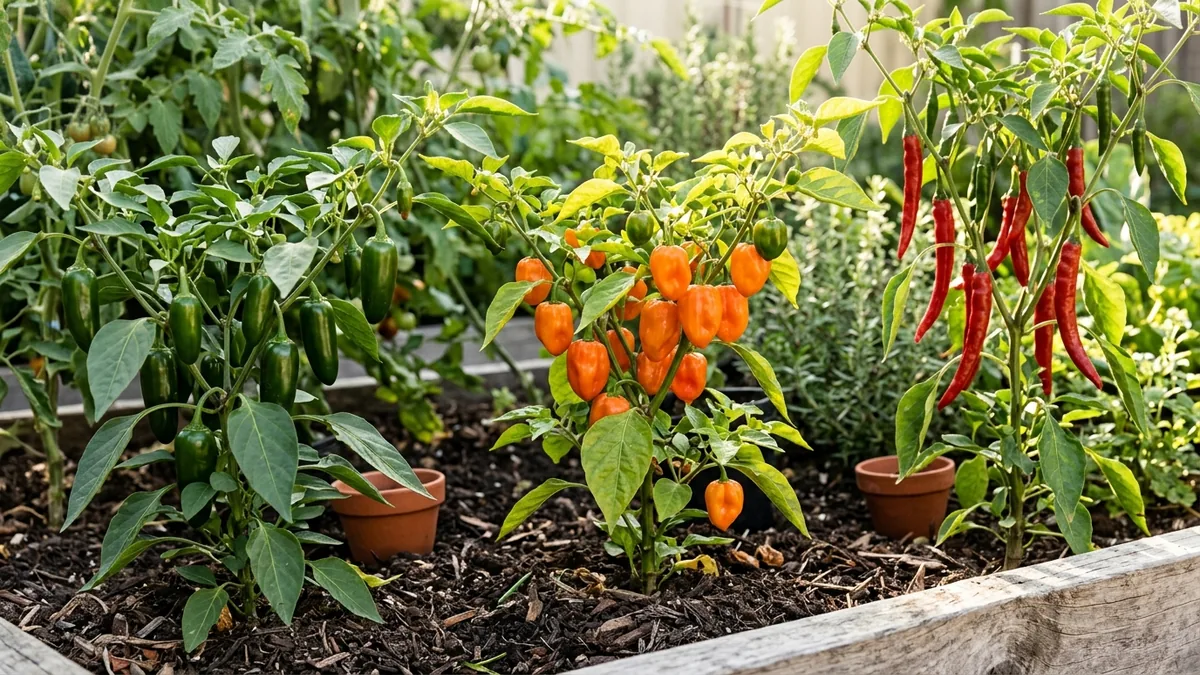
Growing Hot Peppers
Updated June 2026
Pick your heat level, start early, feed for fruiting, and grow superhots in pots anywhere in the US.
Hot peppers are one of the most rewarding crops you can grow. A single healthy plant can carry hundreds of fruit, the plants are pretty enough for a pot by the back door, and homegrown chilies have a depth of flavor and heat that store-bought ones rarely match. The catch is that peppers, and superhots especially, are slow. They need a long, warm season, so the gardeners who succeed are the ones who start early.
This guide covers everything from picking a heat level that suits you, through starting seed early indoors, feeding for fruit rather than leaves, ripening for maximum heat, growing the fierce superhots in pots in cool zones, and handling hot peppers safely.
Heat picker: choose your level
Pick how much heat you want and we will suggest real varieties with their Scoville Heat Unit (SHU) range.
Scoville Heat Units (SHU) measure capsaicin, the compound that makes peppers hot. A bell pepper sits at zero, a jalapeno is a few thousand, and the superhots run past one million. For the full ladder see our chili heat scale guide.
A long, warm season
Hot peppers are tropical perennials grown as annuals in most of the US. They love heat and hate cold, and they fruit best with a long run of warm weather. In the South and the Gulf they grow over a long season and can fruit heavily, while in the cool North the season is short, so you make the most of it by starting early and choosing faster varieties.
The hotter the pepper, the longer it takes. A jalapeno fruits in a single warm summer. A Carolina Reaper can need five months or more of heat from transplant to ripe fruit, which is why an early start matters so much.
Start early indoors
Because peppers are slow, start seed indoors 8 to 10 weeks before your last frost, earlier than you would start tomatoes. Superhots are the slowest of all and benefit from the earliest possible start.
Pepper seed needs real warmth to germinate, ideally a soil temperature of 80 to 90F. A seedling heat mat is close to essential for an even strike, especially for habanero and superhot types, which can take 3 to 6 weeks to come up even when warm. Be patient and keep the mix warm and just moist.
Transplanting and growing on
Transplant peppers out only after your last frost, once nights stay above about 55F and the soil is warm, in the hottest, sunniest, most sheltered spot you have. They want full sun, well-drained soil, and warmth at the roots. In cool zones a wall that holds the day's heat, or black plastic mulch to warm the soil, gives them the extra warmth that lifts the crop.
Space plants 18 to 24 inches apart, water consistently, and mulch to keep moisture even. A short stake helps heavily laden plants stay upright once they are carrying fruit.
Feeding for fruit, not leaves
Feed peppers the way you feed tomatoes. While the plant is young and building leaves, a light balanced feed is fine. Once flowering and fruiting begin, switch to a potassium-rich feed, such as a tomato or bloom fertilizer. Potassium drives flowering, fruit set, and ripening.
The classic mistake is too much nitrogen, which gives a big lush green bush and very few peppers. If your plant is all leaves and no fruit, ease off the nitrogen and switch to potassium.
Why late stress can raise heat
Variety sets most of a pepper's heat, but how you grow it nudges the result. Capsaicin tends to build when the plant is under a degree of stress, particularly later in the season. A controlled, gentle stress can raise heat:
- Ease back slightly on water as the fruit matures. A plant kept a touch drier late in the season often produces hotter fruit than one watered to luxury.
- Plenty of sun and heat builds capsaicin. The hottest, brightest position gives the hottest fruit.
- Let the fruit fully ripen. Heat keeps building as the pepper colors up and matures on the plant.
Ripening green to red
Most peppers start green and ripen through to red, orange, yellow, or brown depending on the variety. You can pick and eat them green, but ripening changes everything. A fully ripe pepper is sweeter, more complex in flavor, and noticeably hotter than the same pepper picked green. A red jalapeno, for example, is hotter and sweeter than a green one, and ripened red and smoked it becomes a chipotle.
Leave fruit on the plant to color up if you want maximum heat and flavor. If frost threatens before they ripen, pick mature green fruit and ripen it indoors on a windowsill, or pull the whole plant and hang it somewhere warm.
Growing superhots in pots in cool zones
You can grow even a Carolina Reaper in the cool North, as long as you grow it in a pot. A container lets you beat a short, cool season:
- Start indoors. Sow very early and raise the plant indoors under lights while it is still cold outside.
- Move it to the heat. Put the pot in the hottest, most sheltered, sunniest spot once it warms up, and move it to follow the sun.
- Protect it. Bring the pot indoors if a cold snap or early frost threatens at either end of the season.
- Overwinter it. Peppers are perennials. Cut the plant back, keep it on the dry side and frost-free indoors over winter, and it surges away the next spring for a much earlier, bigger crop.
Use at least a 5 gallon pot, a good well-draining mix, and feed regularly, because potted plants run out of nutrients faster than ones in the ground.
Handling hot peppers safely
- Wear disposable gloves when picking, cutting, or processing hot peppers.
- Keep your hands away from your face the whole time.
- Wash hands, knives, and cutting boards thoroughly with soapy water afterward. Oil or whole milk cuts capsaicin better than water alone.
- If you are drying or grinding superhots, do it in a well-ventilated space, since the airborne dust will catch in your throat and eyes.
- If pepper burns your skin or mouth, dairy (milk or yogurt) soothes it far better than water.
Got a glut of hot fruit? Turn it into something you can keep all year. See our how to make hot sauce guide.
| Variety | Heat level | Scoville range (SHU) |
|---|---|---|
| Jalapeno | Medium | 2,500 to 8,000 |
| Cayenne | Hot | 30,000 to 50,000 |
| Thai (bird's eye) | Hot | 50,000 to 100,000 |
| Habanero | Hot | 100,000 to 350,000 |
| Scotch Bonnet | Hot | 100,000 to 350,000 |
| Ghost (Bhut Jolokia) | Superhot | 800,000 to 1,000,000+ |
| Trinidad Scorpion | Superhot | 1,200,000 to 2,000,000 |
| Carolina Reaper | Superhot | 1,400,000 to 2,200,000 |
Track your peppers from seed to sauce
Add hot peppers to your garden in the Planting Season app and get reminders for starting early, feeding for fruit, ripening, and harvest, tuned to your region and zone.
Open the App →Common questions
When should I start hot pepper seeds?
Start hot pepper and superhot seed indoors 8 to 10 weeks before your last frost, earlier than tomatoes. Peppers are slow to germinate and grow, especially the superhots, so an early start is the difference between a big crop and a few late fruit. In the South you can start earlier and grow over a longer warm season.
What temperature do pepper seeds need to germinate?
Pepper seeds need real warmth to germinate, ideally a soil temperature of 80 to 90F. Superhots are the slowest and fussiest and can take 3 to 6 weeks even when warm. A seedling heat mat is close to essential for reliable, even germination, especially for habanero and superhot types.
How do I make my peppers hotter?
Heat is mostly set by the variety, but growing conditions nudge it. Let fruit ripen fully on the plant, since a red pepper is hotter than the same pepper picked green. Plenty of sun and heat builds capsaicin, and a controlled amount of stress late in the season, such as easing back slightly on water as fruit matures, can raise heat. Do not starve or severely dry out the plant, which just reduces the crop.
Can I grow superhots in a cool climate?
Yes, but grow them in pots. Superhots like the Carolina Reaper need a long, hot season. In cool northern zones grow them in containers so you can start early indoors, move them into the hottest, sunniest spot, and bring them in if a cold snap or early frost threatens. A pot also lets you overwinter the plant for an earlier, bigger crop next year.
How do I feed hot peppers?
Feed lightly with a balanced fertilizer while the plant is young and building leaves, then switch to a potassium-rich feed once flowering and fruiting begin. Too much nitrogen gives a big leafy bush and few peppers. A tomato or bloom fertilizer is ideal during fruiting.
Do I need gloves to handle hot peppers?
For hot and superhot peppers, yes. Capsaicin sticks to skin and is very hard to wash off, and it burns badly if it reaches your eyes, nose, or other sensitive areas. Wear disposable gloves when picking, cutting, or processing hot peppers, keep your hands away from your face, and wash hands, knives, and boards thoroughly afterward.
Source: university extension pepper growing guidance; Scoville ranges are typical published values and vary with variety and growing conditions.
When to plant in your region
Pick your region to see exactly when to plant peppers where you garden.
See also: Hot peppers in the plant library →