How to Grow Carob in the US
Updated September 2026
A drought tough pod tree for dry, warm climates
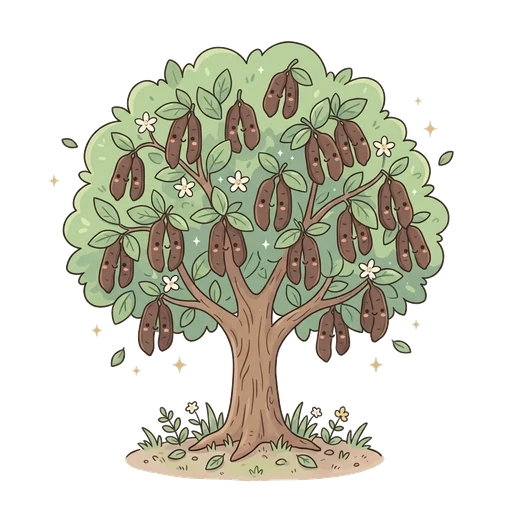
Carob is an evergreen Mediterranean tree that bears long brown pods. Dried and ground, the sweet pulp makes carob powder, a caffeine-free stand-in for cocoa. The tree handles heat and drought and makes a good shade tree where summers are long and dry.
Two things matter most: a dry climate, and a tree that can set pods. Many carob trees are male or female, and male trees never bear.
Where Carob Grows in the US
Carob is right at home in the Desert Southwest (zones 9b to 10a); plant after frost in February or March, or in October, and protect young trees on frost nights. It is a classic Southern California tree, planted in March, April or October. In Northern California and the Central Valley it suits the hot, dry valley; plant from March to May and cover young trees on frost nights for the first few winters. In Hawaii it does best on the dry leeward sides, planted in spring or fall, because wet windward sites give few pods.
Humidity and summer rain mean carob rarely sets pods in Florida or the Gulf South. In Texas, winter freezes, and humidity in the east, stop it cropping. The Mid-South and the Pacific Northwest are too cool and wet, and winters are far too cold in the Mid-Atlantic, the Northeast and New England, the Midwest and Great Lakes, the Upper Midwest and Northern Plains, the Mountain West, the Southern Plains and Alaska. Choose your region below for local planting months.
Varieties to Try
Santa Fe
A California selection with flowers that are both male and female, so a single tree can set pods.
Grafted female trees
Heavy pod producers selected for sweet pulp. They need a male tree, or a tree with both flower types, within range for pollination.
Seedling trees
Cheap and tough, but you will not know for years whether a seedling is male, female or both, and males never bear pods. Buy grafted trees if you want pods.
Planting
Plant in the months shown for your region. Choose full sun, a warm spot and soil that drains very well. Carob grows in poor, rocky and alkaline soils, pH 6 to 8, but heavy, wet ground rots its roots.
Trees grow about 16 to 33 feet tall and wide, so allow about 20 feet around each one. Keep carob away from lawns, which are watered too often for it, and from paving and patios, where roots can lift paths and dropped pods make a mess.
Care and Pollination
Pollination: you need a male and a female tree for pods unless the variety sets pods on its own, like Santa Fe. Bees and other insects move the pollen.
Water: water deeply every couple of weeks in the first two summers, then taper off. Established trees need only occasional deep water in long dry spells. Overwatering is the usual cause of failure.
Frost: young trees are frost tender. Cover them with frost cloth on cold nights for the first few winters. Mature trees handle light frost.
Pruning and feeding: prune in winter only to lift the canopy and remove dead wood. Carob needs little or no fertilizer.
Pests and Diseases
These are the problems US gardeners are most likely to meet:
- Root and crown rot: The biggest threat, caused by wet or poorly drained soil and frequent watering. Plant high and water deeply but rarely.
- Few insect pests: Carob has few pest problems in dry Western gardens.
- Frost damage: Young trees can be killed by frost. Protect them until they are a few years old.
Harvest and Storage
Pods turn dark brown and dry on the tree from late summer into fall. Knock or shake them down onto a tarp, then dry them further in the sun for a few days until they snap cleanly.
To make carob powder, rinse and dry the pods, break them open and remove the very hard seeds, then roast the pieces lightly and grind and sift them. You can also chew the dried pulp straight from the pod. Dried pods keep for months in a dry, rodent-proof container.
Track Your Carob Tree
Add carob to your garden in the Planting Season app and get reminders for watering, frost protection and harvest time.
Open the App →Frequently Asked Questions
Why does my carob tree have no pods?
It may be a male tree, which never bears, or a female with no male nearby. Young trees also take several years to start bearing. Grafted trees of a known pod-bearing variety avoid the guesswork.
Is carob hard to grow?
Not in a dry, warm climate. It needs full sun, excellent drainage and very little water once established. The usual mistakes are overwatering and planting where winters are too cold or wet.
Can carob grow in Florida?
Our calendars do not list carob for Florida. Humidity and summer rain mean it rarely sets pods there. It needs a dry climate like the Desert Southwest or California.
How do you make carob powder?
Rinse and dry ripe pods, remove the hard seeds, roast the pod pieces lightly, then grind them finely and sift. Store the powder in an airtight jar.
See also: Carob in the Plant Library