How to Grow Sapodilla in the US
Updated September 2026
A tough tropical fruit tree for South Florida and Hawaii
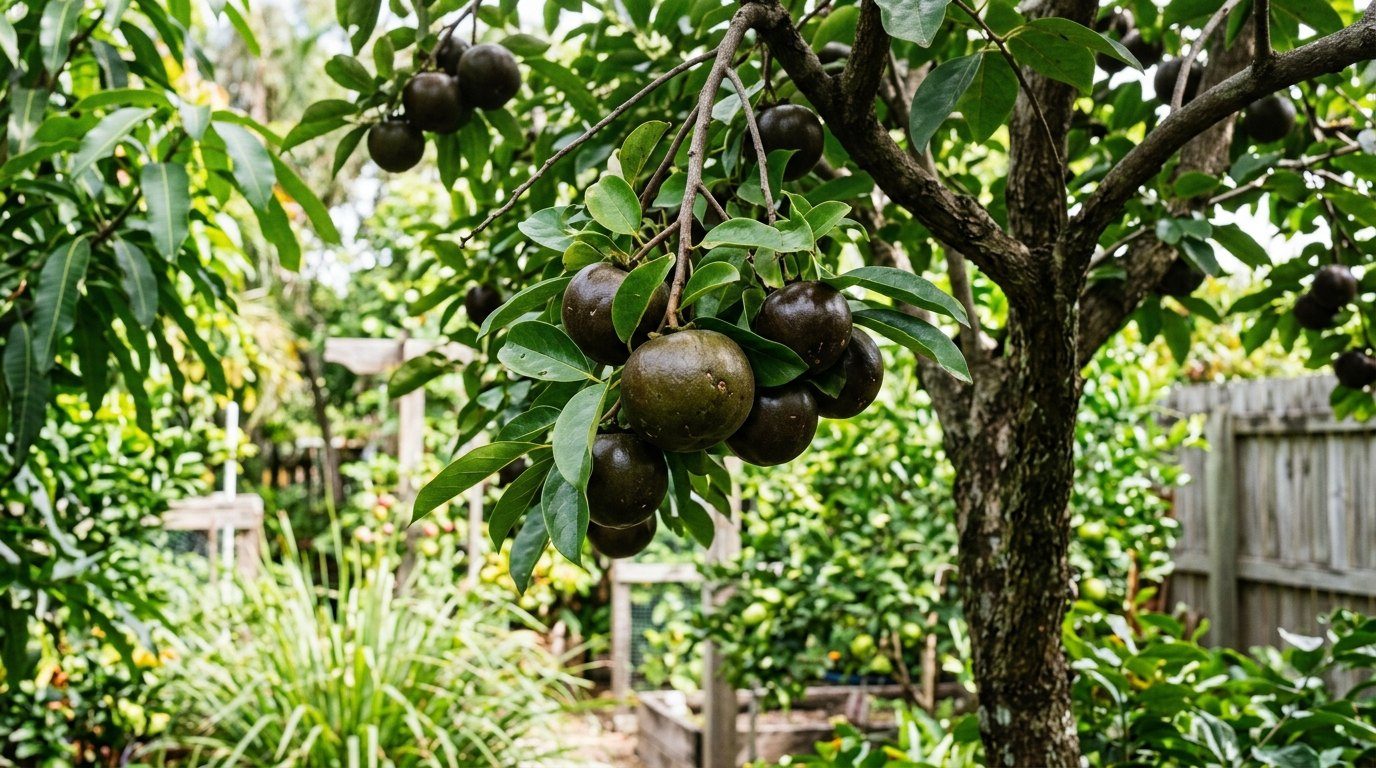
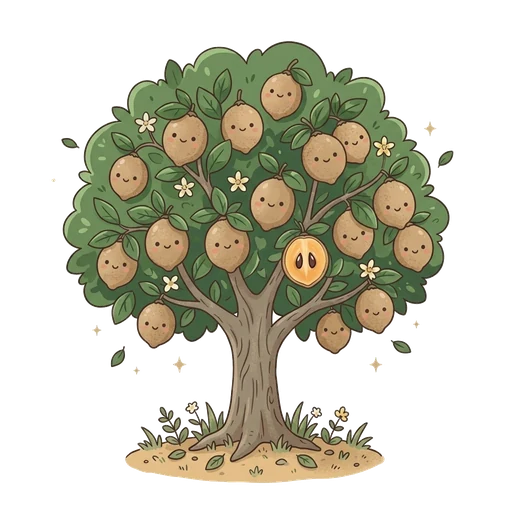
Sapodilla is a slow-growing evergreen tree from Mexico and Central America. Its fruit has thin brown skin and soft, honey-brown flesh with a malty, brown sugar sweetness. The tree's milky latex, chicle, was the original base of chewing gum.
Once established, sapodilla is one of the easiest tropical fruits. It tolerates salt spray, wind and poor sandy or rocky soil, which makes it a good tree for coastal yards. Cold is its only real limit.
Where Sapodilla Grows in the US
Sapodilla grows outdoors in South Florida (zones 10b to 11b), where you can plant from February to October, from late winter through the wet season. It is salt and wind tolerant, so it does well near the coast. It thrives in the warm lowlands of Hawaii; plant in spring or fall.
Sapodilla needs USDA zone 10b or warmer to grow outdoors, and parts of Central Florida are colder, so there grow it in a large container you can move under cover, or skip it. In North Florida and the Gulf South young trees die in a light frost. Texas is too cold outside the far southern tip. Winter frosts and dry heat rule out the Desert Southwest, and Southern California winters are too cool for it to fruit well. Every other US region is too cold. Choose your region below for local planting months.
Varieties to Try
Alano
The standard Florida variety, with sweet, smooth flesh.
Makok
A dwarf, slow-growing tree with small, very sweet fruit. The best choice for a small yard or a large container.
Tikal
An early-ripening variety with elliptical fruit and good flavor.
Hasya
A productive tree with large, sweet fruit.
Planting
Plant in the warm months shown for your region. Choose full sun and soil that drains well. Sapodilla grows in sand and limestone soils and tolerates salty coastal air.
Standard trees grow slowly to about 16 to 40 feet tall, so allow about 20 feet around a full-size tree. Dig a hole as deep as the root ball and wider, set the tree at the same depth, water in well and mulch, keeping mulch away from the trunk.
Care and Pollination
Pollination: most grafted varieties set fruit on a single tree, though crops can be better with another variety nearby.
Water: water young trees regularly for the first year or two. Established trees are drought tolerant but fruit better with water during long dry spells.
Feeding: feed young trees lightly and often during the first year with a balanced fertilizer, then two or three times a year once established.
Cold: protect young trees from any frost with frost cloth. In a container, move the tree under cover before cold nights.
Pests and Diseases
These are the problems US gardeners are most likely to meet:
- Scale insects: Bumps on stems and leaves, often with sticky honeydew and black sooty mold. Spray with horticultural oil.
- Frost damage: The main threat. Young trees are killed by a light frost.
- Wildlife: Raccoons, squirrels and birds take ripening fruit. Pick fruit when mature and ripen it indoors.
Harvest and Storage
Sapodilla fruit looks much the same when mature as when unripe, so check before picking. A mature fruit has brown scurf on the skin that rubs off easily, and a light fingernail scratch shows yellow or tan rather than green skin underneath.
Pick mature fruit and ripen it at room temperature for several days until it softens. Unripe fruit is full of sticky latex and astringent. Once soft, eat it within a few days or keep it in the fridge for a few more.
Track Your Sapodilla Tree
Add sapodilla to your garden in the Planting Season app and get reminders for feeding and harvest time.
Open the App →Frequently Asked Questions
How do I know when a sapodilla is ready to pick?
Rub the skin: on a mature fruit the brown scurf rubs off easily. Scratch it gently with a fingernail; yellow or tan underneath means it is mature, green means wait. Ripen picked fruit indoors until soft.
Can I grow sapodilla in Central Florida?
Sapodilla needs zone 10b or warmer, and parts of Central Florida are colder. Grow a dwarf variety such as Makok in a large container you can move under cover on frost nights.
Does sapodilla tolerate salt?
Yes. Sapodilla handles salt spray and wind, which makes it one of the better fruit trees for coastal yards in South Florida.
Why is my sapodilla fruit sticky and bitter?
It was picked before it was mature or eaten before it softened. Unripe sapodillas are full of latex. Pick only mature fruit and let it soften at room temperature.
See also: Sapodilla in the Plant Library