
How to Grow Sweet Potatoes
Updated June 2026
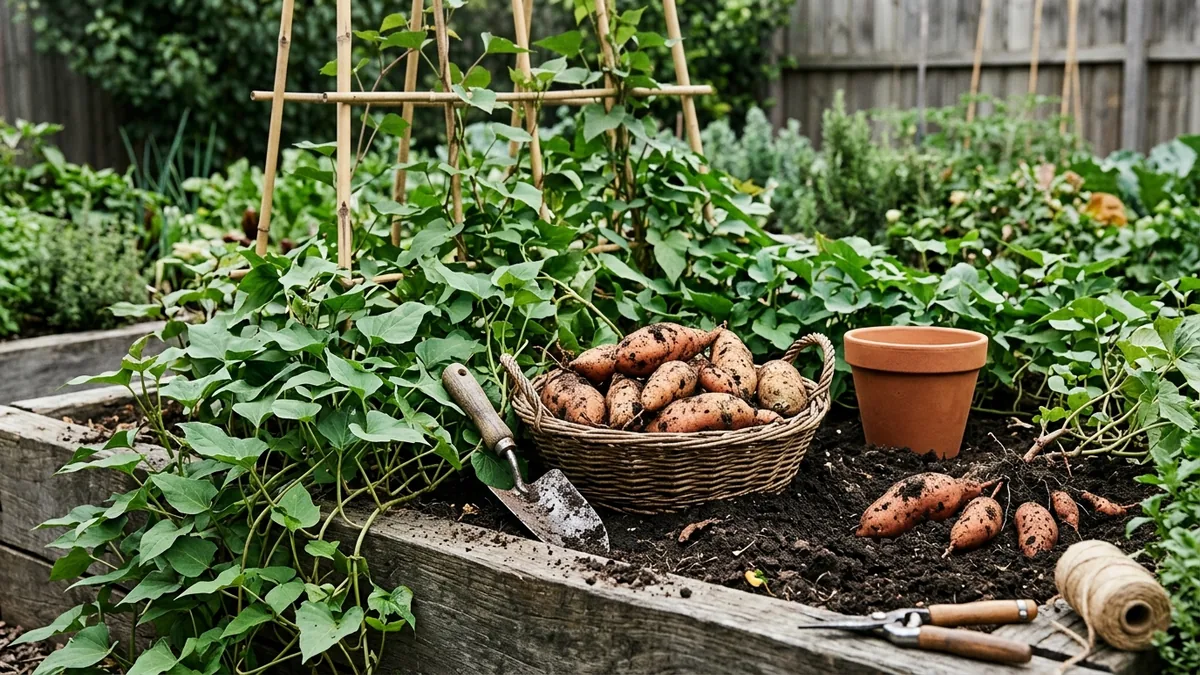
Slips, a warm, long season, mounding, even watering, and curing for sweetness and storage
Sweet potato is a warm-season root crop grown for its sweet, starchy tubers and its vigorous trailing vine. It is not a true potato and it is not grown from seed. Instead you plant slips, which are rooted shoots, and the plant rewards you with heavy yields even from fairly poor soil, as long as it gets heat and a long frost-free season.
The vines sprawl across the ground and smother weeds while the tubers swell underground. Give sweet potatoes full sun, warm soil and room to roam, then leave them largely alone. The two things that make the difference between a bland, starchy harvest and a sweet, creamy one are a long enough warm season and a proper curing step after digging.
Growing From Slips
A slip is a rooted shoot that sprouts from a sweet potato tuber. You can buy slips by mail order or from a garden center, but they are easy and cheap to grow yourself, and growing your own lets you choose your variety and start at the right time for your garden.
How to make your own slips
- Choose a healthy, firm tuber. Either half-bury it in moist sand or seed-starting mix, or suspend the lower half in a jar of water using toothpicks.
- Keep it warm, around 75 to 85 F, in a bright spot. Shoots sprout over a few weeks.
- When the shoots reach about 6 to 8 inches, twist or snap them off the tuber.
- Root the slips in a glass of water or pot them up in moist mix. Roots form within a week or so.
- Plant out once the soil is warm and frost has passed.
Start the process about 6 to 8 weeks before your planting-out time. One tuber can throw many slips over several weeks, so keep snapping off new shoots as they appear.
A Warm, Long Season
Sweet potatoes need about 4 to 5 months, roughly 100 to 150 days, of warm, frost-free weather to size up. They love heat and grow best when the soil is consistently above 65 F. Cold, wet soil makes slips sit and rot rather than strike, so there is no benefit in planting early.
In cooler or short-season zones you can still grow a crop. Warm the soil with black plastic or mulch before planting, use cloches or row cover early, and choose short-season varieties. Sweet potatoes are not frost tolerant at either end, so plant only after the last frost and dig before the first fall frost.
Slips Calculator
Tell the calculator the size of your bed and it estimates how many slips you need. It assumes rows about 30 inches apart, with slips spaced along the row at the spacing you choose. Row spacing stays fixed at about 30 inches.
Add about 10 percent spare slips, as not all of them strike. Rows are assumed at 30 inches apart.
Position and Soil
Give sweet potatoes full sun and the warmest spot you have. They like loose, free-draining sandy loam and slightly acidic to neutral soil, around pH 5.5 to 6.5. Heavy clay restricts the tubers and makes them forked and small, so loosen the bed deeply and add compost and grit if your soil is heavy.
Avoid very rich, high-nitrogen soil. Too much nitrogen pushes lush leafy vine at the expense of tubers, so feed lightly. On reasonably fertile ground you often need no extra feeding at all.
Mounding and Ridging
Plant slips into raised mounds or ridges about 8 to 12 inches high. Mounding improves drainage, warms the soil and gives the tubers room to form and expand. It is one of the most useful things you can do for a sweet potato crop.
Push each slip in deeply, leaving only the top 2 to 3 leaves above the soil. Buried stem readily grows roots and tubers, so deep planting pays off.
Watering
Keep the soil evenly moist while the slips establish and through the main growth period. Even moisture gives the best-sized tubers. In the last 3 to 4 weeks before harvest, cut back on watering to firm up the skins and improve storage.
Avoid two extremes. Waterlogged soil rots the tubers, and erratic wet-then-dry cycles cause cracking as the tubers swell in sudden bursts. Lift and redirect the vines occasionally so they do not root at every node, which otherwise scatters the plant's energy into many small tubers.
Growing in Containers
Sweet potatoes grow well in a large container, half-barrel or grow bag of at least 10 gallons. Plant one to two slips in a free-draining mix, set it in full sun, and water consistently through the season. Bush or compact varieties suit containers far better than rampant vining types, which need a lot of room to roam.
Varieties
| Variety | Flesh / skin | Notes |
|---|---|---|
| Beauregard | Orange flesh, light skin | The most widely grown variety, reliable with good yields. About 90 to 110 days, a solid first choice. |
| Georgia Jet | Orange flesh | Early and quick, the pick for cooler and shorter seasons in the North where time is tight. |
| Centennial | Deep orange flesh | Sweet, moist orange type that stores well. A dependable all-rounder. |
| Murasaki | White flesh, purple skin | Japanese type with a nutty, chestnut flavor and firm texture. Striking on the plate. |
| Bonita | White flesh, light skin | Mild, creamy white-fleshed variety. A good change of pace from the orange types. |
| Northern Star | White flesh | A good keeper with a drier, starchier texture closer to a regular potato. |
Harvesting
Sweet potatoes are ready when the lower leaves start to yellow, once the tubers have sized up, or simply before the first frost in cooler zones. Gently fork into the edge of a mound to check tuber size before committing to digging the whole plant.
Dig carefully on a dry day. Start digging well away from the stem, as tubers can extend 12 inches or more from the base. The skins are fragile and bruise easily, so handle them gently and do not scrub them hard. Brush off loose soil and let them dry, but do not wash them before curing.
Curing and Storage
Curing is the key step for both sweetness and storage. Cure freshly dug tubers for about 4 to 7 days in warm, humid conditions, roughly 80 to 85 F with high humidity around 85 to 90 percent. This heals the skins and converts some of the starch into sugar, which is exactly why cured sweet potatoes taste sweet and creamy rather than bland.
After curing, store the tubers somewhere cool but not cold, around 55 to 60 F, in a dark, airy spot. Do not refrigerate them. Fridge temperatures cause chilling injury, giving a hard core and an off flavor when cooked. Cured tubers keep for months, and the flavor often improves over the first few weeks.
Region and season note
Across the US, plant slips 2 to 4 weeks after your last frost, once the soil has warmed. In the South and Florida the long season lets you plant in spring, and the warmest areas can fit more than one planting. In the North, the season is short, so choose short-season varieties, warm the soil with black plastic, and harvest before the first fall frost. Find your zone's frost dates on the what to plant now page.
Plan your sweet potato season in the app
Add sweet potatoes to your garden in the Planting Season app and get timed reminders to start slips, plant out after frost, and dig before the cold. Log the harvest and watch your totals build.
Open the App →Common questions
How do I make my own sweet potato slips?
Take a healthy, firm sweet potato and either half-bury it in moist sand or seed-starting mix, or suspend the lower half in a jar of water, in a warm spot around 75 to 85 F. Shoots sprout over a few weeks. When the shoots reach about 6 to 8 inches, twist or snap them off and root them in water or pot them up, then plant out once the soil is warm and frost has passed. Start about 6 to 8 weeks before your planting-out time. Use certified or healthy untreated tubers, as some grocery-store ones are treated to stop sprouting.
When do I plant sweet potatoes?
Plant slips 2 to 4 weeks after your last frost, once the soil has warmed. In the South and Florida the long season lets you plant in spring, and the warmest areas can fit more than one planting. In the North, choose short-season varieties, warm the soil first, and harvest before the first fall frost. Sweet potatoes are not frost tolerant and need a long warm run of about 4 to 5 months.
Why are my sweet potatoes all vine and no tubers?
Too much nitrogen is the usual cause. Rich, high-nitrogen soil pushes lush leafy vine at the expense of tubers, so feed lightly and avoid heavy nitrogen feeds. Vines that root at every node where they touch the soil also spread the plant's energy into many small tubers, so lift and redirect the vines occasionally. Full sun and a long warm season help the plant put energy into roots.
Why do I need to cure sweet potatoes?
Curing heals the skins and converts some of the starch into sugar, which is why cured sweet potatoes taste sweet and creamy rather than bland and starchy straight from the ground. Cure freshly dug tubers for about 4 to 7 days in warm, humid conditions, roughly 80 to 85 F with high humidity around 85 to 90 percent. Curing also toughens the skins so the tubers store for months.
How do I store sweet potatoes, and why not the fridge?
After curing, store sweet potatoes somewhere cool but not cold, around 55 to 60 F, in a dark, airy spot. Do not refrigerate them. Fridge temperatures cause chilling injury, which gives a hard core and an off flavor when cooked. Cured tubers keep for months and the flavor often improves over the first few weeks.
Can I grow sweet potatoes in a container?
Yes. Use a large container, half-barrel or grow bag of at least 10 gallons, with one to two slips in a free-draining mix, in full sun. Keep the water up consistently through the season. Bush or compact varieties suit containers better than rampant vining types, which need a lot of room.
How long do sweet potatoes take to grow?
From planting slips, sweet potatoes take about 4 to 5 months, roughly 100 to 150 days, of warm frost-free weather to mature. Warmth speeds it up and cool conditions slow it down, so in cooler zones choose short-season varieties and warm the soil to make the most of the season.
See also: How to Grow Potatoes and How to Grow Pumpkin
Related guides
See also: Sweet Potato in the Plant Library