
How to Grow Pumpkins and Winter Squash
Updated June 2026
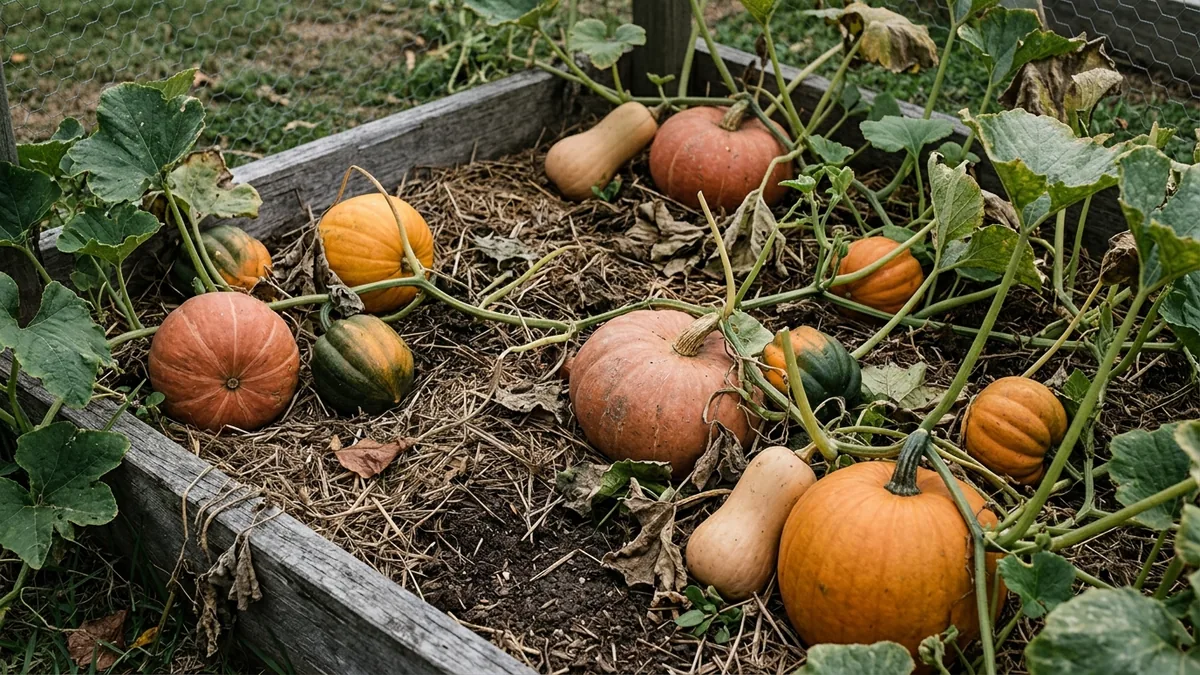
A sprawling warm-season crop that rewards rich soil and a long summer with fruit that keeps for months.
What it looks like as it grows
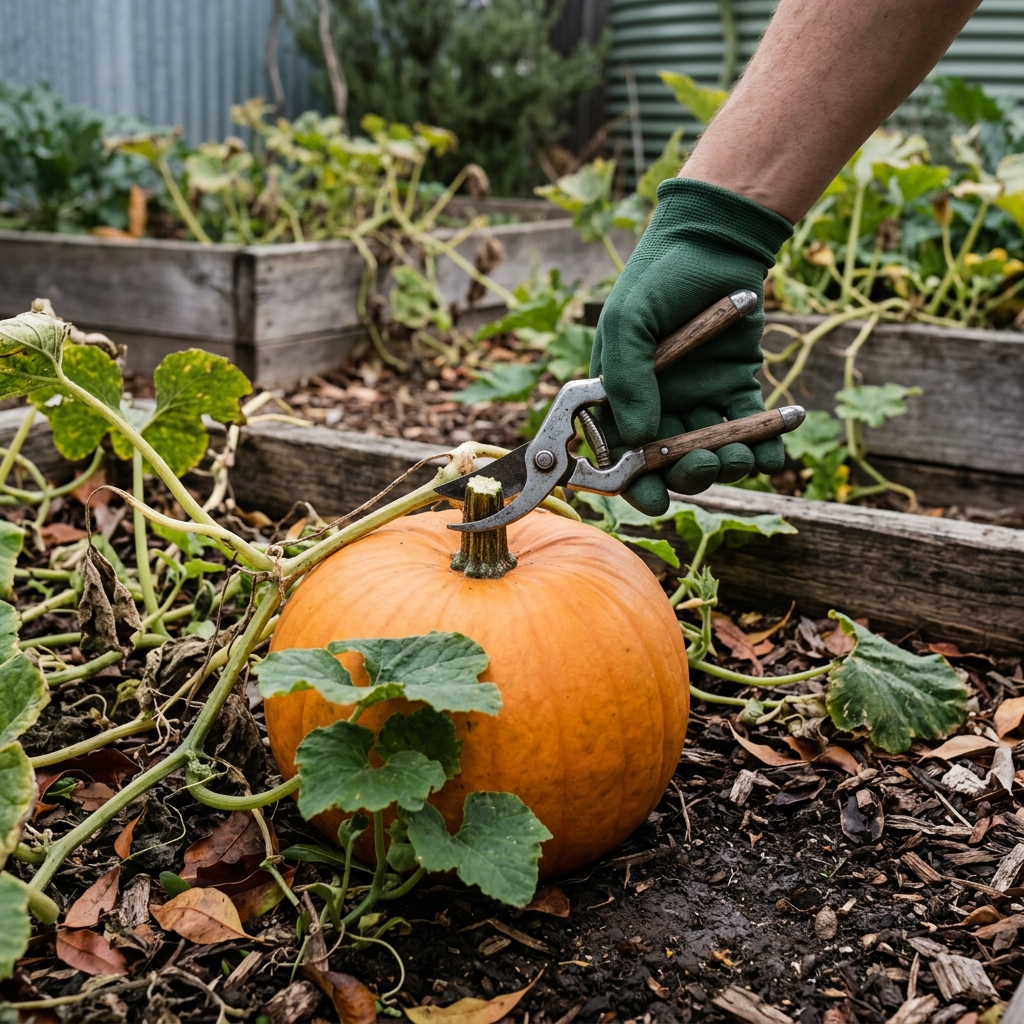
Pumpkins and their winter squash cousins are some of the most satisfying things you can grow. Give them sun, rich soil, warmth, and room to run, and a single seed becomes a vine carrying fruit you can store right through fall and winter. They are a warm-season crop through and through, so the whole job hangs on timing the sowing to warm soil and giving the plants a long enough season to finish.
The two skills that separate a good crop from a poor one are pollination and patience. Pumpkins rely on bees to move pollen between separate male and female flowers, so when set is poor you step in by hand. Then you wait, because a pumpkin is not done until the rind is rock hard and the stem has corked. Cure it well after picking and it will keep for months.
Pumpkin space calculator
Enter how many plants you want and whether they are vining or bush types. The calculator estimates the patch size you need.
Position and soil
Pumpkins demand full sun and rich, free draining soil. Before planting, dig in a generous amount of compost or well rotted manure, because these are heavy feeders that build a lot of leaf and fruit in a short time. They will happily take over a corner of the yard, so choose somewhere the vines can run without smothering other crops, or train them along a fence line.
Sowing and planting on hills
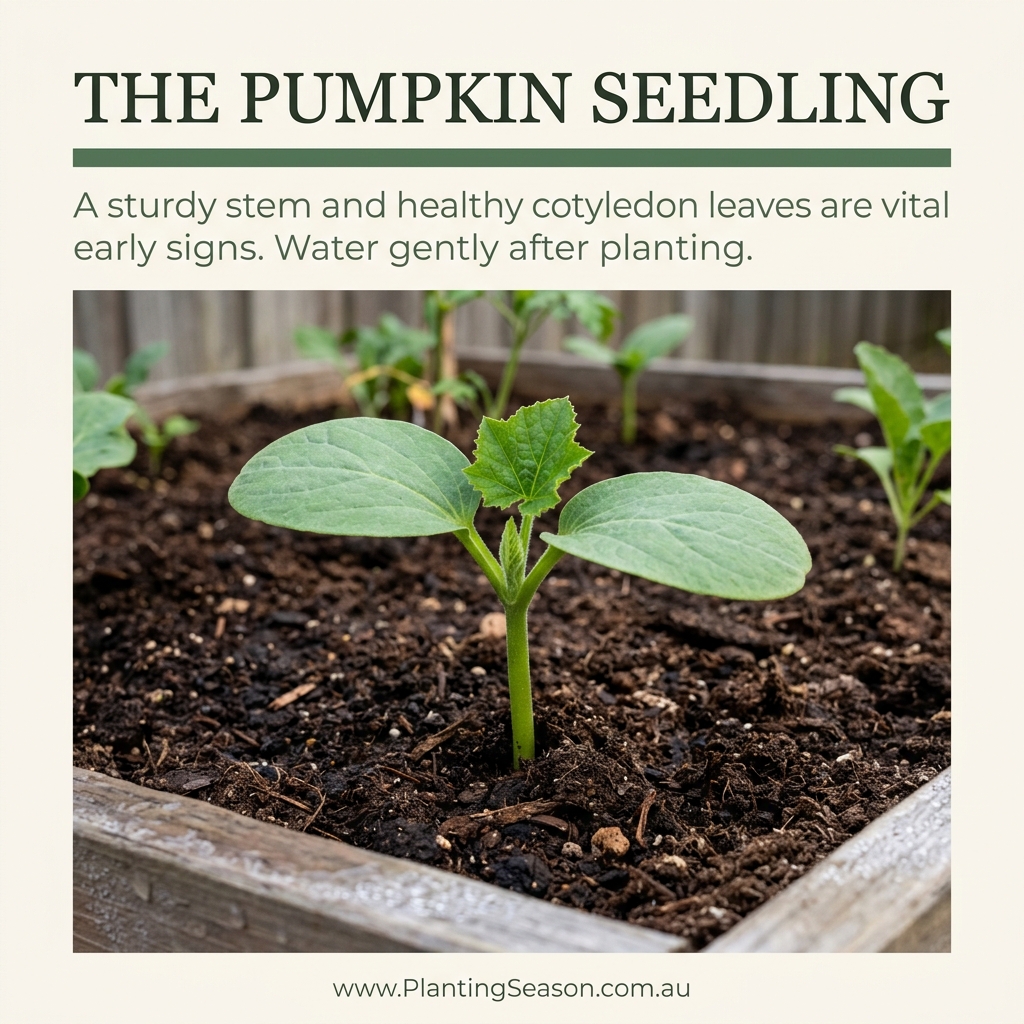
Sow seed directly after the last frost, once the soil has warmed to about 65 to 70 F. Seed dropped into cold, wet soil simply rots. A traditional and effective method is to plant on hills, low mounds of enriched soil about a foot across. Sow two or three seeds per hill an inch deep, then thin to the strongest one or two seedlings. Mounds warm faster, drain well, and give the roots a deep pocket of rich soil to work in.
In short-season northern zones, start seed indoors in pots two to three weeks before your last frost and transplant carefully once the weather is settled, or simply choose a faster pie type that finishes within your summer.
Hand pollination
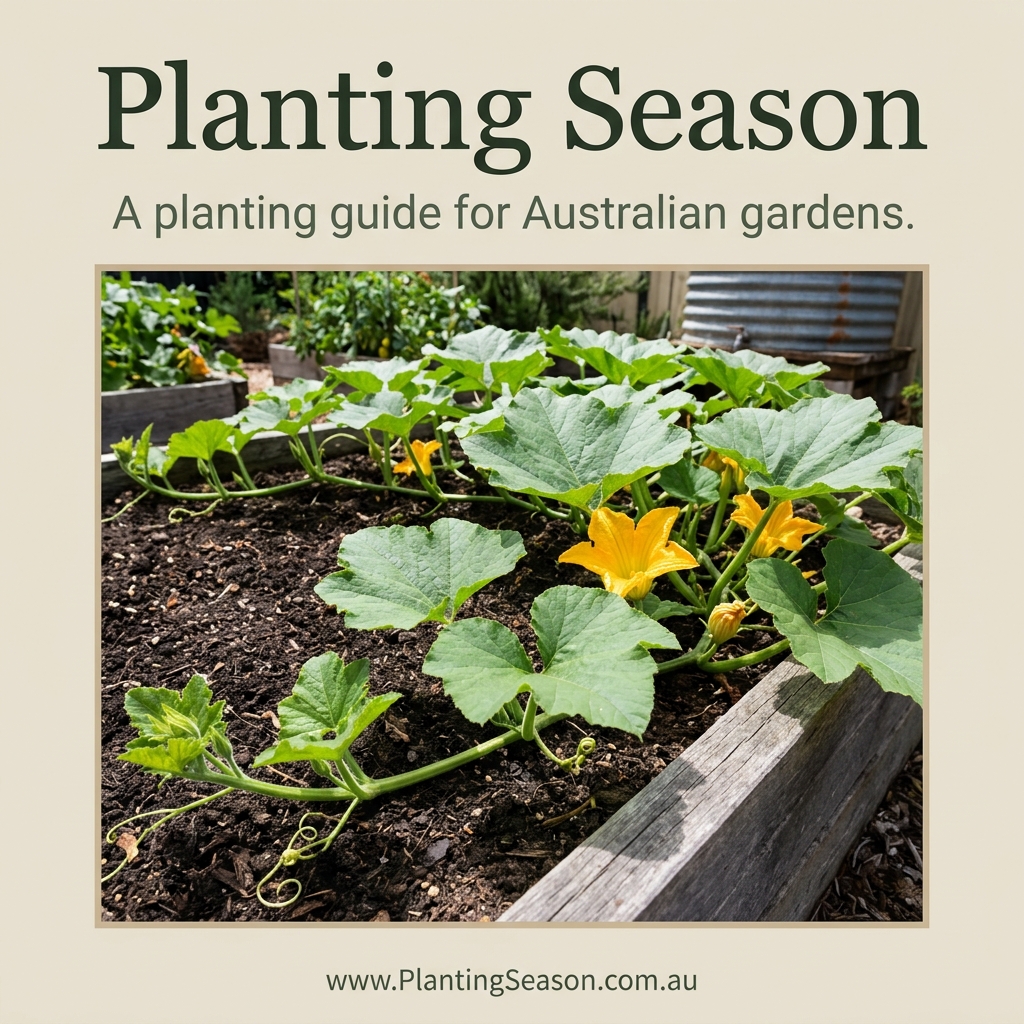
Each plant carries separate male and female flowers. Male flowers sit on thin straight stems and usually open first. Female flowers have a tiny immature fruit, a small swelling, right behind the bloom. Bees normally do the work, but when set is poor or pollinators are scarce you can step in. On a warm morning, pick a freshly open male flower, peel back its petals, and dab the pollen-laden center directly onto the middle of an open female flower. A small soft brush works too. Do it early in the day while the flowers are fully open.
Watering and feeding
Pumpkins drink and eat heavily. Water deeply and regularly, aiming the water at the soil line rather than over the leaves to keep foliage dry and slow disease. Mulch to lock in moisture and keep developing fruit off bare soil. Feed through the season with a balanced fertilizer, easing off on nitrogen once fruit has set so the plant puts its energy into the pumpkins rather than yet more leaf.
Problems: powdery mildew
Powdery mildew is the classic pumpkin trouble, a white powdery coating that spreads across the leaves, usually late in the season. Slow it by spacing plants for good airflow, watering at the soil line, and removing the worst affected leaves. A milk spray or a potassium-bicarbonate spray can hold it back. Late mildew rarely ruins a crop that is already ripening, so do not panic if it shows up as the pumpkins are sizing up. Watch also for squash bugs and vine borers, picking pests off by hand where you can.
Harvest, curing, and storage
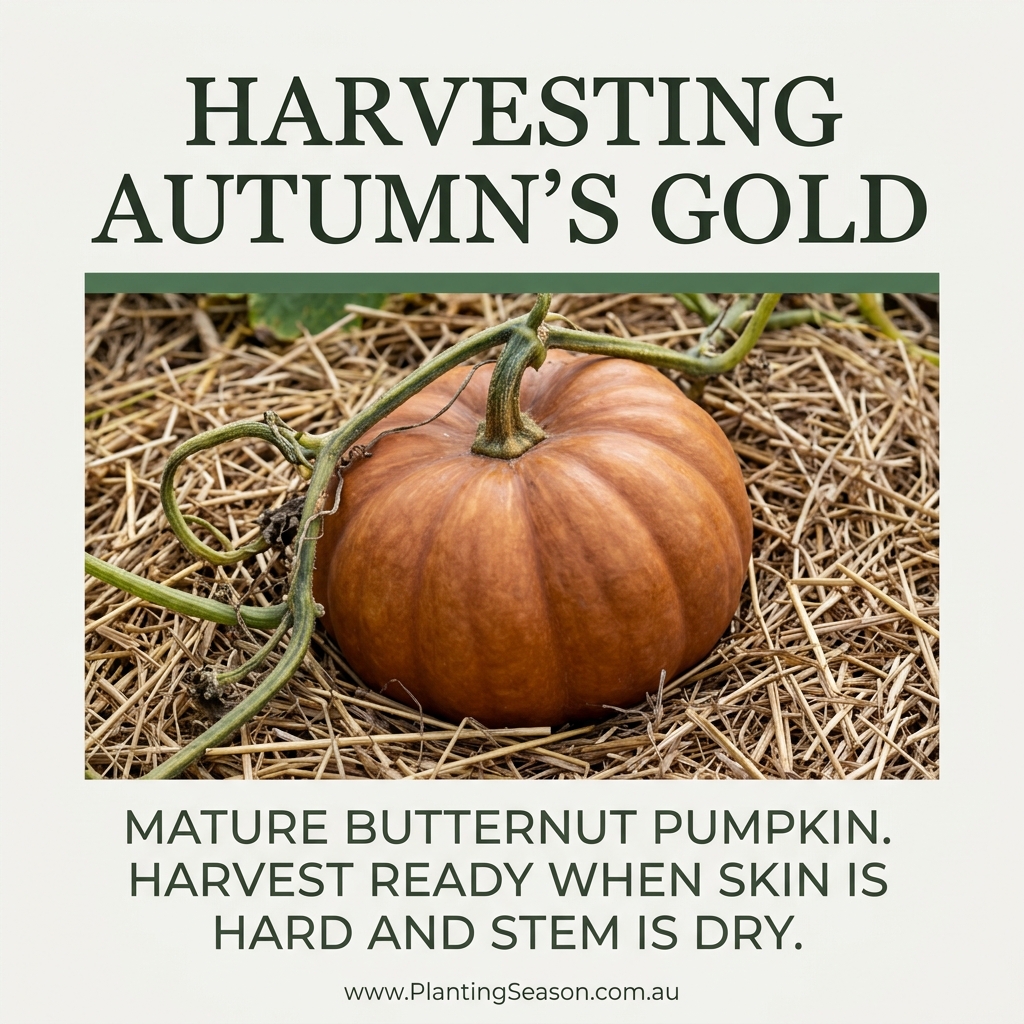
A pumpkin is ripe when the rind is hard enough that you cannot dent it with a thumbnail, the color has turned deep and dull rather than glossy, the stem has corked and dried, and it sounds hollow when thumped. Harvest before the first hard fall frost, cutting the fruit with a few inches of stem still attached; a missing stem is an open door for rot.
Cure the cut fruit for one to two weeks in a warm, dry, airy spot to harden the rind and heal small wounds. Cured pumpkins then store for months in a cool, dry place, not touching one another. Curing is the single step that decides whether your pumpkins keep until midwinter or spoil within weeks.
Best pumpkin and winter squash varieties for US gardens
| Variety | Type | Why grow it |
|---|---|---|
| Waltham Butternut | Butternut squash | Sweet, dense flesh, reliable, and one of the best keepers in storage. |
| Sugar Pie / New England Pie | Small pie pumpkin | Small, sweet, and fine textured, the classic choice for baking and pies. |
| Jarrahdale | Blue-gray heirloom | Handsome slate-blue rind, sweet flesh, and an excellent long keeper. |
| Dickinson | Tan processing pumpkin | The classic canning and pie pumpkin, with thick, smooth, flavorful flesh. |
| Connecticut Field | Large traditional pumpkin | The big, round, ribbed jack-o-lantern type, productive and easy to grow. |
US regions and seasons
Pumpkins grow across most of the US through summer, but they need a long warm season of about three to four months to finish. Sow after the last frost once the soil is warm. In short-season northern zones, start seed indoors two to three weeks early or pick faster pie types that mature in around 90 days. In the South and Southwest, an early sowing avoids having the harvest run into the worst summer disease pressure. Everywhere, harvest before the first hard fall frost.
Track your pumpkin patch in the app
Log your sowing date, get hand-pollination and harvest reminders, and count down to your first fall frost with Planting Season.
Open the App →Frequently asked questions
- When should I plant pumpkins?
- Sow after the last frost, once the soil has warmed to about 65 to 70 F. Seed sown into cold soil rots. In short-season northern zones, start seed indoors two to three weeks early or choose faster pie types.
- How much space does a pumpkin plant need?
- Vining types sprawl 5 to 6 feet each way, so allow roughly 25 to 36 square feet per plant. Bush types need far less, about 9 to 16 square feet each. Use the calculator above to size your patch.
- Why are my pumpkin flowers not setting fruit?
- Pumpkins carry separate male and female flowers, and the first flush is usually all male. Female flowers have a tiny fruit behind the bloom. If pollinators are scarce, hand pollinate in the morning with a male flower or small brush.
- How do I deal with powdery mildew?
- It shows as a white powdery coating on leaves. Improve airflow, water at the soil line, remove affected leaves, and treat with a milk or potassium-bicarbonate spray. Late mildew rarely ruins a crop already ripening.
- How do I know when a pumpkin is ripe?
- A ripe pumpkin has a hard rind you cannot dent with a thumbnail, a deep dull color, a stem that has corked and dried, and a hollow sound when thumped. Harvest before the first hard fall frost, leaving a few inches of stem.
- Do I need to cure pumpkins before storing?
- Yes. Cure cut pumpkins for one to two weeks in a warm, dry, airy spot to harden the rind. Cured fruit then keeps for months in a cool, dry place. Curing is the difference between a pumpkin that keeps and one that rots.
- How long do pumpkins take to grow?
- Sugar and pie pumpkins take about 90 to 110 days, butternut about 100 to 120 days, large heirlooms like Jarrahdale and Dickinson about 100 to 120 days, and giant types longer. Count back from your first expected fall frost.
Related guides
See also: Pumpkin in the Plant Library