Mulching Guide
The single highest-return hour you can spend in a garden.
Mulch is a layer of material spread over bare soil. It does four things at once: holds moisture in, keeps weed seed from germinating, evens out soil temperature, and feeds the soil as it breaks down. Nothing else you can do in an hour pays back as well.
Which mulch for which job
The right choice depends on whether you are mulching a vegetable bed that gets dug every season or a permanent planting that will sit for years.
- Straw. The standard for vegetable beds. Cheap, light, breaks down in a season and feeds the soil doing it. Buy straw, not hay: hay is cut with the seed heads on and you will be weeding grass all summer.
- Shredded leaves. Free, and among the best things you can put on a bed. Run the mower over a pile first, because whole leaves mat into a mahogany-colored sheet that sheds water instead of letting it through.
- Grass clippings. Free and high in nitrogen, but only in thin layers. More than about two centimeters and they go slimy and sour. Let them dry a day first. Never use clippings from a lawn treated with a broadleaf herbicide, which persists and will damage tomatoes and beans.
- Pine straw. The default across the South, cheap or free where pines grow, and excellent on paths and around shrubs. It knits together and stays put on a slope better than anything else.
- Shredded hardwood. Long lasting and tidy, so it suits permanent beds, borders and around trees. Too slow to break down for an annual vegetable bed.
- Pine or cypress bark. Decorative and durable. Nuggets wash away in heavy rain, so shredded holds better on any slope.
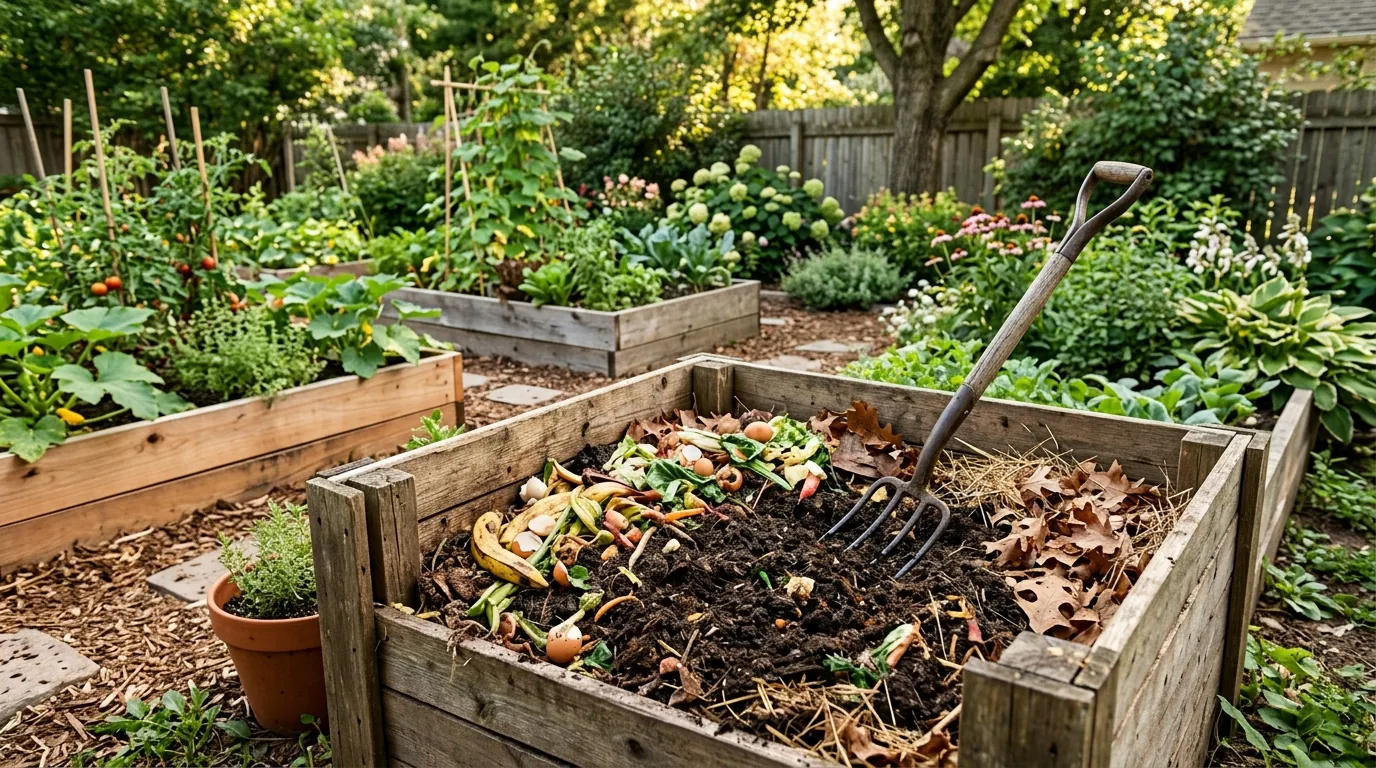
- Compost. The best of all as a feeding mulch, though it suppresses weeds less well than a coarse material because weed seed will happily germinate in it.
- Cardboard under any of the above for reclaiming a weedy patch. Overlap the seams, wet it down, and cover.
What to leave alone: rubber mulch, which does nothing for soil and never breaks down; landscape fabric in a vegetable garden, which weeds root into from above and then fragments; and fresh wood chips dug into a bed, which tie up nitrogen while they decompose. Chips on the surface are fine, chips mixed in are not.
Laying it properly
- Weed first. Mulch stops seeds germinating, it does not kill an established weed. Anything perennial will come straight through.
- Water the ground first if it is dry. Mulch keeps moisture in, and it keeps it out just as effectively. Laying it over dry soil locks the dryness in.
- Two to four inches for most materials, which is about five to ten centimeters. Less than that and weeds come through. Much more and water struggles to reach the soil.
- Keep it off stems and trunks. Leave a hand's width of clear ground around the base of every plant.
- Top it up rather than replacing it. An organic mulch is supposed to disappear. That is the material becoming soil.
The two mistakes that do real damage
Volcano mulching. Piling mulch in a cone against a tree trunk is the most common and most damaging landscaping habit in the country. Bark kept permanently damp rots, the tree grows roots up into the mulch instead of down into the soil, and it kills trees slowly enough that nobody connects the two. Mulch should sit like a doughnut around a tree, not a volcano against it. Pull it back until you can see the flare where the trunk widens into the roots.
Mulching a cold bed too early. Mulch holds temperature steady, which works against you in spring. A bed mulched before it has warmed stays cold, and heat-loving crops sit and sulk. Wait until the soil has warmed, then mulch.
Season by season
- Spring. Wait for the soil to warm before mulching heat-loving crops. Cool season crops can be mulched straight away.
- Summer. This is where mulch earns its keep, cutting evaporation and keeping roots cool. Top up anything that has thinned.
- Fall. The best time to mulch permanent plantings, and shredded leaves are free and abundant.
- Winter. A thick mulch protects perennial crowns from repeated freeze and thaw, which does more damage than steady cold. Pull it back in spring so the ground can warm.
Questions worth answering
Does pine straw make soil acidic? Not enough to matter. Pine needles are mildly acidic when fresh and neutralize as they break down. This is one of the most persistent pieces of garden folklore there is, and you can safely use pine straw around anything.
Do wood chips steal nitrogen? Only at the point of contact. Chips on the surface affect the top centimeter or so, which is not where roots are. Dug into a bed they are a genuine problem.
Does mulch bring termites and slugs? It gives slugs cover, so keep it thin around seedlings, which are what they take. Termites are drawn to wood in contact with a building, not to garden beds, so keep mulch clear of the foundation and siding.
Will it blow away? Light materials will on an exposed site. Water it in once laid, and use pine straw or shredded hardwood where wind is a problem.
See also: Weed control, since mulch prevents more weeds than any amount of pulling, Watering, which mulch makes go much further, and Composting for making your own.