
How to Grow Onions From Sets
Updated June 2026
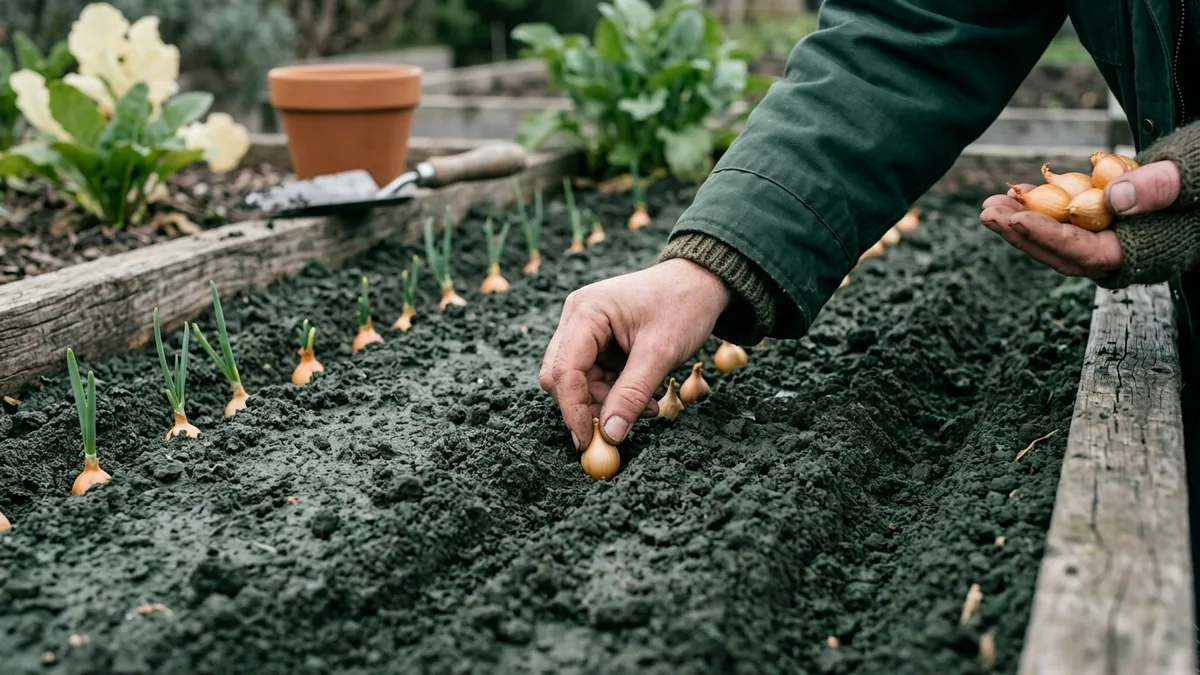
The fast, forgiving way to grow onions, with sets versus seed compared and a calculator for how many to buy
Onion sets are the easy door into growing your own onions. A set is a small, immature mini bulb that was started from seed last season, then lifted and dried so it sits dormant until you plant it. Because the plant already has a head start, sets get away quickly, cope far better with cold soil than tiny seedlings, and reward you with a reliable crop for very little fuss. For anyone short on time, short on warm weather, or simply new to the garden, they are the friendliest place to begin.
Growing from seed has its own rewards, and we will compare the two honestly below. It is cheaper, opens up a much wider choice of varieties, and the plants tend to bolt less. The trade is time and care. Seed needs an early start indoors and a long run of around 18 to 20 weeks, while sets can go straight into the ground and shrug off a cool start. This guide walks you through choosing good sets, planting and feeding them, the all-important day-length question, and how to cure and store the harvest.
What onion sets actually are
An onion set is a baby onion. Growers sow onion seed thickly in the previous season so the plants stay small, then lift these little bulbs, dry them and hold them dormant. When you plant a set the following season, it simply picks up where it left off and powers into leaf and then bulb. That head start is the whole appeal.
Choose sets that are firm, dry and unsprouted, roughly 1/2 to 3/4 inch across, around the size of a pea up to a marble. Smaller is better than larger here. Very large sets carry more stored energy and are far more likely to bolt, sending up a flower stalk instead of swelling a good bulb. Pass over any that are soft, moldy, already shooting green leaves, or that feel light and hollow.
Sets vs seed vs transplants
There is no single right answer. Each starting point suits a different gardener and season. Here is the honest comparison.
| Starting point | Strengths | Trade-offs |
|---|---|---|
| Seed | Cheapest by far. Widest choice of varieties, including the best long-keepers. Tends to bolt less than sets. | Slowest. Needs an early indoor start and a long season of about 18 to 20 weeks. More fiddly for beginners. |
| Sets | Fast and easy. Reliable in cool soils and short seasons. Forgiving for beginners. No raising of seedlings. | Fewer varieties on offer. Slightly more bolt-prone, especially oversized sets. Can cost more per plant than seed. |
| Transplants (seedlings) | A middle ground. Quicker than seed, often a wider variety choice than sets, and a strong start in the ground. | Can be pricier, and young transplants need careful watering until established. Availability varies by season and supplier. |
In short, choose seed for value and range, sets for speed and certainty, and transplants when you want a bit of both. For a first onion crop in a cool or short season, sets win on ease almost every time.
Onion Sets Calculator
Work out how many sets to buy for a single row or a whole bed. Choose your spacing, enter your measurements, and the calculator rounds up to a whole number of sets.
How many sets do I need?
Buy ~10% extra for duds.
Day-length types, the part that decides everything
This is the single most important thing to get right with onions, and the one most often missed. Onions bulb in response to day length, not just warmth. If you grow the wrong type for your latitude, the plant either never forms a proper bulb or forms a tiny one, no matter how well you feed and water it. There are three broad types.
- Long-day onions need around 14 to 16 hours of daylight to trigger bulbing. They suit higher latitudes and cooler regions, where midsummer days are genuinely long. In a low-latitude garden the days never get long enough, so they bolt or fail to bulb.
- Short-day onions bulb at around 10 to 12 hours of daylight. They suit low latitudes and warmer regions, where days stay shorter through the growing season. Grown too far north they bulb far too early, before the plant is big enough, giving small onions.
- Intermediate or day-neutral onions bulb at around 12 to 14 hours. They have the broadest adaptability and are the safe middle-ground pick if you are unsure of your day length.
Why it matters by region. In the US the rule is simple and worth memorizing. The North grows long-day onions. The South, including Florida, grows short-day onions. The middle of the country, the transition zone roughly across the central states, does best with intermediate or day-neutral types. A rough dividing line runs near the 35th to 38th parallel, but check your seed packet or set label for the day-length type and follow your state Cooperative Extension if you are near the line. Picking the wrong type means poor bulbing or no bulb at all, so this choice does more for your crop than anything else on this page.
Position and soil
Onions want full sun and free-draining, fertile soil. Heavy, wet ground rots sets and stunts bulbs, so dig in compost to open up clay and improve drainage. Aim for a soil pH around 6.0 to 7.0. Work in well-rotted compost before planting, but go easy on high-nitrogen fertilizer late in the season, as a flush of soft leaf late on comes at the cost of bulb size and storage life. Firm the bed before planting so the sets sit in steady, settled soil rather than fluffy ground that dries out unevenly.
Planting onion sets
Plant into soft, prepared soil, pointy end up. The pointed tip is where the leaves emerge, and the flatter base, often with the dried root scar, goes down. Push each set in gently so just the tip shows at the surface. Do not bury them deep, as too much soil over the set slows it and can cause rot.
- Space sets about 4 to 5 inches apart (4 to 5 inches) along the row.
- Space rows about 10 to 12 inches apart (10 to 12 inches).
- Plant so the tip just shows. The neck should sit at or just below the surface, not deeply buried.
- Firm the soil around each set so it makes good contact.
Feeding and watering
Keep the soil steadily moist while the plants are building leaves early on, since onions have shallow roots and dislike drying right out. Feed with a nitrogen source early to drive strong leaf growth, because every leaf becomes a ring in the bulb. Then ease off. As the bulbs swell and the tops begin to fall, cut back both feeding and watering so the bulbs firm up and the skins set for storage. Keep the bed weed-free throughout, weeding gently by hand, as those shallow roots compete poorly and resent being disturbed by deep hoeing.
When onions are ready and how to harvest
The plant tells you when it is done. The tops yellow, soften at the neck and flop over of their own accord. That is your signal. Stop watering, then lift the onions on a dry day, easing them up with a fork rather than yanking the tops. If the weather is fine, leave them lying on top of the soil for a day or two to begin drying before you move them to cure.
Why onions bolt, and how to stop it
Bolting is when an onion sends up a flower stalk instead of swelling a storage bulb. A bolted onion will not keep, so it is worth avoiding. The usual causes are:
- Oversized sets. Big sets carry the energy to flower, so they bolt far more readily than small ones.
- A cold snap after planting. A cold check makes the plant think a winter has passed, a process called vernalization, which flips it into flowering mode.
- Stress or a check in growth. Any setback, from drought to transplant shock, can trigger bolting.
- Swings from very dry to very wet. Erratic moisture stresses the plant.
To reduce bolting, choose small to medium sets, plant at the right time for your area, keep growth steady with even moisture and feeding, and look for heat-treated or bolt-resistant sets, which are processed to lower the bolting risk. If an onion does bolt, snap off the flower stalk and use that onion fresh soon, rather than trying to store it.
Curing and storing
Curing is what turns a fresh onion into one that keeps for months. After lifting, spread the onions in a single layer somewhere warm, airy and shaded, out of direct sun and rain. Leave them for two to three weeks until the necks are completely dry and tight and the outer skins are papery. Only then are they ready to store. Keep cured onions somewhere cool, dry and airy, in mesh bags or braided by their dried tops. Check them now and then and pull any that go soft. Use any thick-necked or bolted onions first, as those will not store and are best eaten fresh.
Varieties to look for
Match the day-length type to your region first, then pick for flavor and keeping quality. These are widely grown across the US.
| Variety | Type / day-length | Notes |
|---|---|---|
| Stuttgarter | Long-day | A very common variety sold as sets in the North. Flat-round golden bulbs, good all-rounder and keeper. |
| Yellow / White Ebenezer | Long-day | Classic Northern storage set. Firm bulbs, dependable and a reliable keeper. |
| Texas Early Grano / Texas Supersweet | Short-day | Southern standards. Big, mild, sweet onions for the South and Florida. Eat fresh, they do not keep long. |
| Red Burgundy | Short-day | Mild, sweet red onion for warm Southern gardens. Lovely raw in salads. |
| Candy | Intermediate / day-neutral | Adaptable across much of the country. Large, mild, sweet bulbs, a great middle-ground pick. |
| Walla Walla | Long-day (intermediate behavior in some zones) | Famous sweet onion. Best in the North and Pacific Northwest. Mild and juicy, use fresh. |
Region and season
When to plant by region. In the South and Florida, plant short-day sets or transplants from fall into winter, roughly October to January, for spring bulbs. In the North, plant long-day sets in early spring as soon as the soil can be worked. In the transition zone across the middle of the country, plant intermediate or day-neutral types in early spring. Always match the day-length type to your latitude first, then the timing to your zone.
Plan your onion bed and track it to harvest
The Planting Season app tells you the right planting window for onions in your region, helps you space the bed, and logs the crop from set to cured bulb. Less guesswork, more onions in the pantry.
Open the App →Common questions
Are onion sets better than seed?
Sets are faster, easier and more forgiving than seed, which makes them the best choice for beginners and for cool or short seasons. Sets are already part-grown mini bulbs, so they get away quickly even in cold soil. Seed is cheaper, gives you a far wider choice of varieties and tends to bolt less, but it needs an early indoor start and a longer growing time of around 18 to 20 weeks. If you want a reliable crop with the least fuss, choose sets. If you want range, value or the very best keepers, choose seed.
Which way up do I plant onion sets?
Plant onion sets pointy end up. The pointed tip is where the leaves emerge and the flat, slightly rooty base goes down into the soil. Push each set into soft, prepared soil so just the tip shows at the surface, then firm the soil gently around it. Planting them upside down or too deep slows them down and can cause them to rot.
Why did my onions bolt or go to flower?
Bolting is usually triggered by a cold check after planting, which the plant reads as a winter passing, so it tries to flower and set seed. The main causes are oversized sets, a cold snap after planting, any stress or check in growth, and swings from very dry to very wet. To reduce bolting, choose small to medium sets about the size of a pea to a marble, plant at the right time for your area, keep growth steady with even moisture, and look for heat-treated or bolt-resistant sets. If an onion does bolt, use it fresh soon, as it will not store well.
How many onion sets do I need?
It depends on your spacing and how much room you have. As a rough guide, with sets 4 inches apart you fit about 3 per foot of row, with rows about 10 to 12 inches apart. Use the Onion Sets Calculator on this page to work out the exact number for a single row or a whole bed, then buy around 10 percent extra to cover any duds or damaged sets.
Should I grow long-day or short-day onions for my area?
Day length decides whether an onion bulbs up properly, so matching the type to your region matters. In the US, northern states grow long-day onions, the South including Florida grows short-day onions, and the middle of the country does best with intermediate or day-neutral types. Picking the wrong type means poor bulbing or no bulb at all, so check the seed packet or set label for the day-length type.
Can I grow onions from sets in containers or pots?
Yes. Onions grow well in a deep, wide container at least 8 to 10 inches deep filled with free-draining potting mix. Space the sets about 3 to 4 inches apart, keep them in full sun, water steadily and feed lightly while they are growing. Containers dry out faster than open ground, so watch the moisture, then ease off watering as the bulbs swell and the tops start to fall.
When can I harvest onions and how do I store them?
Onions are ready when the tops yellow and flop over naturally. Stop watering, then lift them on a dry day, ideally leaving them on top of the soil for a day or two if the weather is fine. Cure them by drying the necks fully for two to three weeks in a warm, airy, shaded spot until the skins are papery and the necks are tight. Store cured onions somewhere cool, dry and airy. Use any thick-necked or bolted onions first, as they will not keep.
See also: How to Grow Onions, our full guide to growing onions from seed and transplants as well as sets.