
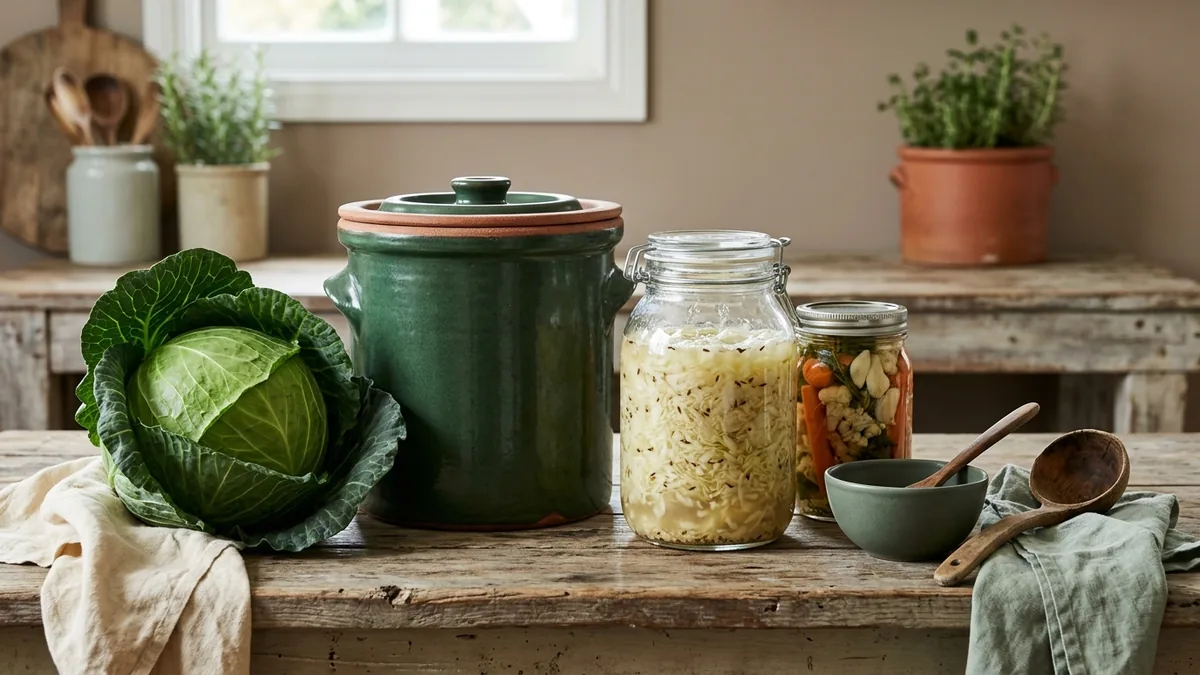
How to Make Sauerkraut and Ferment Vegetables
Updated June 2026
Lacto-fermenting turns a glut of cabbage, carrots or beans into tangy, gut-friendly food using nothing but salt and time. Here is the safe, simple method, with a calculator to get your salt right every time.
Fermenting is one of the oldest ways to keep a harvest, and one of the easiest to do well at home. You do not need special equipment, vinegar or canning gear. You need fresh vegetables, plain salt, a clean jar and a few weeks of patience. The vegetables sour as friendly bacteria turn their natural sugars into lactic acid, which gives sauerkraut and kimchi their bright, tangy flavor and helps keep them safe to eat.
The two rules that make fermenting reliable are simple. Get the salt right, and keep everything under the brine. The calculator below sorts the first one. The rest of this guide covers the second, plus how to tell a harmless film from real mold so you can ferment with confidence.
How salt and submersion keep it safe
Lacto-fermentation is an anaerobic process, which means it happens without oxygen. Two things do the protective work. Salt, at roughly 2 to 2.5 percent of the weight of the vegetables, slows down spoilage organisms while the salt-tolerant lactic acid bacteria get going. Keeping the vegetables fully submerged under the brine removes the oxygen that mold and yeast need to grow on the surface.
As the bacteria work, they produce lactic acid and the brine turns more acidic. That rising acidity is what makes a finished ferment a hostile place for anything harmful. The whole job, then, is to start with the right amount of salt and to keep the vegetables under the liquid until the souring is done. For detailed, tested fermentation guidance, the National Center for Home Food Preservation is a reliable reference.
Fermentation salt calculator
Weigh your prepared vegetables, then choose a salt percentage. A 2 percent salt level ferments a little faster and tastes milder, while 2.5 percent is firmer, slower and very forgiving in warm weather. For sauerkraut, 2 to 2.5 percent is the usual range. Enter the weight in ounces and the calculator converts to grams of salt.
Use a plain non-iodized salt with no anti-caking agents, such as pure sea salt or canning and pickling salt. Iodine and anti-caking agents can cloud the brine and interfere with the ferment.
How lacto-fermentation works, and why salt
Vegetables naturally carry lactic acid bacteria on their leaves and skins. These bacteria are happy in a salty, oxygen-free environment, while most spoilage microbes are not. When you salt shredded cabbage, the salt pulls water out of the cells to make a brine, and the bacteria begin feeding on the vegetable sugars. They release lactic acid, which is what makes the ferment sour and keeps it safe.
Salt does three jobs at once. It slows the spoilage organisms long enough for the good bacteria to take over, it keeps the vegetables crisp by firming their cell walls, and it draws out the brine that protects them. Too little salt and the ferment can go soft or off. Too much and the bacteria struggle and the ferment stalls. The 2 to 2.5 percent range is the reliable middle ground.
Sauerkraut, step by step
Sauerkraut is the best ferment to learn on. It is just cabbage and salt, and the cabbage makes its own brine.
- Shred. Remove any tired outer leaves, quarter the cabbage, cut out the core and shred it finely. Thin shreds release brine faster and pack down better.
- Weigh and salt. Weigh the shredded cabbage and use the calculator above to work out the salt. Sprinkle the salt through the cabbage in a large bowl.
- Massage. Squeeze and scrunch the cabbage with clean hands for five to ten minutes. It will soften, wilt and start to pool with liquid. That liquid is your brine.
- Pack tight. Press the cabbage firmly into a clean jar or crock, pushing out air pockets as you go, until the brine rises above the cabbage.
- Weigh it down. Place a weight on top so the cabbage stays under the brine. A small water-filled bag, a glass weight or a clean stone all work.
- Cover loosely. Rest the lid on loosely or use a cloth and band so carbon dioxide can escape. A tightly sealed jar can build pressure.
- Wait and taste. Keep it at cool room temperature and taste from about a week. When it is as sour as you like, seal it and move it to the fridge.
Brined vegetables, step by step
Firm, chunky or whole vegetables like carrots, beans, radish, cauliflower and cucumbers do not give up enough liquid to make their own brine, so you cover them with a separate salt brine instead.
- Make the brine. Dissolve salt in cool, non-chlorinated water at about 2 to 3 percent, which is roughly 1 to 1.5 tablespoons of salt per quart of water. A slightly stronger brine suits whole vegetables.
- Prepare the veg. Trim, peel where needed and cut into spears, sticks or rounds. Leave small vegetables whole. Pack them snugly into a clean jar with any spices, garlic or chile.
- Pour over. Cover the vegetables completely with the brine, leaving a little headspace at the top of the jar.
- Weigh down and cover loosely. Keep everything under the brine with a weight, and cover so gas can escape, just as you would with sauerkraut.
- Ferment and taste. Leave at cool room temperature, tasting from a few days in. Move to the fridge once it tastes right.
Keeping everything under the brine
This is the single most important habit in fermenting. Anything that pokes above the brine is exposed to air, and the surface is where kahm yeast and mold take hold. The vegetables under the liquid stay protected.
- Use a weight. A glass fermenting weight, a smaller jar of water, or a clean stone in a food bag all hold the vegetables down.
- Try a brine bag. A zip-top bag part-filled with brine, laid on top, presses the vegetables down and seals the surface. If it leaks it leaks brine, not plain water, so the salt level stays right.
- Follow the water line. Check daily for the first week. Press the vegetables back down if they float, and top up with extra brine of the same strength if the level drops.
Kahm yeast versus mold
A thin, flat or lightly wrinkled white film on the surface is almost always kahm yeast. It is harmless, not mold. It can give a slightly musty smell but does not spoil the ferment. Skim it off with a clean spoon, make sure the vegetables are back under the brine, and carry on.
Mold is different. It is fuzzy and raised, and it comes in colors: blue, green, black, gray or pink. If you find a small isolated spot, some experienced fermenters remove it along with a generous margin around it and continue. However, if the growth is fuzzy or colored, or if you are in any doubt at all, the safe choice is to discard the whole batch.
Trust your nose and eyes as well. A clean, sour, tangy smell is exactly right. A putrid, rotten or off smell that is not sour, or any sliminess in the vegetables, means the batch has spoiled. Throw it out. Good salt levels and keeping everything submerged prevent nearly all of these problems in the first place.
Temperature, time and storage
Fermenting is driven by temperature. A cool room of about 65 to 72 degrees Fahrenheit is ideal. It is fast enough to get going and slow enough to develop good flavor and keep a crisp texture.
- Warmer than that. The ferment speeds up but the result is softer and the risk of an off batch rises. In a hot summer, find the coolest spot in the house and check it more often.
- Cooler than that. The ferment slows right down. It still works, it just takes longer, and the texture stays firmer. A cool basement or pantry in winter is fine.
- Timing. Sauerkraut is usually ready in one to four weeks. Brined vegetables can be ready in a few days to a couple of weeks. Taste is the only true test.
Once a ferment tastes as sour as you like, move it to the fridge. The cold slows fermentation almost to a stop, so the flavor holds where you left it. A finished ferment keeps for many months in the fridge as long as the vegetables stay under the brine.
What to ferment, and how
Most firm vegetables ferment well. Use this as a quick reference for the method and timing.
| Vegetable | Method | Typical time | Notes |
|---|---|---|---|
| Cabbage | Dry salt and massage | 1 to 4 weeks | The classic sauerkraut. Makes its own brine. |
| Carrots | Brine | 1 to 2 weeks | Sticks or rounds. Stay crunchy and sweeten as they sour. |
| Beans | Brine | 1 to 2 weeks | Whole, trimmed. Great with garlic and dill. |
| Radish | Brine | 5 to 10 days | Halved or sliced. Color bleeds into the brine. |
| Beets | Brine or grated dry-salt | 1 to 3 weeks | Earthy and deep red. Grated ferments faster. |
| Cauliflower | Brine | 1 to 2 weeks | Small florets. Often spiced with turmeric or chile. |
| Chiles | Brine | 1 to 3 weeks | Whole or sliced. The base for fermented hot sauce. |
| Cucumbers | Brine | 1 to 2 weeks | Use firm small cucumbers. A grape or oak leaf helps crunch. |
| Ginger | Brine | 2 to 4 weeks | Sliced thin. Use a small jar, a little goes a long way. |
| Garlic | Brine | 3 to 6 weeks | Whole peeled cloves. May turn blue-green, which is harmless. |
A note on seasons
The big cabbage glut in much of the United States lands in fall, when cool weather makes for slow, dependable ferments with great texture. If your kitchen drops below the ideal range in winter, just expect it to take longer and taste before you decide it is done. In a hot summer, ferments race along and can turn soft, so keep them in the coolest spot you have and check them daily. If you grow your own, our guide to growing cabbage will help you time a crop for fermenting.
Plan your harvest, then preserve it
Planting Season helps you grow a glut on purpose, then log what you pick and turn it into kraut, pickles and more. Track your beds, harvests and savings in one place.
Open the App →Frequently asked questions
How much salt do I use for sauerkraut?
Weigh your shredded cabbage and use 2 to 2.5 percent of that weight in salt. The calculator above converts ounces of cabbage into grams of salt, with a teaspoon estimate.
Is the white film on my ferment mold?
A thin, flat or lightly wrinkled white film is usually kahm yeast, which is harmless and can be skimmed off. Fuzzy, raised growth in blue, green, black or pink is mold. If it is fuzzy or colored, or you are in any doubt, discard the batch.
How long does sauerkraut take to ferment?
At a cool room temperature of about 65 to 72 degrees Fahrenheit, usually one to four weeks. Warmer is faster but softer and riskier, cooler is slower and crisper. Taste from about a week and refrigerate when you like it.
Why does everything have to stay under the brine?
Fermenting needs an oxygen-free environment. The surface, where the air is, is where mold and kahm yeast grow. Keep the vegetables weighed down and submerged and you avoid nearly all surface problems.
What salt should I use?
A plain non-iodized salt with no anti-caking agents, such as pure sea salt or canning and pickling salt. Iodine and additives can cloud the brine and interfere with the ferment.
Does my ferment need to go in the fridge?
Ferment at room temperature, then move it to the fridge once it tastes as sour as you like. The cold nearly stops fermentation, so it keeps for many months as long as it stays under the brine.
My ferment smells bad. Is that normal?
A clean, sour, tangy smell is right. A putrid or rotten smell that is not sour, or any sliminess, means it has spoiled. Discard it.
Can I ferment vegetables other than cabbage?
Yes. Carrots, beans, radish, beets, cauliflower, chiles, cucumbers, ginger and garlic all ferment well. Firm or whole vegetables are usually covered with a separate brine rather than dry-salted and massaged.
For tested fermentation methods, see the National Center for Home Food Preservation.