
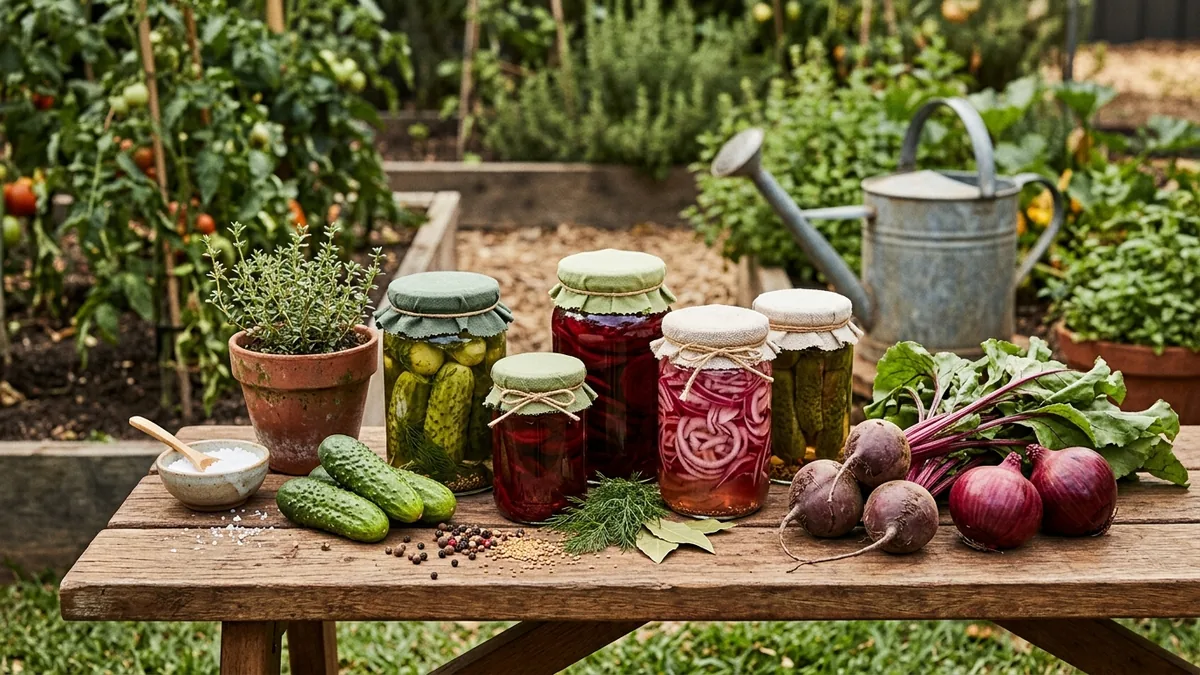
How to Make Pickles: Quick and Fermented
Updated June 2026
The safe way to turn a cucumber or bean glut into a crunchy jar, with a brine calculator for any jar size
Pickling is one of the most satisfying ways to use a garden glut. A box of cucumbers or a flush of beans becomes rows of jars that brighten meals for months. There are two real paths into it. You can make a quick vinegar pickle that is ready in a day, or you can ferment in a salt brine and let nature build the sourness over weeks. Both are simple once you understand the one rule that keeps a pickle safe to eat.
That rule is acidity. Harmful bacteria, including the one that causes botulism, cannot grow in a properly acidic environment. In a quick pickle the acid comes straight from the vinegar bottle. In a ferment the vegetables make their own acid as the brine sours. Get the acid right and the rest is flavor and crunch. This guide covers both methods, the safe vinegar rule, how to keep pickles crisp, what to pickle, and how long it all keeps. The calculator below works out your brine, salt and sugar for whatever jar you have.
The one rule: keep the acid strong
Use vinegar labeled at least 5% acidity. Most white, distilled, cider and wine vinegars sold for cooking already are, but always check the label. For a shelf-stable pickle, never dilute the brine below the safe vinegar to water ratio. A common safe baseline is at least equal parts vinegar and water, and many tested recipes use more vinegar than that.
If a pickle is too sour, fix it with sugar, not water. Adding water lowers the acidity and can make a shelf-stable pickle unsafe. Sugar rounds off the sharpness without touching the acid. For anything you plan to store outside the fridge, follow tested recipes from the USDA and the National Center for Home Food Preservation.
Pickle Brine Calculator
Tell it how big your jar is and it works out the vinegar and water for a safe 1:1 brine, plus standard salt and sugar. It assumes the brine fills about 60% of the jar, because the vegetables take up the rest. Round to sensible kitchen amounts when you measure.
Safety: use vinegar of at least 5% acidity, and do not add extra water to soften the flavor. Sweeten with the sugar instead. For pantry storage, process in a boiling water bath using a tested recipe from the USDA or the National Center for Home Food Preservation.
The 5% acidity rule, in plain terms
Vinegar acidity is printed on the label as a percentage. 5% is the safe minimum for pickling. Cheaper or homemade vinegars can sit below that, which is fine for salad dressing but not safe for a stored pickle. If you cannot see the percentage on the label, do not use it for a shelf-stable pickle.
The brine is a mix of vinegar and water, so the water dilutes the acid. That is why the ratio matters. Stay at or above equal parts vinegar and water. The more vinegar in the mix, the sharper and safer the pickle. You can always make it taste milder with sugar, never with extra water.
Quick Vinegar Pickles, Step by Step
Quick pickles, also called refrigerator pickles when they are not processed, are the fastest way in. The vegetables sit in a hot vinegar brine and are ready to eat within a day.
- Prep the produce. Wash firm, fresh vegetables. Trim a thin slice off the blossom end of cucumbers. Cut everything to a size that packs tightly into the jar.
- Pack the jar. Add your spices, such as dill, mustard seed, peppercorns, garlic and a tannin source like a grape leaf. Pack the vegetables in firmly so they stay submerged.
- Make the brine. Heat vinegar (at least 5% acidity) and water at the safe ratio with the salt and sugar until they dissolve. The calculator above gives the amounts.
- Pour and cover. Pour the hot brine over the vegetables until they are fully covered. Tap out air bubbles and leave a little headspace.
- Cool and store. For refrigerator pickles, cool and refrigerate. They are best after a day or two. For pantry pickles, fit lids and process in a boiling water bath for the time your tested recipe gives, then check the seal once cool.
Fermented Pickles, Step by Step
Fermented pickles use no vinegar. Vegetables sit in a salt brine and the natural bacteria on them turn sugars into lactic acid, which both sours and preserves the food. This is how a true sour dill pickle and sauerkraut are made.
- Make a salt brine. A roughly 2% to 3% salt solution suits most pickling vegetables. Use pickling or canning salt, or plain non-iodized salt, dissolved in non-chlorinated water.
- Pack and submerge. Pack the vegetables and spices into a clean jar or crock. Keep everything fully submerged under the brine with a weight or a small water-filled bag. Anything above the brine can mold.
- Ferment cool. Leave at cool room temperature, out of direct sun. Bubbles and a sour smell mean it is working. Skim off any surface scum.
- Taste as it goes. Check from a few days in. It is ready when it tastes as sour as you like, which can take days to a couple of weeks depending on temperature.
- Move to cold. Once it tastes right, move the jar to the fridge. The cold slows the ferment so the flavor holds.
For a full walkthrough of lacto-fermenting, including cabbage, see our sauerkraut and fermenting guide.
Keeping Pickles Crunchy
Mushy pickles are the most common disappointment, and they are avoidable. Crunch comes down to fresh produce, a touch of tannin and not overcooking the jar.
- Add a tannin source. A grape leaf, oak leaf, blackcurrant leaf or a pinch of black tea in each jar adds tannins that keep pickles firm.
- Use cold, fresh, just-picked produce. The crisper the vegetable going in, the crisper it stays. Pickle on the day you harvest if you can, and chill the produce first.
- Trim the blossom end. The blossom end of a cucumber carries enzymes that soften pickles. Slice a thin piece off and discard it.
- Keep it cool. Store finished pickles somewhere cool and dark. Heat softens texture over time.
- Do not over-process. If you water-bath for the shelf, use the minimum time your tested recipe gives. Longer boiling means softer pickles.
What to Pickle
Firm, dense vegetables pickle best because they hold their texture in the brine. These are the reliable choices from a home garden.
| Vegetable | Prep | Quick or ferment | Notes |
|---|---|---|---|
| Cucumbers | Whole small, or sliced; trim blossom end | Both | The classic. Use pickling types for the best crunch. |
| Green beans | Top and tail, leave whole | Quick | Dilly beans. Pack upright and tight. |
| Carrots | Peel, cut into sticks or coins | Both | Stay crisp, take spice well. |
| Beets | Cook first, then peel and slice | Quick | Sweet and earthy, classic with onion. |
| Cauliflower | Break into small florets | Quick | A core part of mixed pickles. |
| Onions | Peel small whole, or slice | Quick | Pickled onions keep for months. |
| Chilies | Leave whole or slice into rings | Both | Quick rings are fast; whole ferments well. |
| Radishes | Slice or halve | Quick | Fast, bright pink, ready in hours. |
| Zucchini | Slice into rounds or spears | Quick | Salt and drain first to firm it up. |
Storage and Shelf Life
How long a pickle keeps depends on how it was made.
- Refrigerator pickles: a few weeks up to a couple of months in the fridge. They are never sealed, so they live in the cold.
- Water-bath processed pickles: about 12 months in a cool, dark cupboard for best quality, once the lid has sealed. Label with the date and use the oldest first.
- Fermented pickles: months in the fridge once they reach the sourness you like.
- Opened jars: keep any opened jar in the fridge and use within a few weeks. Always keep the pickles under the brine.
Discard any jar that smells off, looks cloudy when it should be clear, has a bulging or unsealed lid, or shows mold. When in doubt, throw it out.
When the Glut Hits
In most of the United States the pickling rush lands in late summer, when cucumbers and beans come in faster than you can eat them. That is the time to pickle in batches, because the produce is at its freshest and crispest. In the warm South the cucumber and bean season runs earlier and longer, so you can pickle across a wider window. Ferments move faster in the heat, so taste them sooner and move them to the fridge as soon as they hit the sourness you want. If you grow your own, see our guide to growing cucumbers to keep the supply coming.
Track your glut, plan your pickling
The Planting Season app logs your harvest, tells you when a glut is coming, and helps you plan what to pickle, ferment and store before it spoils.
Open the AppFrequently Asked Questions
What is the difference between quick pickles and fermented pickles?
Quick pickles are made with a vinegar brine. They are fast, tangy and ready in hours to days, and they are kept in the fridge or processed in a boiling water bath for the shelf. Fermented pickles use a salt brine instead of vinegar, and natural bacteria turn sugars into lactic acid over days to weeks. Quick pickles get their acid from a bottle, ferments make their own.
What acidity does the vinegar need to be for safe pickles?
Use vinegar labeled at least 5% acidity, which is standard for most white, distilled, cider and wine vinegars. The acid is what makes a shelf-stable pickle safe, so never dilute the brine below the safe ratio. A common safe baseline is at least equal parts vinegar and water, and many tested recipes from the USDA and the National Center for Home Food Preservation use more. If a pickle is too sour, balance it with sugar, never with extra water.
Can I water down the brine to make pickles less sour?
No. Watering down the brine lowers the acidity and can make a shelf-stable pickle unsafe. For a milder pickle, add sugar to round off the sharpness, or use a recipe written for a sweeter style. Keep the vinegar to water ratio at or above the safe baseline and adjust flavor with sugar and spices.
How do I keep my pickles crunchy?
Start with cold, fresh, just-picked produce. Trim a thin slice off the blossom end, which carries a softening enzyme. Add a tannin source such as a grape, oak or blackcurrant leaf, or a pinch of black tea. Do not over-process, keep water-bath time to the minimum a tested recipe gives, and store the jars somewhere cool.
How long do homemade pickles last?
Refrigerator pickles keep a few weeks up to a couple of months in the fridge. Water-bath processed and sealed pickles keep about 12 months in a cool, dark cupboard for best quality. Once opened, keep any jar in the fridge and use within a few weeks. Discard a jar that smells off, looks cloudy, or has a bulging lid.
Which vegetables are best for pickling?
Pickling cucumbers are the classic, along with green beans, carrots, beets, cauliflower, onions, chilies, radishes and zucchini. Firm, dense vegetables hold their crunch best. Cucumbers and cabbage also ferment well in a salt brine. Use the calculator above to work out your brine, salt and sugar.
Do I need to water-bath process quick pickles?
Only if you want them shelf-stable. Refrigerator pickles need no processing, you just pour the hot brine over the vegetables, cool and refrigerate. For pantry storage, fill jars with a tested high-acid recipe and process in a boiling water bath for the time that recipe gives, then check the seal. Use tested times from the USDA and the National Center for Home Food Preservation, and never improvise a processing time.
What salt should I use for pickling and fermenting?
Use pickling or canning salt, or plain non-iodized salt. Iodized table salt can darken pickles and cloud the brine, and anti-caking agents can make ferments cloudy. For fermenting, non-iodized salt matters because iodine can slow the good bacteria. Pure salt gives the clearest brine and the most reliable result.
For tested processing times and recipes, follow the USDA and the National Center for Home Food Preservation.