
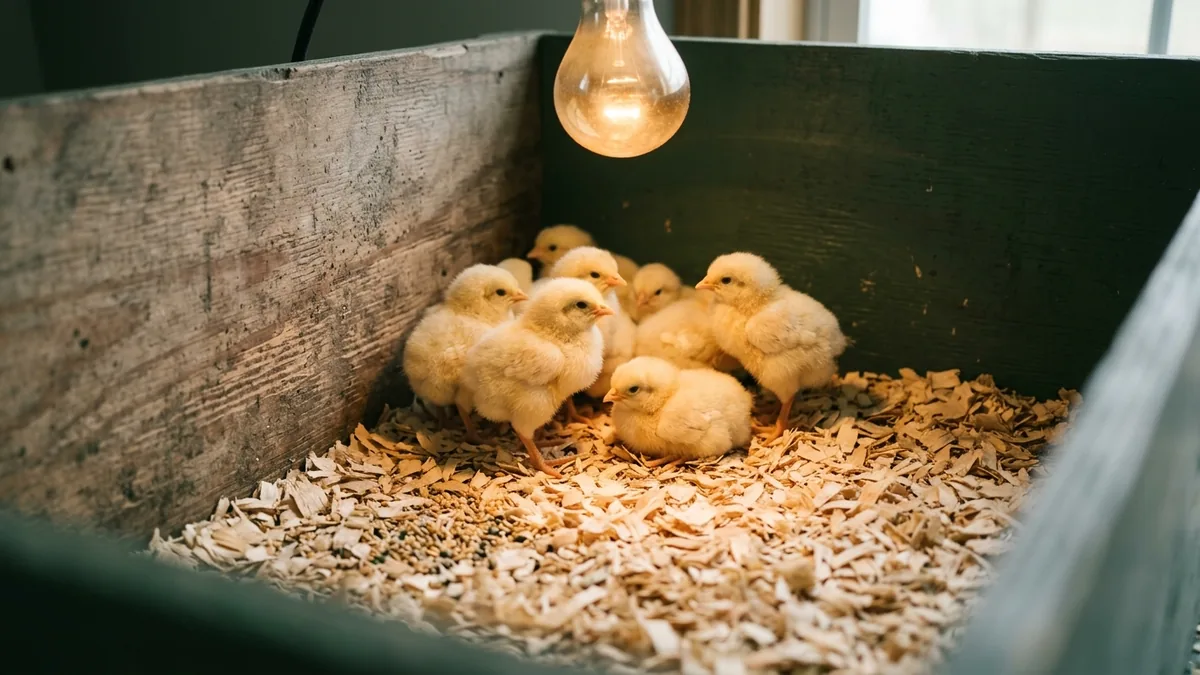
The first six weeks
Raising chicks is mostly about getting a handful of basics right and then staying out of the way. A chick needs steady warmth, clean water it cannot drown in, a good starter feed and a safe space away from pets. Get those four things sorted and most chicks raise themselves.
Over six weeks they go from fluffy and helpless to small feathered birds ready for the outdoors. This guide walks through the brooder, the heat schedule, daily care and the move outside, with a calculator to set the temperature for each week.
Brooder temperature calculator
Enter the chicks' age in weeks and the calculator shows the target brooder temperature in Fahrenheit, the behavior cue that tells you it is right, and what to focus on that week.
Setting up the brooder
The brooder is just a safe, warm box for the first few weeks. A large plastic tub, a stock tank or a sturdy cardboard box all work. What matters is that it is draft-free, easy to clean, tall enough that chicks cannot hop out as they grow, and completely secure from cats, dogs and rodents.
A heat source
A radiant heat plate is preferred over a heat lamp. Plates are safer, cannot easily start a fire, and let chicks tuck underneath like they would under a hen.
A thermometer
Place one at chick level under the heat so you can check the temperature, not just guess. Behavior is the real test, but a reading helps.
A secure lid
Use a mesh or wire lid once chicks start jumping. It keeps chicks in and pets out while still letting air through.
Heat and the cool zone
Start the brooder at 90 to 95 degrees Fahrenheit in the first week, measured at chick level. Lower it by about 5 degrees each week until you reach roughly room temperature. The single most important rule is to heat only one end of the brooder and leave a cool zone, so chicks can move toward or away from the heat and regulate their own temperature.
Safety first. Heat lamps cause brooder fires every year, so secure any lamp with more than the clamp and keep it away from bedding. For water, use a shallow drinker and add clean pebbles or marbles to the trough so tiny chicks cannot fall in and drown. Never let the whole brooder overheat with no cool corner to escape to.
Bedding, feed and water
Bedding
For the first few days, lay paper towel over the floor so chicks learn to eat feed and not slippery bedding. After that, switch to pine shavings, which are absorbent and soft. Never use cedar shavings, as the oils can harm chicks' airways. Spot clean daily and keep it dry.
Feed
Offer a complete chick starter with about 18 to 20 percent protein from day one. Keep it clean and topped up. There is more detail in our feed and nutrition guide, but the short version is starter now, never layer feed.
Water
Provide fresh, clean water in a shallow chick drinker at all times. Dip a few chicks' beaks in when they arrive so they find it. Watch for pasty butt, where droppings cake over the vent. Keep the temperature correct, check chicks daily, and gently clean any blockage with a warm damp cloth.
Reading their behavior
Forget the thermometer for a second and watch where the chicks go. They will tell you whether the brooder is too hot, too cold or just right.
Too cold
Chicks huddle tightly together right under the heat and cheep loudly. Lower the heat source or raise the temperature a little.
Too hot
Chicks pant, hold their wings out and crowd to the far edges away from the heat. Raise the heat source or cool the brooder.
Just right
Chicks spread out evenly across the brooder, eating, drinking and sleeping in relaxed little groups. Leave the setup as it is.
Moving outside and joining the flock
Chicks can take short, supervised trips outside on warm days from around 3 to 4 weeks, then move out permanently at about 6 weeks once fully feathered and night temperatures are mild, roughly 65 degrees Fahrenheit or above. Move them into a clean, draft-free coop and let them settle before any mixing.
To add them to an existing flock, wait until the young birds are a similar size, and quarantine any birds brought in from elsewhere first. Set up a see-but-not-touch arrangement with a wire divider for 1 to 2 weeks so both groups get used to each other, then integrate at night when the older hens are calm and less likely to squabble.
Week by week at a glance
| Week | Target temp (F) | Feathering / stage | What to do |
|---|---|---|---|
| Week 1 | 90 to 95 | Down only, very fragile | Settle them in, dip beaks in water, paper towel floor, starter feed. |
| Week 2 | 85 to 90 | First wing feathers | Switch to pine shavings. Keep a cool zone. Watch for pasty butt. |
| Week 3 | 80 to 85 | Feathers spreading | Short supervised outdoor visits on warm days begin to be possible. |
| Week 4 | 75 to 80 | More body feathers | They are flighty now. Make sure the brooder lid is secure. |
| Week 5 | 70 to 75 | Mostly feathered | Reduce heat steadily. Give them more room to move and roost. |
| Week 6+ | 65 to 70 | Fully feathered | Wean off heat once ambient is about 65 F. Move outside, then integrate. |
Track your real flock
From the brooder to the first egg, the free Planting Season app Poultry and Flock tracker lets you log each bird's hatch date, age and milestones, so you always know which week you are in and when point of lay is coming.
Questions people ask
How warm does a brooder need to be?
Start at 90 to 95 degrees Fahrenheit at chick level in the first week, then lower it by about 5 degrees each week until you reach roughly room temperature. Always leave a cooler zone in the brooder so chicks can move away from the heat and self-regulate.
When can chicks go outside?
Chicks can take short, supervised trips outside on warm days from around 3 to 4 weeks. They can move outdoors permanently at about 6 weeks once they are fully feathered and nighttime temperatures are mild, roughly 65 degrees Fahrenheit or warmer, with no cold snaps forecast.
How long do chicks need a heat lamp or heat plate?
Most chicks need supplemental heat for about 6 weeks. You reduce the temperature each week and wean them off heat once they are fully feathered and the ambient temperature stays around 65 degrees Fahrenheit or above. Watch their behavior rather than just the calendar.
What should I feed baby chicks?
Feed a complete chick starter with about 18 to 20 percent protein from day one, kept clean and dry. Provide fresh water in a shallow drinker. Medicated starter is optional for coccidiosis protection. Do not feed layer feed, since its calcium is too high for chicks.
Can chicks eat layer feed?
No. Layer feed contains around 3.5 to 4 percent calcium, which is far too high for chicks and can harm their developing kidneys. Chicks need chick starter, then grower feed, and only move to layer feed at point of lay, around 18 weeks or the first egg.
How do I prevent pasty butt in chicks?
Pasty butt is dried droppings blocking the vent, often from stress or being too hot or too cold. Keep the brooder at the right temperature, check chicks daily, and gently clean any blockage with a warm damp cloth, taking care not to pull skin. Make sure they have water and starter feed.
When do hens start laying eggs?
Most hens start laying at around 18 to 24 weeks, depending on the breed and the time of year. Lighter laying breeds often start earlier, while heavier breeds and those reaching maturity in fall may wait until the days lengthen again.
How do I introduce chicks to an existing flock?
Wait until the young birds are a similar size, around 6 weeks or more, and quarantine any birds from outside first. Use a see-but-not-touch setup such as a wire divider for 1 to 2 weeks so the flocks get used to each other, then integrate at night when the older hens are calm.
From brooder to first egg, in one app
Log hatch dates, track each chick's week, and get a heads-up as point of lay approaches with the free Planting Season app.