
A drop in eggs is usually normal
Before you worry, remember that a healthy flock will go off the lay at certain times of year and at certain stages of life. Shorter days, the annual molt, broodiness and old age all reduce eggs, and none of them mean anything is wrong. The art is telling a normal pause apart from a real problem.
Work through this page from the most common cause to the least. Start with daylight, then molt, age, broodiness and stress, and only land on illness if a hen also looks unwell. The troubleshooter below points you to the likely cause based on what you are seeing.
Laying troubleshooter
Pick the situation that best matches your flock and the troubleshooter shows the likely cause, a short explanation, and what to do about it.
Daylight is the biggest lever
A hen's laying is driven by day length. She needs roughly 14 hours of light to lay consistently, because light triggers the hormones that release an egg. As days shorten through fall and winter, laying naturally slows and often stops. This is the single most common reason backyard eggs dry up.
You have two reasonable choices. You can add gentle artificial light, ideally in the early morning, to bring the total to about 14 hours and keep hens laying through winter. Or you can let them rest. A winter break is genuinely good for a hen, giving her body a pause that supports a longer overall laying life. Neither choice is wrong, and many keepers prefer to let nature set the pace.
The annual molt
Once a hen is over a year old, she replaces her feathers each year, usually in fall. This molt takes about 6 to 12 weeks and laying slows or stops during it. The reason is simple, feathers are roughly 85 percent protein, and the hen redirects that protein into growing new plumage instead of eggs. Help her along with a higher-protein feed and she will come back into lay once the new feathers are in.
Age and natural decline
Hens lay best in their first one to two years. After that, production declines by roughly 10 to 20 percent each year. An older hen tends to lay fewer eggs, though the eggs she does lay are often larger. A noticeable slowdown after about 2 to 3 years is normal and not a problem to fix, just the natural arc of a laying hen.
Broodiness and breaking it kindly
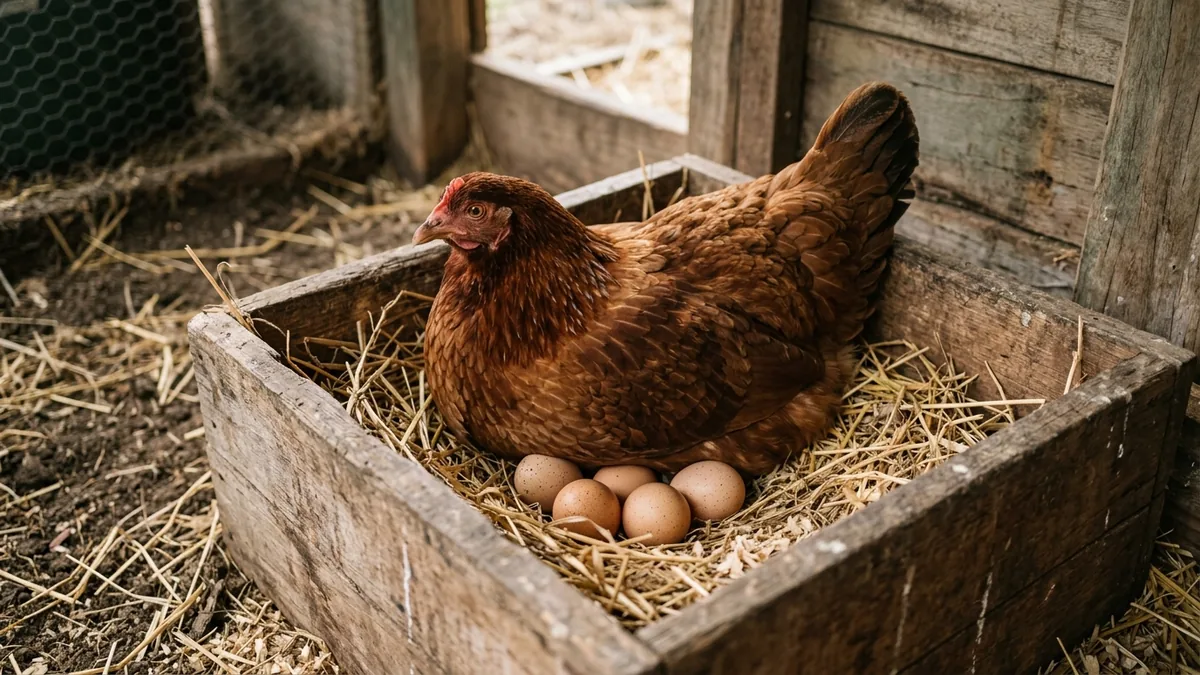
A broody hen has decided to hatch eggs. She sits in the nest all day, puffs up if you reach under her, and stops laying entirely while the hormones run. If you do not want chicks, you can break the broodiness gently. Repeatedly lift her off the nest, and house her for a few days in a cool, airy, well-lit spot such as a crate with a wire floor so she cannot settle into a warm nest. Most hens snap out of it and resume laying within a week or two.
Stress, heat, predators and parasites
Anything that stresses a hen can shut down laying for a while. Heat above about 85 degrees Fahrenheit, a fright from a predator, a move to a new coop, overcrowding, or a mite infestation will all do it. Reduce the stressor first. Provide deep shade and plenty of cool water in summer, secure the run against predators, and give the flock enough space.
Do not overlook parasites. Red mites hide in the coop by day and feed on birds at night, draining them and suppressing laying. Check after dark with a flashlight, looking in cracks and under perches. If your hens free-range, also rule out the simplest explanation of all, a hidden nest. A free-range hen may simply be laying somewhere you have not found, so go looking under shrubs and in quiet corners before you assume she has stopped.
Nutrition gaps
Laying is expensive for a hen's body, and a thin diet shows up fast in the nest. Too little protein or calcium, too many treats diluting the complete feed, or a sudden feed change can all knock laying back. Return to a complete layer feed as at least about 90 percent of the diet, offer oyster shell free-choice for shells, and keep treats under 10 percent. Our feed and nutrition guide covers the protein and calcium targets in detail.
When it might be illness
Most egg drops are normal, but watch for a stop that comes with other signs such as lethargy, a pale or shrunken comb, weight loss, runny droppings or labored breathing. If a hen looks unwell as well as off the lay, isolate her from the flock, check for external and internal parasites, and contact an avian or livestock vet. A sudden drop in an otherwise sick-looking bird is worth a professional opinion.
Causes and fixes at a glance
| Cause | Typical sign | What to do |
|---|---|---|
| Shorter days | Slowdown in fall and winter | Accept the rest, or add gentle morning light to about 14 hours. |
| Molt | Feathers dropping, ragged look | Wait 6 to 12 weeks and raise protein to help feather regrowth. |
| Age | Older hen, fewer but larger eggs | Nothing to fix; expect about 10 to 20% less each year after year two. |
| Broody | Sits on the nest all day | Break it gently with a cool, airy spot away from the nest. |
| Stress or heat | Recent move, fright, heat over 85 F | Reduce stress, add shade and water, secure the run. |
| Nutrition | Thin shells, too many treats | Return to complete layer feed, oyster shell, treats under 10%. |
| Hidden nest | Free-rangers, no eggs in coop | Search shrubs and quiet corners for a secret clutch. |
| Illness | Lethargy, pale comb, weight loss | Isolate, check for parasites, contact an avian or livestock vet. |
Track your real flock
The fastest way to spot why eggs dropped is to see the pattern. The free Planting Season app Poultry and Flock tracker lets you log daily eggs and each bird, so a molt, a seasonal slowdown or a sudden problem shows up clearly in the record.
Questions people ask
Why did my hens suddenly stop laying?
A sudden stop usually traces to shorter days in fall, a molt, broodiness, a recent stress such as heat, a move or a predator scare, a feed change, or in some cases illness or parasites. Work through the likely causes in order, since most are normal and temporary rather than a sign something is wrong.
Do hens lay fewer eggs in winter?
Yes. Hens need roughly 14 hours of light to lay consistently, so laying naturally slows or stops as days shorten in fall and winter. This is normal and many keepers let hens rest, since the break is healthy. Egg numbers usually pick back up as daylight lengthens in spring.
Should I add a light to the coop in winter?
It is optional. You can add gentle artificial light to bring the total daylight to about 14 hours and keep hens laying, ideally added in the early morning. Many keepers choose not to, because a winter rest is good for a hen's long-term health and laying lifespan.
How long does a molt last?
A molt typically lasts about 6 to 12 weeks. It usually happens in fall once a bird is over a year old, as the hen replaces old feathers. Laying slows or stops during the molt because feathers are protein-heavy, then resumes once the new plumage is in.
At what age do hens stop laying?
Hens lay best in their first one to two years, then production declines by roughly 10 to 20 percent each year. They usually slow noticeably after about 2 to 3 years and lay fewer but often larger eggs. Many hens keep laying occasionally for years beyond that.
How do I stop a hen being broody?
A broody hen sits in the nest all day and stops laying. To break it gently, remove her from the nest repeatedly and place her in a cool, airy, well-lit spot such as a wire-floored crate so the warm nest is not available. Most hens snap out of it and resume laying within a week or two.
Can stress stop a hen from laying?
Yes. Heat above about 85 degrees Fahrenheit, a fright from a predator, a move to a new coop, overcrowding, or a mite infestation can all suppress laying. Reduce the stressor, provide shade and water in heat, check for mites at night, and laying usually returns once the bird settles.
When should I worry that it is an illness?
Be concerned if a hen stops laying alongside other signs such as lethargy, a pale or shrunken comb, weight loss, runny droppings or labored breathing. Isolate her, check for parasites, and contact an avian or livestock vet for a sudden drop paired with a sick-looking bird.
Spot the pattern with egg logging
Log daily eggs and watch seasonal dips, molts and problems reveal themselves over time with the free Planting Season app.