
Cover artwork may change before launch.
Planting Season Garden Planner · Coming soon
Central Florida Garden Planner
Undated Planting Calendar, Sowing Log and Harvest Journal
The garden planner that already knows what to plant this month. Every month opens with what to sow, plant out and pick across Orlando, Tampa, Lakeland and the Space Coast, and the facing pages are yours to fill in. Undated, so it lasts as long as you keep gardening.
US$14.95Paperback, on Amazon.com at launch.
The US editions launch after the Australian and New Zealand ones.
We will email you when it is on Amazon.com. You will also get the free monthly what-to-plant email, and you can unsubscribe any time.
- 162 pages, 8 x 10 in paperback
- Undated, starts any month
- Sunday-start weeks, inches and Fahrenheit
- Eight pages for every month
- 44 crops on the year at a glance
- Three months of Pro inside
Look inside
Planners like this one have no Look Inside preview on Amazon, so here are real pages from the Central Florida edition. Tap any page to see it full size, and use the arrows or swipe to move through them.
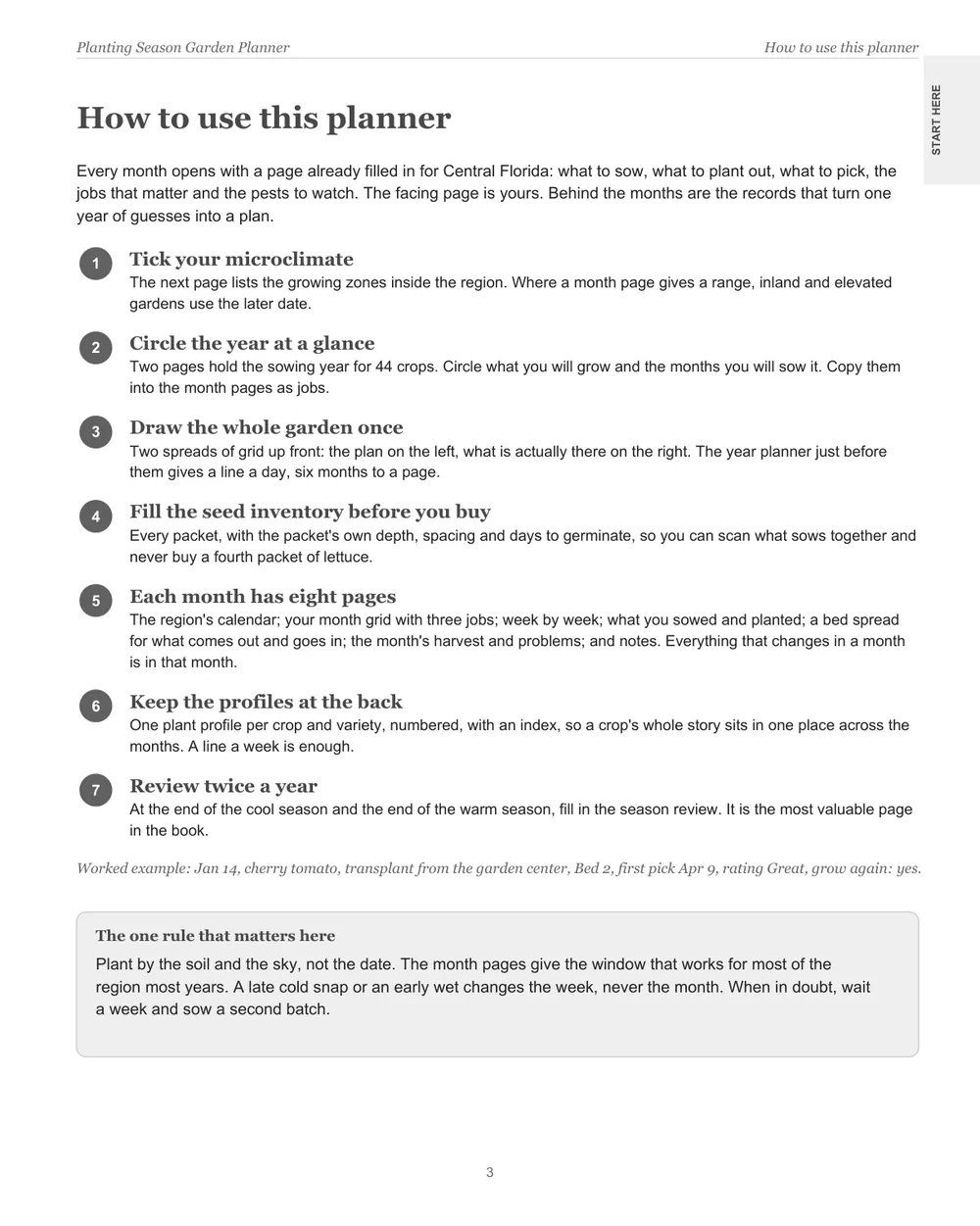 How to use this planner, with a worked example
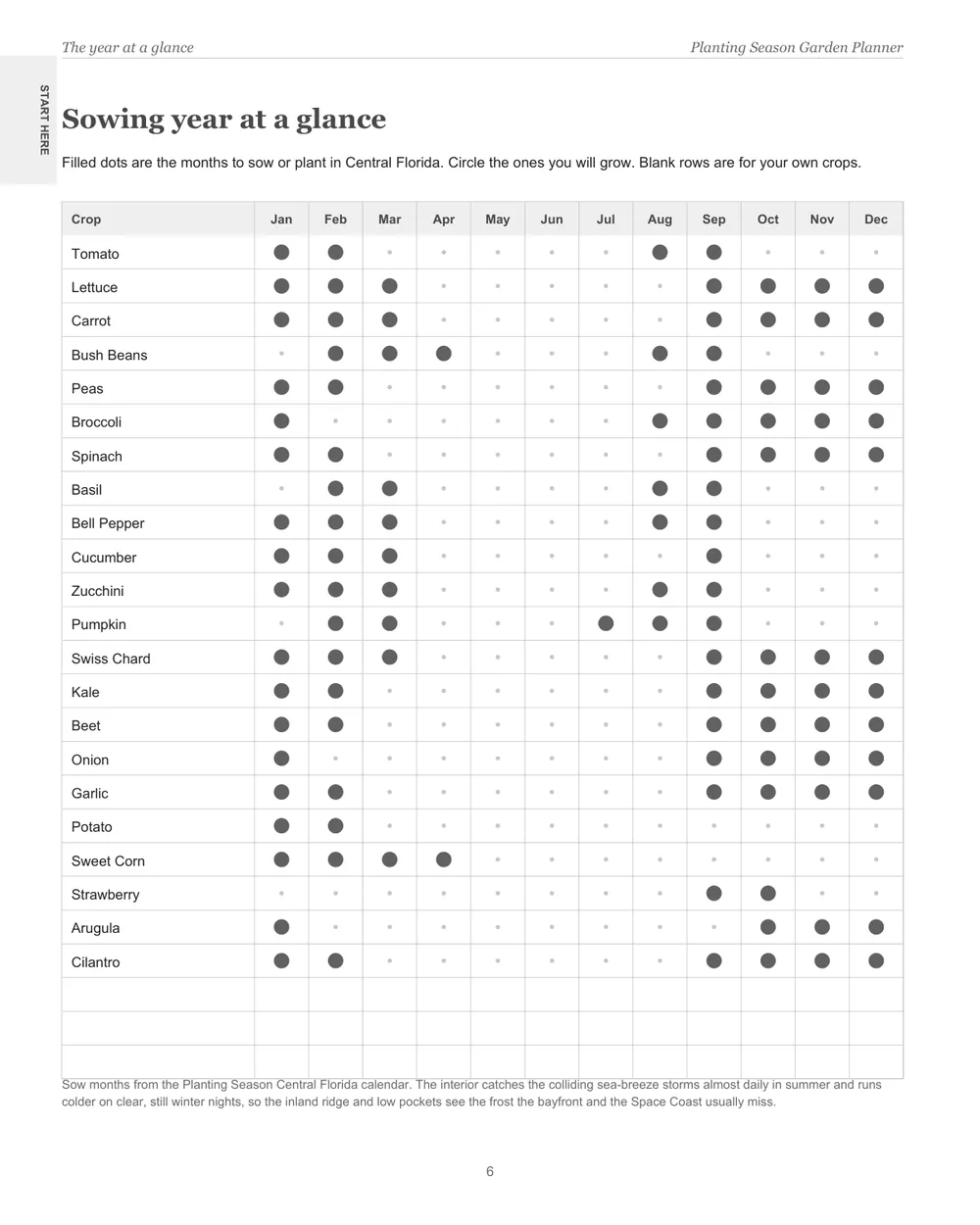 Sowing year at a glance, with the Central Florida months filled in
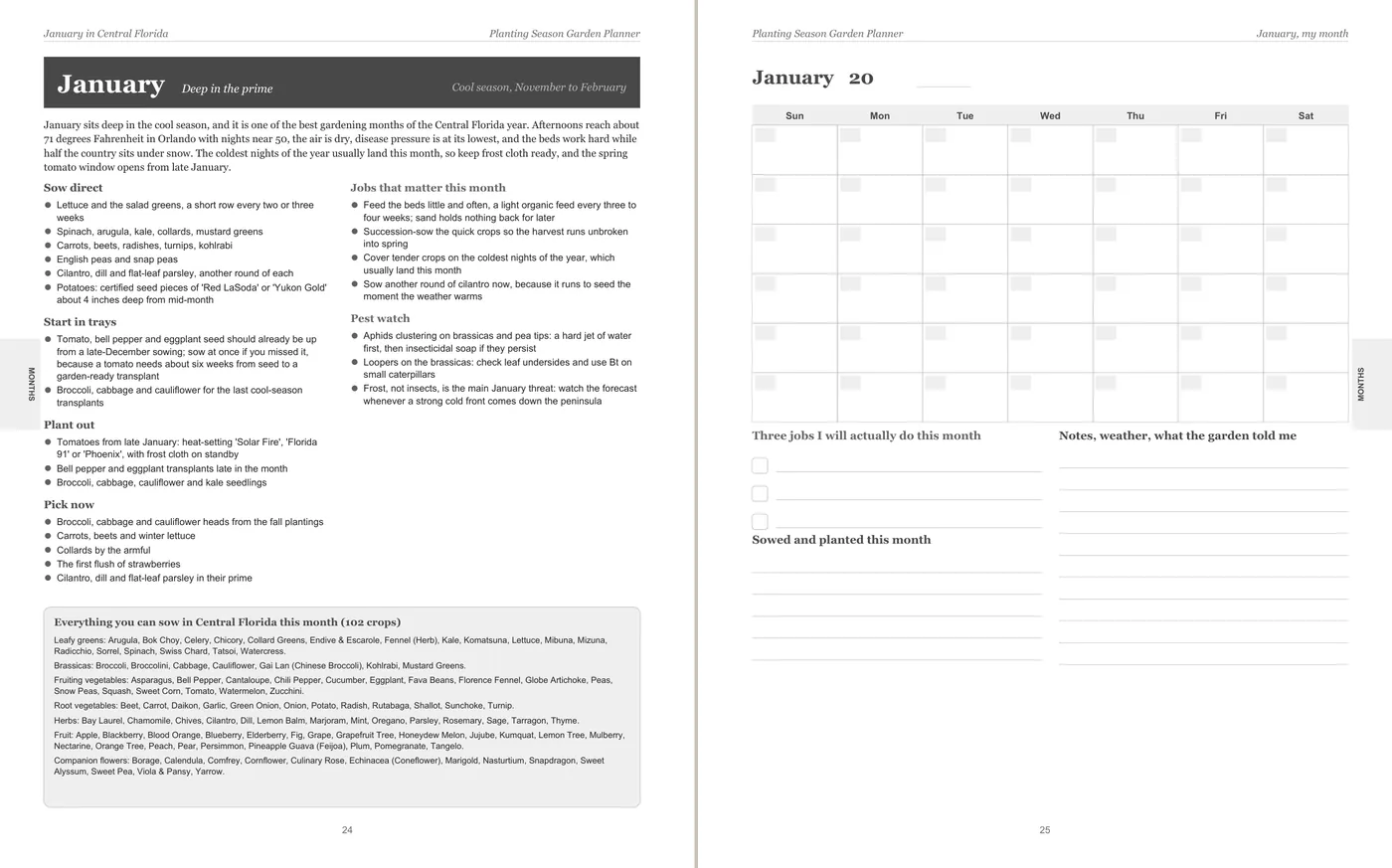 January: the Central Florida calendar page and your Sunday-start month grid
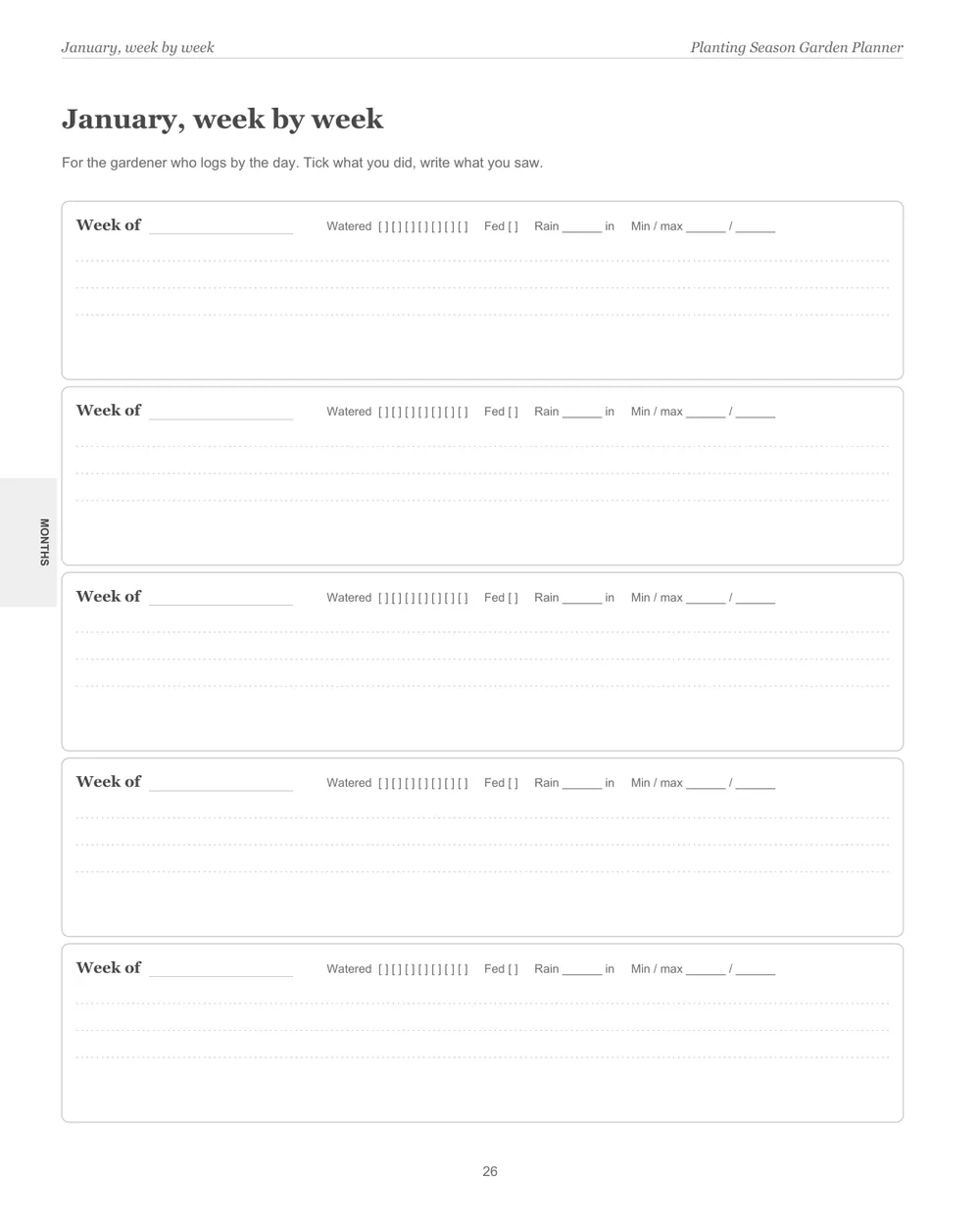 Week by week: watered, fed, rain, minimum and maximum
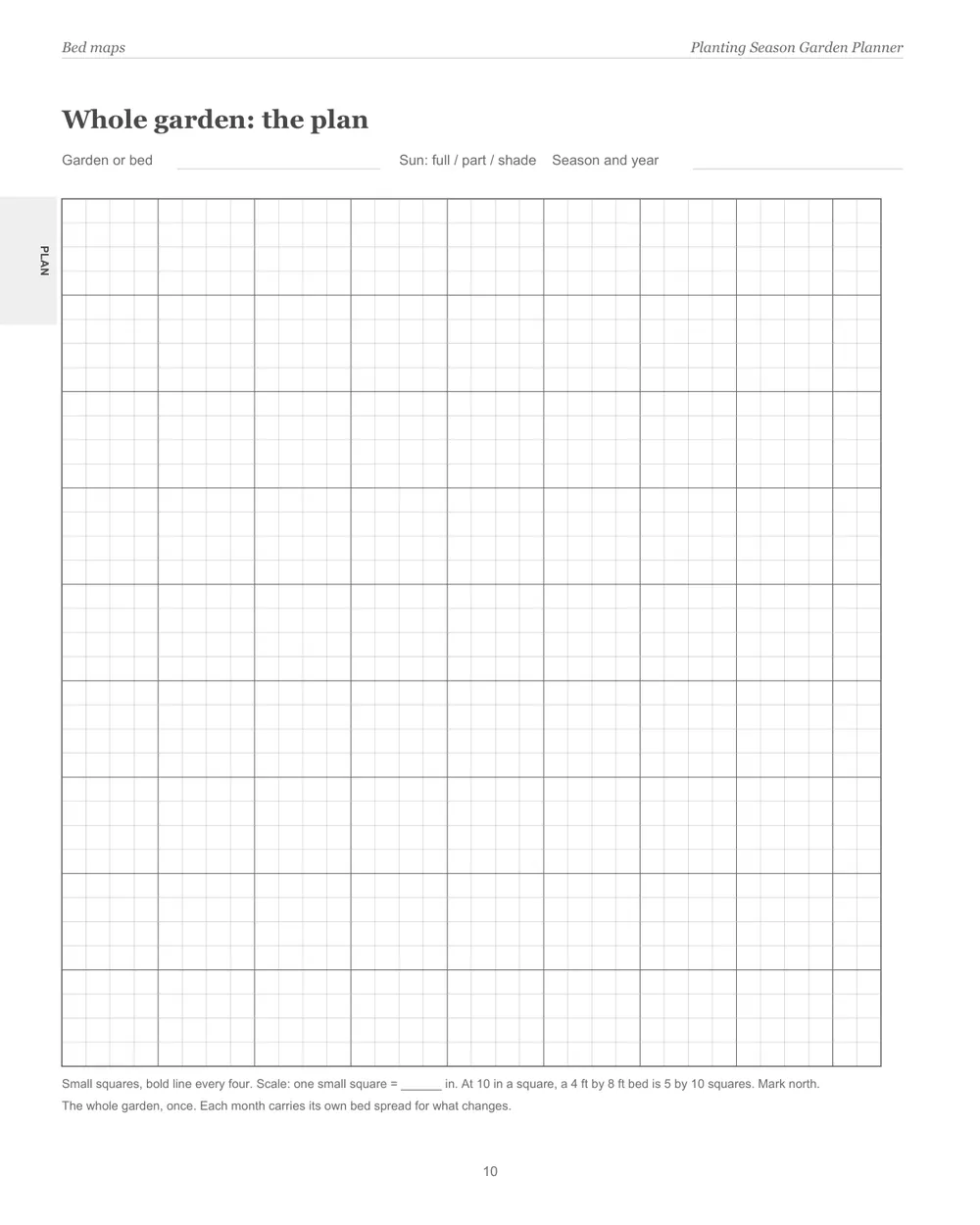 Whole-garden bed map: the plan, on a fine grid
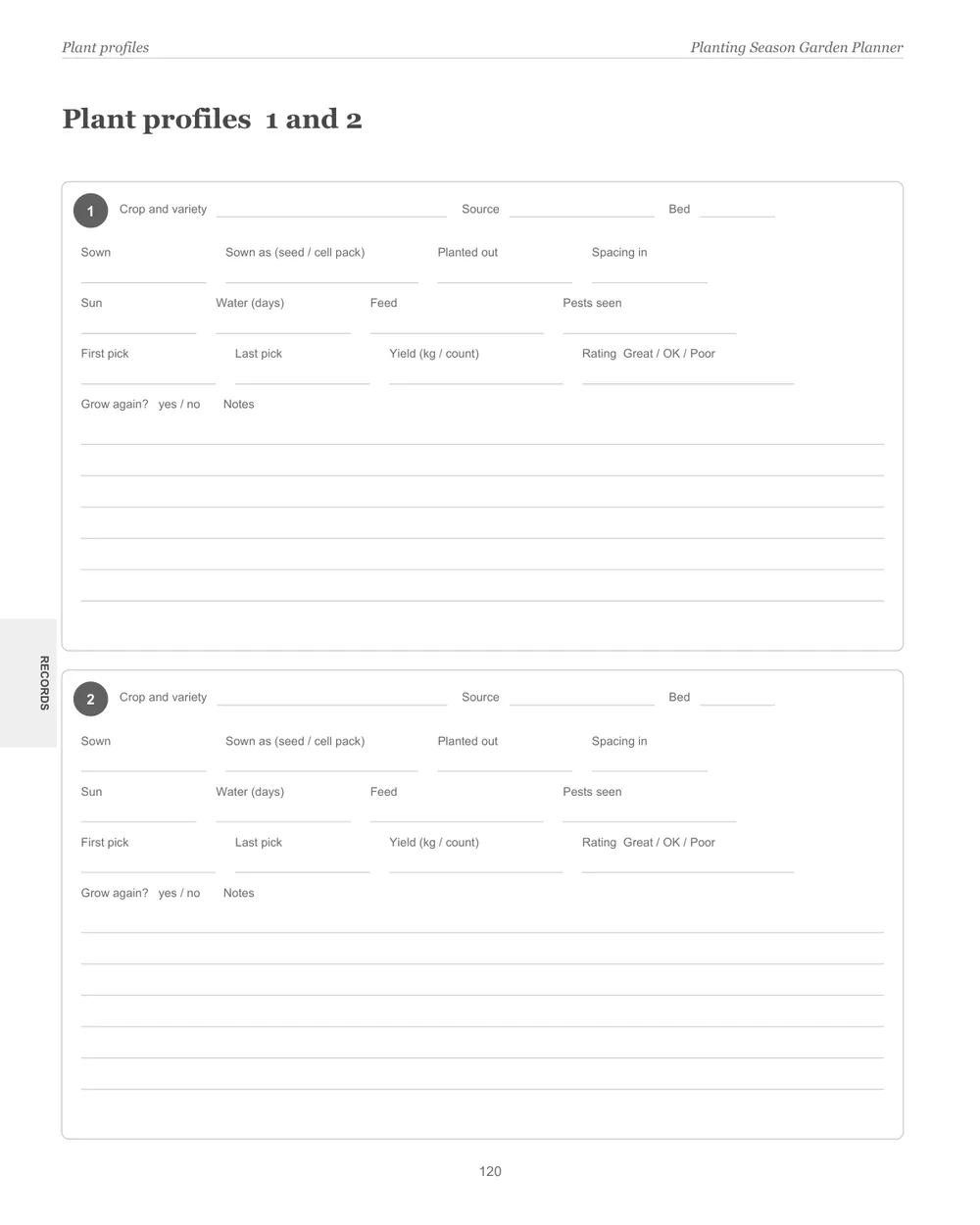 Plant profiles, two to a page, 48 in all with an index
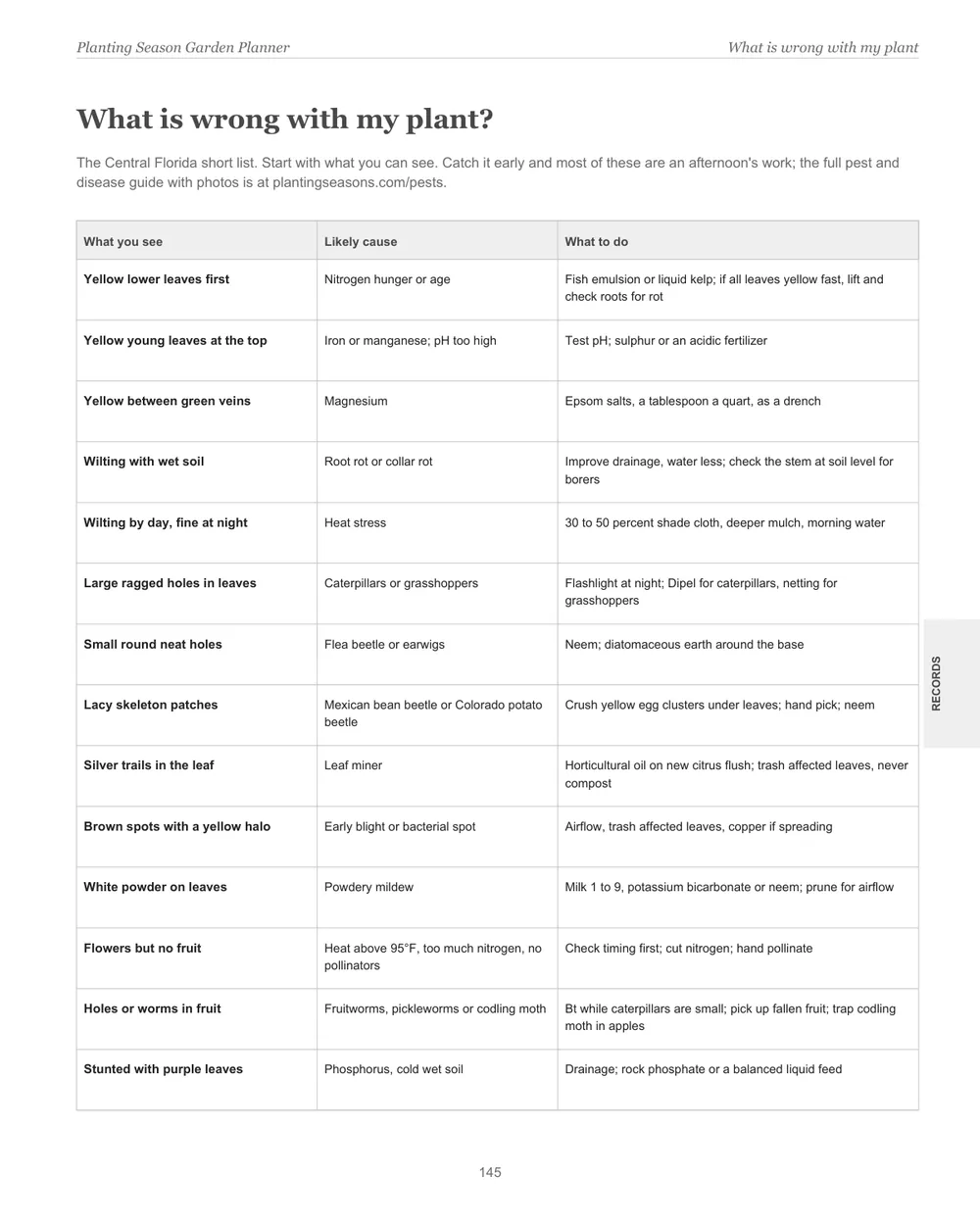 What is wrong with my plant? The symptoms and fixes chart
What's inside, page by page
162 pages in the order you use them: plan, then seeds, then the months, then the records, with the reference pages at the back. Every page has a printed edge tab so you can find each section with your thumb.
| Section | Pages | What is on them |
|---|---|---|
| Start here | 7 | Title and about pages; how to use the planner, with a worked example; Central Florida at a glance, with the microclimates to tick and your own garden's details (ZIP code, frost dates, soil, sun, water); all eighteen Planting Season regions in the United States on one page; and the sowing year at a glance for 44 crops across two pages, with blank rows for your own. |
| Plan | 10 | A year planner with a line a day, six months to a page; two whole-garden bed map spreads on a fine grid, the plan on the left and what is actually there on the right; a wish list and shopping list; a crop rotation planner; a sun and shade map; and a notes page. |
| Seeds | 6 | A seed inventory with the packet's own numbers: crop, variety, source, year, quantity, depth, spacing, days to germinate and a germination test column. |
| Months | 96 | Eight pages for each month: the pre-printed Central Florida calendar page (sow direct, start in trays, plant out, pick now, the jobs that matter and the pest watch); your Sunday-start month grid with three jobs; week by week; a sowed and planted log with germinated, planted out and first pick columns; a bed plan spread for what comes out and what goes in; harvest and problems; and notes. |
| Records | 30 | 48 numbered plant profiles, two to a page, with an index; the What is wrong with my plant? chart; three years of rain, frost and heat records; and a garden costs and savings page. |
| Review | 3 | Two season reviews (cool season and warm season) for what grew, what failed and what to change, and a fails and favorites page, year by year. |
| Notes and back pages | 10 | Lined notes pages with a date column; a seed packets and receipts page to tape an envelope to; the reader code page for the app; and the Central Florida quick chart of the 24 crops most people grow. |
| Total | 162 |
What's regional in the Central Florida edition
The month pages, the region page, the year at a glance, the quick chart and the symptoms chart in this edition are printed for Central Florida. Every sowing window comes from the Planting Season calendar for Central Florida, the same data that runs the free app and the Central Florida planting calendar on this site.
The seasons it plans around
- Fall opening and cool season: August to February. The main growing season. Tomatoes, peppers and eggplant set out mid-August to mid-September, then every brassica, leafy green, root, pea and cool-season herb from late September through winter. Dry air from October, low disease pressure, frost cloth ready in January.
- Spring window and summer: March to July. A second warm-season crop races the heat from February until nights cross 70 degrees Fahrenheit in mid-May. Then the siege: daily storms, wet heat and hurricane season from June 1. Only okra, southern peas, sweet potato, Seminole pumpkin and the tropical greens stand it; the rest of the garden rests, solarizes or grows a cover crop.
Microclimates on the region page
Page 4 lists the growing zones inside Central Florida. Check off yours; where a month page gives a range, inland and elevated gardens use the later date.
On the line-a-day year planner, the frost months for the coldest zone (January) are shaded.
The rain, frost and heat record pages carry the local baseline: Typical for Orlando: about 50 to 55 inches of rain a year, around 60 percent of it in the June to September wet season; July runs near 92 degrees Fahrenheit by day and 75 at night, January about 71 by day and 50 at night, and frost touches a handful of January nights in an average winter.
The Central Florida quick chart (page 161)
The 24 crops most people grow, with the planting months printed for Central Florida. This table is copied from the book.
| Crop | Days to first pick | Spacing in | Depth in | Planting months |
|---|---|---|---|---|
| Tomato | 85 | 24 | 1/2 | Jan, Feb, Aug, Sep |
| Lettuce | 55 | 10 | 1/4 | Jan, Feb, Mar, Sep, Oct, Nov, Dec |
| Carrot | 85 | 2 | 1/4 | Jan, Feb, Mar, Sep, Oct, Nov, Dec |
| Bush Beans | 65 | 8 | 1 | Feb, Mar, Apr, Aug, Sep |
| Peas | 75 | 4 | 1 | Jan, Feb, Sep, Oct, Nov, Dec |
| Broccoli | 90 | 18 | 1/2 | Jan, Aug, Sep, Oct, Nov, Dec |
| Spinach | 55 | 8 | 1/2 | Jan, Feb, Sep, Oct, Nov, Dec |
| Basil | 65 | 10 | 1/4 | Feb, Mar, Aug, Sep |
| Bell Pepper | 100 | 18 | 1/4 | Jan, Feb, Mar, Aug, Sep |
| Cucumber | 60 | 20 | 1 | Jan, Feb, Mar, Sep |
| Zucchini | 60 | 31 | 1 | Jan, Feb, Mar, Aug, Sep |
| Pumpkin | 120 | 59 | 1 | Feb, Mar, Jul, Aug, Sep |
| Swiss Chard | 60 | 12 | 1/2 | Jan, Feb, Mar, Sep, Oct, Nov, Dec |
| Kale | 70 | 16 | 1/2 | Jan, Feb, Sep, Oct, Nov, Dec |
| Beet | 65 | 4 | 1/2 | Jan, Feb, Sep, Oct, Nov, Dec |
| Onion | 180 | 4 | 1/2 | Jan, Sep, Oct, Nov, Dec |
| Garlic | 210 | 6 | 1 | Jan, Feb, Sep, Oct, Nov, Dec |
| Potato | 90 | 12 | 4 | Jan, Feb |
| Sweet Corn | 90 | 12 | 1 | Jan, Feb, Mar, Apr |
| Strawberry | 90 | 12 | 1/2 | Sep, Oct |
| Arugula | 40 | 6 | 1/4 | Jan, Oct, Nov, Dec |
| Cilantro | 50 | 6 | 1/2 | Jan, Feb, Sep, Oct, Nov, Dec |
| Parsley | 80 | 8 | 1/4 | Jan, Feb, Mar, Sep, Oct, Nov, Dec |
| Green Onion | 60 | 4 | 1/2 | Jan, Feb, Mar, Sep, Oct, Nov, Dec |
The symptoms and fixes chart (page 145)
14 symptoms, each with the likely cause and what to do, written for US gardens. The likely causes it covers:
- Nitrogen hunger or age
- Iron or manganese; pH too high
- Magnesium
- Root rot or collar rot
- Heat stress
- Caterpillars or grasshoppers
- Flea beetle or earwigs
- Mexican bean beetle or Colorado potato beetle
- Leaf miner
- Early blight or bacterial spot
- Powdery mildew
- Heat above 95°F, too much nitrogen, no pollinators
- Fruitworms, pickleworms or codling moth
- Phosphorus, cold wet soil
The app bonus: three months of Pro
Each planner has a reader code on page 160 for three months of Planting Season Pro. Scan the QR code on that page, or enter the code at plantingseasons.com/redeem/. One claim per account, on any phone or computer.
Pro is for the whole property: more than one garden bed (free members edit one), the Orchard's tree records, Flock, Bees, Livestock and Worms with their health records, and Projects.
Everything else in the app is free for everyone, code or no code: one bed with all its logging, the planting calendar, the plant library, pest and disease help, the journal, frost alerts and the weekly email.
The Central Florida planting calendar behind the month pages is free to read any time at plantingseasons.com/grow/central-fl/.
Specifications
| Format | Paperback, glued spine, printed on demand by Amazon |
|---|---|
| Size | 8 x 10 inches |
| Pages | 162 |
| Interior | Black ink on white paper |
| Cover | Matte |
| Dates | Undated: write the year on each month page and start in any month of any year |
| Weeks | Sunday start |
| Units | Inches, feet and degrees Fahrenheit |
| Spelling | American English |
| Edition | Central Florida, calendar data as at October 2026 |
| Author and publisher | Planting Season |
| Sold on | Amazon.com (amazon.com) |
| Editions | Paperback only at launch. Amazon does not publish write-in books as Kindle books. |
Want it to lie flat? Add a spiral
Amazon prints this planner as a paperback with a glued spine, and print on demand offers no spiral or lay-flat binding. Many planner buyers take theirs to an office supply or print shop and pay to have the glued spine cut off and a spiral or coil binding put on. The inner margin on every page is 0.625 in, so the punch holes land in blank paper, clear of the writing areas.
Ask the shop to trim as little as possible from the spine edge.
Questions
When will the Central Florida planner be out?
It is not on sale yet. The US editions launch after the Australian and New Zealand ones. Leave your email on this page and we will tell you when it is on Amazon.com.
Is it dated?
No. The planner is undated, so you write the year on each month page and it works in any year. Start it in whatever month you buy it.
How is it different from a blank garden planner?
Every month opens with a page already filled in for Central Florida: what to sow, what to start in trays, what to plant out, what to pick, the jobs that matter and the pests to watch. The sowing windows come from the Planting Season calendar for Central Florida. The facing pages are yours to write in.
Is Central Florida the right edition for me?
This edition is set for Orlando, Tampa, Lakeland and the Space Coast. If you are not sure which region you garden in, enter your ZIP code on the Find My Region page. If you garden across a boundary, use the later date.
Is it spiral bound?
No. Amazon prints it as a paperback with a glued spine and offers no spiral binding. Many owners have an office supply or print shop cut the spine off and add a spiral; the inner margins are wide enough for the punch holes to miss the writing areas.
What does the reader code give me?
Each planner has a reader code on page 160 for three months of Planting Season Pro. Scan the QR code or enter the code at plantingseasons.com/redeem/. One claim per account. Pro adds more than one garden bed, the Orchard's tree records, Flock, Bees, Livestock and Worms, and Projects. The calendar, frost alerts and one bed are free without a code.
Will there be a Kindle or PDF version?
Not at launch. Amazon does not sell write-in books like this one as Kindle books, and the paperback comes first.
Other US editions
Each edition carries its own region's calendar. See every planner or find your region.