
How to Control Fruit Fly in the US Garden
Updated June 2026
Tell spotted wing drosophila from quarantine fruit flies, and beat it with an organic-first plan that is safe for bees and pets
For most US home gardeners the fruit fly that ruins a crop is spotted wing drosophila, and it is a different beast from the harmless flies in your fruit bowl. It attacks sound, ripening soft fruit, so your berries can go soft and leaky right when they should be at their best. On top of that, parts of the country face periodic outbreaks of exotic quarantine fruit flies that trigger eradication programs and movement rules. The good news is that the home pest, spotted wing drosophila, is beatable with sanitation, netting and a few well-timed tools.
This guide explains which fruit flies you are dealing with, how the lifecycle works, what the damage looks like, and a clear organic-first control plan. Use the tool below to build your plan around where you are right now, whether you are trying to prevent fruit fly, beat it organically, or step up because it is already a problem.
Build your fruit fly control plan
Pick the approach that fits where you are right now. Every option here leads with sanitation and physical exclusion, and keeps any sprays to bee-safe, low-risk methods used the right way.
Which fruit fly do you have?
There are really two different fruit fly problems in the US, plus a harmless lookalike that causes a lot of confusion.
- Spotted wing drosophila (Drosophila suzukii). The major home-garden fruit fly, widespread across the country. Unlike ordinary vinegar flies, the female has a serrated, saw-like ovipositor that cuts into sound, ripening soft fruit and lays eggs inside it. The males have a dark spot near the tip of each wing. This is the one that breeds in your berries.
- Quarantine tephritid fruit flies. Exotic species such as Mediterranean fruit fly (medfly) and others are not generally established but show up as periodic outbreaks, notably in California and Florida. These trigger eradication programs and movement restrictions run by USDA APHIS and state agriculture departments. You comply with the rules during an outbreak rather than spraying for them yourself.
- Vinegar flies (the fruit bowl ones). The tiny flies hovering over bananas on the counter are common vinegar flies. They feed on already-rotting fruit and do not attack sound fruit on the plant. They are a nuisance, not the garden pest, and need no control beyond clearing old fruit.
If you are not sure what you have, a simple cup trap will catch adults you can compare against photos, and floating suspect fruit in salt water will bring out any maggots. The in-app Plant Doctor can help you confirm before you commit to a plan.
The lifecycle, and why timing matters
Understanding the cycle is what makes control work. The spotted wing drosophila female saws into ripening fruit and lays eggs just under the skin. Those eggs hatch into maggots that feed inside the fruit, breaking it down from the inside. The maggots then drop or pupate, and emerge as new adults to start again.
In warm conditions the whole cycle can run in around one to two weeks, so populations build very fast through the fruiting season. That speed is why prevention timed to ripening, frequent clean harvesting and quick refrigeration matter so much. By the time you see soft, leaking fruit the damage is already done, so you have to get ahead of the cycle, not chase it.
What the damage looks like
Spotted wing drosophila damage is sneaky because the fruit can look perfect from the outside.
- Soft, weeping fruit. Berries and soft fruit collapse, leak and soften faster than they should, often right at peak ripeness.
- Tiny sting scars. A small puncture or scar on the skin where the female laid eggs, sometimes hard to spot.
- Maggots inside. Cut or float the fruit and you find small white maggots in fruit that looked sound. The salt-water float test is the easy way to confirm.
Because the fruit can look fine until you open it, monitoring with traps and acting on the calendar beats waiting for visible damage.
The organic IPM ladder
Integrated pest management means starting with the gentlest, most reliable tools and only stepping up if you need to. For spotted wing drosophila the ladder looks like this.
1. Sanitation, the non-negotiable first step
Remove all ripe and culled fruit promptly, and never leave soft, over-ripe or fallen fruit on the plant or ground. Pick clean and pick often. Do not toss infested fruit in an open compost pile, because the maggots simply pupate in your garden. Seal it in a bag and solarize it in the sun for several days, freeze it, or bin it. Refrigerate your harvest fast, because cold stops any eggs from developing. This habit removes the breeding ground.
2. Physical exclusion, the most reliable home control
If the female cannot reach the fruit, she cannot lay. Spotted wing drosophila is tiny, so use fine exclusion netting of about 1 mm mesh or smaller over bushes, rows or whole plants. Put it on before the fruit starts to ripen, seal the edges, and check there are no gaps. For berries and soft fruit this is the single most effective thing you can do.
3. Monitoring traps
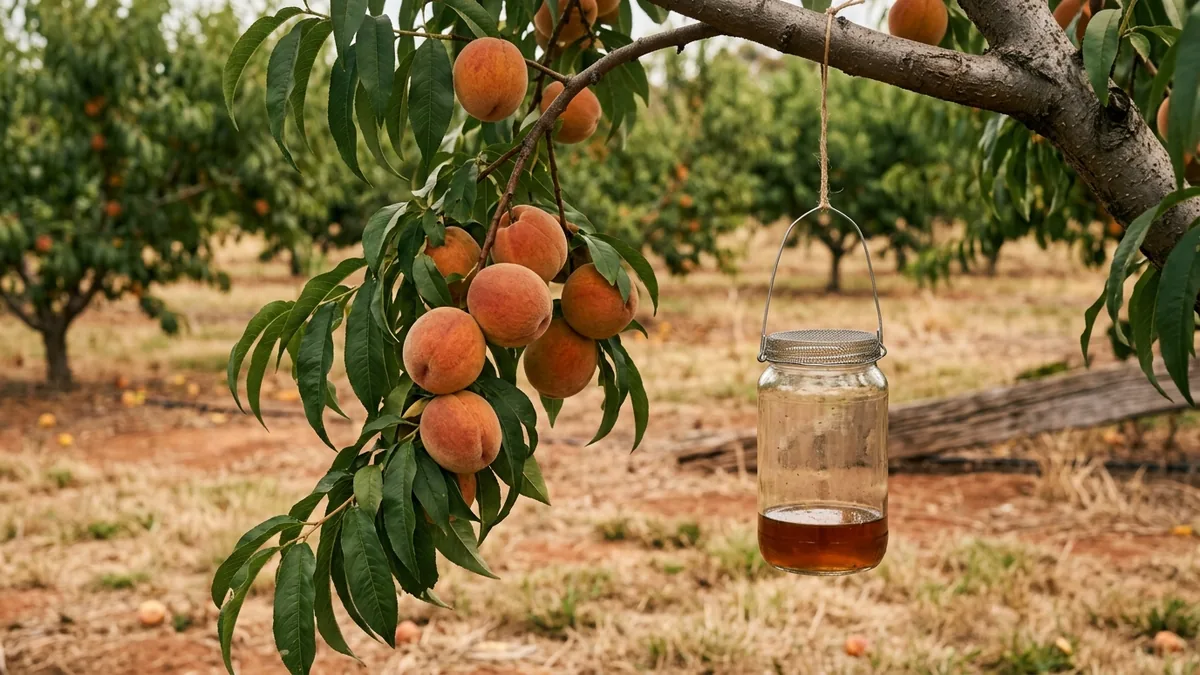
Hang cup traps baited with apple cider vinegar, or a yeast and sugar mix, with a drop of unscented dish soap to break the surface, as fruit begins to color. They tell you when adults arrive and how heavy the pressure is. Traps alone will not save a heavy crop, but they tell you when to escalate.
4. Harvest frequently and early
Pick every few days through the season, and harvest fruit slightly early where you can, since spotted wing drosophila targets ripe and over-ripe fruit. Frequent clean harvesting plus fast refrigeration starves the pest of the soft fruit it needs.
5. Bee-safe spray, only if pressure is severe
For heavy pressure, spinosad-based products that are OMRI-listed for organic use are a common home option. Spinosad is toxic to bees while it is wet, so apply late in the day when bees are not foraging, never on open blossom, and let it dry before bees return. Choose a product registered for your crop and follow the label exactly.
How to prevent fruit fly next season
- Start traps as fruit colors so you know the moment adults appear.
- Net before ripening. Cover plants with fine 1 mm mesh while fruit is still firm, not once it is soft.
- Keep it clean. No soft, over-ripe or fallen fruit left on the plant or ground.
- Pick often and refrigerate fast. Frequent clean harvesting and quick cooling stop eggs developing.
- Choose earlier varieties where you can. Fruit that ripens before peak fly numbers escapes some pressure.
- Prune for airflow and access. Open, well-pruned plants dry faster, are less attractive, and are easier to net and harvest cleanly.
Susceptible plants
Spotted wing drosophila hits soft and berry fruit hardest, while quarantine tephritid fruit flies attack a wider range. The most at-risk hosts in home gardens include:
- Berries: blueberries, raspberries, blackberries, strawberries.
- Cherries and other soft stone fruit, plus peaches, nectarines, plums and apricots.
- Grapes, especially thinner-skinned table grapes.
- Figs and persimmons and other soft, sweet fruit.
- Tomatoes, particularly cracked or over-ripe fruit, can be affected, which surprises many gardeners.
- Citrus and pome fruit are more a concern for quarantine fruit flies during an outbreak than for spotted wing drosophila.
See our guides to tomatoes, grapes and blueberries for crop-specific growing advice.
When it is serious
If you find maggots in fruit, or your monitoring traps are filling quickly, treat it as an active infestation: strip and destroy all soft and culled fruit at once, net everything still salvageable, harvest more often, and use a bee-safe spray if pressure stays high. If you see unusual fruit flies or maggoty fruit in or near a declared exotic fruit fly outbreak area, report it to your state department of agriculture or USDA APHIS. Early reports help protect whole regions.
Time your fruit fly defense to the season
The Planting Season app includes a Pest Calendar that tells you when to hang traps, net fruit and harvest, tuned to your region, plus an in-app Plant Doctor to identify what is attacking your crop.
Open the App →Frequently Asked Questions
What is spotted wing drosophila?
Spotted wing drosophila (Drosophila suzukii), often called SWD, is the major fruit fly of US home gardens. Unlike ordinary vinegar flies that only breed in already-rotting fruit, the SWD female has a serrated, saw-like ovipositor that cuts into sound, ripening soft fruit and lays eggs inside it. Maggots then develop in fruit that looks perfect on the outside. It is widespread across the country and is most damaging to cherries, blueberries, raspberries, blackberries, strawberries and grapes.
How is SWD different from a quarantine fruit fly?
They are two different problems. Spotted wing drosophila is widespread and breeds in your own berries every season, so it is something home gardeners manage directly with sanitation, netting and traps. Quarantine tephritid fruit flies, such as Mediterranean fruit fly (medfly), are not generally established and instead show up as periodic outbreaks, notably in California and Florida, that trigger eradication programs and movement restrictions run by USDA APHIS and state agriculture departments. You manage SWD yourself, but you comply with the rules during a quarantine fruit fly outbreak.
What does SWD damage look like?
Berries and soft fruit collapse, weep and soften faster than they should, sometimes with a tiny sting scar on the skin. Cut the fruit open and you find small white maggots inside fruit that looked sound. Because SWD attacks ripening fruit rather than waiting for it to rot, you often notice a crop going soft and leaky right as it should be at its best. Floating suspect fruit in salt water will bring maggots out so you can confirm.
Does netting work against fruit fly?
Yes, when the mesh is fine enough. Spotted wing drosophila is tiny, so exclusion netting needs to be about 1 mm mesh or smaller to keep the flies off the fruit. Cover bushes, rows or whole plants before the fruit starts to ripen, seal the edges, and make sure there are no gaps. Fine exclusion netting is one of the most reliable non-chemical controls for berries and soft fruit.
Are fruit fly sprays safe for bees and pets?
For severe pressure, spinosad-based products that are OMRI-listed for organic use are a common home option, but spinosad is toxic to bees while it is wet. Spray late in the day when bees are not foraging, never on open blossom, and let it dry before bees return. Always choose a product registered for your crop, follow the label exactly, and keep all sprays and traps out of reach of pets and children. Sanitation, netting and traps come first, with spray as a last step.
How do monitoring traps for fruit fly work?
A simple cup trap baited with apple cider vinegar, or a yeast and sugar mix, with a little unscented dish soap to break the surface, will catch adult flies and tell you when SWD has arrived and how heavy the pressure is. Hang traps near ripening fruit and check them often. Traps alone will not protect a heavy crop, but they tell you when to step up sanitation, netting or spraying.
What should I do during a fruit fly quarantine?
During a declared medfly or other exotic fruit fly outbreak, your state agriculture department and USDA APHIS may restrict moving host fruit out of the quarantine area. Comply with the local quarantine boundaries, do not carry or mail home-grown fruit out of the zone, and follow official instructions. If you find unusual fruit flies or maggoty fruit, especially in or near a declared outbreak area, report it to your state department of agriculture or USDA APHIS so they can respond.
When should I act on fruit fly?
Start before the fruit ripens. Hang monitoring traps as fruit begins to color so you know the moment SWD arrives, net before ripening, and harvest frequently and early once fruit starts to soften. Pick clean and remove every ripe and culled fruit promptly, and refrigerate your harvest fast to stop any eggs developing. By the time you see maggots it is too late for that fruit, so timing and sanitation are everything.
See also: Pest and Disease Guide and How to Grow Blueberries