How to Grow Almonds in the US
Updated September 2026
A nut tree for dry springs, mild winters and long, hot summers
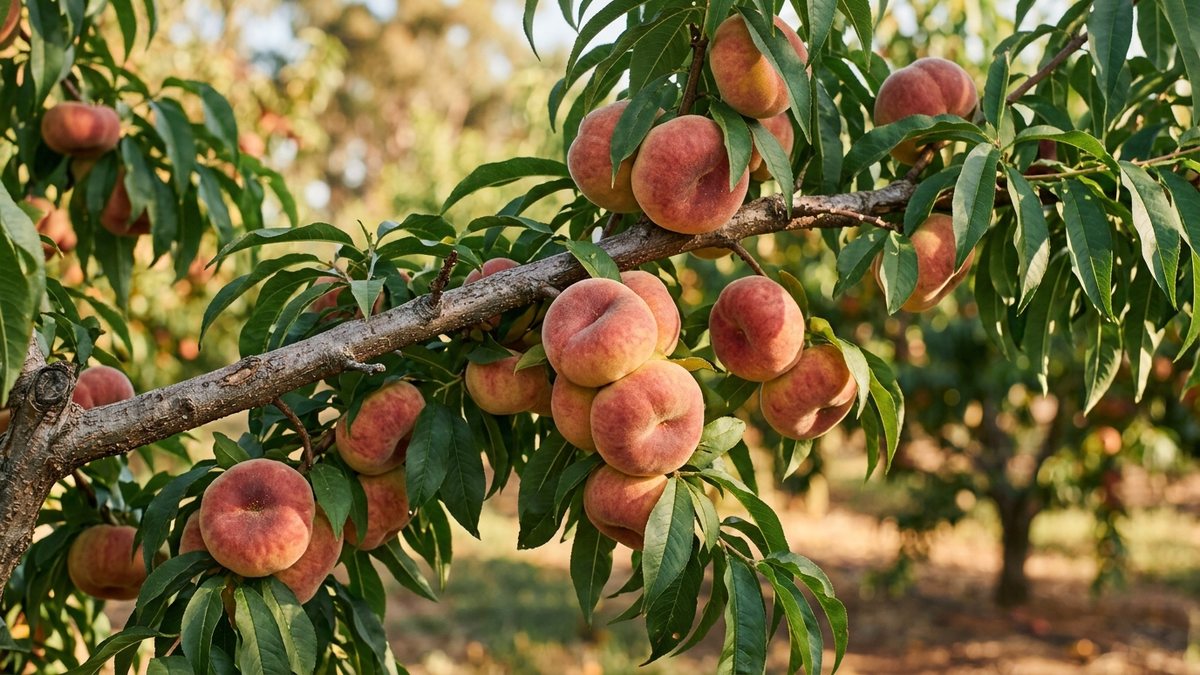
The almond is a close relative of the peach. Instead of eating the flesh you crack open the stone and eat the seed inside. It flowers very early in the year, needs some winter chill, and does best where spring is dry and summer is long and hot. That is why the US almond crop comes from California.
This guide covers where almonds grow in the US, the varieties that make sense in a home garden, and how to plant, prune, protect and harvest them. If you garden somewhere wet or frosty in spring, read the region notes first. A pecan is often the better nut tree for you.
Where Almonds Grow in the US
Almonds need three things: enough winter chill to flower, a dry spring so bloom and young nuts escape disease, and no hard frost while the tree is in flower. Northern California and the Central Valley (zones 9a to 9b) is almond country. Plant bare root trees from December to February with a pollinizer, or choose a variety that pollinates itself. In Southern California and the Desert Southwest, plant bare root trees in January or February.
Everywhere else the flowers come too early or the spring is too wet. In the Gulf South and Texas, humid springs, late freezes and too little chill mean almonds rarely crop, and pecan is the better nut tree. In the Mid-South, the Mid-Atlantic and the Southern Plains, late frosts and humid springs usually ruin the crop. West of the Cascades in the Pacific Northwest, wet springs bring disease and poor nut set. The Northeast, the Midwest and the Upper Midwest are too cold, and the blossom is lost to spring frost. In the Mountain West only a few warm southern valleys have a chance. Florida winters are too mild and springs too humid, Hawaii has no chill for flowering, and Alaska is far too cold. Choose your region below for local planting months.
Varieties to Try
Nonpareil
The classic California almond, with a thin, papery shell and a smooth kernel. It does not pollinate itself, so plant it with a compatible variety that flowers at the same time.
Carmel
A productive variety often planted as a pollinizer for Nonpareil. Its shell is harder, which gives a little more protection from birds and insects.
All-in-One
A smaller, self-fruitful tree for home gardens. One tree sets nuts without a partner, though bees still need to visit the flowers.
Garden Prince
A genetic dwarf that stays small enough for a backyard and is self-fruitful. A good choice where there is room for only one tree.
Independence
A self-fruitful variety with Nonpareil-type nuts, useful where a single larger tree is wanted.
Planting
Plant bare root trees while they are dormant in winter, or container trees in the same window. Choose full sun and deep soil that drains quickly. Almonds hate wet feet, and crown and root rot kill trees in heavy or waterlogged ground. Avoid low spots where cold air settles, because the flowers open early and a frost at bloom takes the crop.
Standard trees reach about 13 to 26 feet tall, so allow about 20 feet between trees. Dig a hole as deep as the roots and twice as wide, set the graft union above soil level, backfill with the native soil and water well. Hold off on fertilizer until the tree starts to grow.
Care and Pollination
Pollination: most almonds cannot set nuts with their own pollen. Plant two compatible varieties that bloom together, or choose a self-fruitful type such as All-in-One, Garden Prince or Independence. Either way, bees do the work, so avoid spraying while the tree is in flower.
Water: water deeply every week or two through the dry season on sandy soil, less often on heavier ground, and let the top few inches dry between waterings. A thick layer of mulch kept a hand's width away from the trunk saves water.
Pruning: train young trees to an open vase with three or four main branches, much like a peach. Almonds fruit on short spurs that crop for several years, so mature trees need only light thinning in winter to let in light and remove dead wood.
Feeding: give a nitrogen fertilizer in late winter or early spring. Yellowing leaves in spring usually mean the tree is hungry.
Pests and Diseases
These are the problems US gardeners are most likely to meet:
- Navel orangeworm: The most damaging almond pest in California. The caterpillars bore into nuts once the hulls split. Knock old nuts off the tree in winter and destroy them, and harvest promptly.
- Peach twig borer: Small caterpillars that tunnel into shoot tips in spring and later into nuts. A dormant horticultural oil spray in winter helps.
- Shot hole disease: A fungus that makes small purple spots on leaves which fall out, leaving holes. It spreads in wet spring weather. Prune for airflow and water at the base.
- Brown rot: Rain at bloom turns flowers brown and the rot moves into twigs. Remove blighted twigs and old fruit, and keep the canopy open.
- Spider mites: Tiny mites that bronze the leaves in hot, dusty summers. Hose dust off the leaves and keep trees watered.
- Birds and squirrels: Both take nuts as they ripen. Harvest as soon as the hulls split.
For organic control methods, see our organic pest management guide.
Harvest and Storage
Almonds are ready in late summer to early fall, when the hulls split open, dry out and pull away from the shell. Spread a tarp under the tree and shake or knock the branches with a padded pole.
Remove the hulls, then dry the nuts in their shells in a single layer in a warm, airy spot out of direct sun for a week or so, until a kernel snaps cleanly rather than bending. Stored dry in the shell in a cool place, almonds keep for months. Shelled kernels keep longer in the fridge or freezer.
Track Your Almond Tree
Add almonds to your garden in the Planting Season app and get reminders for pruning, feeding, pest checks and harvest time.
Open the App →Frequently Asked Questions
Can I grow almonds outside California?
Our calendars list almonds for Northern California and the Central Valley, Southern California and the Desert Southwest. Elsewhere the very early flowers are usually lost to spring frost, or humid springs bring disease and poor nut set. In most of the South a pecan is the better nut tree.
Do almond trees need a pollinizer?
Most do. Plant two compatible varieties that flower at the same time, such as Nonpareil with Carmel, or choose a self-fruitful variety like All-in-One, Garden Prince or Independence. Bees are needed either way.
How long do almond trees take to produce nuts?
Grafted almond trees usually bear their first nuts about three years after planting, and the crop builds over the following years as the tree fills out.
Are homegrown almonds safe to eat?
Named sweet almond varieties from a nursery are safe. Trees grown from seed can produce bitter almonds, which contain compounds that release cyanide, so do not eat nuts that taste bitter.
See also: Almond in the Plant Library