
How to Grow Green Beans: When to Plant Beans in the US
Updated October 2026
Bush and pole beans are among the fastest, most rewarding Florida crops, as long as you plant them in the warm shoulders of the year and skip the brutal mid-summer.
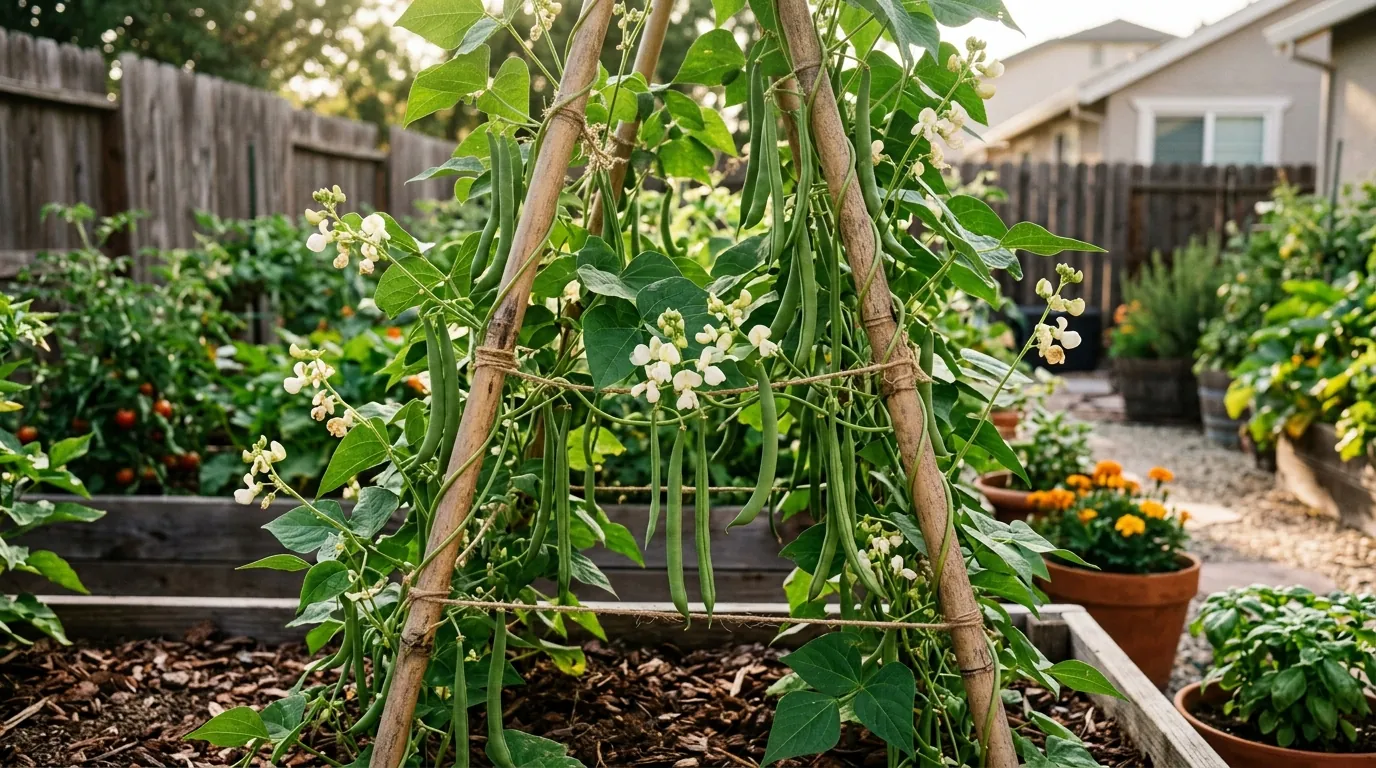
Snap beans are a warm-season crop that can crop in as little as 50 days, which makes them a perfect fit for Florida's spring and fall windows. They dislike both frost and extreme summer heat, so the trick is timing them for the mild stretches on either side of the hottest part of the year.
There are two main kinds. Bush beans grow about knee high, need no support, and deliver a fast concentrated harvest. Pole beans climb a trellis and crop steadily for weeks, giving you far more food from the same patch of ground. If the heat is on and snap beans simply will not set, Southern peas, also called cowpeas, carry you through the summer.
Beans resent transplanting, so always sow seed directly into warm soil once the danger of frost has passed. Pick the right type and the right window and a row of beans is about as close to a guaranteed win as Florida gardening gets.
Bush or pole bean selector
Choose your bean type and your planting window for tailored spacing, support and timing.
What it looks like as it grows
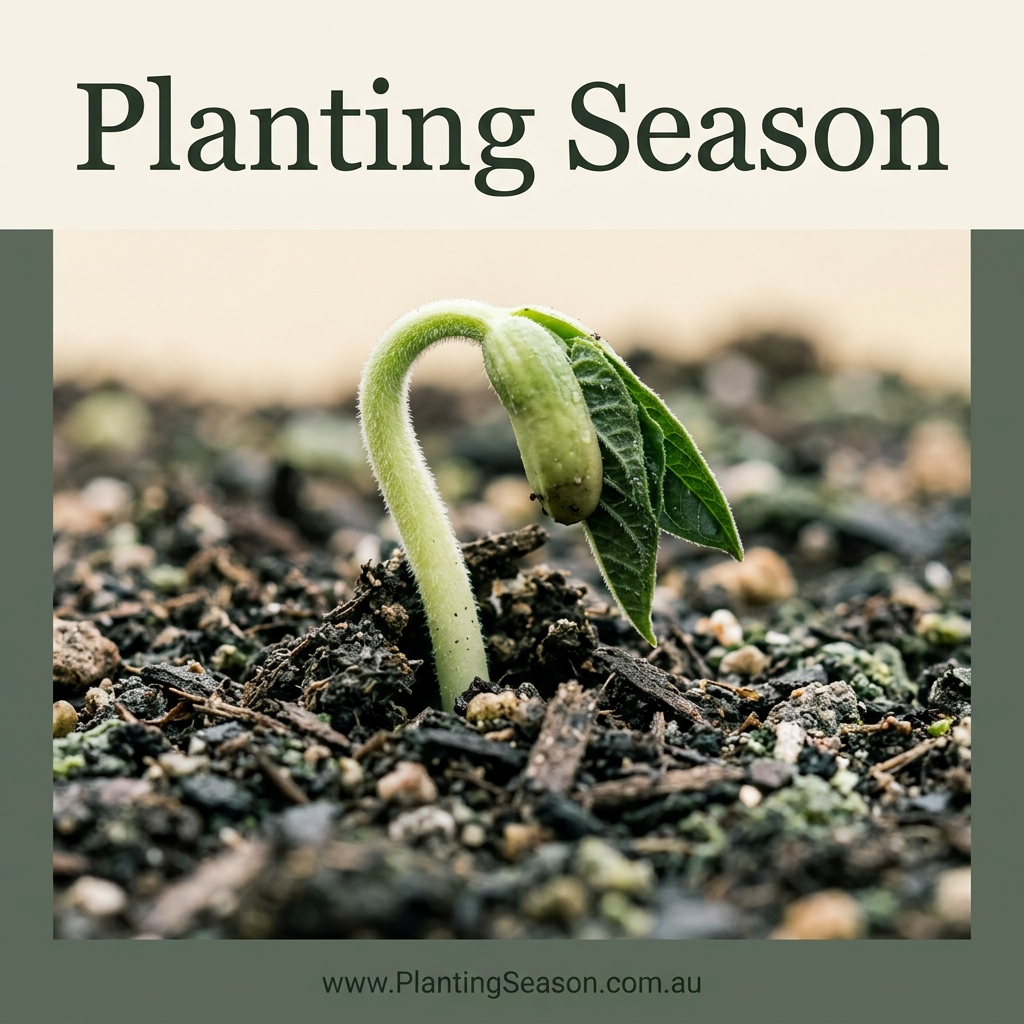
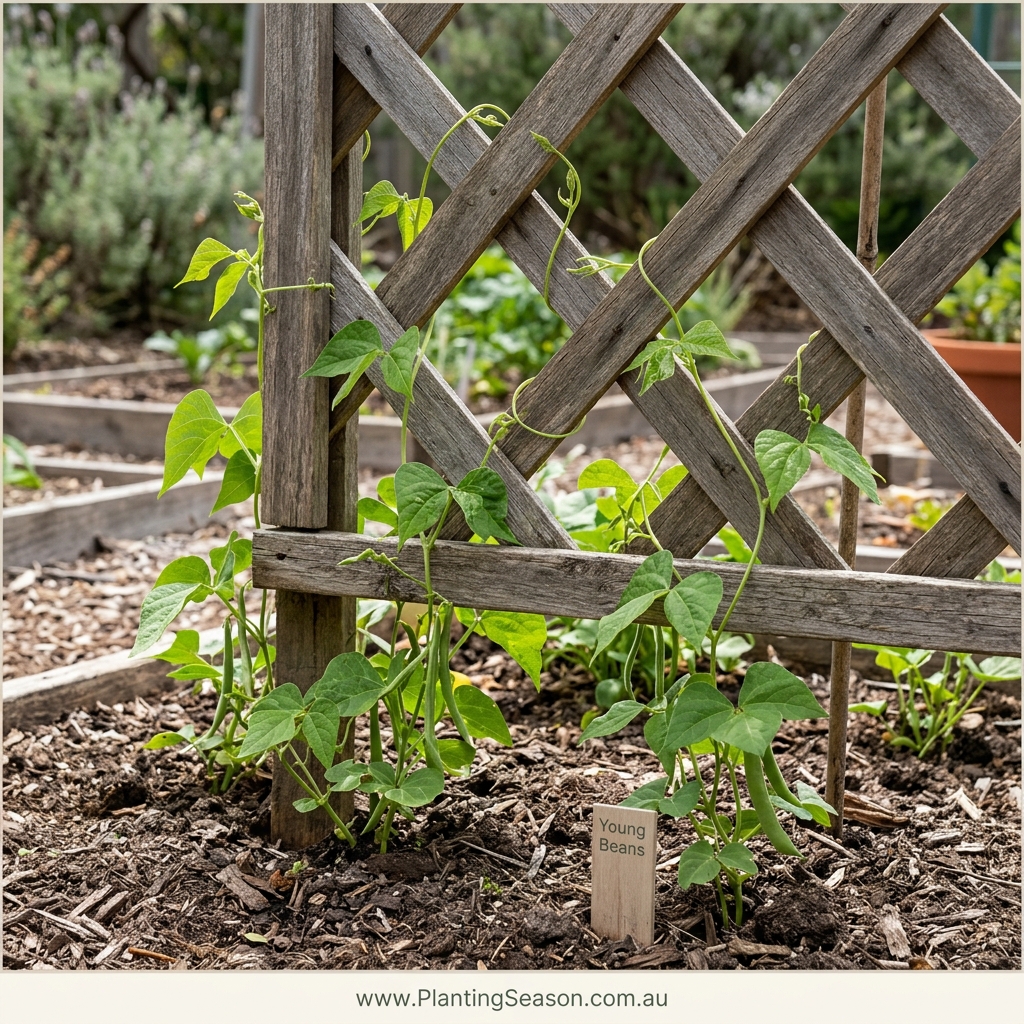
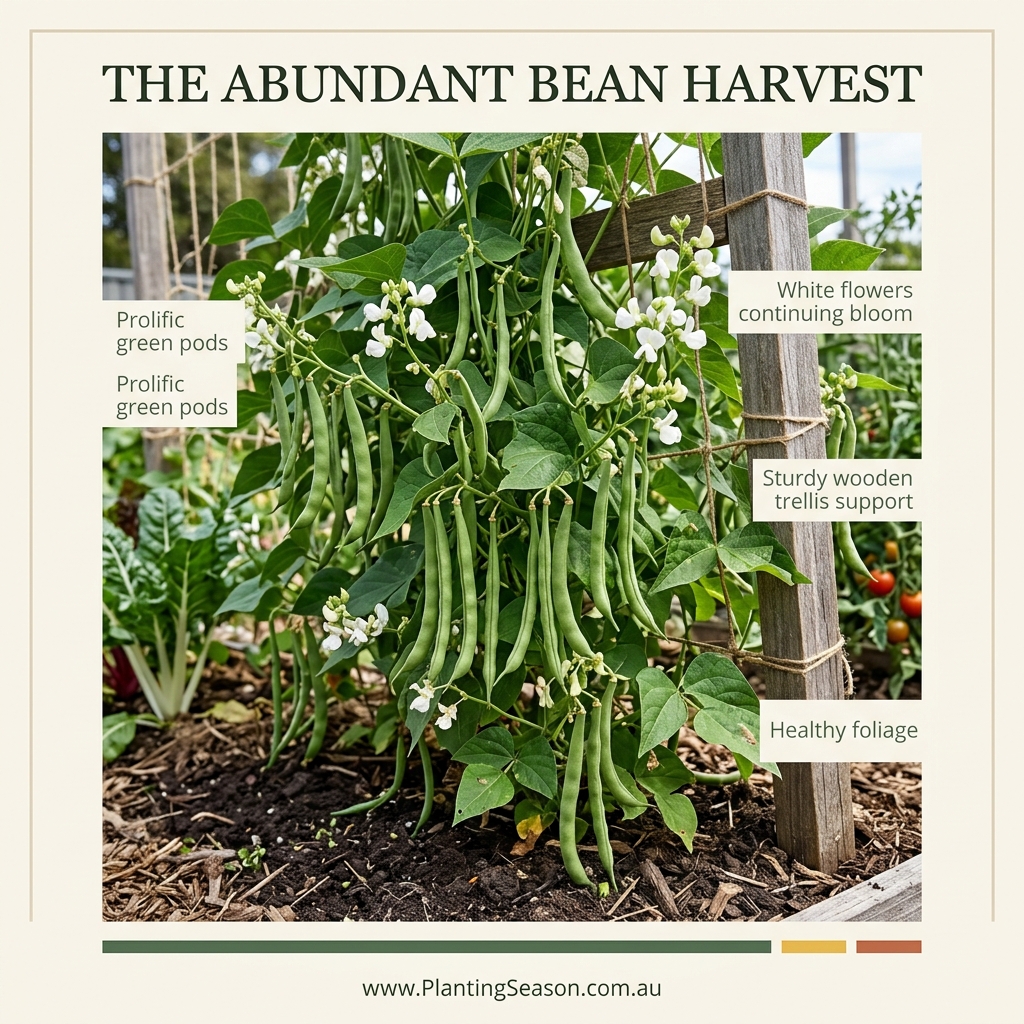
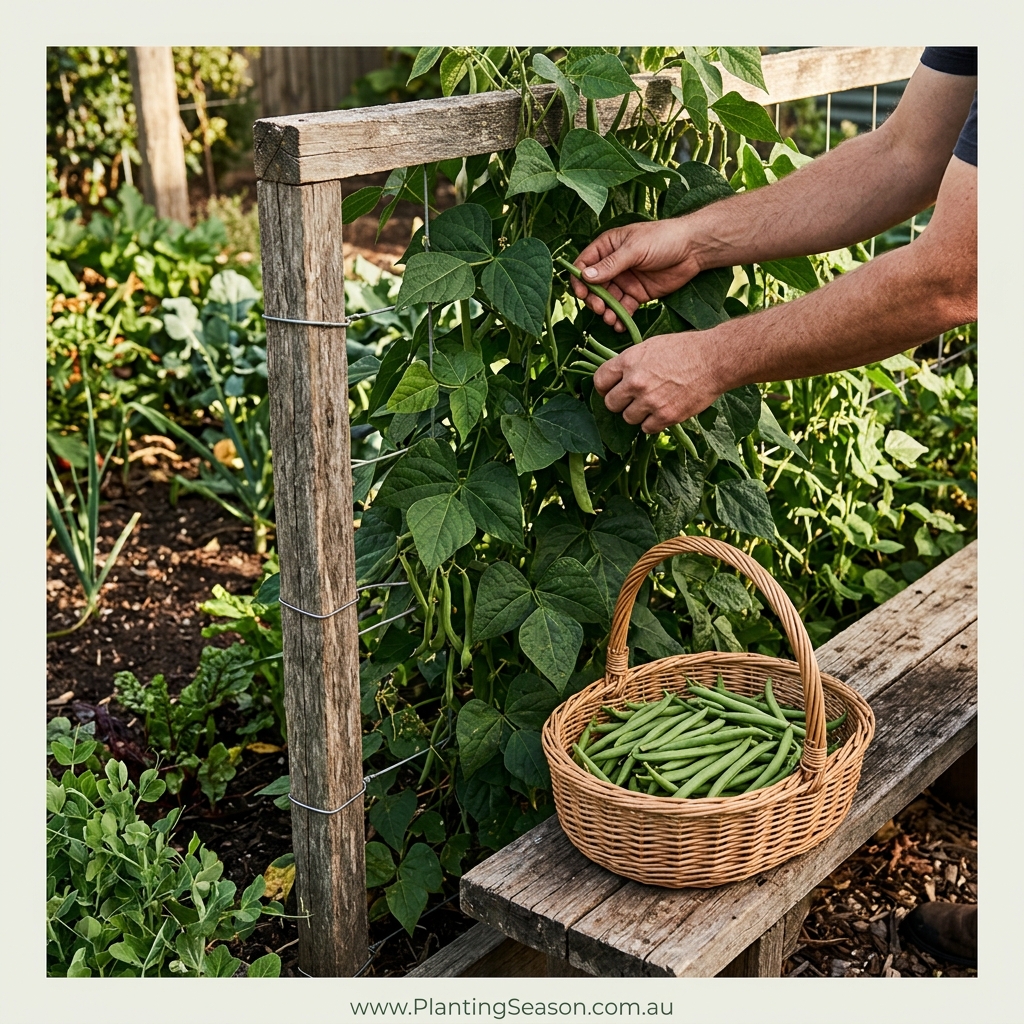
🌱 Plant profile: Bush Beans, with sowing times for your region, companion plants and common pests.
When to Plant Green Beans in Your Region
Green beans are frost tender and sown straight into warm soil. In the North they go in once, after the last frost. North and Central Florida, the Gulf South, the low desert and Texas sow in spring and again in late summer, skipping the hottest months, and South Florida grows them through the cool, dry season. These are the planting months for each of our 18 regions, with each region's frost window. Each region links to its full vegetable planting calendar, and the Bush Beans plant page shows the calendar for any region you pick.
| Region | Sow seed | Frost window and local note |
|---|---|---|
| North Florida | March to April and August to September | February 15 to December 5 |
| Central Florida | February to April and August to September | Effectively frost free |
| South Florida | September to April | Effectively frost free |
| Gulf South | March to April and August to September | February 25 to December 1 |
| Desert Southwest | February to March and August to September | February 5 to December 5 |
| Texas | March to April and August | March 1 to November 28 |
| Southern California | March to July | Effectively frost free |
| Mid-South | April to June | April 10 to October 25 |
| Pacific Northwest | May to June | March 25 to November 15 |
| Northeast & New England | May to June | May 10 to October 15 |
| Mid-Atlantic | May to July | April 15 to October 25 |
| Midwest & Great Lakes | May to June | April 30 to October 15 |
| Upper Midwest & Northern Plains | May to June | May 15 to September 25 |
| Mountain West | May to June | May 5 to September 30 |
| Southern Plains | May to July | April 10 to October 30 |
| Northern California & Central Valley | March to July | February 28 to November 17 |
| Hawaii | All year | Effectively frost free |
| Alaska | June | May 15 to September 10 |
The Pacific Northwest, the Northeast and New England, the Midwest, the Upper Midwest and the Mountain West plant green beans in May and June. North Florida and the Gulf South plant green beans in March and April, and August and September. Southern California and Northern California plant green beans between March and July. The Mid-Atlantic and the Southern Plains plant green beans between May and July.
Position and Soil
Give beans full sun, at least six to eight hours a day, and a well-drained bed enriched with compost. Florida's sandy soils drain fast and hold little, so work in plenty of organic matter before sowing. Beans fix their own nitrogen from the air through root bacteria, so go easy on high-nitrogen fertilizer. Too much nitrogen gives you lush leaves and few pods. A balanced feed and good compost are all most beds need. Aim for a soil pH around 6.0 to 6.8.
Sowing
Sow seed directly into warm soil, about 1 inch deep. Beans germinate best when the soil has warmed to roughly 65F or above, so do not rush spring sowings. For a continuous pick, sow a fresh short row of bush beans every 2 to 3 weeks through the window rather than one big planting that all matures at once. Pole beans crop over a long season from a single sowing, so you need fewer of them.
Spacing
- Bush beans: 2 to 4 inches apart in the row, rows about 18 to 24 inches apart. No support needed.
- Pole beans: 4 to 6 inches apart at the base of a sturdy trellis, teepee or netting 6 to 8 feet tall.
- Southern peas: 3 to 4 inches apart, bushy types need no support, vining types appreciate a low trellis.
Watering and Feeding
Keep the soil evenly moist, especially during flowering and pod-set, which is when water stress costs you the most pods. Florida's heat and sandy soil mean you will often water every day or two in the warm months. Water at the roots in the morning and keep the leaves dry to limit disease. Because beans make their own nitrogen, feeding is light: a side dressing of compost or a low-nitrogen balanced feed once pods begin to form is plenty.
Common Problems
Watch for aphids, bean leaf beetles and stink bugs on the foliage and pods. In the soil, root-knot nematodes are a serious Florida problem, so rotate beds and use resistant ground or solarize between crops. Rust and bacterial blights thrive in humidity, so give plants airflow, avoid wetting the leaves, and never work among wet plants, which spreads disease. Picking promptly and clearing spent plants keeps pest populations down.
Harvest
Pick snap beans young and tender, before the seeds visibly bulge in the pod, every day or two to keep the plants producing. Bush beans give a concentrated flush over a week or two. Pole beans crop for weeks if you keep picking. For shell beans and Southern peas, you can let some pods mature and dry on the plant for storage.
Varieties for Florida
| Variety | Type | Days to Harvest | Notes |
|---|---|---|---|
| Contender | Bush | 50 to 55 | Fast, heat-tolerant, reliable Florida workhorse. |
| Provider | Bush | 50 to 55 | Germinates in cooler soil, very dependable early crop. |
| Roma II | Bush | 55 to 60 | Flat Italian-style pods with rich flavor. |
| Kentucky Wonder | Pole | 60 to 70 | Classic climber, long harvest, great old-fashioned flavor. |
| Blue Lake Pole | Pole | 60 to 70 | Heavy yields of tender round pods over many weeks. |
| Region | Spring | Fall |
|---|---|---|
| North Florida | March to April | August to September |
| Central Florida | February to April | August to September |
| South Florida | September to March (cool dry season) | |
Green Beans at a glance
The planting figures for bush beans from our plant data, converted to inches and Fahrenheit.
| Planting depth | 1 1/4 inches |
|---|---|
| Spacing | 8 inches |
| Days to come up | About 8 days |
| Soil temperature for sprouting | 64 to 86°F |
| Days to harvest | About 65 days |
| Frost | Frost tender |
| Container | At least 12 inches |
Sowing green beans
Sow bean seed directly where the plants are to grow, because beans dislike root disturbance. Our plant data puts the seed about 1 1/4 inches deep and about 8 inches apart, with a soil temperature range of 64 to 86°F; seedlings appear in about 8 days. Do not overwater before the seedlings are up, and skip heavy nitrogen feeding, because beans fix their own. Sow again every few weeks for a steady supply.
Growing green beans in containers
Bush beans suit containers well. Our plant data suggests a pot at least 12 inches across. See how to grow beans in pots.
How long do green beans take to grow?
Our plant data allows about 65 days from sowing to the first picking for bush beans, and fast varieties can be quicker. Pick pods while they are slim, firm and crisp, before the seeds bulge, and keep picking every few days so the plants keep setting more.
Frequently Asked Questions
When should I plant beans in Florida?
Beans are a warm-season crop best grown in the mild shoulders of the year. In North Florida sow March to April and again August to September. In Central Florida sow February to April and August to September. In South Florida the main window is September to March. Skip mid-summer, when the heat is too intense for good pod set.
What is the difference between bush beans and pole beans?
Bush beans grow about knee high, need no support, and give a concentrated flush in roughly 50 to 55 days. Pole beans climb a trellis 6 to 8 feet tall, take about 60 to 70 days to start, and then crop steadily for weeks, so they yield more from a small footprint.
Do beans need a trellis?
Only pole beans need a trellis, ideally 6 to 8 feet tall. Bush beans are self-supporting and need no structure.
How far apart should I space beans?
Sow bush beans about 2 to 4 inches apart in the row. Space pole beans 4 to 6 inches apart at the base of a trellis. Sow all beans about 1 inch deep.
Can I grow beans in the Florida summer?
Snap beans struggle to set pods in extreme summer heat. For a true summer legume, grow Southern peas, also called cowpeas, which thrive in the heat when snap beans cannot.
How often should I pick beans?
Pick snap beans young and tender, before the seeds bulge in the pod, every day or two. Frequent picking keeps the plants flowering and producing for longer.
Do beans need a lot of fertilizer?
No. Beans fix their own nitrogen from the air, so go easy on high-nitrogen feed, which pushes leafy growth at the expense of pods. A compost-amended bed and a balanced feed are plenty.
See also: Beans in the plant library →
When should I plant green beans?
The Pacific Northwest, the Northeast and New England, the Midwest, the Upper Midwest and the Mountain West plant green beans in May and June. North Florida and the Gulf South plant green beans in March and April, and August and September. Southern California and Northern California plant green beans between March and July. The Mid-Atlantic and the Southern Plains plant green beans between May and July. The table on this page lists all 18 regions with their months.
How long do green beans take to grow?
Our plant data allows about 65 days from sowing to the first picking for bush beans, with seedlings up in about 8 days in warm soil.
Can I plant green beans in October?
Yes, in 2 of our 18 regions: South Florida and Hawaii. Everywhere else our calendar has no October planting for green beans; the table on this page shows each region's months.
Related guides
Source: UF/IFAS Florida Vegetable Gardening Guide (SP 103); UF/IFAS Gardening Solutions.
Plant profile
The bush beans profile has sowing times for your region, companion plants and common pests.