How to Grow Chestnuts in the US
Updated September 2026
Blight resistant Chinese and hybrid chestnuts for acid soil
The American chestnut was once a giant of Eastern forests. Chestnut blight, a fungal disease that arrived in the early 1900s, killed nearly all the mature trees across their range. Home growers today plant Chinese chestnuts and hybrids that resist the blight and bear sweet nuts every fall.
Chestnuts are big trees that need acid, well-drained soil and a second tree for pollination. Give them that and they crop for decades.
Where Chestnuts Grow in the US
Blight resistant Chinese or hybrid chestnuts do well in the Mid-South and the Mid-Atlantic; plant two in acid, well-drained soil in February, March or November. In the Pacific Northwest plant in the same months, choosing a warm, sunny site that helps the nuts ripen. In the Northeast and New England, Chinese and hybrid chestnuts suit zone 5 and warmer; in the Midwest and Great Lakes they suit the milder zones. Plant two there in April, May or October. In the Southern Plains chestnuts grow well in Missouri and eastern Kansas; avoid alkaline soil. In Northern California they do well in the foothills and valley edges, planted bare root from December to February.
North Florida, the Gulf South and Texas can plant in January or February. In Texas that means the acid, sandy soils of the east, not alkaline ground. Chinese chestnut is a North Florida tree, and Central and South Florida are too warm for good crops. The Upper Midwest and Northern Plains are too cold for Chinese chestnut to crop reliably. Alkaline soils and dry heat rule out the Desert Southwest and the Mountain West, and mild winters with alkaline soils rule out Southern California. Hawaii lacks winter chill and Alaska is too cold. Choose your region below for local planting months.
Varieties to Try
Chinese chestnut
Castanea mollissima, the most widely planted chestnut in Eastern gardens. It resists chestnut blight and bears sweet nuts. Seedlings vary in nut size and quality.
Grafted Chinese selections
Named, grafted trees bear sooner and give more even nuts than seedlings. Ask a specialty nursery which selections are proven in your region.
Dunstan hybrids
American and Chinese chestnut hybrids selected for blight resistance, widely sold for Southeastern gardens.
Colossal
A European and Japanese hybrid with large nuts, planted in Northern California and the Pacific Northwest where blight pressure is low. It needs a pollinizer.
Planting
Plant in the dormant season, in the months shown for your region. Chestnuts need full sun and deep, well-drained, acid soil, ideally pH 5.5 to 6.5. Test the soil first; alkaline soil yellows the leaves and stunts the tree, and wet ground invites root rot.
These trees reach about 26 feet and much taller with age, so space them about 33 feet apart, but keep the two pollinating trees within the same planting. Set the tree at nursery depth, water in and mulch out to a wide circle.
Care and Pollination
Pollination: chestnuts do not set nuts well with their own pollen. Plant at least two trees of different seedlings or varieties. Wind and insects carry the pollen when the long, strongly scented catkins open in early summer.
Water: water young trees deeply through their first two summers. Established trees cope with dry spells but fill their nuts better with water in late summer.
Pruning: chestnuts need little pruning. Remove low branches gradually so you can reach under the tree, and cut out dead or damaged wood in winter.
Feeding: a light spring feed of compost or a balanced fertilizer each year is enough.
Pests and Diseases
These are the problems US gardeners are most likely to meet:
- Chestnut blight: A fungus that makes sunken or swollen orange-brown cankers that split the bark and kill the branch above. Chinese chestnut and many hybrids resist it. Prune out cankered branches well below the damage.
- Ink disease: A root rot in wet, poorly drained soil that darkens the base of the trunk and kills trees. Plant only in soil that drains well.
- Chestnut weevils: The larvae feed inside the nuts and leave through a small round hole. Gather nuts every day as they fall and refrigerate them quickly.
- Japanese beetles: Common on leaves in Eastern states in summer. Hand-pick them into soapy water early in the morning.
- Squirrels and deer: Squirrels take the nuts and deer browse young trees. Protect young trunks with a tree guard.
Harvest and Storage
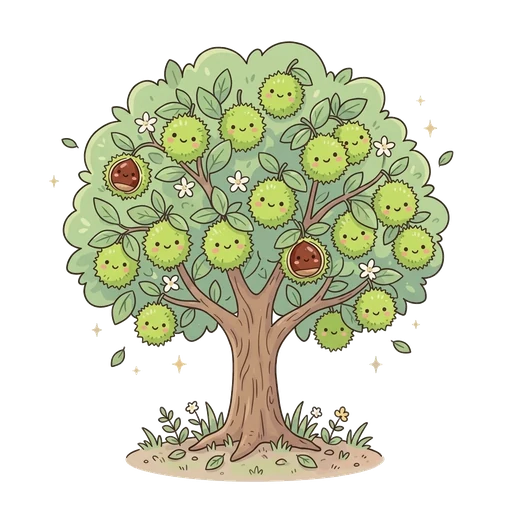
The spiny burs split open in fall and the nuts drop. Gather them every day or two, wearing thick gloves, before weevils, squirrels and drying take their share.
Chestnuts are fresh produce, not dry nuts. They are soft and moist, and they spoil at room temperature. Store them in the fridge in a bag with a few holes, where they keep for a few weeks and sweeten a little after a few days. For longer keeping, cook and freeze them, or dry them. Cut a slit in the shell before roasting so they do not burst.
Track Your Chestnut Trees
Add chestnuts to your garden in the Planting Season app and get reminders for planting, watering and harvest time.
Open the App →Frequently Asked Questions
Are Chinese chestnuts resistant to chestnut blight?
Yes. Chinese chestnut and many Chinese hybrids resist chestnut blight, which is why they are the usual choice for home gardens. American chestnut and most European chestnuts are badly affected.
Do I need two chestnut trees?
Yes. Chestnuts set few nuts with their own pollen, so plant at least two trees of different seedlings or varieties in the same planting.
Why are there worms in my chestnuts?
Those are chestnut weevil larvae. Pick nuts up every day as they fall and refrigerate them straight away, and clear up any nuts left on the ground.
Are horse chestnuts the same as sweet chestnuts?
No. Horse chestnuts and buckeyes are different trees and their nuts are poisonous. Only eat chestnuts from a tree you know is a sweet chestnut, with densely spiny burs.
See also: Sweet Chestnut in the Plant Library