
How to Grow Cucumbers: When to Plant Cucumbers in the US
Updated October 2026
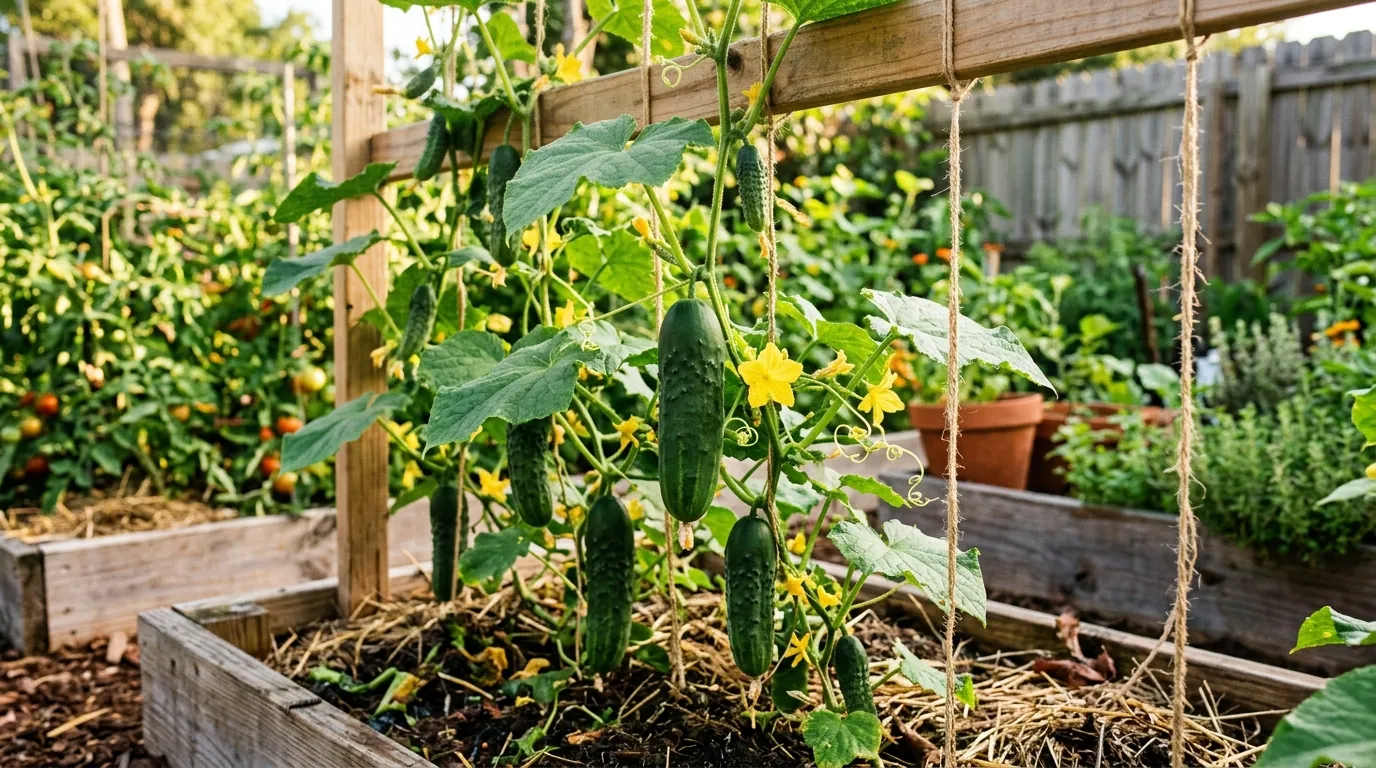
Spring and fall growing, disease-resistant varieties, and trellising for clean, sweet fruit
Cucumbers are a fast, generous warm-season vine. They love heat but melt under Florida's peak summer disease pressure, so the trick is to grow them in the cooler spring and fall shoulders. Give them sun, steady water, and a trellis, and they bear heavily in 50 to 65 days.
This guide covers when to plant by region, the right varieties for the humidity, spacing for trellised and bush types, watering for sweet fruit, pollination, pests, and harvest. Start with the spacing and trellis calculator to plan your bed.
Spacing & trellis calculator
Enter your bed or row length and pick a cucumber type. The calculator works out how many plants fit at the correct spacing and recommends a support.
What it looks like as it grows
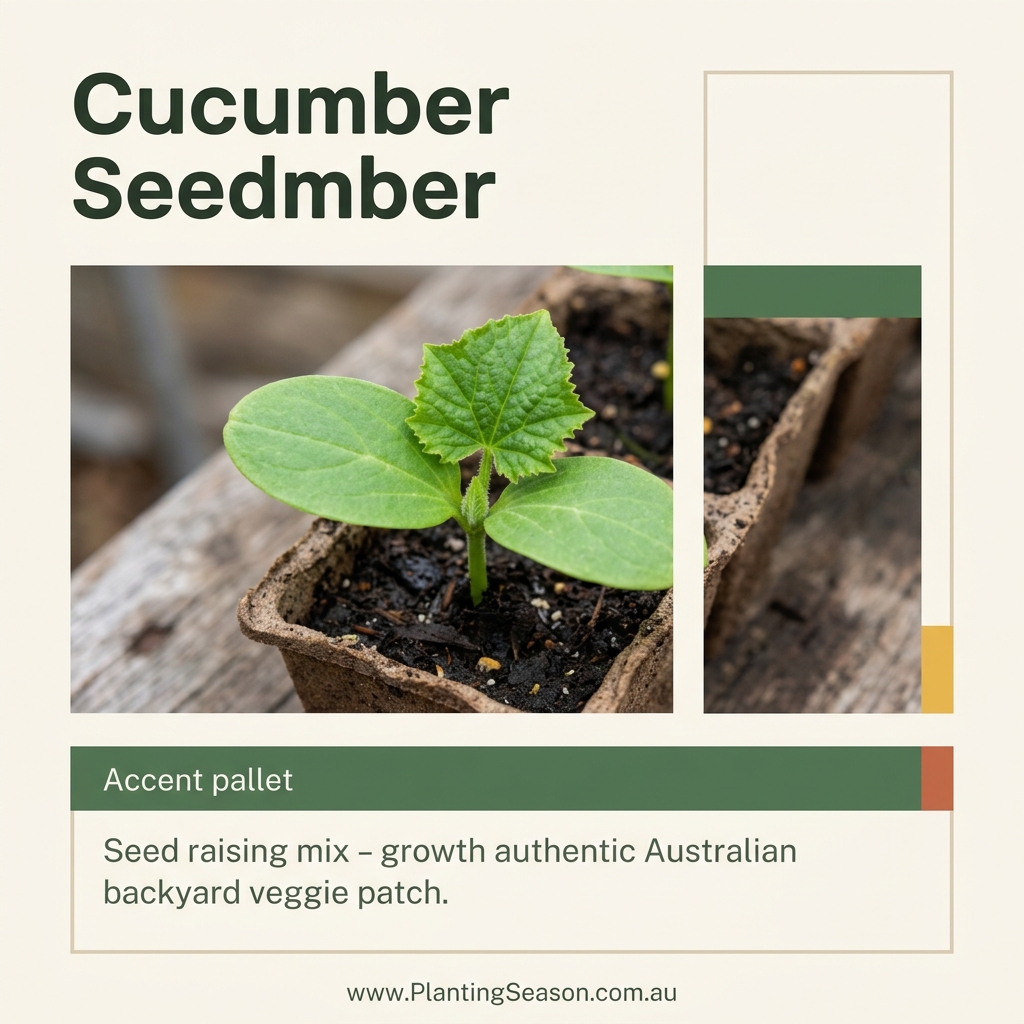
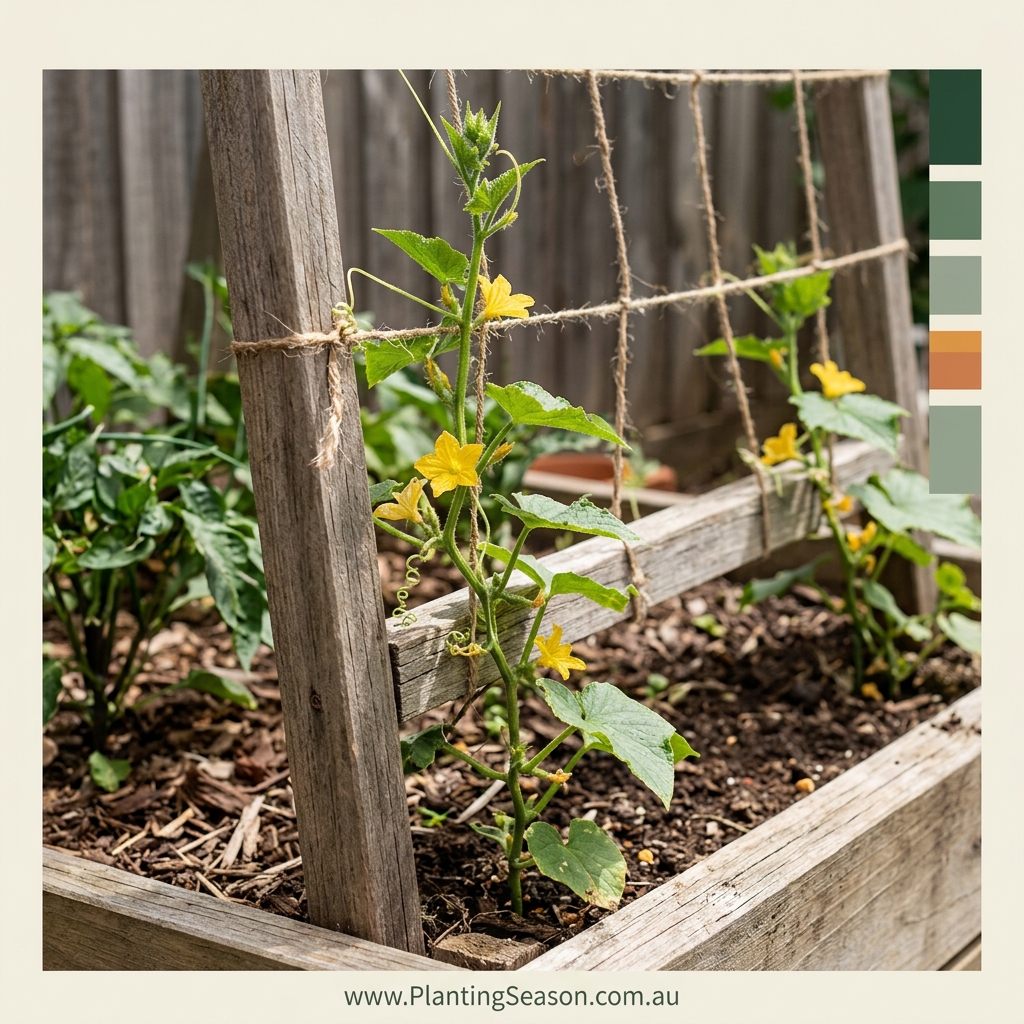
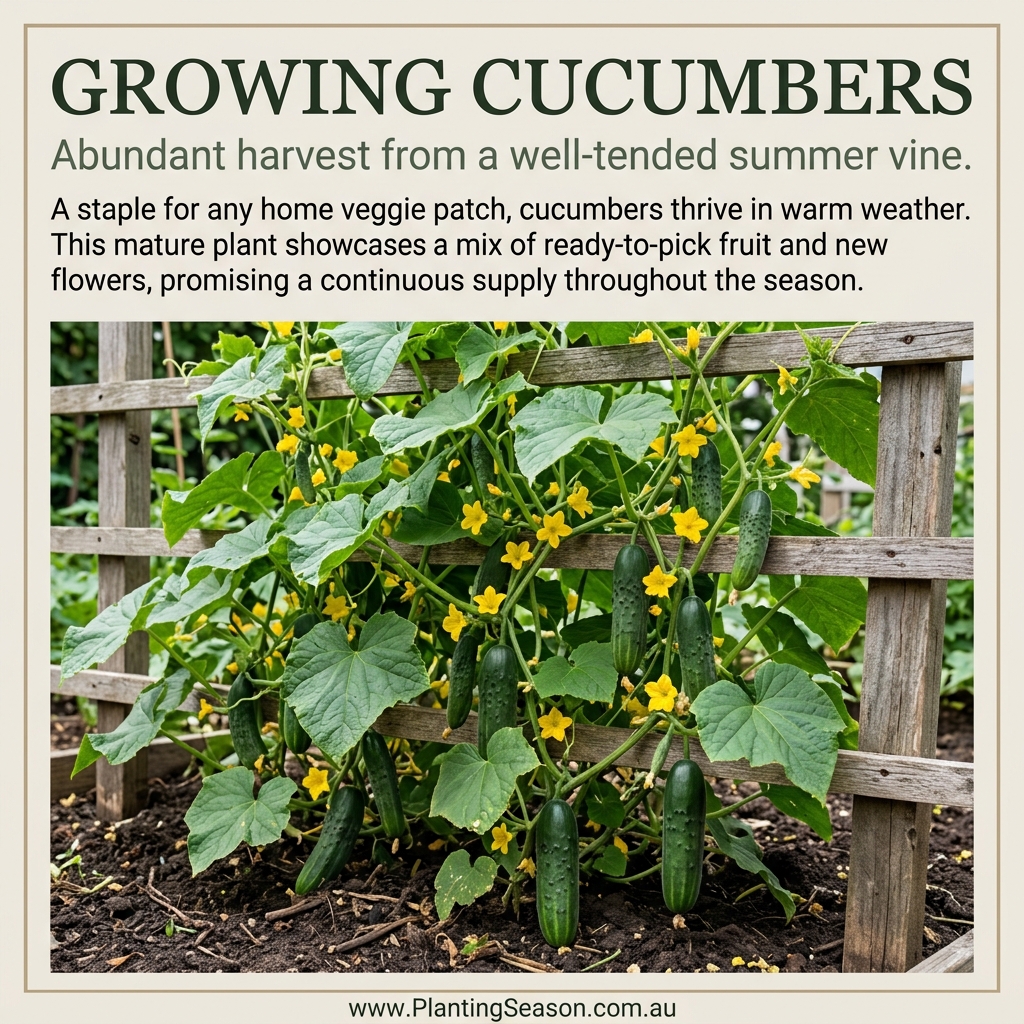
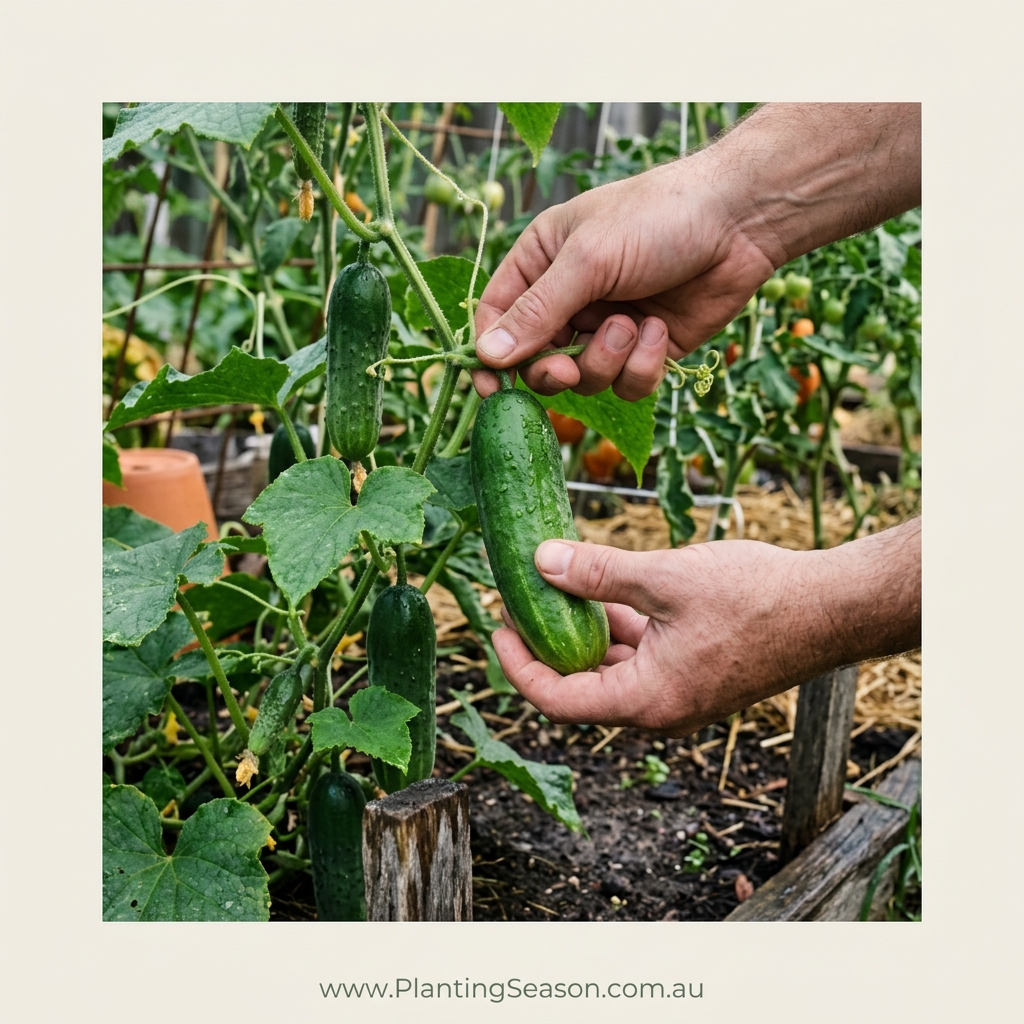
🌱 Plant profile: Cucumber, with sowing times for your region, companion plants and common pests.
When to Plant Cucumbers in Your Region
Cucumbers are frost tender and thirsty. The North sows them once, after the last frost. North Florida and the Gulf South plant in spring and again from July to September, and South Florida grows them from September to March. These are the planting months for each of our 18 regions, with each region's frost window. Each region links to its full vegetable planting calendar, and the Cucumber plant page shows the calendar for any region you pick.
| Region | Sow or plant | Frost window and local note |
|---|---|---|
| North Florida | March to April and July to September | February 15 to December 5 |
| Central Florida | January to March and September | Effectively frost free |
| South Florida | September to March | Effectively frost free |
| Gulf South | March to April and July to September | February 25 to December 1 |
| Desert Southwest | February to March and August to September | February 5 to December 5 |
| Texas | March to April and August | March 1 to November 28 |
| Southern California | March to July | Effectively frost free |
| Mid-South | April to June | April 10 to October 25 |
| Pacific Northwest | May to June | March 25 to November 15 |
| Northeast & New England | May to June | May 10 to October 15 |
| Mid-Atlantic | May to July | April 15 to October 25 |
| Midwest & Great Lakes | May to June | April 30 to October 15 |
| Upper Midwest & Northern Plains | May to June | May 15 to September 25 |
| Mountain West | May to June | May 5 to September 30 |
| Southern Plains | May to July | April 10 to October 30 |
| Northern California & Central Valley | March to July | February 28 to November 17 |
| Hawaii | All year | Effectively frost free |
| Alaska | June | May 15 to September 10 |
The Pacific Northwest, the Northeast and New England, the Midwest, the Upper Midwest and the Mountain West plant cucumbers in May and June. North Florida and the Gulf South plant cucumbers in March and April, and July to September. Southern California and Northern California plant cucumbers between March and July. The Mid-Atlantic and the Southern Plains plant cucumbers between May and July.
When to plant in Florida
| Region | Sow / transplant |
|---|---|
| North Florida | Mar to Apr, Jul to Sep |
| Central Florida | Jan to Mar, Sep |
| South Florida | Sep through Mar |
Cucumbers need warm soil above 70 degrees to germinate but suffer in the deep heat and humidity of midsummer. Time plantings for the milder shoulders so the vines fruit before the worst disease pressure arrives.
Position and soil
Give cucumbers full sun, at least six hours a day. They are heavy feeders and drinkers, so work in plenty of compost or aged manure before planting. Aim for rich, well-drained soil with a pH around 6.0 to 7.0. Florida's sandy soils drain fast, so mulch and steady water matter even more here.
Sowing and planting
Cucumbers dislike cold soil and root disturbance. You have two options:
- Direct sow: push seeds about 1 inch deep into warm, prepared soil. This is the simplest method and avoids transplant shock.
- Raise transplants: start seeds in cells three to four weeks before your window, then set them out gently once the soil is warm. Use larger cells so you barely disturb the roots.
Seeds germinate in about 7 to 10 days in warm soil, and most varieties fruit in 50 to 65 days.
Spacing and support
Spacing depends on the type. Trellised vining cucumbers grow up, so they sit closer together, about 12 to 18 inches apart in a row. Bush types sprawl sideways and need about 18 to 24 inches. Use the calculator above to match your bed.
Vining types crop better on a trellis. A panel of netting or wire mesh 5 to 6 feet tall is plenty. Cucumbers climb with tendrils and grab any thin support. Growing up gives clean, straight fruit and the airflow that fights downy and powdery mildew, and it saves space. If you grow on the ground, mulch heavily so fruit sits on straw, not bare soil.
Watering and feeding
Even moisture is the single biggest factor in sweet fruit. Cucumbers are mostly water, and any swing from bone dry to soaked shows up as bitter, misshapen fruit. Water deeply, keep the soil evenly moist, and mulch to hold it. Water at the roots in the morning so leaves dry quickly, which also slows mildew. Feed every two weeks with a liquid fertilizer once flowering starts.
Pollination
Most cucumbers carry separate male and female flowers on the same plant. Bees move pollen between them, and the female flowers are the ones with a tiny cucumber behind the bloom. Early on, plants throw mostly male flowers, so be patient. Avoid spraying open flowers so you do not harm bees. If pollinators are scarce, hand pollinate with a small brush. Some varieties are parthenocarpic and self-set without pollination.
Varieties for Florida
| Variety | Type | Notes |
|---|---|---|
| Marketmore 76 | Vining | Reliable, downy-mildew-aware slicer. A dependable all-rounder for Florida gardens. |
| Poinsett 76 | Vining | Florida-adapted, disease-resistant slicer bred for the humid Southeast. |
| Straight Eight | Vining | Classic 8-inch slicer with smooth, dark fruit. Best grown up a trellis. |
| Bush Champion | Bush | Compact bush bred for small spaces and containers. Full-sized fruit on short vines. |
| Lemon | Vining | Round, pale yellow heirloom with mild, non-bitter flesh. Very productive. |
| Boston Pickling | Vining | Heavy-bearing pickler. Pick small and often for crisp pickles. |
| Armenian | Vining | Long, ribbed, thin-skinned fruit (technically a melon) that shrugs off heat. Eats like a mild cucumber. |
Common problems
Pickleworm
This caterpillar bores into the fruit, leaving a small hole and sawdust-like frass. Grow in the cooler shoulders, cover young plants with row cover until flowering, and remove and destroy infested fruit.
Downy and powdery mildew
Both thrive in Florida humidity. Choose resistant varieties, trellis for airflow, water at the roots in the morning, and remove affected leaves. A milk spray of one part milk to nine parts water helps early on powdery mildew.
Bitter fruit
Caused by stress, mostly uneven water and heat. Keep the soil evenly moist, mulch, feed regularly, and pick young. If a fruit is bitter, peel it from the blossom end toward the stem.
Poor fruit set
Early plants make mostly male flowers, and poor bee activity leaves female flowers unpollinated. Be patient, avoid spraying flowers, and hand pollinate if needed.
Harvest
Pick young and often. Oversized cucumbers turn bitter and seedy and slow the vine down. Daily picking at peak keeps production high and the fruit crisp.
What to Plant with Cucumbers
Our companion data lists these plants as good neighbors for cucumbers, and these to keep apart. The lists read both ways, so a plant that names cucumbers as a companion appears here too. The full companion planting chart for vegetables has the same lists for 55 crops and prints on one sheet.
- Good companions for cucumbers: Beans, Marigold, Nasturtium, Peas, Radish, Snow Peas, Sunflower, Sweet Corn.
- Keep cucumbers apart from: Aromatic herbs, Potato, Sage.
Cucumbers at a glance
The planting figures for cucumber from our plant data, converted to inches and Fahrenheit.
| Planting depth | 3/4 inch |
|---|---|
| Spacing | 20 inches |
| Days to come up | About 7 days |
| Soil temperature for sprouting | 64 to 86°F |
| Days to harvest | About 60 days |
| Frost | Frost tender |
| Container | At least 12 inches |
Sowing cucumber seed
Sow cucumber seed about 3/4 inch deep into warm soil, either directly or in trays you transplant gently, because the roots dislike disturbance. Our plant data gives a soil temperature range of 64 to 86°F and about 7 days to emerge. Space plants about 20 inches apart and train vining types up a trellis, which saves space, keeps the fruit clean and improves airflow against mildew.
Growing cucumbers in containers
Cucumbers grow in a pot at least 12 inches across with a small trellis. See how to grow cucumbers in a pot.
How long do cucumbers take to grow?
Our plant data allows about 60 days from sowing to the first fruit. Pick when the fruit is firm, evenly green and full sized for the variety, before it yellows or fattens, and cut the stalk rather than pulling. Regular picking keeps the vines producing. Uneven watering is the usual cause of bitter or misshapen fruit; see why cucumbers turn bitter.
Frequently Asked Questions
When should I plant cucumbers in Florida?
Cucumbers grow in the cooler shoulders of the year. North Florida plants in March to April and again from July to September. Central Florida plants January to March and again in September. South Florida grows from September through March. Check the table above for your region.
How far apart should I space cucumbers?
Trellised vining cucumbers go about 12 to 18 inches apart in a row. Bush types need about 18 to 24 inches because they sprawl sideways. Use the spacing and trellis calculator on this page to plan your bed.
Why are my cucumbers bitter?
Bitterness comes from stress, usually uneven watering, heat, or hungry plants. Water deeply and evenly, mulch well, and feed every two weeks during fruiting for sweet fruit.
Do cucumbers need a trellis?
Vining types crop better on a trellis. It keeps fruit clean and straight, improves airflow to fight downy and powdery mildew, and saves space. Bush types like Bush Champion can sprawl on the ground or grow in a pot without support.
How do I beat pickleworm and mildew?
Grow in the cooler spring and fall windows, choose resistant varieties, cover young plants with row cover until flowering, water at the roots in the morning, and trellis for airflow.
Can I grow cucumbers in containers?
Yes. Use a container of at least 8 gallons, pick a bush variety such as Bush Champion, water daily in heat, and feed every two weeks with liquid fertilizer.
Source: UF/IFAS Florida Vegetable Gardening Guide (SP 103); UF/IFAS Gardening Solutions.
See also: Cucumbers in the plant library →
When should I plant cucumbers?
The Pacific Northwest, the Northeast and New England, the Midwest, the Upper Midwest and the Mountain West plant cucumbers in May and June. North Florida and the Gulf South plant cucumbers in March and April, and July to September. Southern California and Northern California plant cucumbers between March and July. The Mid-Atlantic and the Southern Plains plant cucumbers between May and July. The table on this page lists all 18 regions with their months.
How long do cucumbers take to grow?
Our plant data allows about 60 days from sowing to the first fruit, with seedlings up in about 7 days in warm soil.
Can I plant cucumbers in October?
Yes, in 2 of our 18 regions: South Florida and Hawaii. Everywhere else our calendar has no October planting for cucumbers; the table on this page shows each region's months.
Related guides
Plant profile
The cucumber profile has sowing times for your region, companion plants and common pests.