
How to Grow Eggplant
Updated June 2026
When to plant by USDA zone, the best varieties, and how to get fruit to set
What it looks like as it grows
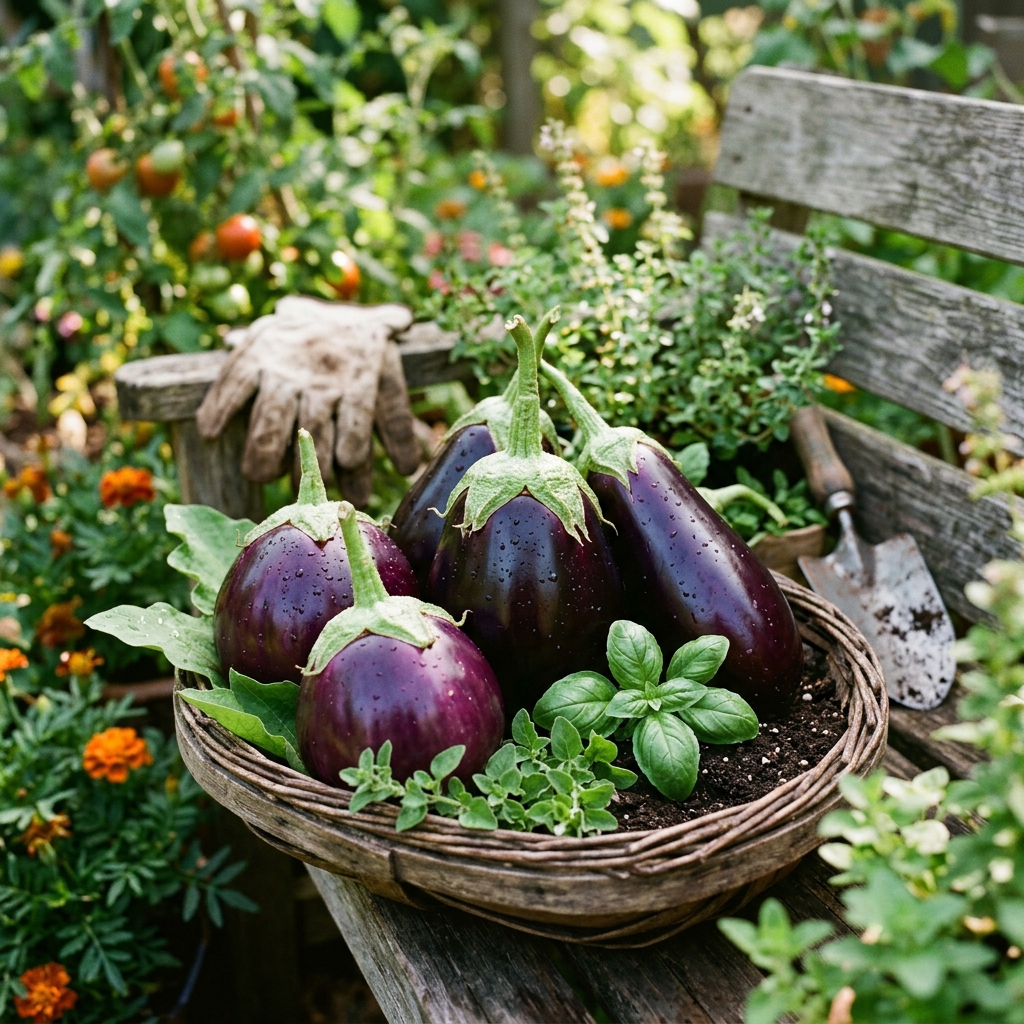
Eggplant is a rewarding warm-season crop for the home garden, and it is even more heat-loving than peppers. To crop well it needs three things: warm soil of at least 65F to establish, warm nights to set fruit, and a long stretch of summer heat to ripen. That makes it a natural fit for the South and the warmer West. In cooler zones you can still grow a fine crop, but you will need to start early indoors, give it the hottest spot you have, and often grow it in a pot, under row cover, or in a greenhouse.
The payoff is worth it. Eggplant picked at the right stage has a creamy texture and a mild flavor that beats anything from the store, and a single plant will produce for months once it gets going.
Climate sowing selector
Choose your zone above to see when to start and plant eggplant, whether to start indoors or sow direct, whether to grow in the ground or a pot, and the warmth it needs.
Position and soil
Give eggplant the hottest, sunniest spot in the garden. A full day of sun is essential, and a position against a south-facing wall or fence adds useful reflected heat. Soil should be rich, well-drained, and worked with plenty of compost, at a slightly acidic to neutral pH of about 6.0 to 7.0.
- Full sun, all day, with shelter from cold wind
- Rich, well-drained soil improved with compost
- Warm the soil before planting with black plastic, or wait for real warmth
- In cool zones, a large pot against a sunny wall beats open ground
Sowing and planting
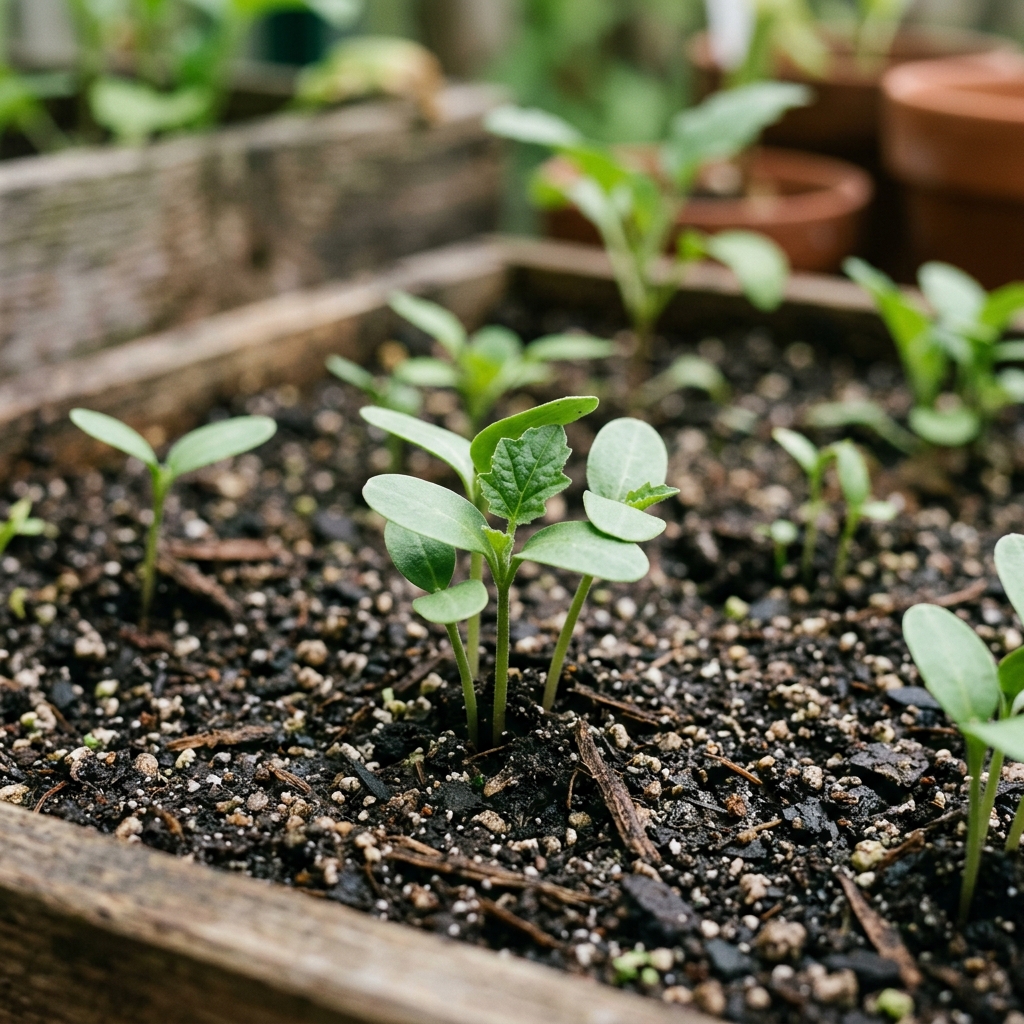
Eggplant seed is slow to germinate and needs steady warmth to get moving. Start seed indoors 8 to 10 weeks before your last frost. Soil temperature of 75F to 85F gives reliable germination, so use a heat mat. Transplant only after the last frost, once nights stay above 60F and the soil has reached at least 65F.
- Barely cover the seed in a fine seed-starting mix, on bottom heat
- Keep the mix consistently moist but never soggy
- Germination takes 10 to 21 days depending on warmth
- Pot up once seedlings have two true leaves and harden off over a week
- Do not rush plants out: a cold spell sets them back for weeks
Spacing
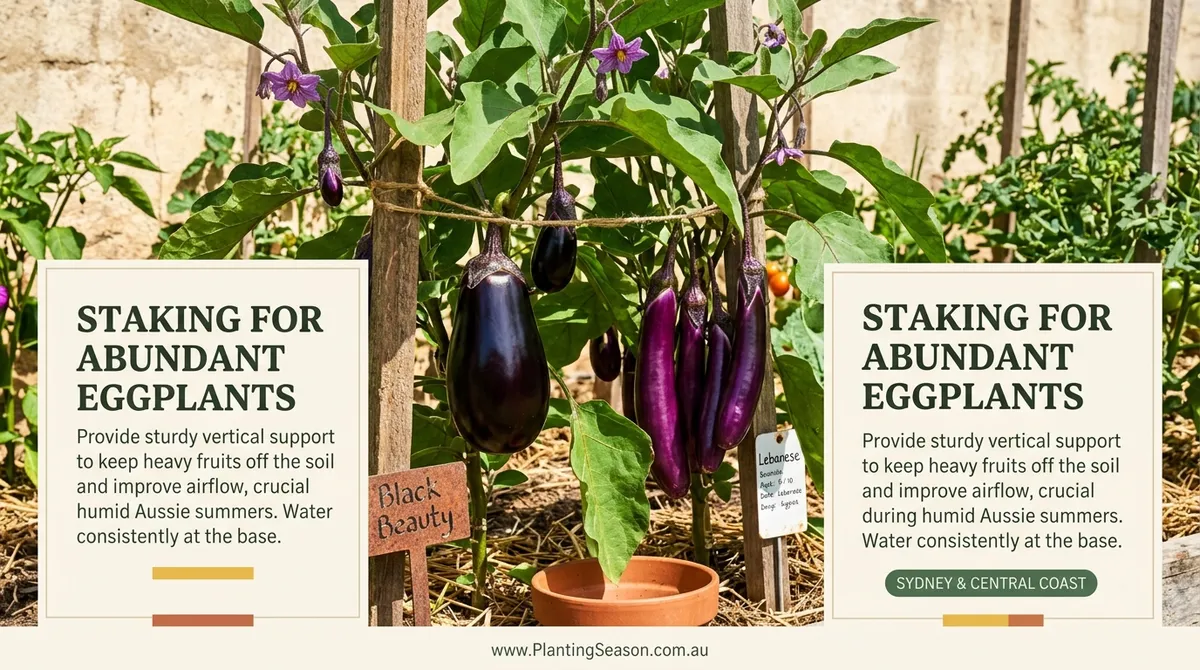
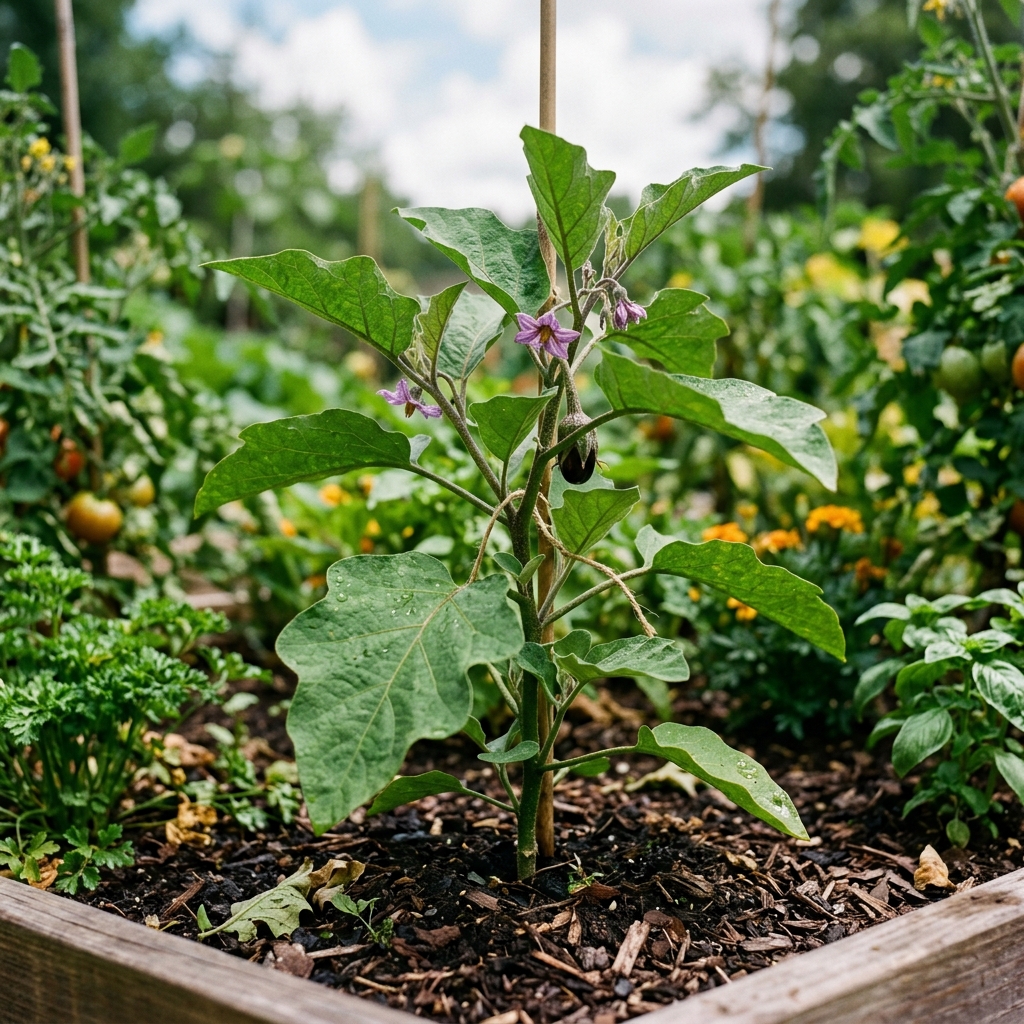
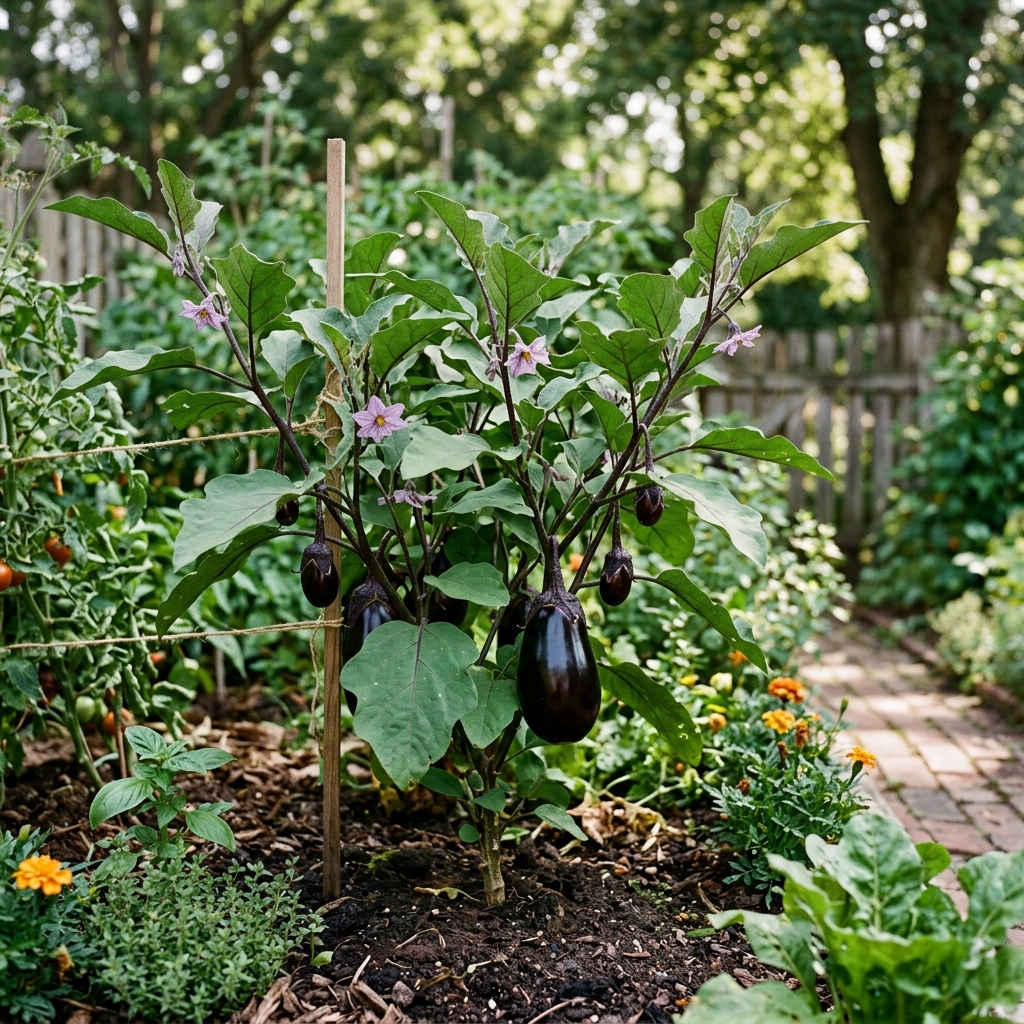
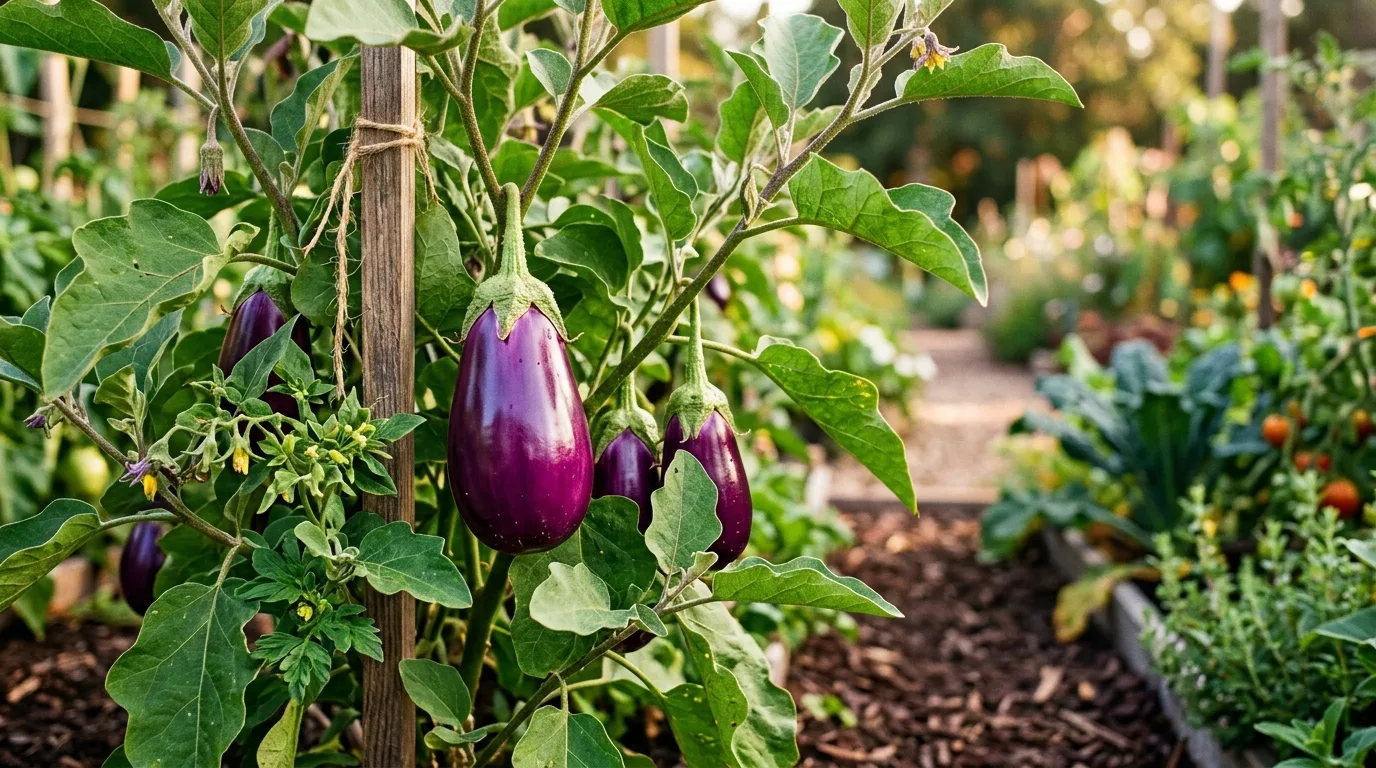
Space plants about 18 to 24 in apart, with similar room between rows. Eggplant grows into a sturdy bush, but the fruit is heavy enough to pull branches down or snap them, so stake each plant early with a single stake or a tomato cage.
Watering and feeding
Consistent moisture is the key to tender, non-bitter fruit. Irregular watering causes tough skin and a bitter flavor, so water deeply (roughly 2 gallons per plant every couple of days in hot weather) and mulch well to hold moisture. Once flowering starts, feed every two weeks with a potassium-rich fertilizer to drive fruiting. Go easy on high-nitrogen feed, which gives a leafy bush and little fruit.
Pollination
Eggplant flowers are self-fertile, so a single plant sets its own fruit. Help it along by gently shaking or tapping open flowers in the warmest part of the day. The main enemy of fruit set is temperature: flowers drop without setting when nights fall below about 60F or days climb above the mid-90s.
Pests and problems
Flower drop
The most common complaint. Flowers form and fall without setting fruit, almost always due to temperature. Wait for settled warm weather, keep water steady, and shake the flowers to assist pollination.
Blossom end rot
A sunken brown patch at the base of the fruit, caused by uneven watering disrupting calcium uptake rather than by a pest. Mulch and water consistently to fix it.
Flea beetle
Tiny holes peppered through the leaves, as if shot with a pin. Flea beetles are small, shiny, and jump when disturbed. Damage is mostly cosmetic on healthy plants; protect young transplants with floating row cover until they are well established.
Colorado potato beetle
Striped beetles and humpbacked red larvae that strip the leaves fast. Hand-pick adults and larvae, crush the orange egg clusters under the leaves, and use row cover early in the season.
Aphids and two-spotted spider mite
Aphids cluster on new growth; spider mites cause fine speckling and dull leaves in hot dry weather, with faint webbing underneath. Hose them off, encourage beneficial insects, and use insecticidal soap or horticultural oil if they spread.
Verticillium wilt
A soil-borne fungus that yellows and wilts whole plants from the bottom up. There is no cure once a plant has it, so rotate crops away from tomatoes, peppers and potatoes, and choose resistant varieties where you can.
Harvest
Pick eggplant while the skin is glossy and firm. Press the fruit gently with a thumb: if the flesh springs back it is ready, and if the dent stays it is overripe. Overripe fruit has dull skin and brown seeds, and turns tough and bitter. Pick regularly to keep the plant producing, and cut the tough stem with pruners rather than pulling the fruit.
Best varieties
| Variety | Type | Notes |
|---|---|---|
| Black Beauty | Large purple | The standard large glossy purple eggplant with firm white flesh. A heavy cropper in heat. (Bonnie Plants) |
| Ichiban | Japanese long | Slender, deep-purple fruit, tender and very productive. Early and reliable. (Park Seed) |
| Slim Jim | Finger / baby | Clusters of small slender fruit on a compact plant. Excellent for containers. |
| Listada de Gandia | Striped heirloom | Purple and white striped fruit, sweet and creamy, and very ornamental. |
| Rosa Bianca | Round Italian | Plump lavender-pink fruit, mild and creamy with very little bitterness. |
| Casper (white) | White | Ivory-skinned fruit with a mild, mushroom-like flavor. Crops well in heat. |
When to plant by zone
Eggplant timing follows your last frost date. In the warmest zones (9 and 10) plant in early spring once frost has passed, and a second crop is often possible in late summer. In cooler zones (5 through 7) start indoors early and wait until well after the last frost, with row cover or a greenhouse to extend the warmth. Use the climate sowing selector above for timing tied to your zone.
Track your eggplant from seed to harvest
Add eggplant to your garden in the Planting Season app for planting, feeding, and harvest reminders tuned to your region.
Open the App →Frequently Asked Questions
When should I plant eggplant?
Start seed indoors with bottom heat 8 to 10 weeks before your last frost, then transplant 2 to 3 weeks after the last frost once nights stay above 60F and the soil is at least 65F. In cold zones (5 and 6) you must start indoors early and may need a greenhouse or row cover. In warm zones (9 and 10) plant in early spring, and a second crop is possible in late summer.
Why won't my eggplant set fruit?
The usual cause is temperature. Eggplant flowers drop without setting when nights fall below about 60F or days climb above the mid-90s. Gently shake open flowers to help self-pollination, keep water steady, and ease off high-nitrogen feed once flowering starts.
Do eggplants need a lot of heat?
Yes. Eggplant is even more heat-loving than peppers. It needs warm soil of at least 65F to establish, warm nights to set fruit, and a long warm season to crop well. In cool zones grow it in a pot against a sunny wall, under row cover, or in a greenhouse.
Can I grow eggplant in a pot?
Yes, and in cool zones a container is often best. Use a pot of at least 5 gallons with quality potting mix, and set it in the warmest, sunniest spot. Pots warm faster than garden soil and can be moved to follow the sun or escape a cold snap.
How long does eggplant take to grow?
Allow about 3 months, or roughly 12 to 16 weeks, from transplant to the first pick. Plants are slow to establish but then crop steadily through the warm months.
How do I know when eggplant is ready to pick?
Pick while the skin is glossy and the flesh springs back to a gentle press. Dull skin and brown seeds mean it is overripe and will taste bitter. Cut the tough stem with pruners rather than pulling the fruit.
See also: Eggplant in the plant library →