How to Grow Jujube in the US
Updated September 2026
A heat and drought tough fruit tree that asks for very little
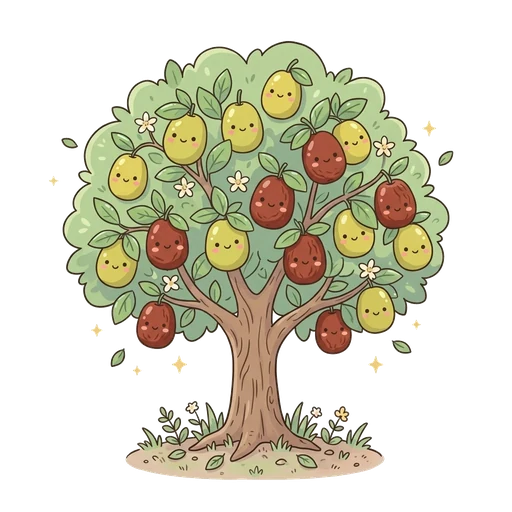
Jujube, sometimes called Chinese date, is a small, spiny tree with glossy leaves and fruit that tastes like a crisp, sweet apple when fresh and like a date once dried. It handles heat, drought, poor soil and alkaline ground, and it has very few pest or disease problems in the US.
Its main need is a long, hot summer to sweeten the fruit, which is why it does so well across the South and Southwest.
Where Jujube Grows in the US
Jujube can be planted in January or February across Florida, the Gulf South, Texas, the Desert Southwest and Southern California. In Northern California and the Central Valley it loves the valley heat; plant bare root from December to February and be patient, because it leafs out late. In the Mid-South plant bare root in February or March. In the Mid-Atlantic it is hardy and fruits well after hot summers; plant in March or April. The Southern Plains suit it well, since it is heat, drought and wind tough; plant in March or April.
In the Northeast and New England it needs a long hot summer, so it is best in zone 6 and 7 gardens; plant in April or May in full sun. In the Midwest and Great Lakes it is hardy to zone 5 but needs your warmest, sunniest spot. In the Mountain West it does well at lower elevations with hot summers; plant in April or May. Pacific Northwest summers are too cool for the fruit to sweeten, the Upper Midwest and Northern Plains are too cold with too short a summer, Hawaii lacks the winter chill jujube needs, and Alaska is too cold. Choose your region below for local planting months.
Varieties to Try
Li
Large, round fruit that ripen early and are best eaten fresh and crisp. Crops better with a second variety such as Lang nearby.
Lang
Pear-shaped fruit that are best dried. A good pollinizer for Li.
Sugar Cane
Small, very sweet fruit and heavy crops. Excellent fresh.
Honey Jar
Small, juicy, very sweet fruit on a productive tree.
Sherwood
A late variety on an upright tree, with good fresh or dried fruit.
Planting
Plant in the months shown for your region, usually as a bare root tree while dormant. Jujube needs full sun and well-drained soil. It grows in sandy, rocky or alkaline ground where many fruit trees fail, but it will not tolerate standing water.
Trees grow about 13 to 26 feet tall, so allow about 16 feet around each one. Plant at nursery depth and water in. Most jujubes are grafted onto rootstock that suckers, so plant where you can mow or pull suckers easily.
Care and Pollination
Pollination: many jujubes set some fruit alone, but most crop more heavily with a second variety that flowers at the same time. Li and Lang are a common pair.
Water: water regularly in the first summer to establish the tree. After that, jujube is drought tough, though a deep soak in long dry spells improves fruit size.
Suckers: pull or cut suckers from the rootstock as they appear; they do not bear the grafted variety's fruit.
Feeding and pruning: little is needed. A light spring feed of compost is plenty. Prune in winter only to remove dead wood, suckers and crossing branches, and wear gloves for the spines.
Patience: jujube is one of the last trees to leaf out in spring. A bare tree in April is usually alive; scratch a twig to check for green.
Pests and Diseases
These are the problems US gardeners are most likely to meet:
- Few serious pests: Jujube has very few pest or disease problems in the US, which is one of its big advantages.
- Fruit splitting: Heavy rain while fruit ripens can split it, especially in humid summers. Pick split fruit promptly and use it fresh.
- Birds, squirrels and deer: They take ripe fruit and browse young trees. Net small trees and guard young trunks.
- Root suckers: Not a pest, but a nuisance that can form a thicket. Remove them every year.
Harvest and Storage
Jujubes ripen from late summer into fall. For fresh, crisp fruit, pick when the skin is half to fully red-brown. For dried fruit, leave them on the tree until they turn fully brown and start to wrinkle.
Fresh jujubes keep for about a week in the fridge. Dried in the sun or a dehydrator until wrinkled and chewy, they store for months.
Track Your Jujube Tree
Add jujube to your garden in the Planting Season app and get reminders for planting and harvest time.
Open the App →Frequently Asked Questions
What does jujube fruit taste like?
Fresh jujubes are crisp and sweet, often compared to an apple. Dried, they become chewy and sweet like a date, which is why they are also called Chinese dates.
Do I need two jujube trees?
Many varieties set some fruit alone, but most bear much better with a second variety that flowers at the same time. Li and Lang are a common pairing.
Why has my jujube not leafed out yet?
Jujube is one of the last trees to leaf out, often weeks after other fruit trees. Scratch a twig with a fingernail; if the wood underneath is green, the tree is alive.
Can jujube grow in cold climates?
Jujube is hardy to about zone 5, but it needs a long, hot summer to ripen sweet fruit. It does best in zone 6 and 7 gardens in the North, and not at all in the Upper Midwest, the Pacific Northwest or Alaska.
See also: Jujube in the Plant Library