How to Grow Walnuts in the US
Updated September 2026
English walnuts for mild valleys, black walnuts for the cold
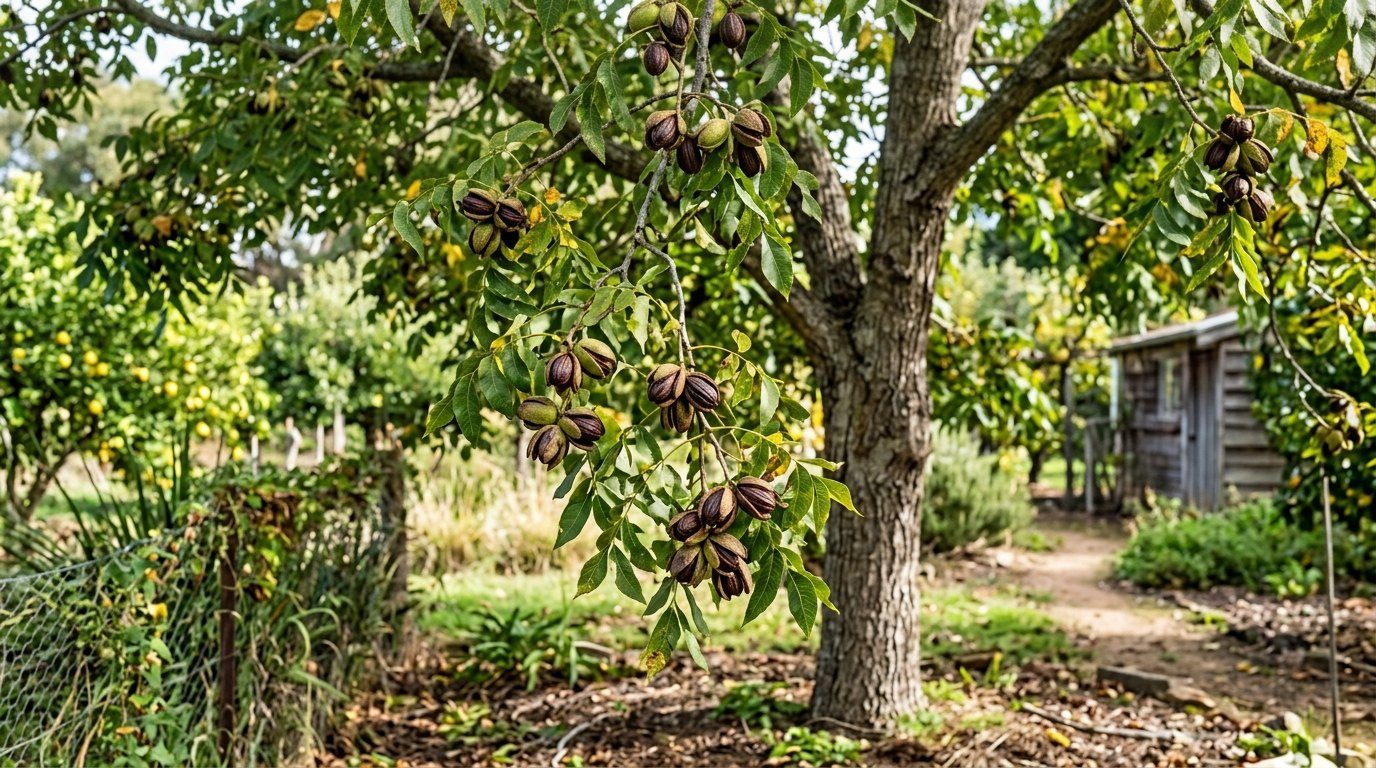
Walnuts are big, long-lived trees, and a mature one can shade a whole yard. Home gardeners grow two kinds. English walnut, also called Persian walnut, has the thin-shelled nuts sold in stores. Black walnut is a native American tree with a hard shell and a strong, rich flavor.
Before you plant, think about space and neighbors. Walnut roots and leaves release a compound called juglone that stunts some garden plants, black walnut most of all. Put the tree well away from the vegetable garden.
Where Walnuts Grow in the US
English walnut is a Central Valley staple in Northern California and the Central Valley, where you plant bare root trees from December to February and give them plenty of room. In the Pacific Northwest it suits the milder valleys; plant in February, March or November. For the cold, choose Carpathian English walnuts or black walnut: plant in April, May or October in the Northeast and New England, the Midwest and Great Lakes and the Mountain West (water deeply in dry summers there), and in February, March or November in the Mid-Atlantic.
In the Mid-South, black walnut does well but English walnut struggles with humid summers. Black walnut is native to the Southern Plains, where you plant in February, March or November. In the Upper Midwest and Northern Plains, grow black walnut only, and only in the milder zone 4 areas, planting in April or May. North Florida, the Gulf South, Texas and Southern California can plant in January or February. Black walnut is the better fit across humid Southern gardens, and pecan is the more rewarding nut tree there. Central and South Florida are too warm with too little chill, the low desert heat of the Desert Southwest scorches nuts and leaves (walnuts do better at higher elevations), Hawaii lacks winter chill and Alaska is too cold. Choose your region below for local planting months.
Varieties to Try
Chandler
The leading English walnut in California orchards. It leafs out late, which helps it escape walnut blight, and bears on side shoots as well as tips.
Franquette
An old, late-leafing English walnut that blooms late and is often planted alongside Chandler.
Carpathian walnuts
English walnuts raised from trees collected in the Carpathian Mountains. They are hardier than California types and the choice for colder northern gardens.
Black walnut
The native Juglans nigra. Very hardy, with hard shells and bold flavor. Seedlings are easy to find; grafted selections such as Thomas and Emma K crack out better.
Planting
Plant bare root trees while dormant, in the months your region calendar shows. Walnuts need full sun and deep, well-drained soil, because they grow a long taproot and dislike standing water. Young trees move badly once that taproot is established, so choose the final spot from the start.
These trees get large, often 26 feet tall and much more with age, so allow about 33 feet from buildings, other trees and the vegetable garden. Plant at the depth the tree grew in the nursery and water in well.
Care and Pollination
Pollination: each walnut tree carries both male catkins and female flowers, and the wind moves the pollen. On many trees the catkins shed pollen before or after the female flowers are ready, so a single tree often sets a light crop. A second variety whose pollen sheds at the right time gives much better nut set.
Water: water young trees deeply every week or two through their first summers. Established trees still crop better with a deep soak during long dry spells.
Pruning: prune in the dormant season to form a strong central trunk with well-spaced branches, starting 5 or 6 feet up so you can walk and mow under the tree. Mature trees need little more than removal of dead or crossing wood.
Neighbors: keep tomatoes, potatoes, peppers, eggplant, apples and blueberries away from black walnut roots and leaf fall. Many grasses and a lot of native shrubs grow under walnuts without trouble.
Pests and Diseases
These are the problems US gardeners are most likely to meet:
- Codling moth: The same caterpillar that attacks apples tunnels into young walnuts. Pheromone traps show when moths are flying.
- Walnut husk fly: Maggots turn the husks black and slimy and stain the shells. The kernel inside is often still fine. Pick up fallen nuts promptly.
- Walnut blight: A bacterial disease that leaves black spots on leaves, shoots and young nuts in wet spring weather. Late-leafing varieties escape much of it.
- Anthracnose: A fungal leaf spot, common on black walnut in wet summers, that causes early leaf drop. Rake up fallen leaves.
- Thousand cankers disease: A disease of black walnut spread by the tiny walnut twig beetle, causing branch dieback. Some states restrict moving walnut wood, so never move walnut firewood or logs.
- Squirrels: They take a large share of nuts in most yards. Gather nuts daily once they start to fall.
Harvest and Storage
Walnuts ripen in fall. English walnuts are ready when the green husks split and the nuts drop or shake free. Black walnuts are ready when the husks soften and a thumb leaves a dent. Collect nuts from the ground every day or two.
Remove the husks straight away, rinse the nuts, then dry them in their shells in a single layer in a shady, airy place for two to three weeks, until the kernel snaps. Dry walnuts in the shell keep for months in a cool place, and shelled nuts freeze well.
Track Your Walnut Tree
Add walnuts to your garden in the Planting Season app and get reminders for planting, watering and harvest time.
Open the App →Frequently Asked Questions
Should I plant an English walnut or a black walnut?
English walnut suits mild valleys such as Northern California and the Pacific Northwest, and Carpathian strains handle colder northern winters. Black walnut is hardier, native to much of the country and tougher in humid summers, but its nuts are harder to crack and it releases more juglone.
Do I need two walnut trees?
One tree can set nuts, but pollen and female flowers often open at different times on the same tree, so a second variety nearby usually gives a much bigger crop.
What should I not plant near a black walnut?
Keep tomatoes, potatoes, peppers, eggplant, apples and blueberries away from the roots and leaf fall. Black walnut releases juglone, which stunts or kills these plants.
How long do walnut trees take to produce nuts?
Grafted trees often bear their first nuts about four years after planting. Seedling trees usually take longer, and full crops come as the tree matures.
See also: Walnut in the Plant Library