
How to Grow Beets in Florida and the Warm US
Updated June 2026
Beets are a fast, forgiving cool-season crop, and you get two harvests in one because the leaves are as good as the roots.
Beets are a cool-season vegetable that thrive through the mild months across Florida and the warm southern US. They grow quickly, tolerate the sandy soils common in the region, and give you both a sweet root and a tray of edible greens from the same plant. For a new gardener they are one of the easiest things to get right.
The one quirk worth knowing is the seed. Each beet seed is actually a dried cluster that holds several seeds, so a single seed often produces a little clump of seedlings. That is normal. The job at thinning time is to reduce each clump to one strong seedling so the roots have room to swell.
In cooler parts of the country beets are a spring and fall crop rather than a winter one. Use the climate selector in the tool below to find the sowing window for where you garden.
Sowing and spacing calculator
Position and soil
Beets want full sun, at least six hours a day, though they will take light afternoon shade in hot weather. Give them a loose, well-drained bed enriched with compost. Florida sand suits them well as long as you add organic matter to hold moisture. Loose soil free of clods and stones lets the roots round out cleanly. Go easy on high-nitrogen feed, which pushes leaf at the expense of root.
Sowing
Sow seed direct, about half an inch deep, in rows or blocks. Remember each beet seed is a cluster, so it will produce several seedlings that you thin to one later. Keep the surface moist until seedlings appear, usually within one to two weeks. Beets transplant poorly, so direct sowing is best.
Spacing and thinning
When seedlings are a couple of inches tall, thin each cluster to the strongest one seedling, then thin again so plants stand between 2 and 4 inches apart depending on the size you want. Closer spacing gives tender baby beets, wider spacing gives larger roots. Snip thinnings at soil level and eat the tender greens.
Watering and feeding
Keep the bed evenly moist. Dry spells make roots tough and woody, while erratic watering can split them. A single feed of balanced fertilizer once the tops are growing well is usually enough. Too much nitrogen grows lush leaves and small roots, so do not overdo it.
Pests and problems
Beets have few serious pests in Florida. Leaf miners can tunnel inside the greens, so remove and bin affected leaves and use a row cover if they are a problem. Leaf-spot diseases show up in humid weather, helped by good spacing and airflow. Small or woody roots are almost always a crowding or watering problem rather than a pest.
Harvest and storage
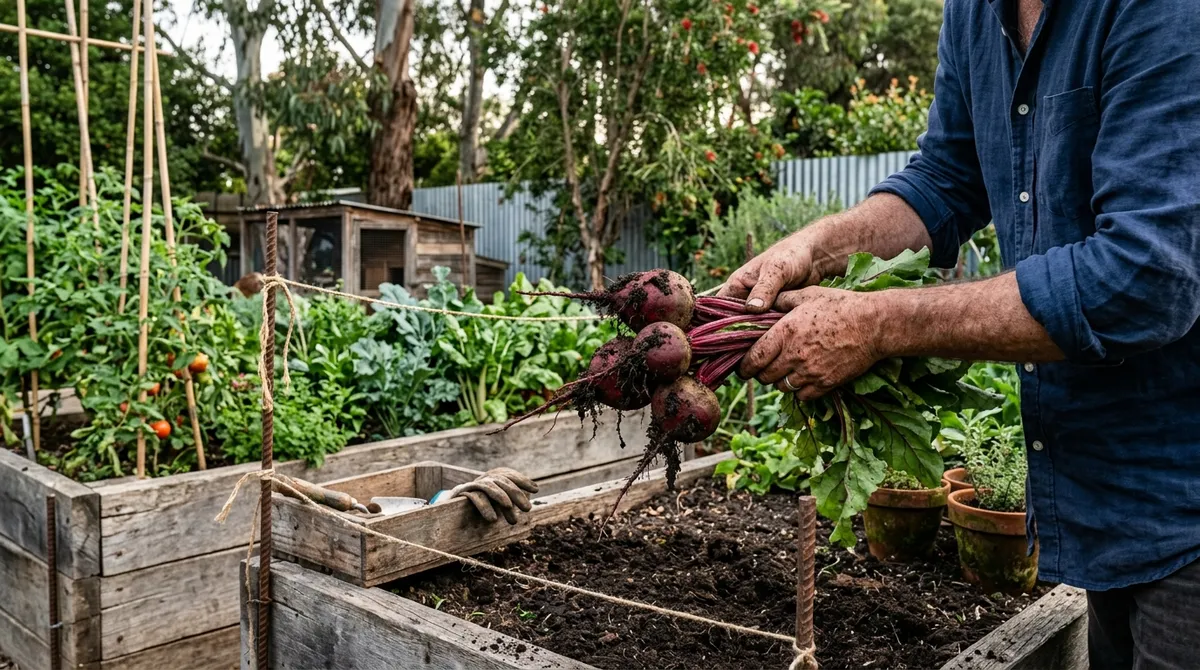
Begin harvesting from about 50 to 65 days, when roots are between 1.5 and 3 inches across. Pull them young for the most tender texture, lifting as needed rather than all at once. Twist off the tops, leaving about an inch of stalk so the roots do not bleed, and store them in the fridge where they keep for a few weeks. Cook or eat the greens fresh.
Varieties to grow
| Variety | Why grow it |
|---|---|
| 'Detroit Dark Red' | Reliable standard, deep red and sweet. |
| 'Chioggia' | Candy-stripe rings inside when cut. |
| 'Bull's Blood' | Dark edible leaves, ornamental and tasty. |
| 'Cylindra' | Long cylindrical root for uniform slices. |
| 'Golden' | Mild and sweet, does not bleed on the board. |
When to plant by region
This is a warm-US guide. The table below gives Florida sow windows. In other warm zones (USDA 8b to 11) grow beets through the cool season. In cold-winter zones grow them as a spring and fall crop.
| Region | Sow direct |
|---|---|
| North Florida | Sep to Mar |
| Central Florida | Oct to Feb |
| South Florida | Oct to Jan |
| Cooler US zones | Early spring, and again late summer for a fall crop |
Track your beet sowings in the app
Get a sowing and thinning schedule tuned to your region, plus reminders for watering and harvest.
Open the app →Frequently Asked Questions
When should I plant beets in Florida?
Beets are a cool-season crop. Sow seed directly through the mild months. North Florida sows September to March, Central Florida October to February, and South Florida October to January.
Why do beet seeds come up in clumps?
Each beet seed is actually a dried cluster that holds several seeds, so a single seed produces several seedlings. Thin each cluster to the strongest one seedling so the roots have room to swell.
How far apart should beets be?
Thin beets to between 2 and 4 inches apart depending on the size you want. Closer spacing gives smaller, tender baby beets, wider spacing gives larger roots.
Can I eat beet leaves?
Yes. Beet greens are edible and nutritious, cooked like chard or eaten young in salads. Pick a few outer leaves from each plant and leave the center to keep the root growing.
How long do beets take to grow?
Most beets are ready about 50 to 65 days from sowing, when the roots are between 1.5 and 3 inches across. Pull them young for the most tender texture.
Why are my beets small or woody?
Small or woody roots usually come from overcrowding, dry spells, or leaving them in the ground too long. Thin properly, keep the bed evenly moist, and harvest before the roots get oversized.
Do beets need full sun?
Beets grow best in full sun but will tolerate light afternoon shade in hot regions. In Florida some afternoon shade can help during warm spells at the edges of the season.
Can I grow beets outside Florida?
Yes. In warm USDA zones 8b to 11 grow beets through the cool season. In cooler zones grow them as a spring and fall crop, sowing in early spring and again in late summer for a fall harvest.
Source: UF/IFAS Florida Vegetable Gardening Guide (SP 103).