
Watermelon Varieties and Types: How to Choose for Your Season
Updated November 2026
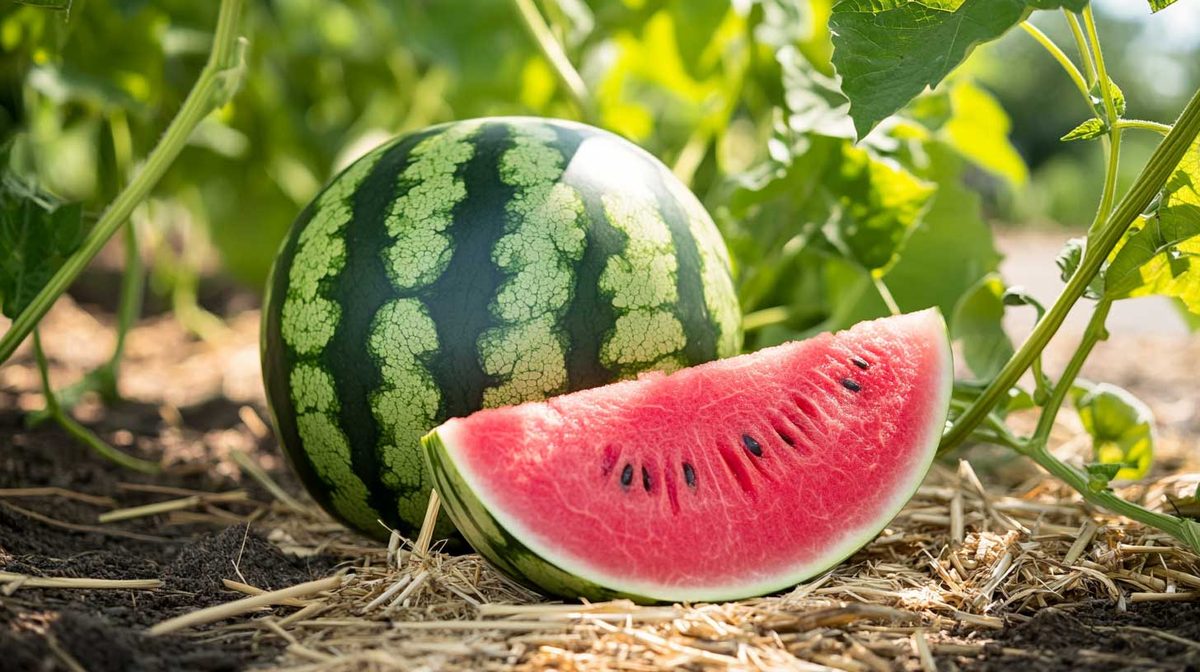
Icebox, picnic, seedless, yellow flesh and heirloom types, with days to maturity and fruit size.
Watermelon varieties fall into a handful of types: small icebox melons, large picnic melons, seedless triploids, yellow and orange fleshed melons, and heirlooms such as Moon and Stars. The right type depends mostly on how many warm days your summer gives you. Gardeners in the Northeast, Northern Plains, Pacific Northwest and Alaska should look at short-season icebox types of roughly 65 to 80 days, while the long hot South and Texas can grow anything, including 30 pound picnic melons.
Short answer: pick icebox types such as Sugar Baby (about 76 days on Johnny's chart) in short-summer regions, pick large seeded melons such as Crimson Sweet (85 days from transplanting) where summers are long, and add a seeded pollinizer plant if you grow seedless triploids.
The main types of watermelon
Seed catalogs sort watermelons in several overlapping ways: by fruit size, by whether the seeds are present, by flesh color and by whether the line is an heirloom open-pollinated variety or a modern hybrid. The groups below are the ones that matter in a home garden.
Icebox watermelons
Icebox melons weigh roughly 5 to 12 pounds, small enough to fit in a refrigerator. Sugar Baby is the long-standing example; Johnny's Selected Seeds lists it as a seeded diploid at 76 days with 8 to 10 pound fruit and red flesh. Johnny's chart also lists very small, quick types such as Natsu Cocoa (65 days, 3 to 5 pounds), Mini Love (70 days, 5 to 7 pounds) and Juice Box (70 days, 5 to 8 pounds). Icebox types are the safest starting point wherever frost arrives early.
Picnic or large watermelons
Picnic melons are the big, oblong or round fruit people picture at a summer cookout. Crimson Sweet is the common example: Johnny's lists it at 85 days from transplanting (add about 10 days if direct seeded) with 15 to 25 pound fruit and sweet pink to red flesh. Charleston Gray and Jubilee are long-oval classics. The Cucurbit Genetics Cooperative cultivar list gives Jubilee fruit at 35 to 40 pounds and notes resistance to anthracnose and fusarium wilt for Jubilee, Crimson Sweet and Charleston Gray, with sunburn resistance noted for Charleston Gray. Black Diamond is another large dark green classic. These melons need space and a long warm stretch, so they suit the South, Texas, the Mid-Atlantic and the Southern Plains better than cold regions.
Seedless triploid watermelons
Seedless watermelons are triploid hybrids. Their flowers produce little viable pollen, so a seeded diploid variety must grow nearby to supply pollen, and bees must carry it. Most seed companies sell a pollinizer variety or pollinizer seed packet alongside the seedless line, usually one pollinizer plant for every two or three seedless plants. Triploid seed is also pickier to start: it wants warm soil and warm air to germinate well, and chilling can ruin a batch. Start seedless melons indoors on a heat mat rather than sowing them cold in the ground. Johnny's chart lists seedless Gentility at 80 days (6 to 7 pounds) and Century Star at 80 days (10 pounds); other catalog entries run to the mid 80s.
Yellow and orange flesh watermelons
Yellow and orange fleshed melons look different when cut and are no harder to grow than red ones. On Johnny's chart, Sureness is a seeded yellow-fleshed melon at 75 days and 8 to 10 pounds, and Tropical Sunshine is the yellow-fleshed triploid. Seed Savers Exchange and Baker Creek also sell open-pollinated yellow and orange types, and the yellow-fleshed form of Moon and Stars is offered by several heirloom sellers.
Heirloom watermelons
Moon and Stars is the best known heirloom: a dark green rind speckled with yellow dots and splashes. Sellers differ on its maturity, with listings from the low 80s to 95 days and fruit from about 20 to 40 pounds, so read the specific listing you buy from. Heirlooms are open-pollinated, which means you can save seed, and most are seeded. They often take longer than modern icebox hybrids, which matters in short seasons.
Watermelon varieties compared
The table collects figures read from named seed catalogs and one university-linked cultivar list. Days to maturity vary by seller, because some count from transplanting and some from direct seeding, so treat the numbers as a guide and always check the packet.
| Type | Example | Days to maturity | Fruit size | Flesh color | Disease notes |
|---|---|---|---|---|---|
| Icebox, very small | Natsu Cocoa | 65 | 3 to 5 lb | Red | None listed |
| Icebox | Juice Box | 70 | 5 to 8 lb | Red | Fusarium resistance listed by Johnny's |
| Icebox | Sugar Baby | 76 | 8 to 10 lb | Red | None listed |
| Yellow flesh, seeded | Sureness | 75 | 8 to 10 lb | Bright yellow | None listed |
| Picnic, large | Crimson Sweet | 85 from transplant | 15 to 25 lb | Pink to red | Anthracnose and fusarium wilt resistance (Cucurbit Genetics Cooperative list) |
| Picnic, extra large | Jubilee | Check seller | 35 to 40 lb | Red | Anthracnose and fusarium wilt resistance (same list) |
| Picnic, long oval | Charleston Gray | Check seller | Large | Red | Anthracnose, fusarium wilt and sunburn resistance (same list) |
| Seedless triploid | Gentility | 80 | 6 to 7 lb | Red | None listed |
| Seedless triploid | Century Star | 80 | 10 lb | Red | None listed |
| Heirloom | Moon and Stars | About 81 to 95, varies by seller | 20 to 40 lb | Red (yellow form also sold) | Open-pollinated; none stated |
Resistance codes are only shown where a source states them. A blank in the disease column means we did not find a resistance claim on the pages we read, not that a variety has none.
Short-season varieties for the North
In the Northeast, Northern Plains, Alaska and the Pacific Northwest the practical limit is the number of warm, frost-free days. Watermelon is frost tender and wants warm soil, so the useful window is short. The shortest catalog entries on Johnny's comparison chart are Natsu Cocoa at 65 days, Mini Love and Juice Box at 70 days, Starlight at 75 days and Sugar Baby at 76 days, all seeded diploids with fruit between 3 and 12 pounds. If you want a seedless melon in a short season, the 80-day triploids on that chart are the earliest listed, and they still need a pollinizer.
Three habits matter more than variety once the choice is made. First, start transplants indoors about three to four weeks ahead rather than sowing into cold soil. Second, warm the bed with black plastic mulch laid a week or two before planting, and consider a row cover or low tunnel until the vines flower, removing it so bees can pollinate. Third, plant after frost and once soil has warmed; the frost dates page shows your average last frost.
Choosing by region
In the live Planting Season data, watermelon is planted May to Jun in the Northeast, May to Jun in the Upper Midwest and Northern Plains, May to Jun in the Pacific Northwest and May to Jun in Alaska. In those regions, stick to icebox and other short-season types and use plastic and transplants.
The long season in the South changes the calculation. The data shows Mar to Apr in Texas, Mar to Apr in the Gulf South and May to Jul in the Southern Plains. Here you can grow big picnic melons, seedless triploids and long-vined heirlooms, and the bigger risks are heat stress, pests and foliar disease in humid summers rather than the calendar. Mid-South gardeners plant May to Jul and Mid-Atlantic gardeners May to Jul, a middle ground where 80 to 90 day types are realistic.
If you do not know your region, use the region finder, then open the planting table on the watermelon plant page for your own months.
Growing tips that apply to every type
- Soil and sun. Full sun, well-drained soil and warm ground. Sandy and loamy beds warm faster than heavy clay.
- Space. Large melons need roughly 6 to 8 feet between hills or a trellis for small fruit. Icebox types are the easiest to trellis.
- Water. Steady moisture while fruit sizes up, then less as it ripens.
- Pollination. Watermelon relies on bees. Seedless types need a seeded variety blooming at the same time.
- Rotation. Fusarium wilt can build in soil, so avoid planting melons in the same bed in consecutive years.
Full spacing, feeding and harvest signs are in how to grow watermelon, and the wider family is covered in how to grow melons. Pest and disease pages such as cucumber beetle and powdery mildew help you identify trouble early.
How to pick a variety in five steps
- Count the warm, frost-free days between your last spring frost and first fall frost.
- Subtract about two to three weeks for transplant setup and slow early growth in cool soil.
- Choose a variety whose catalog days to maturity fit inside what is left, and check whether the seller counts from transplanting or seeding.
- Decide on size: small households and small gardens suit icebox melons, big gardens and gatherings suit picnic types.
- If you want seedless fruit, plan the pollinizer plants from the start.
When the catalog gives a range, the lower number is the optimistic one. Cool summers push real maturity toward the upper end, so in marginal areas choose the shorter variety rather than gambling on the longer one.
Questions
What are the main types of watermelon?
The main types are icebox (about 5 to 12 pounds), picnic or large (15 pounds and up), seedless triploids, yellow and orange fleshed melons, and heirlooms such as Moon and Stars. Most catalogs also sort watermelons as diploid (seeded) or triploid (seedless).
Which watermelon variety ripens fastest?
On Johnny's Selected Seeds comparison chart the quickest are Natsu Cocoa at 65 days, then Mini Love and Juice Box at 70 days. Sugar Baby is listed at 76 days. Always check whether the seller counts days from transplanting or from seeding.
Do seedless watermelons need another plant to pollinate them?
Yes. Seedless triploids produce little usable pollen, so a seeded diploid variety must flower nearby and bees must move pollen between them. Seed companies commonly sell a pollinizer variety for this, and one pollinizer plant per two or three seedless plants is a common rule.
Can I grow watermelon in a short northern summer?
Yes, with the right type and some help. Choose icebox varieties of about 65 to 80 days, start transplants indoors, and lay black plastic to warm the soil. Use a row cover until flowering, then remove it so bees can reach the blossoms.
What is the best watermelon for a small garden?
Icebox types such as Sugar Baby, Mini Love or Juice Box produce fruit of about 5 to 10 pounds and are easier to trellis than large picnic melons.
Is Moon and Stars a good watermelon?
It is a widely grown heirloom with a speckled rind and large fruit, around 20 to 40 pounds according to different sellers. It takes longer than most icebox types, so it suits regions with a long, warm summer.
Sources
- Johnny's Selected Seeds, Watermelon Varieties Comparison Chart
- Johnny's Selected Seeds, Crimson Sweet watermelon
- Cucurbit Genetics Cooperative, Vegetable Cultivar Descriptions for North America: Watermelon (A to L)
Plant profile
The watermelon profile has sowing times for your region, companion plants and common pests.