
Powdery mildew: identify, prevent, control
Updated October 2026
Worst from midsummer into fall across most of the US, and almost year round in coastal California and the Gulf states.
Powdery mildew is a group of closely related fungi that grow on the surface of leaves, stems and sometimes fruit, covering them in a white or gray powder. Each mildew tends to stick to its own plant family, so the mildew on your zucchini will not spread to your roses. It rarely kills plants outright, but it shortens the harvest, weakens perennials and leaves fruit exposed to sunscald.
Podosphaera, Golovinomyces, Erysiphe and related species
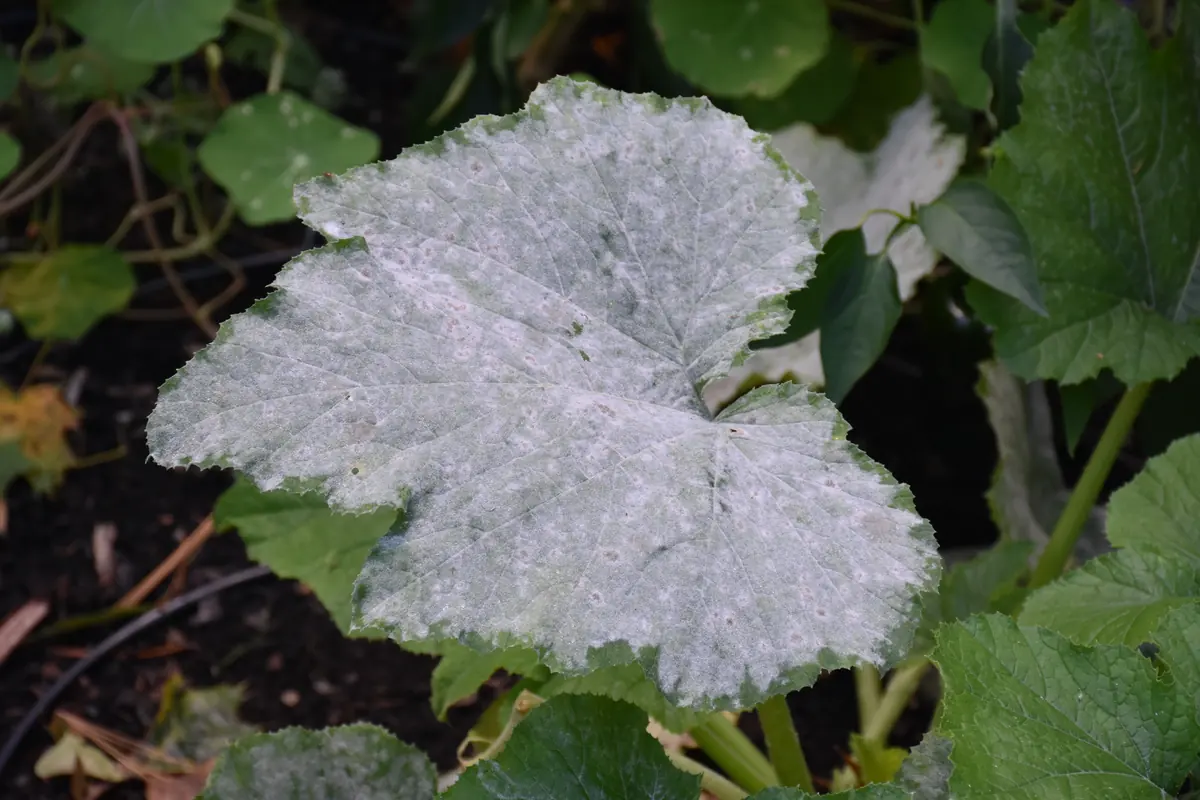

How to identify it
- The first sign is a few small, round white spots on the upper side of older, shaded leaves, as if someone dusted them with flour.
- The spots spread and join until whole leaves, leaf stalks and stems look coated in white or pale gray powder that rubs off on your finger.
- Badly affected leaves turn yellow, then brown and papery, and on squash and pumpkins the vines can die back weeks early.
- On peas, beans and herbs such as sage and marjoram, the coating often covers both sides of the leaf and the pods or stems as well.
- On grapes, apples, currants and gooseberries the fungus can also scar or russet the fruit, and grape berries may crack.
- Late in the season you may see tiny black or brown dots in the white growth, which are the resting bodies that carry the fungus through winter.
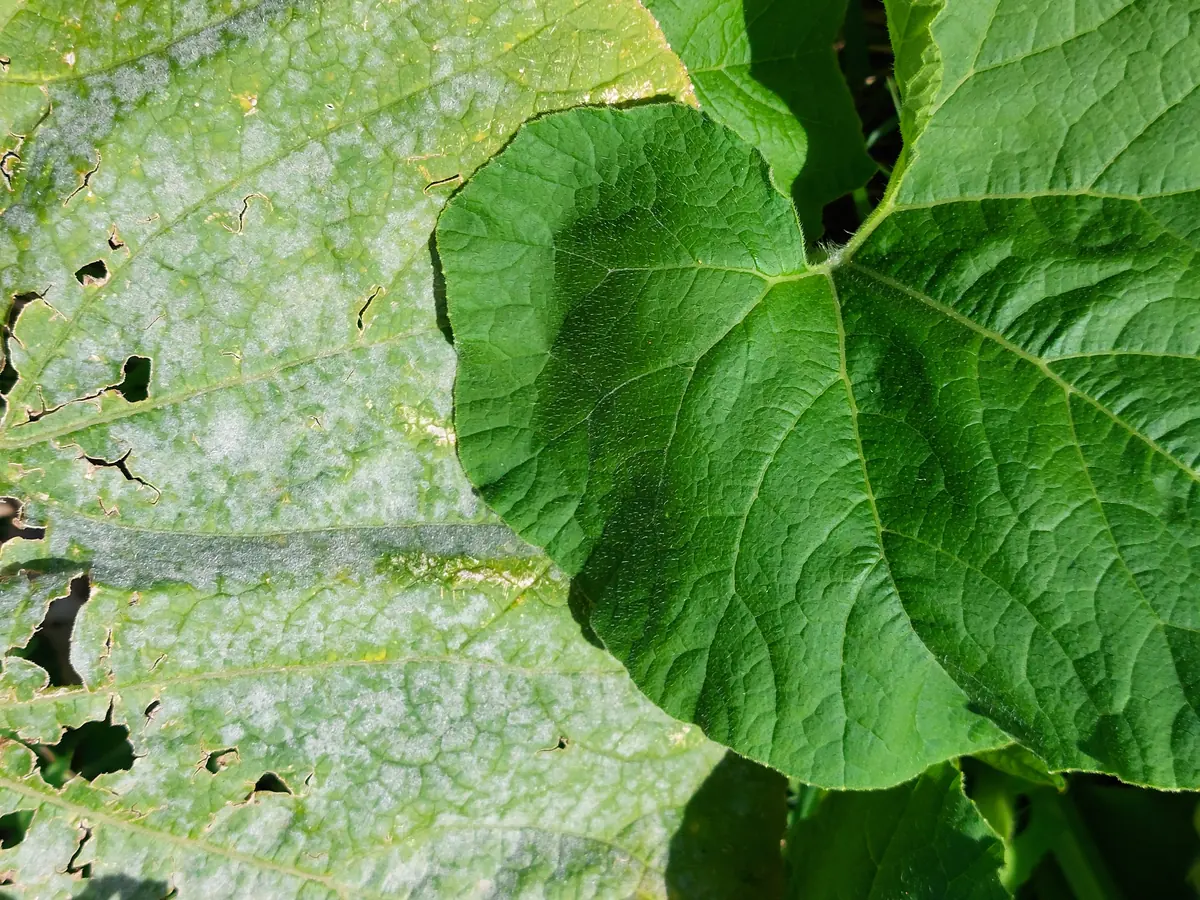

What it is often confused with
Downy mildew
Downy mildew starts as yellow, angular patches on the upper leaf with gray or purple fuzz only on the underside, and it needs wet weather. Powdery mildew sits on top of the leaf as white powder and does well in dry weather.
Spider mites
Spider mites leave pale speckling and fine webbing, mostly under the leaves. Look with a hand lens: mites move, mildew does not.
When and where it is worst
Unlike most leaf diseases, powdery mildew does not need rain or wet leaves to infect. It thrives when days are warm (about 60 to 80°F), nights are cool and humid, and plants are crowded or shaded. That is why it shows up in July and August in the Northeast and Midwest and keeps going until frost, and why it is common in the dry interior of California and the Southwest as well as the humid Southeast.
In Florida, Texas and coastal California it can appear on cucurbits, strawberries and mango flowers in winter and spring. Very hot weather above 90°F and full sun slow it down, so plants in shade or with dense canopies suffer most.
Plants it affects
These plants in our library list it as a problem to watch for.
How to prevent it
- Choose varieties listed as resistant or tolerant to powdery mildew, which are widely available for cucumbers, squash, zucchini, pumpkins, melons, peas and zinnias.
- Plant in full sun and space plants so air moves through them, and trellis cucumbers, melons and peas where you can.
- Avoid heavy doses of nitrogen fertilizer, which push soft, leafy growth that the fungus prefers.
- Prune grapes, currants, gooseberries, apples and roses to open up the center of the plant and remove mildewed shoot tips in spring.
- Water at the base of plants in the morning; overhead watering does not cause powdery mildew, but keeping leaves dry helps against the other leaf diseases that often arrive with it.
- At the end of the season pull out and bin or hot-compost badly infected annual plants, and rake up fallen leaves under fruit bushes and roses.
Organic control, step by step
- Pick off the first few infected leaves on zucchini, cucumber and squash as soon as you see them to slow the spread.
- Spray potassium bicarbonate products at the first sign of disease and repeat every 7 to 14 days, covering both sides of the leaves.
- Use wettable sulfur as a protectant before the disease builds up, but never above 90°F, never within about two weeks of an oil spray, and test it first on melons because some varieties are injured by sulfur.
- Horticultural oil or neem oil will clear light infections, but do not use oils in hot weather or close to a sulfur spray.
- Products based on Bacillus subtilis or Bacillus amyloliquefaciens can help as part of a regular protective program on vegetables and herbs.
Conventional control
- Chlorothalonil is labeled for powdery mildew on cucurbits in home garden products; start at the first spots and repeat on the label interval.
- Myclobutanil is labeled for powdery mildew on roses, grapes, apples and some other fruits in home products; it works best applied before the disease is established.
- Sulfur and potassium bicarbonate products are also sold for conventional gardens and are often the simplest choice on edible crops close to harvest.
- Read the label, check that your crop is listed, and keep to the pre-harvest interval shown for that crop.
Frequently asked questions
Can I eat squash or cucumbers from plants with powdery mildew?
Yes. The fungus does not make the fruit unsafe to eat. The fruit may be smaller or sunburned because the leaves are failing, and winter squash may not store as long.
Does baking soda work on powdery mildew?
Bicarbonate sprays can slow powdery mildew, and the registered potassium bicarbonate products are the more reliable choice because they are tested and come with rates on the label. Homemade baking soda sprays can burn leaves if made too strong, so test on a few leaves first.
Will powdery mildew on my zucchini spread to my roses or grapes?
No. The powdery mildews are largely host specific, so the cucurbit mildew stays on squash, cucumbers and melons. Your roses and grapes can still get their own mildew, so the same prevention steps apply.
Why does powdery mildew show up in dry weather when other diseases do not?
Powdery mildew spores germinate in high humidity without needing a film of water on the leaf. Warm days, cool humid nights and shade suit it, which is why it often appears in late summer during dry spells.
Related problems
Sources: UC IPM, Powdery Mildew on Vegetables (Pest Notes); UC IPM, Powdery Mildew on Fruits and Berries (Pest Notes); Clemson HGIC, Cucumber, Squash, Melon and Other Cucurbit Diseases; Penn State Extension, Addressing Downy Mildew and Powdery Mildew in the Home Garden. Identification and control follow these sources. Always read and follow the product label.