
Clay Soil: How to Improve It With Compost, Mulch and Raised Beds
Updated November 2026
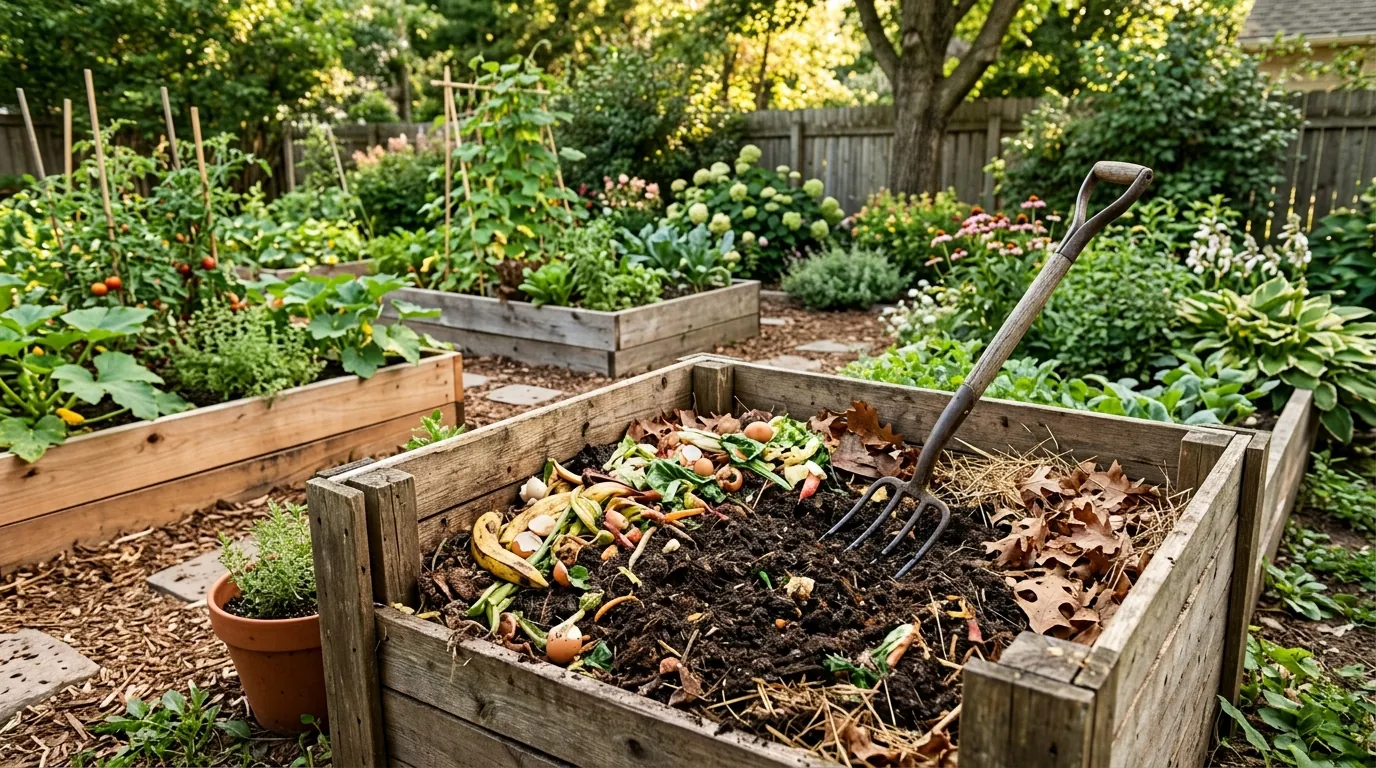
Clay soil holds nutrients and water well, but it drains slowly, sets hard when dry, and turns sticky and airless when wet. The fix is not a single product. It is a handful of habits: feed the soil with compost, protect its surface with mulch, stay off it when wet, and use raised beds where drainage is poor. This guide covers how to tell if you have clay, what works, what does not, and how to use compost, gypsum and cover crops.
Quick answer
- Add organic matter on the surface every year and let worms do the digging. Compost is the single most useful amendment for clay.
- Do not dig or walk on wet clay, and do not mix sand into it.
- Gypsum helps only some clays, called sodic or dispersive clays. Test before you buy.
- Where drainage is poor, grow in raised beds and use the clay for the paths.
How to tell if you have clay soil
- Ribbon test. Squeeze a handful of moist soil between your thumb and finger into a ribbon. A ribbon that holds together for 2 inches or more before breaking indicates a heavy clay.
- Jar test. Fill a straight-sided jar one third with soil, top up with water and a pinch of dishwashing detergent, shake well, and leave it to settle for 24 hours. Sand settles in the first minute, silt within a few hours, and clay over a day or more. A thick top layer of clay, more than about 40 percent of the total, means clay soil.
- Behavior. Sticky and shiny when wet, cracked and rock-hard when dry, and puddles that last for days after rain.
What works for clay soil
Compost on the surface, every year
Spread about 2 inches of compost over the bed in fall and again in spring if you can, and cover it with mulch. Worms and soil microbes pull the organic matter down and stick clay particles into crumbs, which opens pores for air and water. This is the answer to the common search "compost for clay soil". Digging it in deeply is less important than keeping the top layer rich and covered, and over time the structure improves. Our composting guide covers making your own, and our worm farming section helps if you want a worm farm to speed things up.
Mulch to protect the surface
Bare clay seals under rain and bakes under sun. A layer of 2 to 3 inches of organic mulch prevents both and feeds the soil as it breaks down. See our mulching guide.
Stay off wet clay
Walking or digging wet clay squeezes out the air spaces and leaves hard clods that take years to recover. Wait until a handful of soil crumbles rather than smears when you squeeze it. Use stepping boards or fixed paths, and keep foot traffic off the beds.
Raised beds where drainage is poor
If water stands for more than a day after rain, a bed built up 8 to 12 inches above the clay, filled with good garden mix and compost, lets you grow root crops, herbs and vegetables that would otherwise rot. Do not line the base of the bed with sand or gravel, which can trap water above it. See how to build a raised garden bed.
Cover crops and deep roots
A winter or summer cover crop, dug in or chopped and left as mulch, adds organic matter and its roots open channels in the clay. See green manure and cover crops.
What does not work
- Mixing sand into clay. Small amounts of sand do not help and can make a harder, concrete-like mix. It takes a very large quantity of coarse sand, close to half the volume, to change clay's behavior, which is rarely practical.
- Digging once and leaving it. Digging in a lot of compost helps for a season, but the clay re-compacts unless you keep adding organic matter and avoid compacting it.
- Dishwashing detergent or other home tonics. We found no good evidence for them, so we do not recommend them.
Gypsum for clay: when it helps
Gypsum (calcium sulfate) improves structure in sodic or dispersive clays, where too much sodium makes clay particles separate in water and seal the surface. In non-sodic clay it makes little difference. A quick home check is the crumb test: place a dry crumb of soil in a jar of rainwater and leave it overnight. If the water turns cloudy or milky, the clay may be dispersive, and a lab test for sodicity can confirm it. Gypsum does not change soil pH, so it is not a substitute for lime.
Lime and pH on clay
If a soil test shows acidic clay, garden lime or dolomite raises pH and can help clay particles cluster into crumbs. If the clay is already neutral or alkaline, lime will not help and can do harm. See our soil pH guide.
Plants that cope with clay
Brassicas, chard, beans, peas, kale and most leafy crops cope well once the top layer is improved, as do many fruit trees on a mound. Carrots and parsnips fork in heavy clay, so grow them in raised beds or deep pots. Add a 2 inches mulch around trees and keep it clear of the trunk.
A simple yearly routine for clay
- Fall: spread 2 inches of compost on empty beds, then cover with mulch, or sow a cover crop.
- Winter: stay off the beds when wet.
- Spring: pull back the mulch, plant into the compost layer, and replace the mulch.
- Each year: test pH every year or two, and add lime only if needed.
Make a no-dig bed on clay
- Mow or flatten weeds, and leave the cut material in place.
- Cover with a layer of cardboard with no tape or glossy print, overlapping the edges, and wet it well.
- Add 4 to 6 inches of compost and, if you have it, a layer of straw or pea straw on top.
- Plant straight into the compost through the cardboard, or wait a few weeks until it begins to break down.
- Top up each year. Within a season or two, worms and roots will open the clay beneath.
Lime versus gypsum for clay
| Garden lime or dolomite | Gypsum | |
|---|---|---|
| What it is | Calcium carbonate, with magnesium if dolomite | Calcium sulfate |
| Changes pH | Yes, raises it | No |
| Helps which clays | Acidic clays that need a higher pH | Sodic or dispersive clays |
| How to know | A soil pH test shows acid soil | The crumb test turns the water cloudy, confirmed by a lab test |
| Risk | Overuse locks up iron and manganese | Little effect on non-sodic clay, so it can be wasted money |
Frequently asked questions
How do I improve clay soil?
Add organic matter such as compost to the surface every year, mulch it, avoid digging or walking on wet soil, and use raised beds where drainage is poor. Improvement takes a few seasons.
What is the best compost for clay soil?
Any well-finished compost works. Spread about 2 inches over the surface and cover with mulch, so worms and microbes can take it into the soil.
Should I add sand to clay soil?
No. Small amounts of sand can make clay set harder, and it takes a huge amount of coarse sand to change it. Compost is the better choice.
Does gypsum break up clay?
Only some clays. Gypsum helps sodic or dispersive clays, where particles separate in water. Do the crumb test or a lab test before buying it, because it makes little difference to other clays.
What grows best in clay soil?
Brassicas, chard, beans, peas and kale cope well once the top layer is improved. Root crops such as carrots do better in raised beds or deep pots.
Related guides
See what to plant this month
Pick your region for a month-by-month calendar tuned to your climate.
Find your region →