
Pear Varieties: Types of Pears, Fire Blight Resistance and the Best Choices by US Region
Updated November 2026
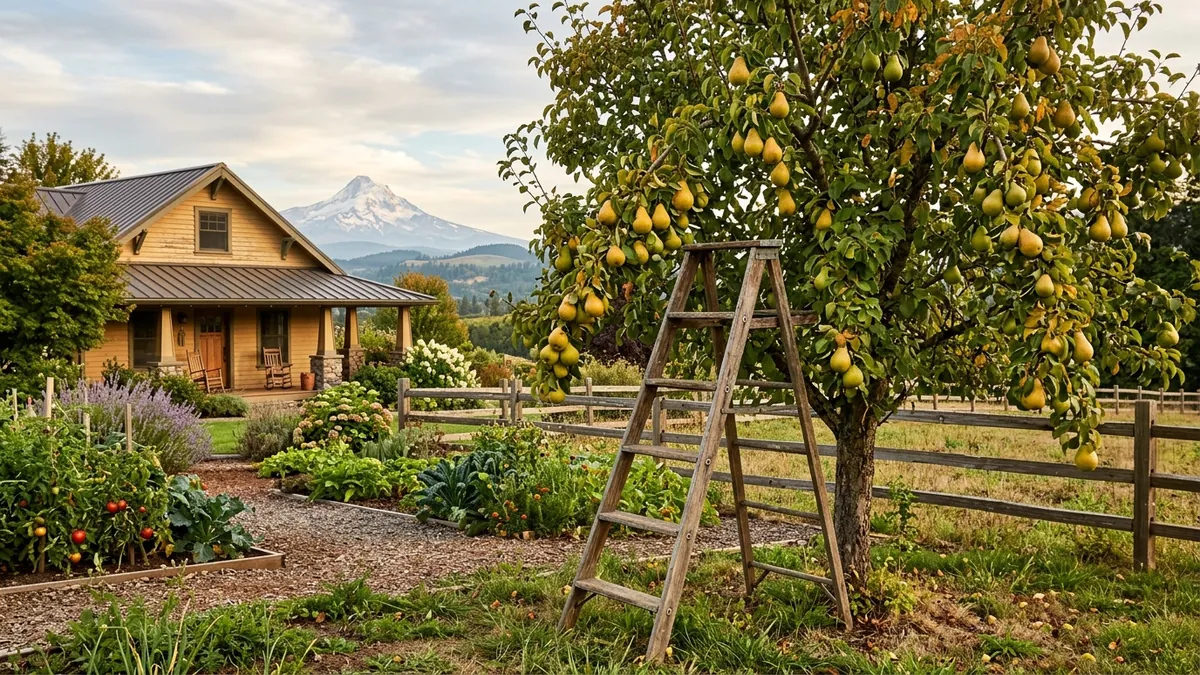
European, Asian and Southern pears with chill hours, zones and pollination partners
Pear varieties fall into two main groups. European pears such as Bartlett, Bosc, Anjou, Comice and Seckel have the soft, buttery flesh most people picture, and they ripen after picking. Asian pears are round, crisp and eaten firm. A third group of hybrids, led by Kieffer, Orient and Pineapple, is grown across the South because it copes with warm winters and a disease called fire blight. This guide covers the common types of pears, the numbers that decide whether a variety will fruit where you live, and which varieties suit which US regions.
Pick the variety by three things: the winter chill your area gets, how much fire blight pressure your climate brings, and whether you have a second pear nearby to pollinate it. Warm, humid areas such as the Gulf South need low-chill, blight-resistant types. Cooler areas can grow classic European pears such as Bartlett, Bosc and Anjou.
The main types of pears
European pears (Pyrus communis) include Bartlett, Bosc, Anjou, Comice, Seckel and Concorde. They are the pears of the Pacific Northwest and California orchards, and they are picked mature but still hard, then finished off the tree. Asian pears (Pyrus pyrifolia and related species) are sold as nashi or apple pears and are eaten crunchy straight from the tree. Our Asian pear plant page and the nashi growing guide cover them in full, including the pollinator pairings.
Hybrids and Southern pears such as Kieffer, Orient, Pineapple and Magness carry blood of both groups. They usually need less winter cold and shrug off fire blight better than Bartlett, which is why they dominate old farmstead plantings in the South. The trade-off is quality: Kieffer is better known for canning and baking than for fresh eating.
The general growing guide for the crop is on our pear plant page. This page is about choosing a variety, so keep the plant page open for spacing, pruning and pests.
Fire blight, the key US issue
Fire blight is a bacterial disease that enters pear and apple trees through open blossoms in warm, wet spring weather. Infected shoots wilt, turn black and bend into a shepherd's crook, as if scorched by a flame. In the humid East and South it is the main reason a healthy pear tree can die within a few seasons, and it is why variety choice matters more for pears than for most other fruit.
We read the Dave Wilson Nursery pear list, which is sold to home growers across the US, and it describes Moonglow, Harrow Delight, Blake's Pride and Orient as resistant, and Kieffer, Seckel, Magness, Pineapple and Southern Bartlett as resisting, showing resistance or moderately resistant. It says Bosc is susceptible in warm, moist climates. We quote those words as the nursery gives them. A resistant pear can still catch the disease in a very wet spring. Cut out infected shoots well below the visible damage in dry weather, sterilize the pruners between cuts, and avoid heavy nitrogen that pushes soft new growth. If the disease keeps returning, ask your county extension office about a registered product, used to the label.
Chill hours and USDA zones
Pears need winter cold to flower evenly. The table below uses the chill figures from the Dave Wilson Nursery list. They are a nursery's working numbers rather than laboratory values, and published figures for the same pear differ between sources, so treat them as a guide and check your local extension office for your area. Our chill hours tool shows how much cold your location collects, and the USDA zones guide explains what the zone number does and does not tell you.
As a rough pattern in that list, Kieffer (200 to 300), Pineapple (200), Orient (350) and Southern Bartlett (under 400) suit mild winters. Bartlett, Bosc, Comice and Seckel sit around 500 to 600, and Anjou, Harrow Delight and Blake's Pride are listed at 800. Where zones are given, Blake's Pride is listed for zones 5 to 9, Magness for 6 to 9 and Pineapple for 6 to 10, and the same list says Warren is cold hardy to minus 20 degrees F (minus 29 C).
Pear varieties compared
This table pulls the nursery's figures into one place. Where the list did not state a value, the cell says so rather than guessing. Type is the general grouping, not something the nursery states.
| Variety | Type | Chill hours (nursery list) | Zones where listed | Fire blight (as the list words it) | Pollination | Use and harvest |
|---|---|---|---|---|---|---|
| Bartlett | European | 500 to 600 | Not listed | Not rated in the list | Self-fruitful in most Western climates; elsewhere Bosc or Anjou | Fresh and canning; early to midseason |
| Bosc | European | 500 to 600 | Not listed | Susceptible in warm, moist climates | Bartlett or another pear | Fresh, baking and poaching; late October in California |
| Anjou (D'Anjou) | European | 800 | Not listed | Not rated in the list | Bartlett | Fresh and storage; about a month after Bartlett in central California |
| Comice | European | 600 | Not listed | Not rated in the list | Self-fruitful in most Western climates, or plant with Bartlett | Fresh dessert pear; late |
| Seckel | European | 500 | Not listed | Resists | Bosc, Anjou or another pear, but not Bartlett | Small fruit for fresh eating and pickling |
| Concorde | European | Not listed | Not listed | Not listed | Check the seller tag | Fresh eating; we did not find a nursery figure to quote |
| Moonglow | European type | 400 to 500 | Not listed | Resistant | Needs a pollenizer and is a good pollenizer for other pears | Fresh and canning; midseason |
| Harrow Delight | European type | 800 | Not listed | Resistant | Bartlett, Bosc, Anjou or Moonglow | Fresh; two weeks before Bartlett |
| Kieffer | Hybrid | 200 to 300 | Not listed | Resists | Self-fruitful | Mostly cooking and canning; late season |
| Orient | Hybrid | 350 | Not listed | Resistant | Kieffer or Moonglow | Cooking and canning |
| Pineapple | Hybrid | 200 | 6 to 10 | Shows resistance | Partly self-fruitful; heavier crops with a pollenizer | August |
| Magness | Hybrid | 400 | 6 to 9 | Shows resistance | Harrow Delight, 20th Century or another Asian pear | Early September |
| Southern Bartlett | Bartlett type | Under 400 | Not listed | Moderate resistance | Self-fruitful | Low-chill alternative to Bartlett |
| Blake's Pride | European type | 800 | 5 to 9 | Resistant | Bartlett, Harrow Delight or Warren | Fresh; 10 to 14 days after Bartlett |
Pollination partners and bloom groups
Most pears set a better crop with a second variety that blooms at the same time. The nursery list shows how fussy the pairings are. Bartlett is listed as self-fruitful in most Western climates, but elsewhere it wants Bosc or Anjou nearby. Seckel is listed as needing Bosc, Anjou or another pear, and specifically not Bartlett. Moonglow needs a pollenizer and is called a good one for other pears. Harrow Delight is listed as interfruitful with Bartlett, Bosc, Anjou and Moonglow.
The practical rule is to plant two varieties of the same bloom period within about 50 feet (15 m) of each other, and to check the seller's tag for the pairing it recommends. A single self-fruitful tree such as Kieffer works in a small yard, but it often crops more heavily with a partner. Do not pair a European pear with an Asian pear unless the seller says the two overlap, because bloom times can differ. If bees are scarce, our guide to why fruit trees do not fruit covers pollination and frost damage to blossoms.
Which pears suit which US regions
Pacific Northwest and California. These regions produce most of the commercial pear crop in the country, and European pears are the standard. Bartlett, Anjou, Bosc and Comice all suit the Pacific Northwest hub, and our data gives Feb to Mar and Nov for planting a pear there, with Nov to Feb in Northern California and the Central Valley. Fire blight is less severe in the dry summer climate, though a wet spring can still bring it on.
The South and Gulf Coast. Warm winters and humid springs punish high-chill, blight-prone pears. Look at Kieffer, Orient, Pineapple, Southern Bartlett and Moonglow, which the nursery lists at lower chill figures and with some blight resistance. Our data gives Jan to Feb for planting in the Gulf South, so plant in the cool months while the tree is dormant. Read the low-chill ideas in our low-chill fruit guide as well.
Northeast, Midwest and Mid-Atlantic. Cold winters give plenty of chill, so Bartlett, Seckel, Bosc, Harrow Delight and Blake's Pride are all in range. The planting window in our data is Apr to May in the Northeast and Mar to May in the Midwest and Great Lakes. Humid summers mean blight-resistant varieties are the safer buy. In colder zones, look for the hardiest variety the seller offers; the nursery list gives Warren's cold hardiness in the table above.
Mountain West and Plains. Late spring frosts that kill blossoms are often a bigger risk than chill, so a later-blooming variety helps. Our data gives Apr to May for planting in the Mountain West. Find your own region on the region finder and check frost dates for your area before choosing a bloom time.
Ripening pears off the tree
European pears are picked mature but still hard, and they finish ripening off the tree. If they are left to soften on the branch, the flesh tends to turn gritty and mealy around the core while the outside is still firm. A mature pear separates from the spur when you lift it and tilt it sideways, and the skin color shifts slightly. Bring picked fruit indoors and leave it at room temperature until the flesh gives gently near the stem. Cold storage first, then a few days at room temperature, is a standard extension suggestion for the later varieties such as Anjou, and it holds the fruit longer.
Asian pears are the exception. They are left on the tree until fully ripe and eaten crisp, so they need a different harvest habit from Bartlett or Bosc.
How to choose and buy
Start with your chill figure and your zone, then narrow to varieties with fire blight resistance if you are in the East or South. Pick two that pollinate each other and bloom together. Buy from a seller that lists the chill hours, zone and pollination on the tag; the Dave Wilson Nursery list is one example of a catalog that shows those details, and many garden centers and mail-order sellers carry the same varieties on dwarf and semi-dwarf rootstocks. Plant while the tree is dormant, and work through the spacing and pruning notes on our pear plant page. Pears take about four years from planting to a good crop in our data, so choosing well matters more than buying the biggest tree.
Questions
What are the main types of pears?
European pears such as Bartlett, Bosc, Anjou, Comice and Seckel are soft and ripen off the tree. Asian pears are round and crisp and are eaten firm. Hybrids such as Kieffer, Orient and Pineapple are common in the South because they tolerate warm winters and fire blight better.
Which pear varieties resist fire blight?
The Dave Wilson Nursery list describes Moonglow, Harrow Delight, Blake's Pride and Orient as resistant, and several others such as Kieffer, Seckel and Magness as resisting or showing resistance. It says Bosc is susceptible in warm, moist climates. Resistance reduces the risk and does not remove it.
How many chill hours does a pear need?
It depends on the variety. The nursery list gives Kieffer 200 to 300, Pineapple 200, Bartlett 500 to 600, and Anjou and Harrow Delight 800. Published figures vary, so check your local extension office and use our chill hours tool for your location.
Do I need two pear trees?
Usually yes for the best crop. Some pears, such as Kieffer, are listed as self-fruitful, and Bartlett is listed as self-fruitful in most Western climates. Elsewhere plant a second variety that blooms at the same time. Seckel, for example, should not be paired with Bartlett.
Which pears grow in the South and Gulf Coast?
Look for low-chill, blight-resistant types such as Kieffer, Orient, Pineapple, Southern Bartlett and Moonglow. High-chill pears such as Anjou, at 800 hours on the nursery list, are a poor match for mild winters.
Why are pears picked before they are ripe?
European pears ripen from the inside out, so leaving them on the tree tends to give gritty, mealy flesh. They are picked mature but hard and ripened at room temperature. Asian pears are the exception and are left to ripen on the tree.
Sources
- Dave Wilson Nursery, pear varieties (chill hours, zones, pollination, fire blight notes)
- USDA Plant Hardiness Zone Map
Plant profile
The pear profile has sowing times for your region, companion plants and common pests.