
Types of Tomatoes: How to Choose the Best Variety for Your Garden
Updated November 2026
Choose by how you will use the tomato, whether the plant is determinate or indeterminate, how many days it needs, and how well it suits your climate.
There are thousands of tomato varieties, but they fall into a handful of types. Picking the right one for your garden is mostly a matter of four questions: what will you cook or eat, how much space and support can you give, how long is your season, and how hot and humid is your summer. This guide answers each in turn and ends with a picker you can filter, so you can see the options for your own garden. For planting dates see our guide to when to plant tomatoes.
🌱 Plant profile: Tomato, with sowing times for your region, companion plants and common pests.
The types of tomatoes, by use
| Type | Best for | Typical plant | Examples |
|---|---|---|---|
| Cherry and grape | Snacking, salads, roasting | Indeterminate vines that crop heavily for months. A few dwarf types suit pots. | Sungold, Sweet 100, Yellow Pear, Black Cherry |
| Slicing (salad and globe) | Sandwiches and fresh eating | Medium fruit of 4 to 10 ounces on determinate or indeterminate plants | Better Boy, Celebrity, Early Girl, Big Beef |
| Beefsteak | Thick slices on burgers and sandwiches | Large, late indeterminate plants that need strong support and a long warm season | Brandywine, Mortgage Lifter, Black Krim, Beefsteak |
| Paste (plum, roma) | Sauce, canning, drying | Dense, meaty, low-moisture fruit, often determinate with one concentrated harvest | Roma, San Marzano, Amish Paste |
Roma tomatoes
The roma tomato is the best known paste tomato. It is a determinate bush with plum-shaped, thick-walled fruit and few seeds, so it cooks down quickly into sauce and paste and dries well. Most of the crop ripens in a few weeks, which suits a day of canning. Roma plants stay compact and grow well in large pots, and they need only a short cage or stake. Our paste tomatoes guide compares roma, San Marzano and Amish Paste, and passata and bottling shows how to preserve the harvest.
Beefsteak tomatoes
Beefsteaks are large, juicy slicing tomatoes, many weighing a pound or more. They are almost all indeterminate and need 80 to 90 days, so they work best in the Mid-Atlantic, Midwest and the South, and are harder in a short northern season. Give each plant a heavy stake or tall cage, because a loaded plant is top heavy. Blossom end rot and cracking are more common on big fruit, so keep watering even.
Cherry tomatoes
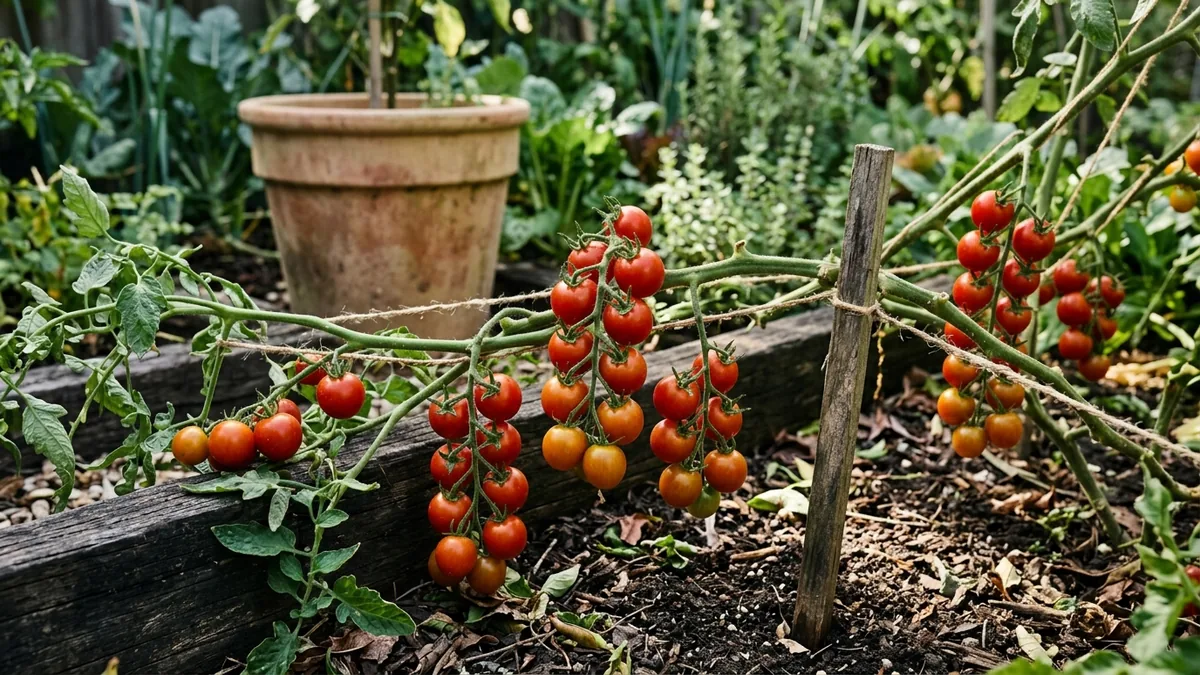
Cherry tomatoes are the easiest type to grow and the most forgiving of heat. Most are indeterminate and fruit from midsummer until frost, so one or two plants feed a household. Dwarf varieties such as Tumbling Tom suit hanging baskets. See our cherry tomatoes guide for the sweetest varieties.
Heirloom tomato plants
Heirloom tomatoes are open-pollinated varieties, many handed down for generations, with colors from pink and purple to green, orange and striped. Because they are open-pollinated, you can save their seed and get the same tomato next year. The trade-off is that heirlooms are generally more prone to cracking and diseases than modern hybrids, and most are indeterminate and late. Choosing heirlooms that suit your region helps. Cherokee Purple, Black Krim and Arkansas Traveler cope with Southern heat better than most. In the north, early heirlooms such as Stupice and Siberian are good choices. Heirloom transplants are scarce at garden centers, so starting from seed (see growing tomatoes from seed) gives you the widest choice.
Determinate or indeterminate?
| Determinate (bush) | Indeterminate (vine) | |
|---|---|---|
| Growth | Stops at a set height, usually 3 to 4 feet | Keeps growing until frost, often 6 feet or more |
| Harvest | One concentrated flush over 2 to 4 weeks | A steady supply over many weeks |
| Support | Short stake or cage | Tall stake, tall cage or trellis |
| Pruning | Leave suckers on | Remove suckers for easier care and larger fruit |
| Best for | Pots, sauce and canning, short seasons | Fresh eating, long seasons and heirlooms |
Tomatoes for your climate
Short-season north
In Alaska, the Northern Plains, the Mountain West, the Northeast and the cooler parts of the Pacific Northwest, the season may allow only 90 to 100 frost-free days. Choose varieties of 49 to 70 days: Fourth of July, Early Girl, Stupice, Glacier, Siberian and Oregon Spring. Start seed indoors, warm the soil with black plastic, and use a cloche or row cover in cold snaps.
Hot, humid South
In the Gulf South, Florida, Texas and the Southeast, heat and humidity cause two problems: flowers drop when nights stay above about 75°F, and fungal disease and nematodes run through the crop. Heat-set varieties such as Heat Wave II, Solar Fire and Florida 91 keep fruiting, and Everglades is tough in humid conditions. Choose varieties marked V, F and N, and plant a spring crop early so fruit ripens before the worst heat, with a second planting in late summer.
Everywhere in between
The Midwest, Mid-Atlantic and most of California suit almost any variety. Reliable choices are Celebrity, Better Boy, Big Beef and Roma, with a few heirlooms for flavor. If your summers are dry, with big swings between day and night, tomatoes sometimes split, so water evenly.
Tomato variety picker
Filter the list by use, habit, climate or heirloom. Days to maturity are counted from transplanting and vary a little with weather and the source of the seed.
| Variety | Type | Habit | Days | Climate fit | Notes |
|---|---|---|---|---|---|
| SungoldSweetest | Cherry | Indeterminate | 65 | Most climates | Glowing orange cherry often named the sweetest tomato of all. A heavy cropper eaten straight off the vine. |
| Sweet 100Sweetest | Cherry | Indeterminate | 65 | Most climates | Long trusses of small, very sweet red cherries. Reliable and prolific. |
| Sweet MillionSweetest | Cherry | Indeterminate | 65 | Hot, humid South | A crack-resistant Sweet 100 type that keeps cropping through a long season. |
| Yellow PearSweetestHeirloom | Cherry | Indeterminate | 75 | Most climates | Mild, sweet, pear-shaped yellow fruit on very vigorous vines. |
| Sun SugarSweetest | Cherry | Indeterminate | 62 | Short-season north | Golden cherry that is as sweet as Sungold with a firmer skin. |
| Black Cherry | Cherry | Indeterminate | 70 | Most climates | Dusky purple cherry with a deep, complex flavor. |
| Everglades | Cherry | Indeterminate | 70 | Hot, humid South | A tiny currant type that keeps setting fruit in Southern heat and humidity. |
| Tumbling Tom | Cherry | Determinate | 70 | Most climates | Trailing dwarf bred for hanging baskets and pots. |
| Early Girl | Slicing | Indeterminate | 55 | Short-season north | Fast to ripen and the classic pick for a short season, giving the first slicers of summer. |
| Fourth of July | Slicing | Indeterminate | 49 | Short-season north | One of the quickest, producing medium red fruit in the north long before most varieties. |
| Stupice | Slicing | Indeterminate | 60 | Short-season north | An early, cold-tolerant variety with potato-leaf foliage and good flavor, a favorite in cool summers. |
| Glacier | Slicing | Determinate | 55 | Short-season north | A compact early tomato for cool summers and short seasons, good in pots. |
| Siberian | Slicing | Determinate | 55 | Short-season north | Bred to set fruit in cool weather, so it suits northern gardens. |
| Oregon Spring | Slicing | Determinate | 58 | Short-season north | A bush tomato that sets fruit well in cool Pacific Northwest and northern summers. |
| Better Boy | Slicing | Indeterminate | 75 | Most climates | A classic American slicer with large, juicy fruit and good disease resistance. |
| Celebrity | Slicing | Determinate | 70 | Most climates | A widely adapted, disease-resistant bush slicer that sets well in varied climates. |
| Green Zebra | Slicing | Indeterminate | 78 | Most climates | Green and gold striped fruit with a tart flavor. |
| Heat Wave II | Slicing | Determinate | 68 | Hot, humid South | Bred to set fruit in high heat where other tomatoes drop their flowers. |
| Solar Fire | Slicing | Determinate | 72 | Hot, humid South | A heat-tolerant slicer that sets fruit in hot summers and holds up to cracking. |
| Florida 91 | Slicing | Determinate | 72 | Hot, humid South | A heat-set variety developed for the humid South. |
| Patio | Slicing | Determinate | 70 | Most climates | A compact bush developed for containers, with full-size flavor. |
| BrandywineHeirloom | Beefsteak | Indeterminate | 90 | Most climates | A famous pink heirloom beefsteak with rich flavor. It needs a long warm season and strong staking. |
| Cherokee PurpleHeirloom | Beefsteak | Indeterminate | 80 | Hot, humid South | A dusky rose-purple heirloom with a deep, sweet-savory flavor that copes with Southern heat better than most heirlooms. |
| Black KrimHeirloom | Beefsteak | Indeterminate | 80 | Hot, humid South | A dark mahogany heirloom with rich, slightly salty flavor. |
| Mortgage LifterHeirloom | Beefsteak | Indeterminate | 85 | Most climates | A huge pinkish-red heirloom up to 2 pounds, mild with few seeds. |
| Arkansas TravelerHeirloom | Slicing | Indeterminate | 80 | Hot, humid South | A pink heirloom that holds up better than most in heat and humidity. |
| Big Beef | Beefsteak | Indeterminate | 73 | Most climates | A disease-resistant hybrid beefsteak with full old-fashioned flavor. |
| Beefsteak | Beefsteak | Indeterminate | 85 | Most climates | A big, meaty classic red slicer for burgers and sandwiches. |
| Roma | Paste | Determinate | 75 | Most climates | A thick-fleshed paste tomato with few seeds that ripens in a concentrated flush. |
| San MarzanoHeirloom | Paste | Indeterminate | 80 | Most climates | The Italian sauce tomato, with long, meaty, low-moisture fruit. |
| Amish PasteHeirloom | Paste | Indeterminate | 85 | Most climates | An heirloom paste with more flavor than most sauce types. |
| Principe BorgheseHeirloom | Paste | Determinate | 75 | Hot, humid South | A small Italian drying tomato that sets heavily in dry heat. |
How many plants do you need?
A common guide is 2 to 3 plants per person for fresh eating, and 5 to 10 paste plants per person if you plan to can sauce. One or two cherry plants are usually enough for a household. See our staking and spacing guide to plan the space, and tomatoes in pots if you are growing on a patio.
Tomato variety questions
What are the main types of tomatoes?
Gardeners usually sort tomatoes by use and fruit shape into cherry (and grape), slicing, beefsteak and paste types. Each can also be heirloom or hybrid, and each is either determinate (a bush that ripens in one flush) or indeterminate (a vine that keeps fruiting until frost).
What is an heirloom tomato?
An heirloom is an open-pollinated variety that has been grown and saved for decades, so its seed comes true when you save it. Brandywine, Cherokee Purple and Black Krim are well known examples. Heirlooms are usually prized for flavor but tend to crack more and resist disease less than modern hybrids.
What is the difference between a roma and a beefsteak tomato?
A roma is a paste tomato with dense, meaty flesh, few seeds and little juice, bred for sauce and canning. A beefsteak is a large slicing tomato with juicy flesh and many seed cavities, best sliced fresh. Roma plants are typically determinate and beefsteaks indeterminate.
What is the easiest tomato for beginners?
Celebrity, Better Boy and Early Girl are dependable choices because they carry disease resistance and set fruit in a range of conditions. Sweet 100 and Sungold are easy for cherry tomatoes.
Which tomatoes grow best in hot, humid summers?
Heat-set varieties such as Heat Wave II, Solar Fire and Florida 91 keep setting fruit when other tomatoes drop their flowers, and Everglades currant tomatoes shrug off humidity. Choose varieties with V, F and N resistance letters where soil diseases and nematodes are a problem.
Which tomatoes ripen fastest in a short season?
Fourth of July, Early Girl, Stupice, Glacier, Siberian and Oregon Spring are all early, ripening in about 49 to 60 days from transplanting. Combine them with black plastic mulch and seed started indoors.
What do determinate and indeterminate mean?
Determinate tomatoes stop growing at a set height and ripen most fruit within a few weeks, so they suit containers and canning. Indeterminate tomatoes grow and fruit until frost and need tall support and pruning.
How many days to maturity should I choose?
Pick a variety that will ripen well before your first fall frost. Days to maturity on a tag are counted from transplanting, so add about 6 to 8 weeks if you are starting from seed. In the short-season north choose 49 to 70 days. In the South you can grow longer varieties in a spring crop, and shorter ones for a fall crop.
Related guides
Sources: Planting Season plant data for days to maturity and habit; resistance letters and heat-set and early varieties follow guidance from Clemson Home and Garden Information Center and Oregon State University Extension. Days to maturity vary by seed source.
Plant profile
The tomato profile has sowing times for your region, companion plants and common pests.
See also: Is a tomato a fruit or a vegetable?.