
Is a Tomato a Fruit or a Vegetable? The Botany, the Kitchen and the 1893 Supreme Court Case
Updated November 2026
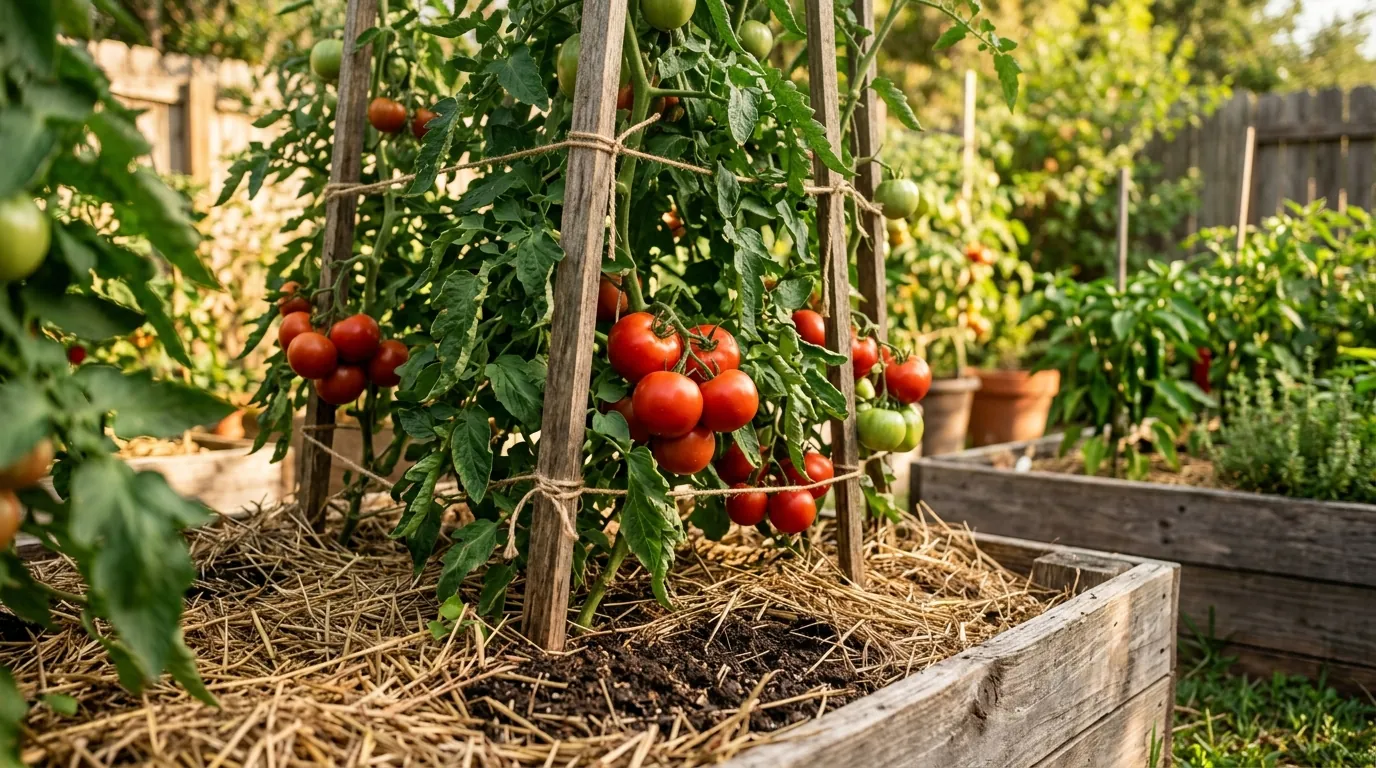
A fruit to botanists, a vegetable to cooks, and a fruiting crop to gardeners.
A tomato is a fruit in botany and a vegetable in the kitchen, and both answers are correct because they answer different questions. Botanists classify plant parts by how they develop, and a tomato develops from the flower's ovary and holds seeds, which makes it a fruit. Cooks and shoppers classify food by how it is eaten, and a tomato goes into salads, sauces and sandwiches rather than dessert, which makes it a vegetable. The United States Supreme Court settled the legal side in 1893.
Short answer: botanically a tomato is a fruit, specifically a berry. In cooking, in grocery stores and under US tariff law since 1893, it is a vegetable. For a gardener the botany is the part that matters, because it explains why tomato plants need flowers, pollination and warm nights to produce anything.
The botanical answer: a tomato is a fruit
In botany a fruit is the mature ovary of a flowering plant, together with the seeds inside it. A tomato plant produces a yellow flower, the flower is pollinated, the ovary at its base swells, and the seeds develop inside the jelly-filled chambers of the fruit. That sequence is the definition of a fruit, and it is the same sequence that produces an apple or a peach.
More precisely, a tomato is a berry: a fruit whose entire wall is fleshy and which contains many seeds with no stony pit. By that definition bananas, grapes and eggplants are berries too, while raspberries and strawberries, despite the name, are not. Botanists use the word vegetable only loosely, if at all, for the leaf, stem, root and bud parts of plants that we eat.
The culinary answer: a tomato is a vegetable
The kitchen definition has nothing to do with seeds. Fruits in the culinary sense are sweet or tart foods usually served as snacks, breakfast or dessert, and vegetables are the savory plant foods served in the main course. A tomato is cooked into sauce and soup, and it sits in the produce aisle with lettuce and cucumbers. By that practical test it is a vegetable, and every seed catalog and grocery store files it that way.
Neither answer is wrong, and neither cancels the other. Think of fruit as a botanical term and vegetable as a culinary one, then keep both in your head depending on whether you are talking to a botanist or standing at a stove.
Nix v. Hedden: the 1893 Supreme Court case
The argument is not just trivia. It reached the highest court in the country in Nix v. Hedden, 149 U.S. 304, decided on May 10, 1893. The Tariff Act of 1883 placed a duty on imported vegetables but allowed fruits to come in free. John Nix and his family imported tomatoes into the port of New York, and the customs collector, Edward Hedden, charged the vegetable duty. The importers sued to recover it, arguing that a tomato is botanically a fruit.
The Court, in an opinion by Justice Horace Gray, agreed that botanically a tomato is the fruit of a vine. It still ruled for the collector. The Tariff Act used the words fruit and vegetable in their ordinary meaning, and in ordinary speech tomatoes are served with dinner, like potatoes, carrots and cabbage, rather than as dessert. The decision settled a customs question about 1883 tariff wording. It did not change the botany, and it does not make a tomato a vegetable to a botanist. You can read the full opinion on Justia, listed in the sources below.
Why it matters in the garden
The botanical answer is the useful one for growing, because tomatoes behave like fruiting crops and not like leaf or root crops. With lettuce or carrots you eat the plant for what it makes in leaves and roots, so a cool, leafy season is fine. A tomato makes nothing you can eat until it flowers and the flowers set fruit, so everything you do is aimed at getting flowers pollinated and ripening fruit.
- Flowers must be pollinated. Tomato flowers are self-fertile, but pollen has to move inside the flower. Wind and bees shaking the blossom do that. If flowers open and drop with no fruit, the cause is almost always temperature or stress, covered in our guide to tomato flowers and no fruit.
- Warmth sets fruit. Pollination fails when nights are cold or days are very hot. That is why tomatoes are planted after the last frost and why timing matters more than it does for greens.
- Fruiting crops want sun and steady water. Leaf crops tolerate partial shade. Fruiting crops need long hours of direct light and even moisture to size up the fruit without splitting.
- Feeding changes. Too much nitrogen builds big leafy plants and few fruits, the opposite of what you want from a fruiting plant.
For the full crop, start with how to grow tomatoes, choose from the tomato varieties guide, and see the tomato plant page for spacing and days to harvest.
When to plant tomatoes
Tomato is a warm-season crop, with about 85 days to harvest on our plant data. Sowing months from our regional calendars: the Midwest is May to Jun, the Northeast is May to Jun, Texas is Mar and Jul to Aug, the Pacific Northwest is May to Jun and Southern California is Mar to Jul. These follow the live data for each region. Use our frost dates page to check your own last frost, then read your region hub for local detail.
Thirty garden crops: botany versus the kitchen
Tomatoes are not alone. Many crops that gardeners call vegetables are botanical fruits, and a few go the other way. The table lists common garden crops with their botanical category and how most cooks treat them. Each crop name links to our growing guide.
| Crop | Botanical category | Kitchen use |
|---|---|---|
| Tomato | Fruit (a berry) | Vegetable |
| Tomatillo | Fruit (a berry in a papery husk) | Vegetable, mostly in salsa verde |
| Cucumber | Fruit (a pepo, a berry with a firm rind) | Vegetable |
| Zucchini | Fruit (a pepo) | Vegetable |
| Summer and winter squash | Fruit (a pepo) | Vegetable |
| Pumpkin | Fruit (a pepo) | Vegetable in soup, pie and roasting |
| Bell pepper | Fruit (a berry) | Vegetable |
| Hot pepper | Fruit (a berry) | Vegetable or spice |
| Eggplant | Fruit (a berry) | Vegetable |
| Okra | Fruit (a ridged seed capsule) | Vegetable |
| Green beans | Fruit (a legume pod) | Vegetable |
| Shell and dry beans | Seed of a fruit (the pod) | Vegetable or pulse |
| Peas | Fruit (a legume pod) | Vegetable |
| Edamame | Fruit (a legume pod) | Vegetable |
| Sweet corn | Fruit (each kernel is a grain, with the seed fused to the fruit wall) | Vegetable when fresh, grain when dried |
| Peanut | Seed of a legume pod that ripens underground | Treated as a nut |
| Avocado | Fruit (a single-seeded berry) | Used like a vegetable in savory dishes |
| Olive | Fruit (a drupe, a stone fruit) | Savory, cured or pressed for oil |
| Chayote | Fruit (a single-seeded pepo) | Vegetable |
| Sunflower seeds | Fruit (an achene, the seed inside the shell) | Snack and baking seed |
| Watermelon | Fruit (a pepo) | Fruit |
| Cantaloupe | Fruit (a pepo) | Fruit |
| Strawberry | Accessory fruit (the red flesh is the swollen flower base, and each seed-like achene is a true fruit) | Fruit |
| Fig | Syconium (an enclosed cluster of tiny flowers that ripen into seed-like fruits) | Fruit |
| Rhubarb | Leaf stalk (a vegetable in botany) | Fruit, because it is cooked with sugar in pies and jams |
| Broccoli | Flower buds | Vegetable |
| Cauliflower | Flower buds | Vegetable |
| Globe artichoke | Flower bud | Vegetable |
| Asparagus | Young shoot (stem) | Vegetable |
| Celery | Leaf stalk | Vegetable |
| Potato | Stem tuber | Vegetable |
| Sweet potato | Storage root | Vegetable |
| Carrot | Taproot | Vegetable |
The reverse cases: rhubarb and the other surprises
Rhubarb is the clearest reverse of the tomato. Botanically you eat the leaf stalk, a plant part that is as vegetable as celery, yet the stalks are tart and nearly always cooked with sugar in pies, crumbles and jam, so cooks treat rhubarb as a fruit. Our rhubarb guide covers growing it, and only the stalks are eaten, never the leaves.
The strawberry is another case where the name misleads. The juicy red part is the swollen base of the flower, and the small seed-like specks on the outside are each a true fruit with a seed inside. Botanists call it an accessory fruit. Peanuts are legumes that ripen underground and are not true nuts, and corn kernels are single-seeded grains that are fruits too.
How to tell fruit from vegetable in the garden
- Ask whether the part you eat grew from a flower and holds seeds. If so, it is a fruit.
- If the part you eat is a leaf, stalk, root, tuber or flower bud, it is a vegetable in botany.
- If you are just deciding how to cook or file it, use the kitchen rule: sweet and dessert means fruit, savory and main course means vegetable.
The practical test for planning a bed is simpler still. If the crop sets flowers before it gives you food, treat it as a fruiting crop: full sun, warm soil, steady water and room for pollinators. Our raised bed guide helps with siting. If you eat the roots or leaves, you can plant earlier and tolerate cooler weather.
Questions
Is a tomato a fruit or a vegetable?
Both, depending on the question. In botany it is a fruit, specifically a berry, because it develops from the flower's ovary and contains seeds. In cooking and in US law since 1893 it is a vegetable.
Why did the Supreme Court say a tomato is a vegetable?
In Nix v. Hedden (1893) the Court was reading the Tariff Act of 1883, which taxed vegetables but not fruits. It held that the act used ordinary words, and in ordinary speech tomatoes are served with dinner, so they were taxed as vegetables. The ruling did not change the botany.
Is a tomato a berry?
Yes. Botanically a berry is a fleshy fruit that develops from one ovary and holds several seeds with no stony pit. A tomato fits, as do grapes, bananas and eggplants, while strawberries and raspberries do not.
Which vegetables are really fruits?
Cucumbers, squash, zucchini, pumpkins, peppers, eggplants, okra, beans, peas, avocados and corn kernels are all botanical fruits. The table above lists thirty garden crops with their botanical category.
Does it matter for growing whether a tomato is a fruit?
Yes. Because it is a fruiting crop it needs flowers, pollination and warm weather before it gives you anything to harvest. A cool season that suits lettuce can leave a tomato plant with flowers that never set.
Is rhubarb a fruit or a vegetable?
Botanically it is a vegetable, because you eat the leaf stalk. In the kitchen it is treated as a fruit, since it is cooked with sugar in pies and jam.
Sources
- Justia: Nix v. Hedden, 149 U.S. 304 (1893)
- Planting Season: How to Grow Tomatoes
- Planting Season: Tomato Flowers but No Fruit
Plant profile
The tomato profile has sowing times for your region, companion plants and common pests.