Birds: identify, prevent, control
Updated October 2026
Worst as fruit colors and softens from late spring to fall, and at seedling time for corn, peas and beans.
Birds are welcome in most gardens because they eat many insects, but some species take a large share of ripening fruit, nuts and grain. Cherries, blueberries, strawberries, figs, grapes and mulberries are favorites, and crows and jays also pull up corn and pea seedlings. Most native birds are protected by federal law, so the answer is to keep them off the crop rather than harm them.
.jpg)
How to identify it
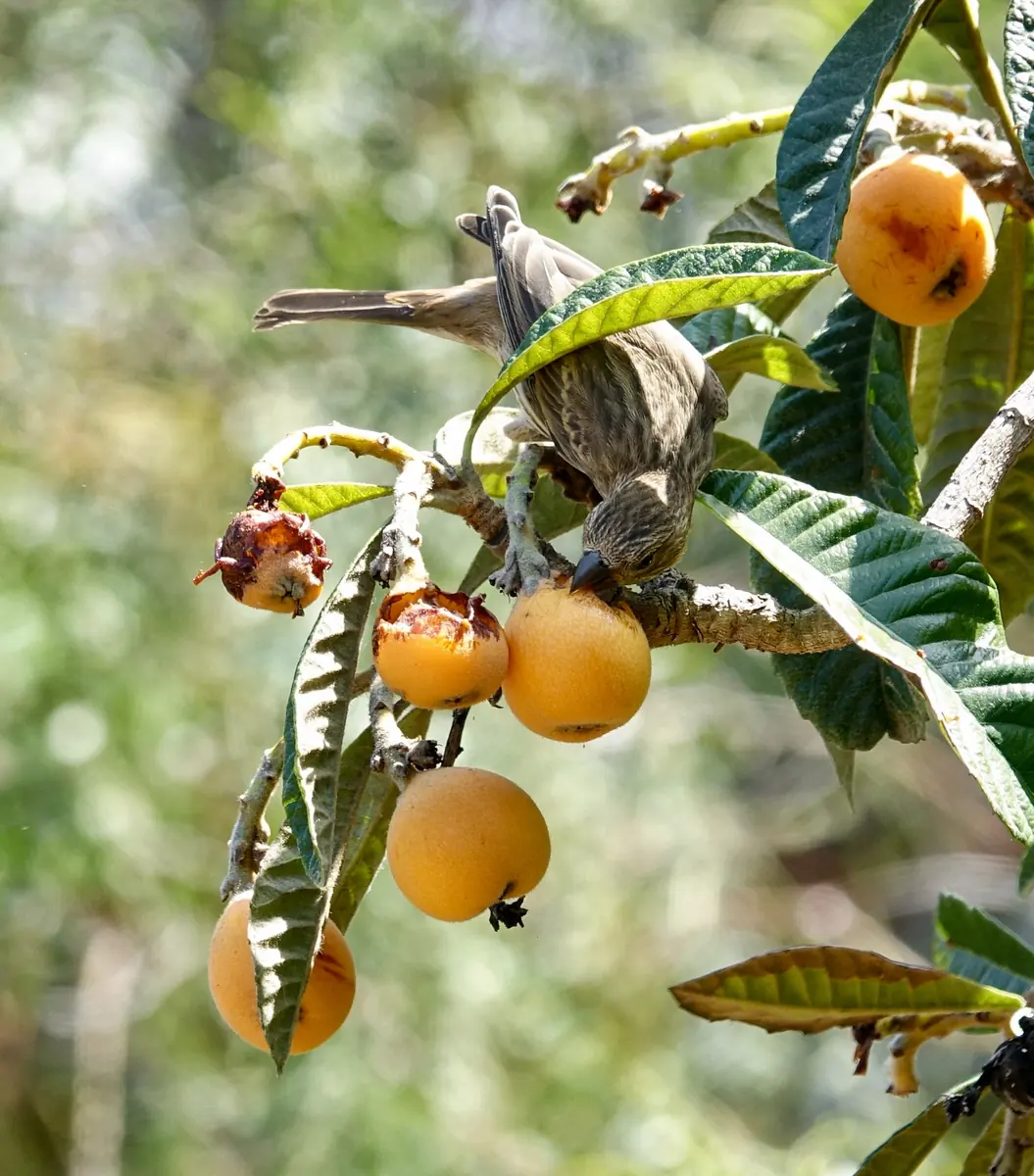
- You usually notice fruit that disappears just as it ripens, or fruit left on the plant with neat triangular or V-shaped peck holes.
- Pecked fruit then attracts wasps, ants and fruit beetles, so you may find insects in fruit that birds opened first.
- Strawberries and figs with shallow scooped-out holes and cherries and blueberries stripped from the stem, often with stones or skins dropped below, point to birds rather than insects.
- Corn, pea and bean seedlings pulled out and left lying on the ground, or missing seeds in a fresh row, usually mean crows, jays or blackbirds.
- Seed heads of sorghum, popcorn, quinoa and sunflowers with seeds missing from the top and outer edge show feeding by finches, sparrows and blackbirds.
- Watch the garden in the early morning, when most bird feeding happens, to see which species are involved.
.jpg)
What it is often confused with
Slugs and snails
Slugs and snails also hollow out strawberries, but they feed at night and leave silvery slime trails and ragged holes close to the ground. Bird pecks are clean and often on higher fruit.
Caribbean fruit fly
Fruit fly damage shows as soft, rotting fruit with maggots inside. Birds leave open peck holes in otherwise firm fruit.
When and where it is worst
Bird damage happens in every region. Robins, cedar waxwings, mockingbirds, house finches, catbirds and starlings take cherries, blueberries, strawberries, mulberries, currants and gooseberries from late spring into summer. Grapes, figs, persimmons, pears and jujubes are hit from late summer into fall, and crows, jays and woodpeckers take almonds, walnuts, hazelnuts and pecans as they mature.
In Florida and the Gulf Coast, mockingbirds and jays peck loquats, jaboticaba and other tropical fruit through spring. Damage is often worst in a dry spell when birds are seeking moisture, and in gardens with only a few fruiting plants that draw every bird in the neighborhood.
Plants it attacks
These plants in our library list it as a problem to watch for.
How to prevent it
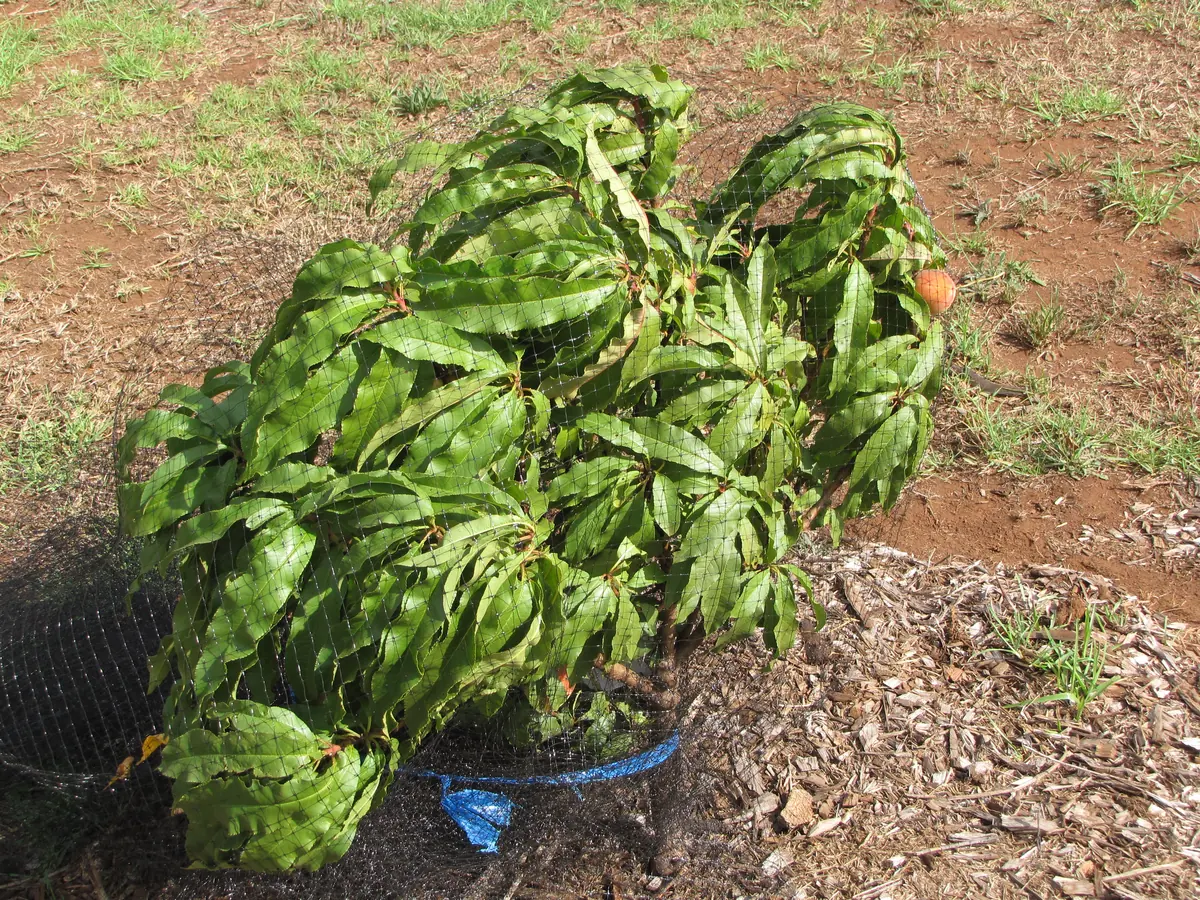
- Net fruit trees and bushes with plastic netting of 1/4 to 1/2 inch mesh before the fruit starts to color, while it is still green.
- Support netting on a frame of stakes or PVC hoops so it sits clear of the plant, and pin or weight the bottom edge to the ground so birds cannot walk underneath.
- Check netting every day for trapped birds, snakes and other animals, and choose fine, taut mesh, which tangles wildlife far less than loose, wide mesh.
- Cover newly sown rows of corn, peas and beans with row cover or wire mesh until seedlings are a few inches tall.
- Slip paper or mesh bags over grape clusters, figs and sorghum, popcorn and sunflower heads once they start to fill.
- Pick fruit promptly as it ripens rather than leaving it to soften on the plant.
Organic control, step by step
- Hang reflective tape, old CDs or scare-eye balloons, and move them every few days so birds do not get used to them.
- Rotate between different scaring methods, changing the combination at least weekly, because birds quickly learn to ignore any single device.
- Grow blueberries, strawberries and currants inside a walk-in net cage, which is the most reliable long-term fix.
- Provide a birdbath away from the fruit in dry weather, as some pecking is for water.
Conventional control
- Repellent sprays based on methyl anthranilate are registered for some fruit crops, but results in gardens are mixed and depend on how much other food is available.
- Most native birds, including robins, finches, mockingbirds and jays, are protected by the federal Migratory Bird Treaty Act, so trapping, shooting or poisoning them needs a permit; only a few non-native species such as European starlings, house sparrows and pigeons are exempt federally, and state and local rules still apply.
- Read the label, check that the crop is listed, and keep to the pre-harvest interval for any repellent you use.
Frequently asked questions
What size netting keeps birds off fruit?
Mesh of 1/4 to 1/2 inch keeps out most fruit-eating birds. Smaller mesh is safer for wildlife because birds and snakes are less likely to get caught, and it should be stretched over a frame rather than draped on the plant.
Do fake owls and scare balloons work?
They help for a few days at best. Birds soon learn the device never moves or harms them, so move it often and rotate between several kinds, or rely on netting.
Is it legal to kill birds that eat my fruit?
Not for most species. Almost all native birds are federally protected, and harming them without a permit is illegal. Netting, bagging and early harvest are the legal and most effective options.
Related problems
Sources: UC IPM, Birds on tree fruits and nuts (Pest Notes). Identification and control follow these sources. Always read and follow the product label.