Slugs and snails: identify, prevent, control
Updated October 2026
Worst in cool, damp weather in spring and fall, and all winter in mild, wet climates such as the Pacific Northwest and coastal California.
Slugs and snails are mollusks that feed mostly at night and on cloudy, damp days, chewing ragged holes in leaves, flowers, seedlings and ripening fruit. A few can wipe out a row of new seedlings overnight. This page covers both: slugs have no outer shell, while snails carry a coiled shell, but they cause the same damage and respond to the same controls.
Gastropoda, including Cornu aspersum (brown garden snail), Deroceras reticulatum (gray garden slug) and Limax maximus (leopard slug)

How to identify it
- You usually notice irregular holes with smooth edges in leaves, or seedlings that vanish overnight, leaving only stubs.
- Look for silvery, dried slime trails on leaves, pots, paths and the soil surface in the morning.
- Go out with a flashlight an hour or two after dark to find the culprits feeding; this is the surest way to confirm them.
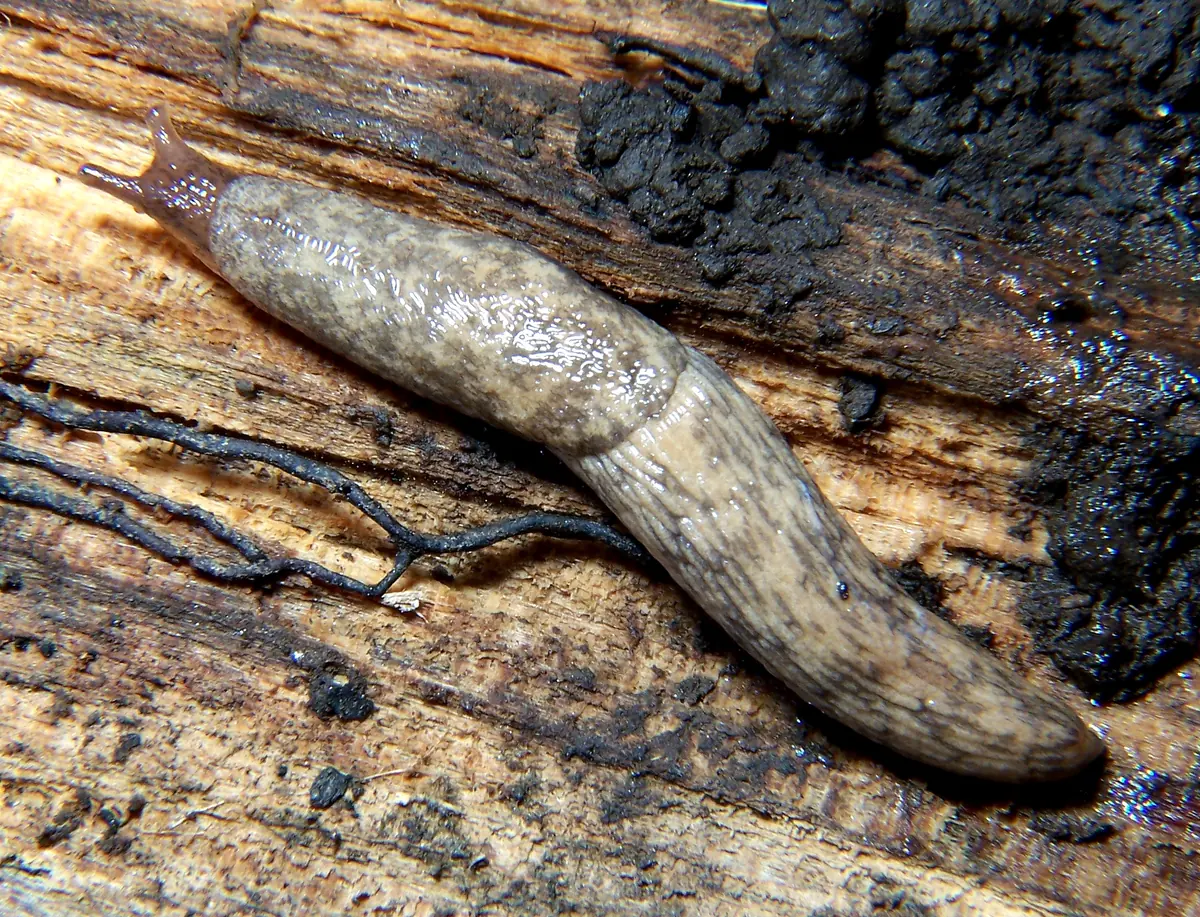
- Slugs are soft, shell-less and gray, tan, black or spotted, from under an inch for the gray garden slug to several inches for the leopard slug.
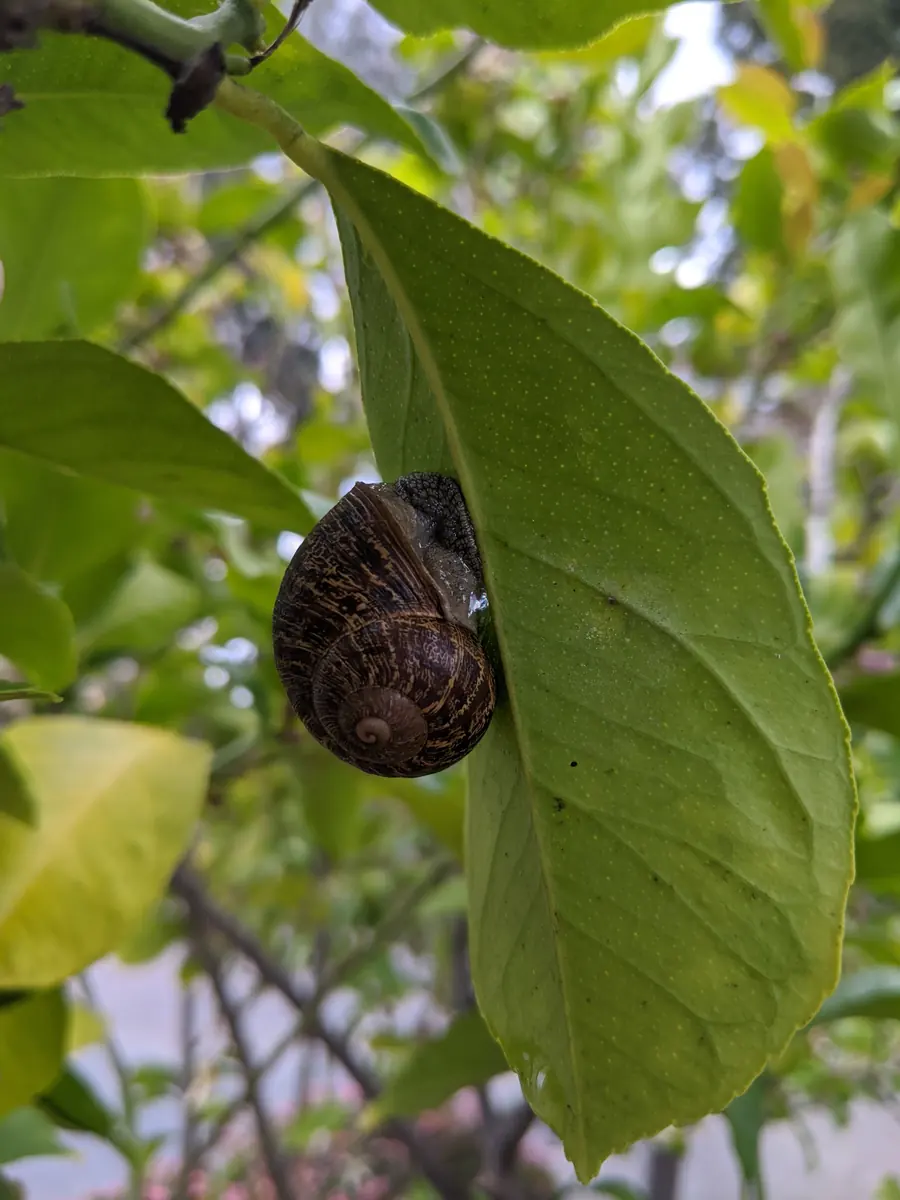
- The brown garden snail has a mottled brown shell about 1 to 1 1/4 inches across and hides by day under boards, ground covers and pot rims.
- Strawberries with deep, hollow holes on the side touching the ground, and asparagus spears with grazed tips, are typical slug damage.

What it is often confused with
Cabbage worms
Caterpillars chew similar holes in leafy greens but leave green droppings instead of slime trails, and you can find them on the plant by day.
Flea beetles
Flea beetles make many tiny round shot holes, while slugs and snails make larger, irregular holes and leave slime.
Birds
Birds peck clean holes in fruit by day, often high on the plant, with no slime. Slug damage is close to the ground and found in the morning.
When and where it is worst
Slugs are worst in the Pacific Northwest, Northern California, the Northeast and the upper Midwest, where cool, damp springs and falls suit them, and they stay active through mild winters west of the Cascades. The brown garden snail is the main snail pest in California and parts of the South. They are active at night and on cloudy, foggy or rainy days, and hide in mulch, under boards, in dense ground covers and in damp corners by day.
In Florida, the Gulf Coast and Hawaii, many introduced snails and slugs feed through the mild winter. The giant African land snail has been found and eradicated several times in South Florida, with quarantine areas in Broward and Pasco counties; if you see a very large snail in Florida, do not handle it without gloves and report it to the FDACS Division of Plant Industry helpline at 1-888-397-1517.
Plants it attacks
These plants in our library list it as a problem to watch for.
How to prevent it
- Water in the morning and use drip irrigation so the soil surface is dry by evening.
- Remove boards, stones, weedy edges and dense ground covers next to beds, and keep mulch thin around seedlings of lettuce, endive, radicchio, chicory and napa cabbage.
- Raise shiitake logs off the ground on blocks and keep the area around them clear of litter, so slugs have fewer places to hide near the mushrooms.
- Start seedlings in pots and plant them out when they are larger and less tender.
- Surround beds or pots with a band of copper sheeting or foil 4 to 6 inches wide, burying the lower edge an inch below the soil, and keep plants from bridging it.
- Mix in plants slugs avoid, such as rosemary, lavender and other strong-smelling herbs, around the edges of vegetable beds.
Organic control, step by step
- Hand-pick slugs and snails at night with a flashlight and gloves and drop them into soapy water, repeating nightly for a week and then weekly.
- Set boards on 1 inch runners between rows, and scrape off and destroy the slugs and snails hiding under them each morning.
- Sink shallow beer traps or yeast-and-sugar traps with the rim slightly above soil level so beetles do not fall in, and empty them every few days.
- Scatter iron phosphate bait thinly around plants in the late afternoon after watering; it is allowed in organic growing, is low risk to pets and wildlife, and slugs stop feeding soon after eating it.
- In Southern California counties where it is legal, the predatory decollate snail controls brown garden snails, but it may not be released elsewhere in California.
Conventional control
- Sodium ferric EDTA baits act a little faster than iron phosphate and are sold for home gardens, but they are not allowed in organic growing.
- Metaldehyde baits kill quickly but are highly poisonous to dogs, cats and wildlife and work poorly in very wet weather, so choose another bait if pets or children use the garden.
- Scatter any bait thinly rather than in piles, and keep it off the edible parts of plants.
- Read the label, check that the crop is listed, and keep to the pre-harvest interval.
Frequently asked questions
Are slug pellets safe for dogs?
Metaldehyde pellets are very dangerous to dogs and cats, even in small amounts. Iron phosphate baits are much lower risk to pets and wildlife, which is why most Extension services recommend them for home gardens.
Do beer traps work for slugs?
Beer traps do catch slugs, but each one only draws in slugs from a few feet away. They work best as part of a routine with hand-picking, board traps and drier watering.
Is it safe to eat lettuce slugs have crawled on?
Wash all garden greens well, especially in the South, Hawaii and other warm areas. Some slugs and snails can carry rat lungworm, a parasite that can make people seriously ill, so wear gloves when handling them and wash your hands afterward.
Related problems
Sources: UC IPM, Snails and Slugs (Pest Notes); University of Minnesota Extension, Slugs in home gardens; Florida Department of Agriculture and Consumer Services, Giant African land snail. Identification and control follow these sources. Always read and follow the product label.