
Caribbean fruit fly: identify, prevent, control
Updated October 2026
Active all year in South and Central Florida, with damage peaking as guava, loquat, Surinam cherry and other host fruit ripen.
The Caribbean fruit fly, often called the Caribfly, is a tropical fruit fly established in southern peninsular Florida. Females lay eggs in very ripe fruit, and the white maggots that hatch tunnel through the flesh, leaving it soft, brown and inedible. UF/IFAS advises that there is no effective chemical control for home growers, so protecting fruit comes down to timing, bagging and clean-up.
Anastrepha suspensa

How to identify it
- You usually notice ripe fruit that turns soft and brown in patches, collapses early or drops from the tree.
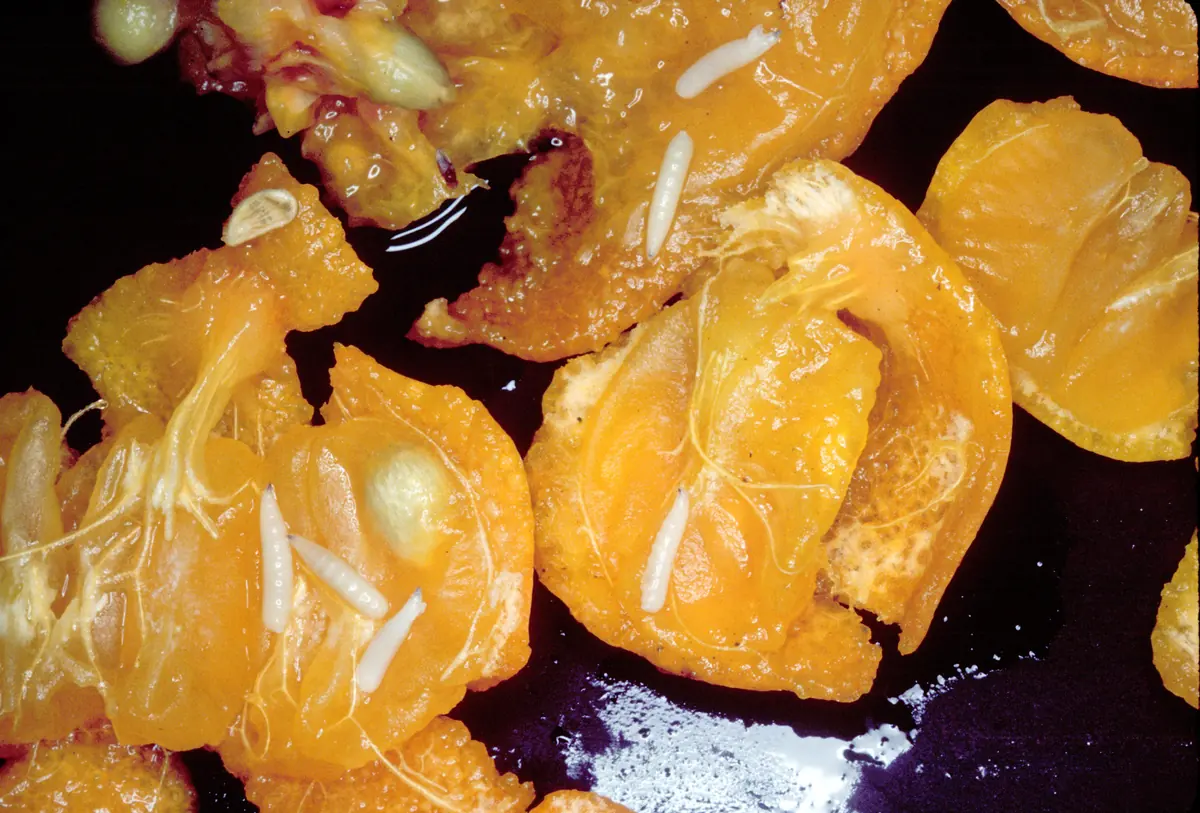
- Cut a damaged fruit open and look for creamy white, legless maggots up to about 1/3 inch long tunneling through the flesh.
- Look closely at the skin for tiny pinprick marks where the female pushed her eggs in.
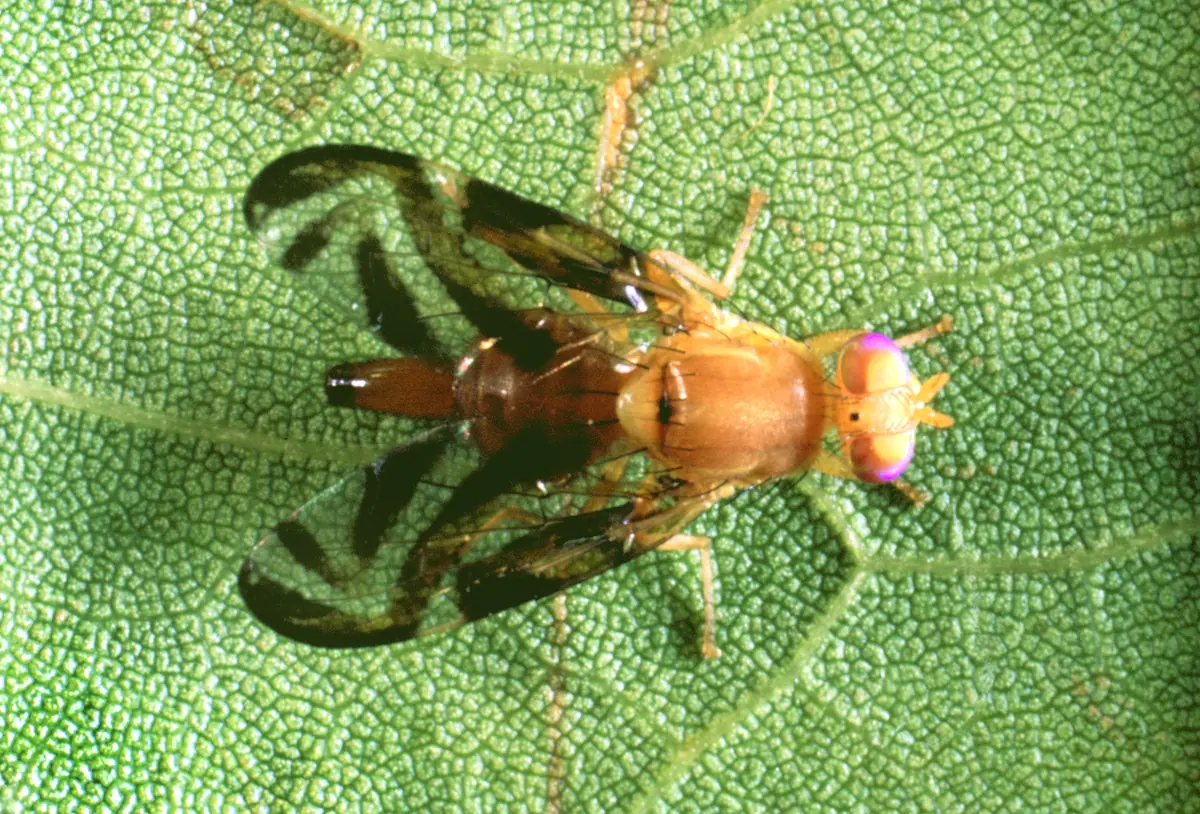
- Adult flies are yellow-brown, a little smaller than a house fly, and hold wings marked with an amber to brown banded pattern, often flicking them as they walk.
- You may see these flies buzzing around guava, loquat or Surinam cherry trees as the fruit ripens.

What it is often confused with
Spotted wing drosophila
Spotted wing drosophila is a tiny vinegar fly with red eyes that attacks soft berries and cherries. The Caribfly is much larger, has banded wings and mostly attacks tropical and subtropical fruit in Florida.
Stink bugs
Stink bug feeding leaves hard, corky or cloudy spots under the skin, but no maggots. Cut the fruit open to check.
When and where it is worst
Within the continental US the Caribfly is established only in Florida, mostly in the southern half of the peninsula and commonly north to about Citrus and Volusia counties, with occasional records farther north. It breeds year round there, and each generation takes roughly five to seven weeks, so numbers build quickly whenever host fruit is ripening.
Favorite hosts include common and cattley guava, Surinam cherry, rose apple, tropical almond and loquat. Sapodilla and white sapote are also recorded hosts. Soursop is not on the main published host lists, so damage there is less likely, but check any fruit left to soften on the tree. Outside Florida, report any fruit fly maggots in tropical fruit to your county Extension office or state department of agriculture, because related Anastrepha fruit flies are regulated pests.
Plants it attacks
These plants in our library list it as a problem to watch for.
How to prevent it
- Pick fruit as soon as it is mature rather than leaving it to ripen fully on the tree, because females prefer very ripe fruit.
- Harvest sapodilla, white sapote and soursop when they are full size and mature, and let them soften indoors, which is how these fruit ripen best anyway.
- Slip a paper bag over individual fruit or whole loquat clusters while they are still green and firm, and leave it on until harvest.
- Pick up every fallen and damaged fruit at least twice a week, seal it in a plastic bag and put it in the trash rather than the compost.
- Consider removing neglected guava or Surinam cherry trees that drop fruit year round, since they keep a breeding population going near your better fruit.
Organic control, step by step
- Bag fruit early, using paper bags or fine mesh bags tied tightly at the stem, and check that bags have not split.
- Harvest at the mature green or color-break stage and ripen fruit on the kitchen counter.
- Collect, bag and trash all dropped and overripe fruit so maggots cannot finish developing in the soil.
- Cut away any small damaged parts of fruit you do pick; the rest of the fruit is safe to eat, although it spoils faster.
Conventional control
- UF/IFAS Extension advises that there is no effective chemical control for Caribbean fruit fly in home gardens, so rely on bagging, early harvest and sanitation.
- Read the label, check that the crop is listed, and keep to the pre-harvest interval for any product you use on these trees for other pests.
Frequently asked questions
Are fruit with Caribfly maggots safe to eat?
The maggots are not harmful, but infested fruit rots quickly and most people would rather not eat it. Cut away the damaged parts or discard the fruit in a sealed bag.
Does the Caribbean fruit fly attack citrus?
UF/IFAS notes that the Florida population has rarely been found in citrus, while some populations in the Caribbean do attack it. Guava, Surinam cherry and loquat are far more at risk in a Florida yard.
Why should I not compost infested fruit?
Maggots leave the fruit and pupate in the soil, then emerge as adults about two weeks later. Composting lets them complete that cycle, while sealing the fruit in a bag stops them.
Related problems
Sources: UF/IFAS Featured Creatures, Caribbean fruit fly (EENY-196); UF/IFAS Gardening Solutions, Caribbean fruit fly; CDFA Plant Quarantine Manual, Caribbean fruit fly host list. Identification and control follow these sources. Always read and follow the product label.