Stink bugs: identify, prevent, control
Updated October 2026
Numbers build through summer and peak from late summer into fall, especially in the South and Southeast.
Stink bugs are shield-shaped bugs that push their needle-like mouthparts into pods, seeds and fruit and suck out the juices. Southern peas, lima beans, tomatoes, peppers, okra and tree fruit and nuts all suffer, with damage that ranges from small cloudy spots to shriveled, unusable seed. Several generations a year mean there are many more stink bugs in late summer than in spring, and adults are hard to kill with sprays.
Family Pentatomidae, including Nezara viridula, Chinavia hilaris, Euschistus servus and Halyomorpha halys
How to identify it
- You usually notice the damage first: southern pea and lima bean pods with shriveled, spotted or sunken seeds, or tomatoes with pale, cloudy yellow blotches under the skin.
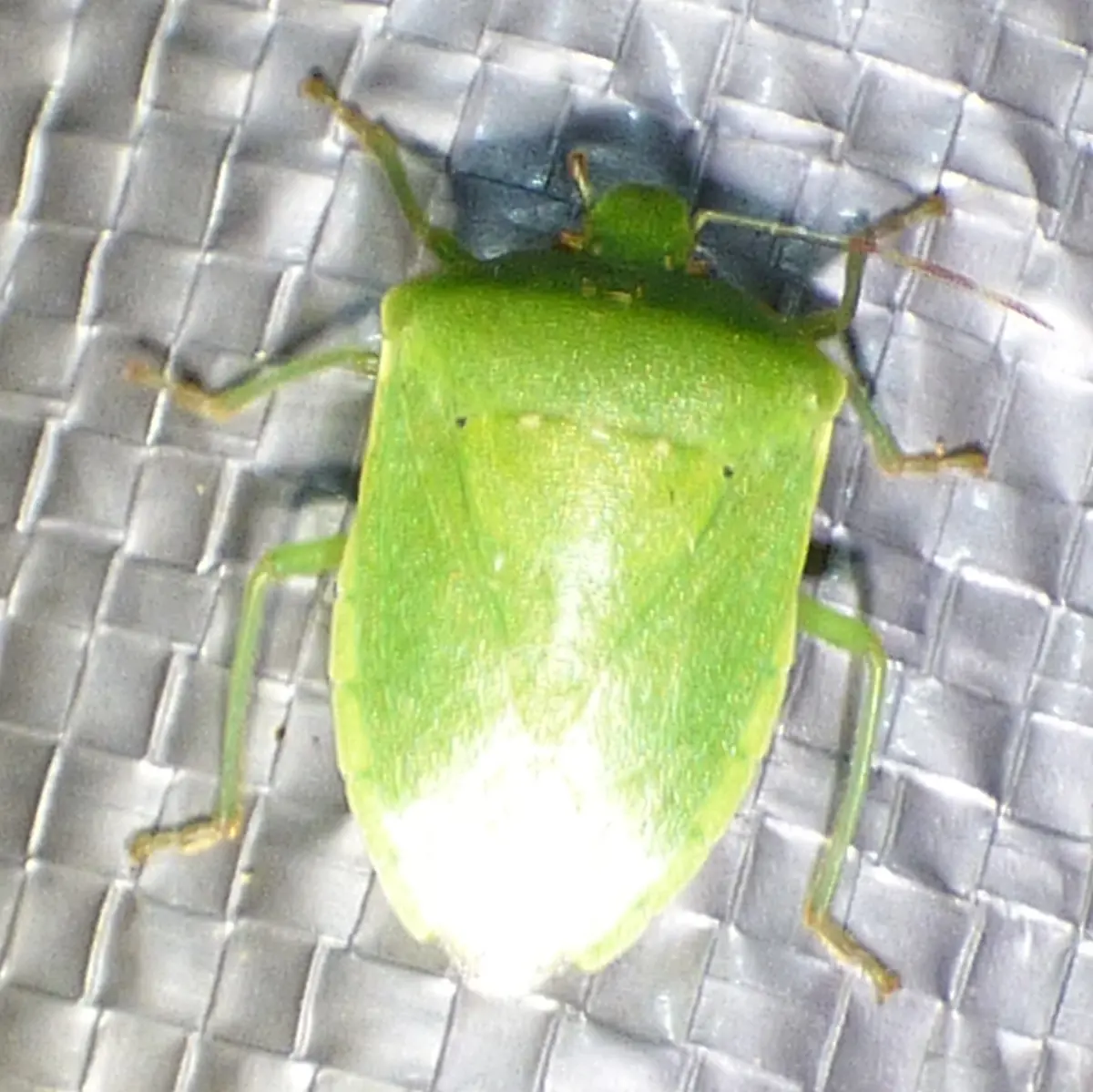
- Look for shield-shaped adults about 1/2 to 5/8 inch long on pods and fruit, which often drop or move to the far side of the stem when you approach.
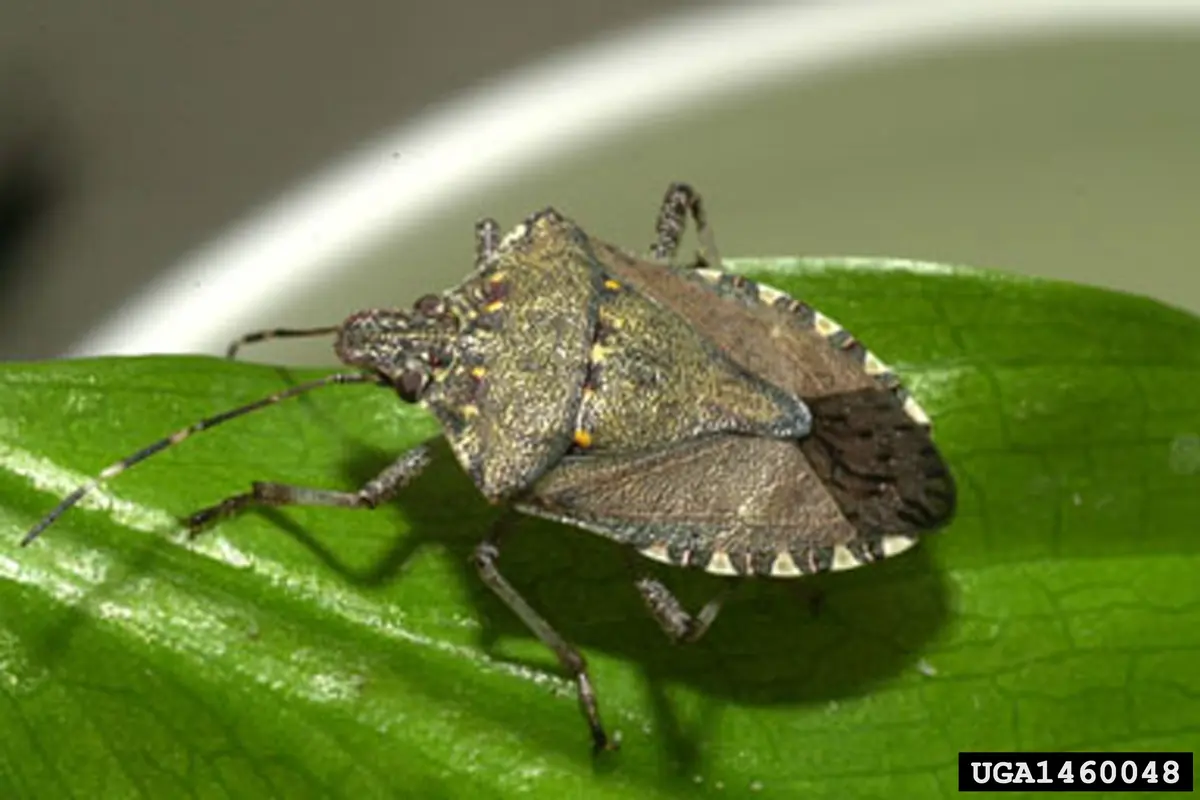
- Southern green stink bug and green stink bug are bright green; brown stink bug is tan with a pale underside; brown marmorated stink bug is mottled brown with white bands on the antennae and along the edges of the abdomen.
- Check under leaves for neat clusters of about 25 to 60 barrel-shaped eggs standing on end, or pale green elliptical eggs for the brown marmorated stink bug.
- Young nymphs are round, wingless and often brightly patterned in black, red, yellow or green, and cluster near their hatched egg mass.
- On macadamia, stink bug feeding shows up as dark, pitted spots on the kernels, and on peaches and apples as dimpled fruit with corky brown flesh beneath.

What it is often confused with
Squash bugs
Squash bugs are flatter, gray-brown and longer than they are wide, and they feed on squash and pumpkin vines rather than pods. Stink bugs have a broad shield shape.
Japanese beetles
Japanese beetles chew leaves to a lace of veins and are metallic green and copper, while stink bugs suck juices and leave leaves intact.
Leaffooted bugs
Leaffooted bugs are longer and narrower, with flattened, leaf-like flaps on the hind legs. They cause the same kind of fruit damage on tomatoes, pomegranates and citrus and are controlled in the same ways.
When and where it is worst
Stink bugs are found in every region, but they are worst in Texas and the South, the Southeast and Florida, where southern green and brown stink bugs have three to four generations a year and pile into southern peas, lima beans, tomatoes and pecans by late summer. Brown marmorated stink bug is a major pest of fruit and vegetables in the Mid-Atlantic and Northeast and is spreading in the Midwest, Pacific Northwest and California, where it also invades homes in fall.
Adults overwinter in leaf litter, weedy edges, bark and buildings and move into gardens in spring. Numbers climb with each generation, so late plantings of peas and beans and fall tomatoes usually take the most damage. In Hawaii and coastal California, southern green stink bug feeds on macadamia nuts, and stink bugs and leaffooted bugs can also mark citrus such as finger lime.
Plants it attacks
These plants in our library list it as a problem to watch for.
How to prevent it
- Keep weeds and tall grass mowed around the garden, since stink bugs breed on many weeds before moving into crops.
- Plant southern peas and lima beans early so most pods mature before stink bug numbers peak in late summer.
- Beans and southern peas pollinate themselves, so you can keep them under row cover through flowering and pod fill, sealing the edges to the ground.
- Check plants twice a week from midsummer and crush egg masses and clusters of young nymphs as you find them.
- Clear crop debris and weedy cover after harvest to reduce places for adults to overwinter.
- Seal cracks around windows, doors and vents in late summer if brown marmorated stink bugs invade your home.
Organic control, step by step
- Hand-pick adults and nymphs early in the morning when they are sluggish, or knock them into a bucket of soapy water.
- Spray kaolin clay on tomatoes and fruit to make them less attractive to feeding bugs, and wash fruit before eating.
- Spray insecticidal soap or neem oil on young nymphs, which are much easier to kill than adults.
- Use pyrethrins against nymphs and small numbers of adults on listed vegetables, accepting that adults are often only knocked down.
- Leave tachinid flies and egg-parasitizing wasps alone, as they kill many stink bugs; look for adults carrying small white fly eggs on their backs.
Conventional control
- Carbaryl is labelled for stink bugs on beans, southern peas and tomatoes in many home garden products, but it kills bees and natural enemies, so never spray it on open flowers.
- Pyrethroids such as bifenthrin or lambda-cyhalothrin, in products labelled for home vegetables or fruit trees, give better knockdown of adults than most other home options.
- Target young nymphs where possible, because the University of Maryland notes that adults resist even highly toxic insecticides.
- Read the label, check that the crop is listed, and keep to the pre-harvest interval.
Frequently asked questions
Are stink bug damaged peas and tomatoes safe to eat?
Yes. The spots and corky patches are only damaged plant tissue, so cut them out and use the rest. Southern green stink bugs can carry a yeast that spoils bean and pea seed, so discard seeds that are discolored or shriveled.
Why do I have so many more stink bugs in late summer?
Most garden stink bugs have several generations a year, and each one multiplies the population. By late summer and fall there are far more bugs than in spring, which is why late crops suffer most.
Do stink bug traps work?
Pheromone traps are useful for showing when stink bugs are around, but they can draw more bugs into the area than they catch. They work best for monitoring placed at the edge of your property, not beside your crops.
Related problems
Sources: University of Maryland Extension, Stink bugs on vegetables; UC IPM, Brown Marmorated Stink Bug (Pest Notes); Mississippi State University Extension, Stink bug damage. Identification and control follow these sources. Always read and follow the product label.