
When Does Spring Start in 2027? March 20 and March 1
Updated November 2026
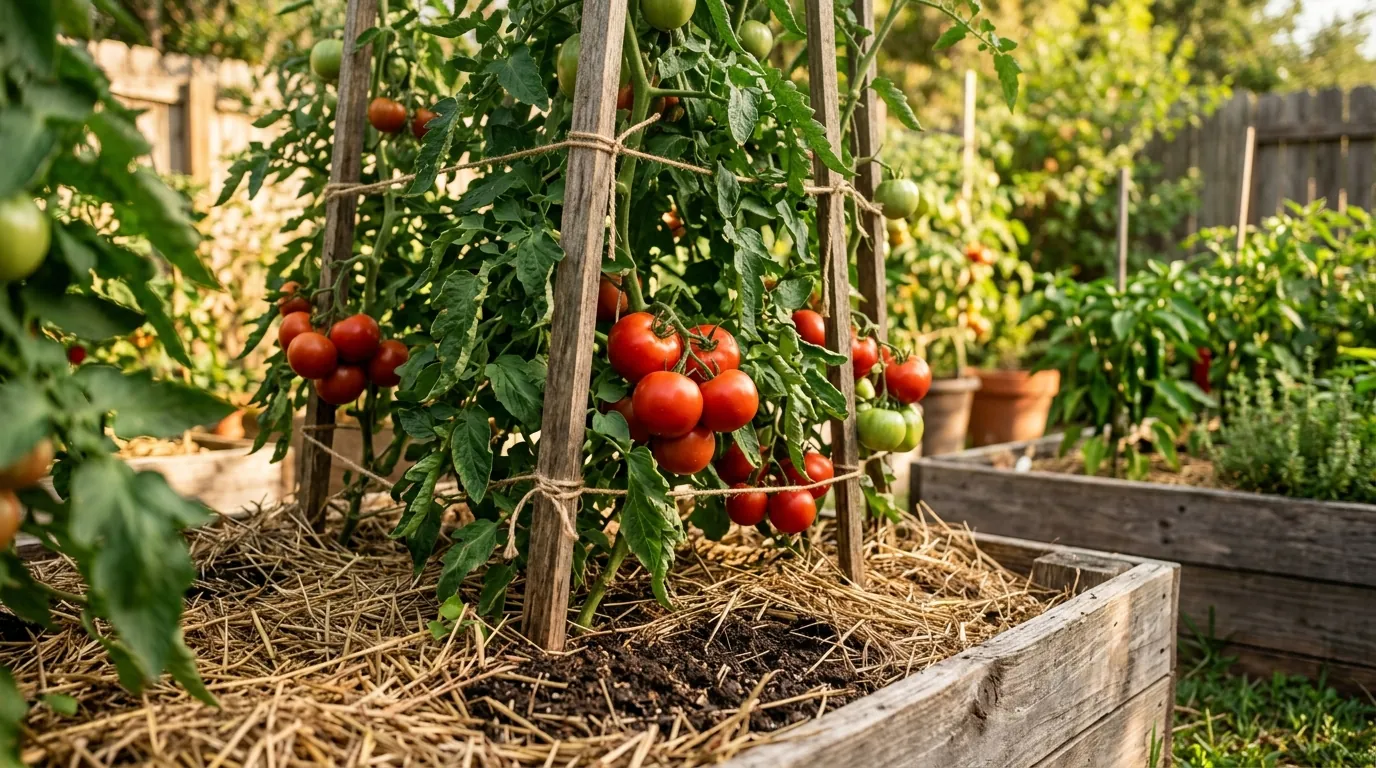
Astronomical and meteorological seasons, the exact 2027 equinox and solstice times, and what each one means for your garden.
Spring 2027 starts on Saturday, March 20, 2027, at 4:25 pm EDT (20:25 UTC), the moment of the March equinox. That is 3:25 pm CDT, 2:25 pm MDT and 1:25 pm PDT. Meteorological spring 2027 starts on Monday, March 1 and runs through May 31, so the spring months are March, April and May.
Times are from the US Naval Observatory and agree with timeanddate.com (20:24:39 UTC, which rounds to 20:25). The full 2027 table is further down this page.
In the United States, spring officially starts on the March equinox, which falls on March 20 in 2027, and on March 1 if you follow the meteorological calendar that NOAA uses for climate records. Summer starts on June 21 (or June 1), fall starts on September 23 (or September 1), and winter starts on the evening of December 21 in US time zones (or December 1). For a garden, none of these dates matters as much as your local last frost date.
Two calendars share the same four season names. Astronomers mark the seasons by Earth's position relative to the sun, so the start of each season is the exact moment of an equinox or solstice. Meteorologists mark them by the temperature cycle, so each season is simply three whole calendar months. Both are correct, they answer different questions, and the date you hear depends on who is talking. This page sets out both, gives the exact 2027 times in Eastern and UTC time, and then ties each season start to the thing a gardener really needs, which is what the soil and the frost risk are doing.
Astronomical seasons and meteorological seasons
The National Centers for Environmental Information (NCEI), part of NOAA, explains the split clearly. Astronomical seasons are set by the solstices and equinoxes, so spring begins on or around March 21, summer on or around June 21, fall on or around September 22 and winter on or around December 22. Because Earth's orbit is an ellipse, the four astronomical seasons are not the same length and run from about 89 to 93 days. Meteorological seasons are groups of three calendar months, so they run from 90 to 92 days, and NCEI notes that they are used to make climate statistics easier to compare from one year to the next.
| Season | Meteorological (NOAA records) | Astronomical (typical date) |
|---|---|---|
| Spring | March 1 to May 31 | March equinox, around March 20 or 21 |
| Summer | June 1 to August 31 | June solstice, around June 20 or 21 |
| Fall | September 1 to November 30 | September equinox, around September 22 or 23 |
| Winter | December 1 to February 28 or 29 | December solstice, around December 21 or 22 |
So when a weather forecaster says that "meteorological fall begins today" on September 1, and a calendar printed for the public says fall begins around September 22, neither is wrong. They are using different definitions. Popular answers to "when does fall officially start" usually mean the astronomical date, because that is the one printed on most calendars and almanacs. NOAA's climate summaries, such as a "summer" temperature average, use June, July and August.
2027 equinox and solstice dates and times
The times below come from the US Naval Observatory (USNO) Astronomical Applications Department, which publishes the dates and times of the equinoxes and solstices to the minute in UTC. As a cross-check, timeanddate.com lists the same four moments, and its times differ from USNO's by at most one minute (it gives 20:24, 14:10 and 06:01 UTC for the first three, and the same 02:42 for December). The Eastern times are our own conversions from the USNO UTC figures.
Daylight saving time in the United States runs from March 14 to November 7 in 2027. That means the March, June and September events fall on Eastern Daylight Time (EDT, which is UTC minus 4 hours) and the December solstice falls on Eastern Standard Time (EST, which is UTC minus 5 hours).
| Event | Season it starts | UTC | Eastern time |
|---|---|---|---|
| March equinox | Spring | March 20, 2027, 20:25 | March 20, 4:25 pm EDT |
| June solstice | Summer | June 21, 2027, 14:11 | June 21, 10:11 am EDT |
| September equinox | Fall | September 23, 2027, 06:02 | September 23, 2:02 am EDT |
| December solstice | Winter | December 22, 2027, 02:42 | December 21, 9:42 pm EST |
Look closely at the last row. The December solstice is on December 22 in UTC but on the evening of December 21 in Eastern time, and the same is true across the continental United States. The September equinox has the opposite quirk on the West Coast, where 06:02 UTC is 11:02 pm on September 22 (Pacific Daylight Time), so fall begins the night before it does in the East. To convert any of these for another time zone, subtract one hour from the Eastern time for Central, two for Mountain and three for Pacific, and remember to check whether the date changes.
Why the dates move around
A calendar year is 365 days, but Earth takes about 365.24 days to go around the sun. Left alone, each equinox and solstice would arrive about six hours later every year. The leap day added in most fourth years pulls the dates back by most of a day, which is why the March equinox wanders between roughly March 19 and March 21 and never settles on one date.
You can see the pattern with two years from USNO. The March equinox of 2027 is at 20:25 UTC on March 20. The one in 2028, a leap year, comes at 02:17 UTC on March 20, which is 10:17 pm EDT on March 19 in Eastern time (daylight saving time in 2028 begins on March 12). So in 2028 spring starts on the evening of March 19 across the whole continental United States, a day earlier than most of us expect from the calendar on the kitchen wall. The same drift explains why the four astronomical seasons come out at different lengths, with the northern summer a little longer than the northern winter.
What the equinox does and does not tell a gardener
At an equinox, day and night are close to equal in length everywhere on Earth. At the June solstice the northern hemisphere has its longest day, and at the December solstice its shortest. Day length matters to plants, because many of them flower or bolt in response to it, but it is a poor guide to when you can safely put a seedling outdoors. The reason is that soil and air temperature lag behind the sun. The warmest weather arrives well after the longest day, and the coldest well after the shortest.
That is why frost dates decide spring planting, not the equinox. The date of the last spring frost can fall in winter along the Gulf Coast and not until late spring in the far north, while the March equinox is the same moment for everybody. Look up the typical last and first frost dates for your area on our frost dates page, check your hardiness band on the USDA zones page, and read when to start seeds to count back from your last frost. If you are not sure which of our regional calendars is yours, the region finder will tell you.
Hardy crops tolerate light frost, so their windows open weeks before the last frost date. Tender crops, which a single frost can kill, wait until the weather has settled. Tomatoes are the standard example. The live Planting Season data lists tomatoes in the Northeast for May to Jun, in the Pacific Northwest for May to Jun and in Texas for Mar and Jul to Aug. The astronomical start of spring plays no part in those differences; climate does.
What to plant at the start of each season
The month pages below are written for the whole country, and every region has its own calendar underneath. Use the season start as a prompt to check your regional calendar, not as an instruction to sow.
Spring (March 1 or the March equinox)
March is the first month of meteorological spring, and the March planting guide shows what is workable by region. In the warm south, spring is already a main growing season. Our data lists peas in the Northeast for Mar to May and Jul to Sep, in the Mid-Atlantic for Feb to Apr and Aug to Oct and in the Midwest for Apr to May and Jul to Sep, so by the start of spring the cool-season peas are already under way in some regions and still ahead in others. Peas are a hardy crop, which is the main reason they can start before the last frost. Read the full pea growing guide for spacing and sowing depth. Tomatoes, by contrast, are tender, so in most of the country the tomato month is later than the first day of spring.
Summer (June 1 or the June solstice)
By June the frost risk is behind most of the country, and the June planting guide turns to heat-lovers. Our calendar lists tomatoes in the Mid-Atlantic for May to Jul and in the Midwest for May to Jun. Summer also brings a second pea window, which in the Northeast and the Midwest opens in July for a fall crop. In Alaska, where the season is short, peas are listed for May to Jul and summer is the main gardening season. For a first tomato crop, the tomato growing guide covers the plants, the spacing and the feeding.
Fall (September 1 or the September equinox)
September is the month when the gardening year turns. Cool-season crops go in for a fall harvest in the north, and the main planting season begins in the hot south. The September planting guide sorts this out by region. In the Pacific Northwest peas are listed for Feb to Apr and Jul to Sep, and in the Northeast for Mar to May and Jul to Sep, so September is when the fall sowings finish. In the Desert Southwest, September opens the cooler growing season: our calendar lists tomatoes there for Feb to Mar and Aug to Sep, which is a spring and a fall window. The Desert Southwest calendar gives the rest of the picture for that climate.
Winter (December 1 or the December solstice)
In most of the country winter is a rest period for the garden, and the December planting guide is shorter for that reason. The exceptions are the warm regions. Our data lists tomatoes in South Florida for Aug to Feb and peas in Central Florida for Sep to Feb, so for Florida the winter solstice sits in the middle of a growing season. Winter is also the planning window for everyone else, when you can order seed, sketch beds and work out the dates for the coming spring from your last frost. The raised beds guide is a good winter project, and the garden planner will lay the year out for you.
Which date should you use?
Use the astronomical dates when you want to answer a question about the sky or about a holiday, such as the first day of fall. Use the meteorological dates when you want to compare weather, since March to May, June to August, September to November and December to February are the same every year. For planting, use neither. Use your last spring frost date, your first fall frost date and the month calendar for your region. Those are the dates that actually decide whether a seedling lives. Read them alongside the 2027 table above and you will have both the astronomy and the practical answer.
Questions
What is the first day of spring in 2027?
The first day of astronomical spring in 2027 is Saturday, March 20, at 4:25 pm EDT (20:25 UTC). The first day of meteorological spring is Monday, March 1, and meteorological spring runs through May 31.
When does spring start in 2027?
Astronomical spring starts with the March equinox on March 20, 2027, at 20:25 UTC, which is 4:25 pm EDT in Eastern time (US Naval Observatory). Meteorological spring starts earlier, on March 1, and runs through May 31.
When does fall officially start in 2027?
The September equinox falls on September 23, 2027, at 06:02 UTC, which is 2:02 am EDT. On the West Coast that is still the evening of September 22. NOAA's climate records use September 1 as the first day of meteorological fall.
When does summer start in 2027?
The June solstice is on June 21, 2027, at 14:11 UTC, or 10:11 am EDT, and marks the astronomical start of summer. Meteorological summer starts on June 1.
Why does the date change from year to year?
A calendar year has 365 days and Earth's orbit takes about 365.24 days, so each equinox and solstice drifts later by about six hours a year, until a leap day pulls it back. That is why the March equinox falls between about March 19 and March 21.
Why does NOAA use March 1, June 1, September 1 and December 1?
NCEI explains that meteorological seasons are made of whole calendar months, which makes climate statistics easier to compare from year to year. The astronomical dates move, so they are harder to use for records.
Is the equinox the right day to start planting?
No. Frost dates decide spring planting, and they vary far more between regions than the equinox does. Check your last frost date on the frost dates page, then count from it using the seed starting guide.