
Companion Plants for Tomatoes: What to Plant With Tomatoes
Updated November 2026
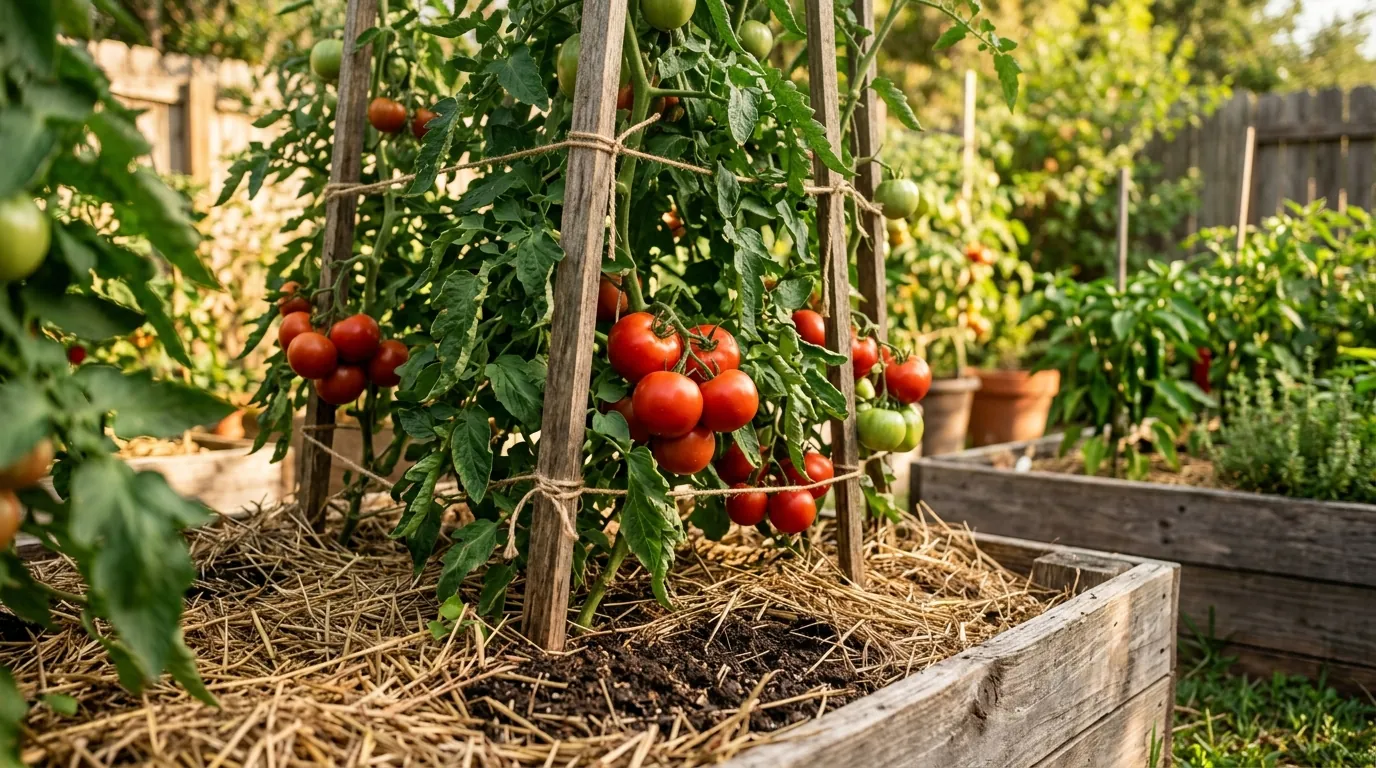
The companion plants for tomatoes in our data are basil, carrot, marigold, parsley, nasturtium, borage and chives, plus garlic, green onions, and flowers such as calendula, cosmos and zinnia when the lists are read both ways. The plants to keep away are potato, sweet corn, brassicas, fennel, rosemary and black walnut trees.
This page tells you how much evidence backs each pairing. Some have been measured, some have promising results from other crops, and some are garden tradition that we could not find a trial for. A label on every row lets you decide what is worth the bed space.
Each pairing gets one of three labels. Proven means someone measured it and it held. Promising means the results are real but mixed, or they come from a different crop. Tradition means we searched for a trial and found none. We do not call traditions wrong, and we tell you what we would plant.
Plant with tomatoes
| Plant | Evidence | Why, and what we found |
|---|---|---|
| Basil | Tradition | Basil grows well next to tomatoes and both end up in the same caprese. We found no trial showing that it improves flavor or deters pests. Let a plant flower for the bees. |
| Marigold | Promising | French marigolds suppress root-knot nematodes, but University of Florida Extension says the effect needs a dense stand grown in the same soil for at least two months before the crop, then tilled in. Marigolds planted between vegetables do not appear to work. They still make a flowering edge for hoverflies. |
| Parsley and chives | Tradition | Low herbs that cover bare soil. Left to flower they feed hoverflies, whose larvae eat aphids, but we found no trial of these herbs beside tomatoes. |
| Carrot | Tradition | Carrots root deep and tomatoes root wide, so they share a bed without much competition. We found no trial of a pest benefit. |
| Nasturtium | Tradition | Often called an aphid trap crop. We did not find a trial of nasturtium protecting tomatoes. It is edible and trails over the bed edge. |
| Borage | Tradition | Bees love borage, which helps pollination. The claim that it deters tomato hornworms has no trial behind it that we could find. It self-seeds heavily, so cut flowers before seed. |
| Garlic and green onions | Tradition | Alliums fit tight against tomatoes without shading them. Their smell is said to confuse pests, but the evidence is inconsistent. |
| Calendula, cosmos and zinnia | Promising | Open flowers feed lady beetles, hoverflies and parasitic wasps. The best field evidence we found comes from flowering strip trials beside other crops, so the result is from a different crop. It is still the best-supported reason to put a flower near tomatoes. |
| Peppers | Tradition | Our data lists bell and chili peppers as neighbors, and they like the same sun and warmth. They are in the same family as tomato and share diseases, so rotate them together. |
Keep apart from tomatoes
| Plant | Evidence | Why, and what we found |
|---|---|---|
| Potato | Proven | Tomato and potato share late blight, caused by Phytophthora infestans (UMass Extension; University of Florida IFAS Extension), and early blight affects both. The Colorado potato beetle also feeds on both, with potato as its favorite and tomato a close second (Rutgers Cooperative Extension). Keep them in separate beds, pull volunteer potatoes and rotate. See our tomato and potato blight guide. |
| Sweet corn | Proven | The corn earworm and the tomato fruitworm are the same insect, Helicoverpa zea, and it feeds on both crops (UC IPM). A corn patch beside your tomatoes gives it a nursery. Colorado State University Extension notes that growers sometimes plant corn on purpose as a trap crop, which is a different job from growing it next to plants you want to protect. |
| Black walnut trees | Promising | Extension lists, including Purdue and the University of Wisconsin, name tomato as sensitive to juglone from black walnut roots, with yellowing, wilting and dark stems. The lists rest largely on observation, and dry soil or root competition can cause similar symptoms. Plant tomatoes well outside the root zone or use a raised bed. |
| Brassicas | Tradition | Cabbage, broccoli, kale and their relatives are heavy feeders that compete with tomatoes. We found no trial of harm in either direction, and the main brassica pests do not attack tomatoes. |
| Fennel | Tradition | Fennel has a long reputation for stunting its neighbors. We found no field trial showing harm to tomatoes. It self-seeds widely, so a pot is sensible. |
| Rosemary | Tradition | Our data lists rosemary as a poor neighbor, and we found no trial. Rosemary wants dry, lean soil while tomatoes want steady water and feeding. |
A simple bed layout
A raised bed 4 feet wide and 8 feet long (1.2 by 2.4 m) holds four staked tomatoes at about 24 inches (60 cm) apart, our plant data spacing. In the United States the sun is to the south, so tall plants go on the north edge where they will not shade the rest.
| Position | What goes there | Why |
|---|---|---|
| North edge | Four staked tomatoes, about 24 inches apart | The tallest plants shade the path behind, not the rest of the bed. |
| Between the tomatoes | One basil plant between each pair, about 10 inches from the stems | Within reach for picking. |
| Middle of the bed | A strip of carrots, with garlic or green onions in the gaps | Different root depths. |
| South edge | French marigold, nasturtium and calendula | Flowers on the sunny edge for hoverflies and bees. |
| A different bed | Potatoes, corn, brassicas, fennel and rosemary | Rotate so tomatoes never follow potatoes. |
Pests companions will not stop
The tomato hornworm is the caterpillar most gardeners meet, and we found no trial showing a companion plant stops it. Hand-picking and checking plants often work better. Colorado potato beetle and late blight both move between potatoes and tomatoes, which is why separating them matters. Planting dates vary by region, so check the tomato plant page for your region and set the companions out at the same time.
Related pages
- Tomato plant page with regional planting dates
- How to grow tomatoes
- Tomato and potato blight
- Companion planting chart
- Tomato hornworm
- Late blight
- Bed planner
Questions
What are the best companion plants for tomatoes?
Basil, carrot, marigold, parsley, chives, nasturtium and borage are on our list, with calendula, cosmos and zinnia for flowers. If you plant just one extra, make it a flower, since flowers that feed hoverflies and wasps have the best evidence.
What should not be planted near tomatoes?
Keep potatoes away because both catch blight and the Colorado potato beetle, keep sweet corn away because the same earworm eats both, and keep tomatoes well away from black walnut roots. Brassicas, fennel and rosemary are traditional keep-apart plants with no trial that we found.
Do marigolds keep bugs off tomatoes?
Not the way old advice says. French marigolds suppress root-knot nematodes when grown as a dense crop for two months before tomatoes and then tilled in. A few between plants are unlikely to do it, but the flowers feed beneficial insects.
Does basil make tomatoes taste better?
We found no trial showing that it does. Plant it beside the tomatoes because it is convenient.
How far apart should tomatoes be planted?
Our plant data gives 24 inches (60 cm) between tomato plants and about 10 inches (25 cm) for basil. Keep herbs trimmed away from the lower leaves so air can move through.
Sources
- University of Florida IFAS Extension, Marigolds (Tagetes spp.) for Nematode Management (ENY-056/NG045)
- UMass Extension, Late Blight of Tomato and Potato
- University of Florida IFAS Extension, Late Blight of Potato and Tomato (PP301)
- Rutgers Cooperative Extension, Colorado Potato Beetle (FS224)
- Purdue Extension, Walnut Toxicity (HO-193)
- University of Wisconsin Extension, Black Walnut Toxicity to Plants
- UC IPM, Corn earworm or tomato fruitworm
- Colorado State University Extension, Tomato fruitworm, Helicoverpa zea